
San Francisco International Airport Flight Cancellations Affect Delta New York and Air Canada Montreal Routes in 2026
Two strategic flight cancellations at San Francisco International Airport have disrupted key corridors to New York JFK and Montreal, impacting business travel and international connectivity.

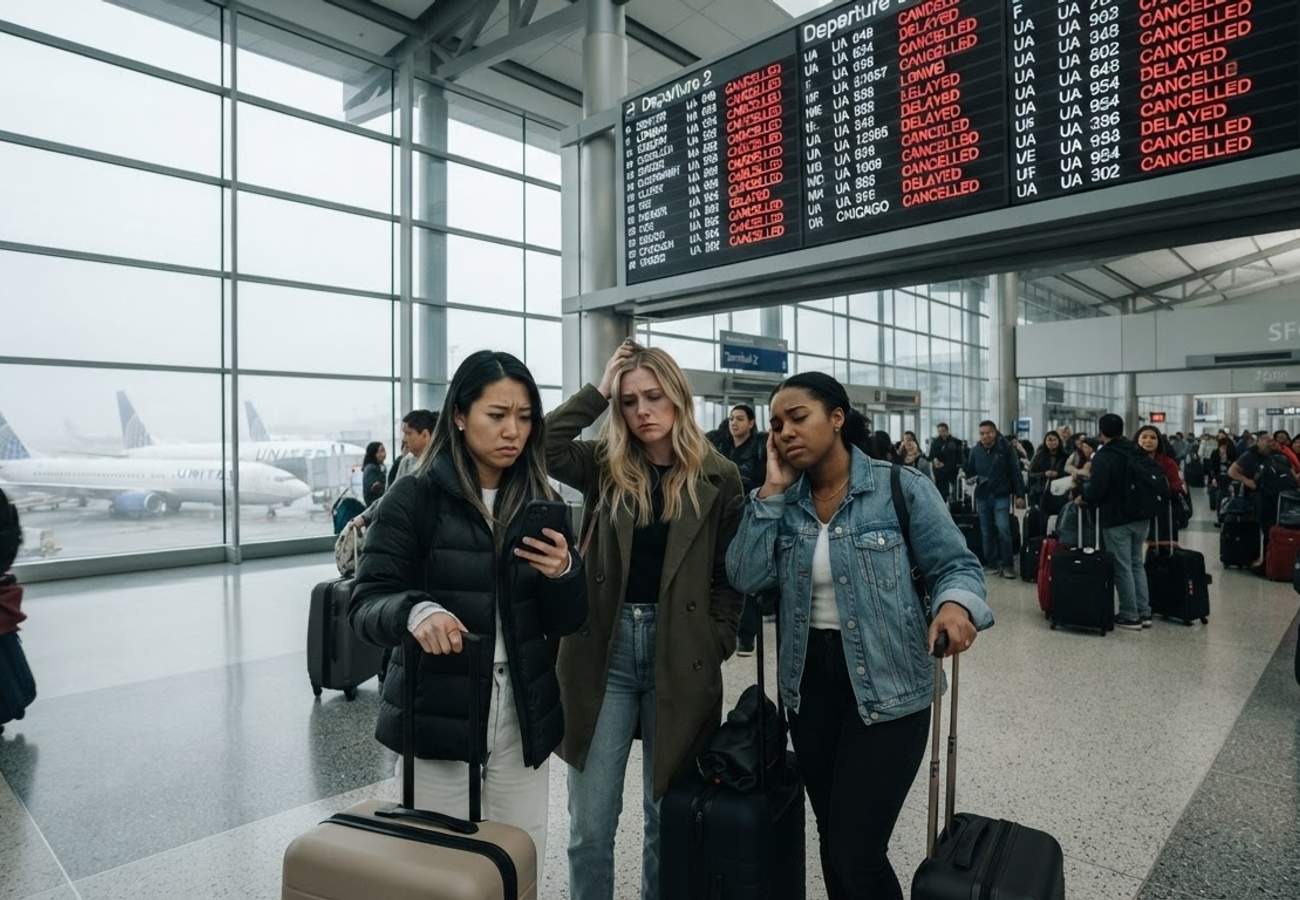
Image generated by AI
Recent operational shifts at San Francisco International Airport (SFO) have led to the cancellation of two high-traffic departures, severing direct links to New York City and Montreal. While the volume of cancellations is low, the specific routes affected represent critical arteries for North American business and international transit.
The disruption impacts one domestic leg to John F. Kennedy International Airport (JFK) and one international leg to Montréal–Trudeau International Airport (YUL). Because these destinations serve as primary hubs, the ripple effect extends far beyond the immediate passengers, potentially delaying hundreds of travelers with onward connections.
Specific Flight Disruptions at SFO
The following services were removed from the schedule, affecting both a narrow-body Airbus and a Boeing MAX aircraft.
| Airline | Flight No. | Aircraft | Destination | Scheduled Departure |
|---|---|---|---|---|
| Delta Air Lines | DAL691 | Airbus A321neo (A21N) | JFK, New York | Tuesday, 1:00 PM PDT |
| Air Canada | ACA756 | Boeing 737 MAX 8 (B38M) | YUL, Montreal | Tuesday, 8:00 AM PDT |
Strategic Impact on Aviation Hubs
The cancellation of Delta flight DAL691 is particularly significant given the nature of the SFO-JFK corridor. This route is a primary pipeline for corporate travel and serves as a gateway for passengers transferring to European and transatlantic flights via New York.
Simultaneously, the loss of Air Canada flight ACA756 disrupts the primary link between the U.S. West Coast and eastern Canada. Montréal–Trudeau (YUL) acts as a vital pivot point for travelers heading deeper into Quebec or connecting to international destinations across the Atlantic.
Analyzing the Operational Ripple Effect
In a tightly synchronized aviation network, the cancellation of even a single aircraft creates a vacuum in resource allocation. These disruptions often trigger a series of logistical challenges:
- Crew Displacement: Flight crews may find themselves out of position, necessitating "deadheading" (flying as passengers) to reach their next assigned route.
- Aircraft Rotation: The Airbus A321neo and Boeing 737 MAX 8 are essential assets; their absence from the schedule can lead to delays in subsequent flights assigned to the same tail number.
- Passenger Bottlenecks: Travelers on connecting itineraries face a cascade of issues, including missed connections, extended layovers, and the need for emergency hotel accommodations.
Probable Drivers of Schedule Changes
Neither Delta nor Air Canada has released a formal statement regarding the specific cause of these cancellations. However, industry standards suggest these shifts typically stem from a few primary variables.
Technical requirements or unscheduled maintenance often force an aircraft to be grounded for safety. Alternatively, crew scheduling conflicts—such as timing out on legal flying hours—can leave a flight without a qualified cockpit or cabin crew. External factors, including air traffic control restrictions or sudden weather shifts at the destination hubs, also play a role in fleet optimization.
Essential Guidance for Affected Travelers
Passengers facing itinerary changes should pivot to digital management tools to avoid long queues at airport service desks.
- Verify Status: Confirm flight viability via the airline's mobile app before departing for SFO.
- Immediate Rebooking: Secure the next available seat promptly, as alternative flights fill quickly during peak travel windows.
- Baggage Tracking: For those with connecting flights, confirm that checked luggage has been rerouted to the new flight number to avoid transit delays.
- Documentation: Keep records of all cancellation notifications to facilitate potential insurance claims or travel vouchers.
Maintaining flexibility and utilizing real-time notifications remains the only reliable strategy for navigating sudden aviation disruptions.
Related Travel Guides
Disclaimer
This article is for informational and educational purposes only. It does not constitute legal, financial, or professional advice. While we strive to provide accurate and up-to-date information, travel policies, regulations, and conditions change rapidly. Always verify information with official sources before making travel decisions. Nomad Lawyer makes no representations about the accuracy, reliability, completeness, or suitability of the information provided. Readers should consult qualified professionals for advice specific to their circumstances. The views expressed in this article are those of the author and do not necessarily reflect the views of Nomad Lawyer.
Raushan Kumar
Founder & Lead Developer
Full-stack developer with 11+ years of experience and a passionate traveller. Raushan built Nomad Lawyer from the ground up with a vision to create the best travel and law experience on the web.
Learn more about our team →