Why Airbus Never Built the A380-900: Inside the Superjumbo's Abandoned Evolution

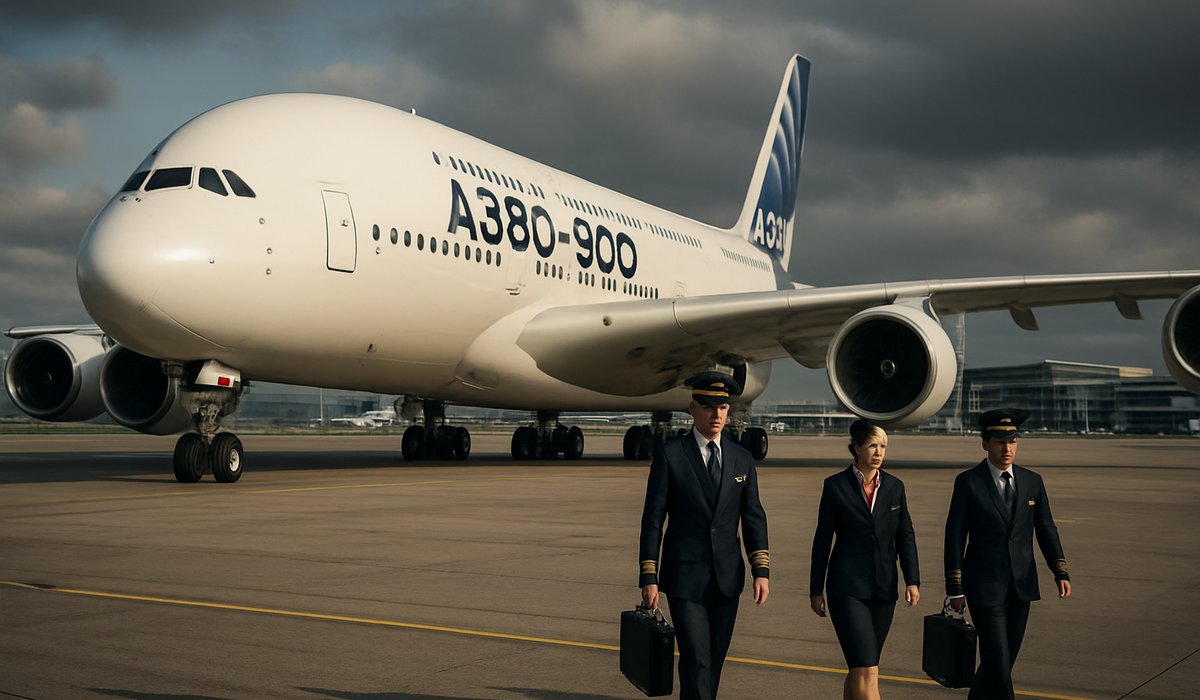
Image generated by AI
The world's largest passenger aircraft was designed to have a bigger sibling—but airlines' shifting priorities and market economics killed the dream before it took flight
The Aircraft That Never Was
Airbus scrapped plans for an even larger variant of its iconic A380 superjumbo, ending a decade-long ambition to expand the world's largest commercial aircraft family. The European manufacturer had envisioned the A380-900 as the natural successor to its -800 predecessor, yet the project never progressed beyond the conceptual stage, ultimately leading to the complete discontinuation of the A380 program in 2019.
Every A380 operating in commercial service today represents the -800 variant—a double-deck, four-engine behemoth capable of carrying up to 853 passengers in high-density configurations. Despite the -800's dominance in long-haul operations since its 2007 introduction, Airbus struggled to generate sufficient market demand for a larger iteration, forcing the manufacturer to abandon expansion plans that would have fundamentally reshaped global aviation capacity.
A Stalled Development Program
The A380 family concept never gained traction with the world's major carriers. Airlines, facing mounting pressures from volatile jet fuel prices, evolving operational costs, and shifting travel patterns, showed little enthusiasm for ordering a supersized variant that would have demanded even higher fuel consumption and increased airport infrastructure modifications.
The program's stagnation reflected broader industry transformations. Rather than concentrating passengers into single mega-aircraft, carriers increasingly favored twin-engine widebodies like the Boeing 787 Dreamliner and Airbus A350, which offered superior fuel efficiency and operational flexibility on point-to-point routes.
The Final Chapter
Airbus delivered its last A380-800 in 2021, concluding production of a program that had commanded significant capital investment since its announcement in the 1990s. The decision to terminate the entire A380 initiative represented a strategic pivot, acknowledging that the market fundamentally rejected the superjumbo model—whether in its standard configuration or proposed enlarged form.
The A380's commercial struggle underscores how rapidly aviation economics can shift, forcing manufacturers to realign product strategies with airline realities and passenger demand patterns.
Frequently Asked Questions
What was the A380-900 supposed to offer? The proposed A380-900 would have been a larger stretched variant of the existing A380-800, designed to carry additional passengers on ultra-long-haul routes, though specific capacity figures were never officially published.
Why didn't airlines order the A380-900? Airlines prioritized fuel-efficient twin-engine aircraft over larger four-engine designs, particularly as jet fuel price volatility increased operational costs and environmental concerns grew.
When did Airbus officially cancel the A380 program? Airbus announced the A380 program's termination in 2019, with final deliveries completed in 2021.
How many A380-800s were built before cancellation? Airbus delivered 254 A380-800 aircraft before discontinuing production.
Are A380s still flying commercially? Yes, A380-800s remain in active service with major international carriers including Emirates, Singapore Airlines, and Air France, primarily on premium long-haul routes.
Related Travel Guides
- Israeli Outbound Travel Expansion Reshapes Eastern Mediterranean Tourism Routes
- American Airlines Airbus A321XLR Faces Crew Challenges Despite Long-Haul Promise
- Delta Air Lines Triggers Catastrophic Global Travel Chaos with 502 Network Disruptions and Severe Flight Cancellations Paralyzing Atlanta, New York, London, and Paris: Latest Airline News
This article is for informational purposes. Flight routes, passenger regulations, visa rules, and transit advisories are subject to change by airlines and aviation authorities. Readers are advised to verify schedules and travel documentation with relevant carriers and border agencies before departure.
Related Stories
Ultra-Comfortable Budget Flights: How Singapore, Japan, Malaysia, and Spain Are Redefining Long-Haul Low-Cost Air Travel
Alaska Airlines Connects Anchorage with Dallas, Austin, and Nashville in Summer 2027 Domestic Network Expansion