
Cambodia Starts Phase 2 of Funan Techo Megaproject Canal
Cambodia launches Phase 2 of the transformative Funan Techo Canal in 2026, a 180-kilometer waterway connecting the Mekong River to the Gulf of Thailand. The megaproject reshapes regional transport and tourism infrastructure across four provinces.

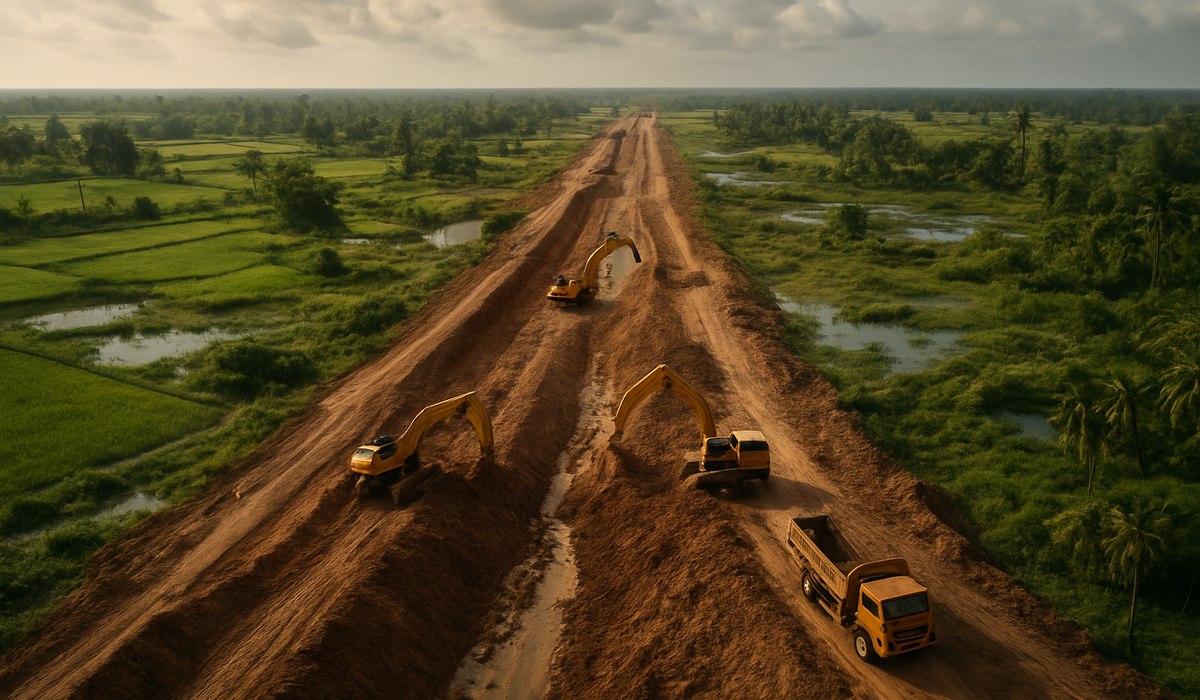
Image generated by AI
Cambodia Advances Funan Techo Canal Phase 2: A Historic Waterway Reshapes Southeast Asia
Cambodia has begun Phase 2 of the Funan Techo Integrated Water Resource Management Project, advancing construction on a transformative 180-kilometer canal linking the Mekong River directly to the Gulf of Thailand. The megaproject, which shifted from planning stages to active earthworks in 2026, will reshape inland transport networks, logistics routes, and coastal tourism infrastructure across southwestern Cambodia. Construction crews are now mobilizing across Kandal, Takeo, Kampot, and Kep provinces, marking the most visible stage of a project that will redefine how goods, people, and water flow through one of Southeast Asia's most strategically important regions.
Major Construction Phase Underway Across Four Provinces
Phase 2 construction focuses on more than 150 kilometers of canal alignment, stretching from the Mekong–Tonle Bassac system south of Phnom Penh through agricultural lowlands and wetlands toward the coastal gateway near Kep. Heavy machinery is now visible across work sites in Takeo and neighboring provinces, with crews conducting embankment cutting, land demarcation, and initial navigation infrastructure installation.
This phase builds on earlier preparatory works that began after the project received high-level political endorsement in 2023 and secured financing agreements throughout 2024 and 2025. The visible transition from surveys to active construction represents a significant milestone for Cambodian infrastructure development. Reports indicate that multiple construction contracts have been awarded to regional engineering firms, creating thousands of employment opportunities for skilled workers, equipment operators, and support staff. The timeline suggests major canal sections could reach navigability within the next 18 to 24 months, though full project completion extends to the early 2030s.
Learn more about Cambodia's infrastructure investments: Visit the Royal Government of Cambodia official website for updates on major development projects.
Integrated Design Combines Navigation, Logistics and Water Management
The Funan Techo canal represents far more than a simple shipping channel. Planners designed it as a multi-purpose corridor integrating navigation, irrigation, flood control, and drainage management into a single engineered system. This integrated approach reflects lessons learned from other major waterway projects across Asia and addresses Cambodia's vulnerability to seasonal flooding and water scarcity.
Navigation locks and regulators will manage water flows to maintain consistent depth for cargo vessels while simultaneously serving agricultural irrigation needs during dry seasons and flood mitigation during monsoons. Side channels and spillway structures will direct excess water into existing rice-farming regions, transforming the canal into a managed water resource for the broader region. The design also incorporates environmental safeguards and fish passage systems to minimize disruption to aquatic ecosystems and local fisheries that depend on Mekong connectivity.
This multifaceted approach positions Cambodia starts phase 2 as a climate adaptation tool alongside a trade corridor. Agricultural communities along the canal alignment will gain access to reliable irrigation water, potentially enabling year-round farming instead of seasonal cultivation. Logistics operators gain a dedicated waterway free from the congestion and seasonal variability affecting the Mekong River itself.
Explore Cambodia's growing logistics sector: Check the Phnom Penh Port Authority website for information on how the canal connects to maritime operations.
Transforming Regional Transport and Reshaping Trade Routes
The 180-kilometer waterway will allow cargo vessels to move directly between river ports near Cambodia's capital and planned deep-water logistics hubs closer to the Gulf of Thailand. This direct inland-to-sea connection eliminates reliance on overland routes that currently funnel goods through congested highways or across neighboring borders.
Bulk commodity exports—particularly rice, cassava, construction aggregates, and light manufacturing goods—will benefit from reduced shipping times and lower transport costs. Analysts project that even modest per-ton savings on high-volume goods can substantially improve competitiveness for Cambodian exports in regional markets. The canal creates routing flexibility for logistics operators, allowing them to bypass bottlenecks at Phnom Penh Autonomous Port and other major transhipment points.
The project also diversifies Cambodia's trade access at a time when mainland Southeast Asian infrastructure is rapidly evolving. While the Mekong River remains critical for regional commerce, a dedicated domestic waterway provides alternative routes and reduces economic dependence on cross-border logistics networks. Private terminal operators and dry ports can now connect directly to both inland and maritime shipping systems.
Historical Significance and Regional Impact
Cambodian planners frame the Funan Techo canal as a revival of historic water corridors that for centuries connected rice-producing interior regions to coastal trading ports. Ancient and medieval Cambodia relied on these waterways for commerce, cultural exchange, and resource distribution. The modern canal project resurrects this historical logic using contemporary engineering, positioning Cambodia as a central node in regional trade networks rather than a marginal player dependent on routes through neighboring countries.
Beyond logistics, the project signals Cambodia's commitment to infrastructure modernization and climate adaptation. Coastal provinces like Kep and Kampot, historically reliant on subsistence agriculture and small-scale fishing, will develop into logistics and processing hubs. This economic shift promises job creation, local business opportunities, and integration into broader Southeast Asian supply chains.
International observers note that the Funan Techo canal also reflects shifting geopolitical dynamics in the Mekong region. By creating alternative transport infrastructure independent of existing river systems managed by upstream nations, Cambodia gains strategic autonomy over its commerce and water resources.
Timeline and Project Financing
| Project Component | Phase/Stage | Status (2026) | Expected Completion | Provinces Affected | Primary Purpose |
|---|---|---|---|---|---|
| Funan Techo Canal Phase 2 | Construction | Active | 2027–2028 | Kandal, Takeo, Kampot, Kep | Navigation, irrigation, flood control |
| Navigation locks & regulators | Engineering | Under development | 2028 | Multiple | Water level management |
| Dry port facilities | Planning | Preliminary design | 2029–2030 | Kampot, Kep | Logistics and transshipment |
| Irrigation distribution network | Design | Early stages | 2030–2031 | Kandal, Takeo | Agricultural water supply |
| Environmental mitigation works | Ongoing | Implementation | 2029 | Full alignment | Ecosystem protection |
| Workforce support infrastructure | Construction | Active | 2027 | Work sites | Housing, safety, services |
The project secured financing commitments from Cambodia's government and international development partners across 2024 and 2025. Phase 2 construction budgets reflect significant investment in earthmoving equipment, material sourcing, and skilled labor recruitment. Public records indicate that contracts emphasize employment of Cambodian nationals and local procurement where feasible, maximizing economic benefit for provincial communities.
Project managers anticipate that Phase 2 completion in 2027–2028 will enable cargo vessel operations on the majority of the canal, with full infrastructure maturation by the early 2030s.
What This Means for Travelers
The Funan Techo megaproject will significantly reshape travel experiences and logistics across Cambodia and the broader Mekong region over the next five years:
-
Enhanced inland waterway tourism: New navigable canal sections will open to tourism operators, enabling scenic boat tours between Phnom Penh and coastal provinces. By 2028–2029, expect commercial river cruise offerings and heritage tourism packages highlighting Cambodia's water-based history.
-
Improved provincial accessibility: Better waterborne transport and logistics will reduce travel times and shipping costs for goods, making southern provinces like K
Disclaimer
This article is for informational and educational purposes only. It does not constitute legal, financial, or professional advice. While we strive to provide accurate and up-to-date information, travel policies, regulations, and conditions change rapidly. Always verify information with official sources before making travel decisions. Nomad Lawyer makes no representations about the accuracy, reliability, completeness, or suitability of the information provided. Readers should consult qualified professionals for advice specific to their circumstances. The views expressed in this article are those of the author and do not necessarily reflect the views of Nomad Lawyer.
Kunal K Choudhary
Co-Founder & Contributor
A passionate traveller and tech enthusiast. Kunal contributes to the vision and growth of Nomad Lawyer, bringing fresh perspectives and driving the community forward.
Learn more about our team →