
Ryanair Flight Leaves 192 Passengers Stranded at French Airport in Gate Closure Chaos
A Ryanair flight leaves a French regional airport nearly empty after boarding gates close without warning, stranding 192 ticketed passengers. The April 2026 incident raises critical questions about airport procedures and passenger communication protocols.

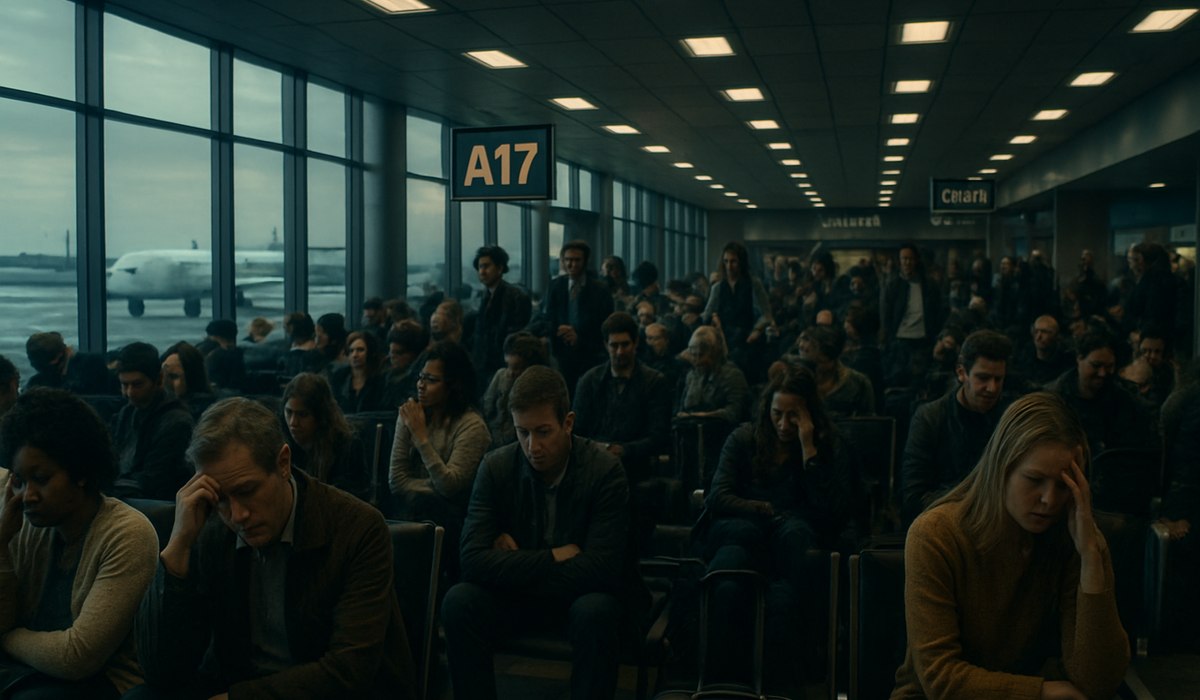
Image generated by AI
Ryanair Flight Leaves 192 Passengers Behind at French Airport
Ryanair flight leaves a French regional airport nearly empty after a sudden gate closure stranded 192 ticketed passengers in the terminal. The April 19, 2026 incident unfolded when boarding doors closed without adequate notice, allowing the aircraft to depart with only a skeleton crew of passengers. Witnesses reported confusion and frustration as travelers discovered the gate had sealed shut despite holding valid boarding passes and having cleared security screening. The incident has sparked widespread scrutiny of airport boarding procedures and airline communication standards across European regional hubs.
What Happened: 192 Passengers Left Behind
The disruption occurred at a French regional airport when passengers approached their departure gate only to discover boarding had already ceased. Multiple accounts from stranded travelers indicate minimal advance warning before gate closure, leaving passengers who were processing through airport security or immigration formalities unable to reach the departure lounge in time.
Witnesses described the scene as chaotic. Some passengers reported standing in security queues when flight status suddenly changed from "boarding" to "gate closed." Others claimed they received no explicit final boarding call or announcement. The Ryanair flight leaves with reported estimates suggesting fewer than 50 passengers aboard, according to testimonies gathered on social media and passenger advocacy forums.
The aircraft subsequently departed the stand and commenced taxi for takeoff, leaving 192 confirmed booked passengers stranded at the terminal. Airport staff provided minimal real-time guidance about the rapidly closing departure window, compounding passenger distress. This operational breakdown has become emblematic of broader coordination failures at regional European airports during peak travel seasons.
Passenger Accounts Describe Confusion and Frustration
Stranded travelers painted a picture of mounting bewilderment as departure procedures unfolded. One passenger reported standing in a security queue when the gate status changed from active to closed, with no advance notification about accelerated timelines. Another account described arriving at the gate only moments after closure, watching the aircraft push back from the stand.
Social media posts from affected passengers highlighted the absence of clear communication. "No announcement was made," one traveler wrote. "We were told to go through security, then suddenly the gate was sealed." The frustration intensified when passengers realized the aircraft departed with substantial empty seating capacity.
These accounts collectively suggest a significant lapse in passenger communication protocols. Standard procedures typically include multiple boarding call announcements at 30-minute, 15-minute, and 10-minute intervals before gate closure. The apparent absence of such announcements raised questions about staff readiness and airport operational standards during the incident timeframe.
Airport Procedures and Gate Management Under Fire
The incident has renewed scrutiny of how French regional airports manage passenger flows during peak travel periods. Industry analysts point to structural challenges that affect many secondary European airports: insufficient security screening capacity, understaffed border control checkpoints, and inadequate real-time coordination between airport operations and airline ground teams.
When passengers navigate through multiple checkpoint stations—security screening, passport control, and final gate processing—delays compound rapidly. A 10-minute bottleneck at passport control can cascade into passengers missing boarding windows they reasonably expected to meet.
Airport management faces competing pressures. Budget constraints limit hiring additional security and immigration personnel. Low-cost carrier business models demand rapid turnaround times between flights. Peak-season travel surges create unpredictable passenger flow volumes. When these factors align poorly, the result often manifests as gate closures that catch passengers still moving through airport formalities.
Aviation operations experts contacted for commentary noted that some regional airports lack real-time passenger tracking systems. Ground staff cannot accurately determine how many passengers remain in security queues versus how many have already passed through checkpoints. This information gap undermines decision-making about gate closure timing. Learn more about aviation operational standards at FAA.gov.
Ryanair's Response and Industry Standards
Ryanair has not released a comprehensive public statement about the specific incident timeline. The carrier's standard operational policy mandates passenger arrival at departure gates at least 45 minutes before scheduled departure time for flights under four hours in duration. Gate closure typically occurs 30-40 minutes before departure, providing a buffer for final boarding procedures.
Low-cost carriers like Ryanair operate on narrow profit margins, necessitating strict adherence to published schedules. Extended gate waits create cascading delays affecting subsequent flights. Consequently, departure gate closures are enforced with minimal flexibility, even when passengers remain in airport processing areas.
The airline industry distinguishes between two categories of departure issues: airline-initiated delays (mechanical problems, crew issues) and passenger-related delays (late arrivals, boarding complications). When passengers fail to reach departure gates on time—regardless of airport infrastructure constraints—airlines typically classify this as passenger responsibility rather than operational failure on the airline's part.
However, this classification framework has drawn criticism from passenger advocacy organizations. When 192 passengers cannot reach a gate due to airport bottlenecks rather than personal negligence, the distinction becomes ethically ambiguous. For passenger rights information, consult U.S. DOT air consumer protections.
Traveler Action Checklist
If you experience a gate closure or fear missing a flight departure:
- Arrive at airport minimum 3 hours before international departure, 2 hours before domestic flights on major routes
- Monitor gate information displays actively and enable airline app notifications for status changes
- Proceed through security immediately upon receiving your boarding pass; avoid lingering in concourse retail areas
- Document the timeline if gate closure occurs: take screenshots of gate information displays, note timestamps, record staff interactions
- Request written confirmation from airport staff explaining why you could not board; this documentation supports compensation claims
- Photograph your boarding pass with visible timestamp before approaching security, establishing proof of timely airport arrival
- Ask ground staff directly about gate closure timing before queuing through additional checkpoint stations
- Retain all receipts for meals, accommodation, and alternative transport if rebooking fails
- File formal complaints with your airline, airport authority, and national aviation regulator within 21 days of incident
- Contact passenger advocacy organizations such as AirHelp or IATA for guidance on compensation eligibility
Key Incident Data
| Metric | Detail |
|---|---|
| Affected Airline | Ryanair |
| Airport Location | French Regional Hub |
| Booked Passengers | 192 |
| Passengers Boarding | Fewer than 50 (estimated) |
| Incident Date | April 19, 2026 |
| Primary Issue | Gate closure without adequate passenger notification |
| Aircraft Status | Departed with significant empty seating |
| Gate Closure Time | Unknown exact moment; occurred during security queue processing |
| Passenger Communication | Reportedly minimal advance warning |
| Applicable Regulation | EU Regulation 261/2004 (Passenger Rights) |
What This Means for Travelers
This incident underscores critical travel planning considerations for European air passengers, particularly those using regional airports or budget carriers. The breakdown between airport infrastructure capacity and airline operational requirements creates genuine risk that ticketed passengers may miss departures despite arriving at recommended times.
Immediate implications: Passengers should increase their airport arrival buffer beyond published minimums. A 2-hour arrival window for a short-haul European flight may prove insufficient at congested regional airports during peak seasons. Three hours provides more reliable protection against checkpoint delays.
Compensation reality: Under EU Regulation 261/2004, passengers who miss flights due to airport processing delays—rather than airline cancellations or significant delays—typically receive limited compensation. Standard rebooking on the next available flight may be your primary remedy, rather than fixed compensation amounts.
Disclaimer
This article is for informational and educational purposes only. It does not constitute legal, financial, or professional advice. While we strive to provide accurate and up-to-date information, travel policies, regulations, and conditions change rapidly. Always verify information with official sources before making travel decisions. Nomad Lawyer makes no representations about the accuracy, reliability, completeness, or suitability of the information provided. Readers should consult qualified professionals for advice specific to their circumstances. The views expressed in this article are those of the author and do not necessarily reflect the views of Nomad Lawyer.
Kunal K Choudhary
Co-Founder & Contributor
A passionate traveller and tech enthusiast. Kunal contributes to the vision and growth of Nomad Lawyer, bringing fresh perspectives and driving the community forward.
Learn more about our team →