
Bypassing Travel Chaos: 20 Passengers Abandoned at Athens Airport as Ryanair Luton Flight Exposes Europe’s Terrifying Summer Border Crisis: Airline News
As severe travel chaos grips European border control, over 20 passengers miss their Ryanair flight from Athens to London Luton amid an EES biometric processing meltdown.

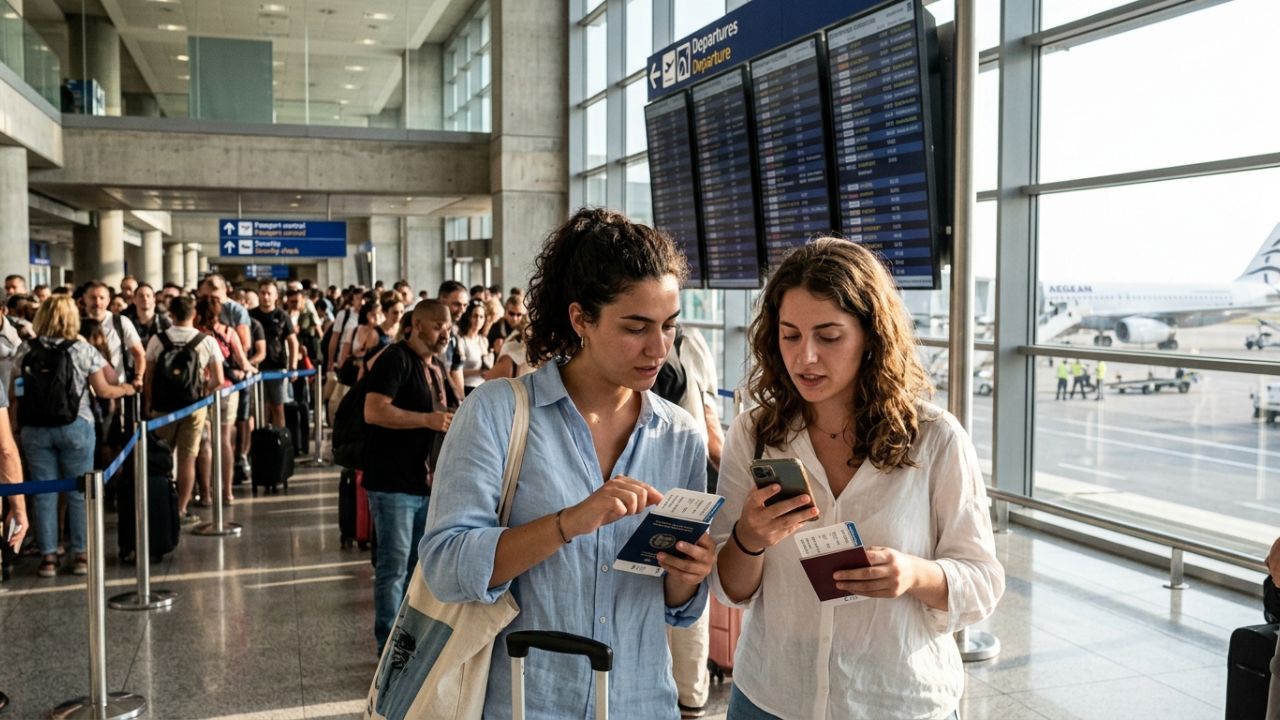
Image generated by AI
In a terrifying demonstration of how rapidly systemic travel chaos can destroy international itineraries, a mass boarding failure at Athens International Airport has exposed a massive vulnerability in Europe’s summer transit grid. Reported on June 20, 2026, as panicked passengers frantically monitor the latest airline news to avoid sudden flight cancellations, over 20 travelers were abandoned at the gate when their Ryanair flight departed for London Luton Airport without them. Stranded in sweltering, highly congested non-Schengen passport control queues, these passengers were physically blocked from reaching their gate before boarding closed. By highlighting the severe mismatch between digital border processing and physical airport capacity, this catastrophic event provides critical "survival intelligence" for travelers seeking to escape sweeping global airport disruptions, cementing this border crisis as today's most crucial headline in breaking aviation updates.
By introducing direct passenger coordination and dynamic scheduling backups, the regional aviation hubs target growing passenger demand across vital commerce sectors. The choice to coordinate flight departures in phases helps to manage gate capacity, supporting the country's broader regional transportation network.
Context: The Digital Border Bottleneck
For the highly interconnected European aviation sector, surviving the modern immigration checkpoint is the absolute ultimate tactical defense against structural network failure.
Historically, navigating an EU airport during the peak summer scheduling wave involved managing ticketing and security queues. However, the core breakdown now occurs entirely at border control for non-Schengen departures. The rollout of the EU’s Entry/Exit System (EES)—designed to digitally register non-EU travelers through mandatory biometric data collection, including facial recognition and fingerprints—has severely crippled processing speed. When manual verification fallback processes are triggered during a massive surge of international departures, the resulting gridlock instantly triggers a massive ripple effect. In Athens, passengers traveling to the UK share the exact same limited non-Schengen immigration lanes as travelers bound for the US and the Gulf. Because airlines operate on fixed schedules and cannot wait for gridlocked border zones to clear, passengers are simply left behind, creating a highly volatile "queue amplification effect."
To view live flight schedules, verify the active departure status of your specific Ryanair itinerary, or to track potential route restorations prior to heading to the airport, travelers must consult official aviation directories. For direct updates regarding how this massive border gridlock might shield you from missing your flight out of Athens, travelers should aggressively utilize the official digital portals of their respective airlines. To explore live flight tracking and monitor the exact severity of the cascading bottlenecks paralyzing the broader European airspace, passengers can consult the official FlightAware tracking service.
Section-Wise Breakdown: The Athens Meltdown
The Mass Boarding Failure
The catastrophic event unfolded during a peak evening departure wave in June 2026. Over 20 ticketed passengers, booked on a direct Ryanair flight to London Luton, became completely trapped in a massive immigration queue extending deep through the terminal zones. Despite arriving at the airport early, they physically could not clear the non-Schengen border checkpoint fast enough. Consequently, the departure gate closed, and the passengers were permanently locked out of their flight.
The Delayed Departure
Ironically, while the passengers were left stranded, the Ryanair aircraft did not depart on time. Strict operational regulations mandate that unaccompanied baggage cannot travel internationally. Therefore, the departure to London Luton was severely delayed by around one hour as ground crews aggressively scrambled to locate and offload the luggage belonging to the 20+ missing passengers. This frustrating operational reality proves that border delays actively degrade the flight schedules for the passengers who actually made it onboard.
The Physical Terminal Strain
The crisis escalated further due to extreme physical conditions inside the terminal. With temperatures exceeding 30°C, the heavily compressed departure environment placed massive physical strain on the crowded passengers. Airport staff faced immense pressure from panicked travelers begging for boarding exceptions, but strict gate-closure protocols were ruthlessly maintained, stranding everyone trapped behind the passport checkpoint.
Technical Roster: Official Airport Incident Matrix
To ensure absolute factual accuracy regarding the exact flight corridors, operational delays, and specific regulatory triggers defining this massive boarding failure, the following matrix details the strictly verified incident data:
Official Athens Airport Incident Matrix (June 2026)
| Operational Metric / Trigger | Verified Aviation Data |
|---|---|
| Operating Carrier | Ryanair |
| Route Impacted | Athens International Airport to London Luton Airport |
| Incident Type | Mass boarding failure due to border gridlock |
| Impacted Passengers | Over 20 ticketed passengers left behind |
| Flight Delay | Approximately one hour delay |
| Delay Cause | Offloading baggage of the missing passengers |
| Primary Chokepoint | Non-Schengen border control (Immigration) |
| Terminal Conditions | Severe congestion; temperatures exceeding 30°C |
| Systemic Trigger | EU Entry/Exit System (EES) biometric processing delays |
Data accurately reflects the verified boarding failure and operational delays tracking the Ryanair Athens-Luton incident as of June 2026.
Passenger Impact: The Non-Schengen Trap
For the tens of thousands of UK-bound travelers traversing European hubs this summer, this incident highlights a terrifying new reality: arriving two hours early is no longer enough to guarantee boarding.
Passengers traveling to the UK, United States, Ireland, and Gulf destinations are particularly vulnerable because they fall strictly under non-Schengen exit control. At hubs like Athens, these diverse groups are funneled into the exact same limited infrastructure. If a biometric scanner fails, or if a single flight’s passengers require extensive manual document verification, the entire queue halts. For UK-bound travelers, this means an extremely high risk of missed boarding, a total loss of prepaid tickets, and severe out-of-pocket costs to secure a last-minute rebooking.
Industry Analysis: Infrastructure vs. Policy
Aviation analysts monitoring the EES rollout note that the Athens incident represents a massive, structural mismatch between aggressive digital border policies and outdated physical airport design.
Anup Kumar Keshan, Founder and Editor-in-Chief of Travel And Tour World, observed that European aviation is actively failing this transition phase. “Europe’s airports are entering a transition phase where digital border systems must match real-world passenger volumes,” Keshan stated. “The Athens disruption is a clear signal that infrastructure readiness must come before policy acceleration, not after it.” Aviation operators emphasize that while digital systems require specific time allotments per passenger to capture facial recognition and fingerprints, physical terminals are completely failing to expand their border lanes at a matching pace. If authorities do not dramatically expand border staffing during peak summer departure waves, the market will witness a massive traveler exodus toward alternative transit hubs with faster, more reliable processing.
Actionable Advice for Surviving Border Control
If you are booked on a non-Schengen flight out of a major European hub this summer, you must execute this strategic survival checklist immediately:
- Arrive Three Hours Early: Airlines across Europe are now explicitly advising passengers to arrive at the airport at least three hours prior to departure for any non-Schengen flight. You must assume the immigration queue will be in a state of total gridlock.
- Prep Biometric Documents: Ensure your passports are pristine and clearly legible for automated e-gates. Do not rely on manual verification lanes, as these are the primary bottleneck during peak departure clustering.
- Monitor EES Suspensions: Occasionally, border authorities will temporarily suspend EES biometric capture during extreme congestion to clear the terminal. If you witness this occurring, move aggressively through the manual checkpoint, as the gate will not wait for you.
FAQ: European Airport Queue Crisis
What caused over 20 passengers to miss their Ryanair flight in Athens?
Severe congestion at non-Schengen passport control prevented over 20 passengers from reaching their departure gate before boarding was closed.
Why was the flight to London Luton delayed?
Despite leaving the passengers behind, the Ryanair flight was delayed by approximately one hour because ground crews had to legally offload the stranded passengers' baggage.
What is the EU Entry/Exit System (EES)?
It is a digitized border modernization program requiring non-EU travelers to submit biometric data (fingerprints and facial recognition), which is currently causing massive processing bottlenecks at physical airports.
The Reality of Digital Border Chaos
The catastrophic boarding failure in Athens proves definitively that relying on outdated arrival timelines is the ultimate recipe for a missed flight. By failing to align digital processing times with massive peak summer demand, the European transit grid has successfully guaranteed that non-Schengen travelers face terrifying logistical hurdles. Yet, as panicked tourists frantically scramble to reach their Ryanair gates, they must accept a critical new reality: the airline will leave you behind. Surviving this era of biometric border expansion demands extreme attention to detail, a complete refusal to underestimate immigration queues, and the tactical discipline to arrive at the terminal three hours before departure.
Key Takeaways
- Mass Boarding Failure: Over 20 passengers missed their Ryanair flight from Athens to London Luton.
- Baggage Delay: The aircraft was delayed for an hour while ground crews offloaded the luggage of the missing passengers.
- Severe Terminal Strain: The gridlock occurred in temperatures exceeding 30°C at the non-Schengen border control checkpoint.
- Systemic Failure: The delays are heavily linked to the EU’s biometric Entry/Exit System (EES) causing massive processing bottlenecks.
- Survival Strategy: Passengers are aggressively urged to arrive at least three hours early for all non-Schengen departures from Europe.
Related Travel Guides
Massive Travel Chaos Paralyzes Chicago O'Hare with 1,425 Disruptions
Disclaimer
This article is for informational and educational purposes only. It does not constitute legal, financial, or professional advice. While we strive to provide accurate and up-to-date information, travel policies, regulations, and conditions change rapidly. Always verify information with official sources before making travel decisions. Nomad Lawyer makes no representations about the accuracy, reliability, completeness, or suitability of the information provided. Readers should consult qualified professionals for advice specific to their circumstances. The views expressed in this article are those of the author and do not necessarily reflect the views of Nomad Lawyer.
Kunal K Choudhary
Co-Founder & Contributor
A passionate traveller and tech enthusiast. Kunal contributes to the vision and growth of Nomad Lawyer, bringing fresh perspectives and driving the community forward.
Learn more about our team →