
Rotterdam Cable Duct Fire Halts Dutch Rail Network, Triggers Eurostar Cancellations Across Amsterdam-London-Paris Corridor on June 29, 2026
A cable duct fire near Rotterdam Stadion disabled critical rail infrastructure on June 29, 2026, suspending southbound trains and forcing Eurostar to cancel Amsterdam and Rotterdam stops, disrupting cross-border European travel during peak summer season.

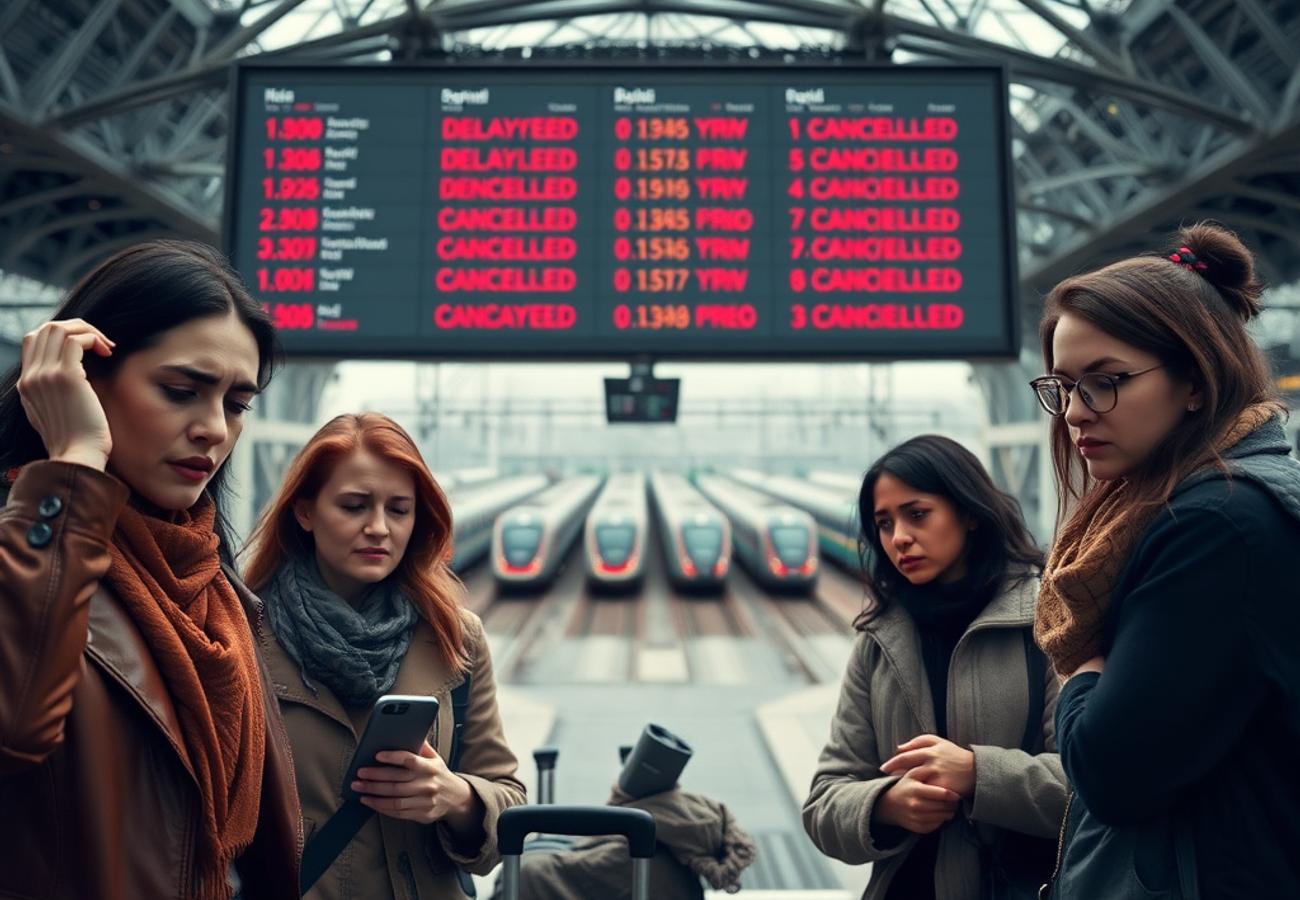
Image generated by AI
European Rail Chaos Erupts: Rotterdam Infrastructure Fire Brings Dutch Network to Standstill
On June 29, 2026, a single cable duct fire near Rotterdam Stadion triggered one of the summer's most consequential rail disruptions across Northern Europe. Within hours, international travellers found themselves stranded, with Eurostar cancelling stops in Amsterdam and Rotterdam, while domestic services towards Barendrecht, Breda, and the critical Kijfhoek freight complex ground to a halt.
The scale of this incident reveals how fragile Europe's interconnected rail infrastructure truly is. One fire. One cable duct. Multiple countries affected.
ProRail Confirms Infrastructure Failure, Not Rolling Stock Damage
The Netherlands infrastructure authority ProRail identified the root cause with precision: a fire inside a critical cable duct that disabled signalling and switching systems. This distinction matters enormously for travel professionals and stranded passengers alike.
The damaged area contained approximately 299 cables, with major damage spanning roughly twenty metres. Overhead line voltage remained intact—meaning power still flowed through the rails—but the operational nervous system that controls signals and switches had been severed. Five trains were physically trapped in the affected zone and required manual intervention to move.
Reddit: "I was on train 9133 heading to Paris when we just stopped outside Rotterdam. No announcement, no updates for over an hour. Now they're saying the whole thing is cancelled." — r/Eurostar
This was not a minor inconvenience. This was infrastructure control failure at a scale that demanded system-wide shutdown rather than risk unsafe operations.
Why Rotterdam's Position Made This Crisis Continental in Scale
Rotterdam Centraal sits at the intersection of European mobility. It functions simultaneously as:
- A primary gateway for Eurostar international traffic linking London, Paris, Brussels, and Amsterdam
- A high-speed corridor hub for domestic Dutch services
- A freight distribution point serving the entire Kijfhoek freight yard—the Netherlands' largest cargo sorting facility
- A connection point for regional services to Barendrecht, Breda, and beyond
This is not peripheral infrastructure. This is arterial. A disruption here echoes across five countries within minutes.
The timing amplified the damage. Late June sits squarely in peak European summer travel season. Business travellers rushing before July slowdowns. Families beginning school holidays. Cruise passengers connecting through Amsterdam. Event attendees heading to major conferences across the continent.
Eurostar Cancellations: The Domino Effect Across Four Nations
Eurostar issued the most visible impact on the day, cancelling or rerouting trains 9133, 9115, 9147, 9167, 9152, and 9157. Additional services 9106, 9114, 9126, and 9140 were listed as not stopping at Amsterdam Central and Rotterdam Central.
The company's own travel advisory used deliberate language: "Train services in the Netherlands were extremely limited."
That phrase masks profound operational disruption. When both domestic Dutch rail and cross-border high-speed services collapse simultaneously, there is no simple substitute. Passengers booked London-Amsterdam-Paris cannot simply switch to a later train. They face full itinerary redesign.
Consider the normal route frequencies that Eurostar and NS International typically operate:
- Amsterdam to London: 5 direct daily departures
- Amsterdam to Paris via Rotterdam: 10 daily services
- Amsterdam to Brussels via Rotterdam: 14 daily services
- Rotterdam to Paris: approximately 2 hours 37 minutes travel time
- Rotterdam to Brussels: approximately 1 hour 10 minutes travel time
Remove all of these simultaneously, and you remove genuine low-carbon travel alternatives for continental Europe. Business meetings slip. Leisure itineraries fracture. Corporate travel programmes face reputational pressure.
The Cascading Risks Travel Professionals Must Now Communicate
For travel agents, tour operators, and corporate travel managers, this incident exposes three critical vulnerabilities:
First, infrastructure concentration risk. Single-point failures in tightly connected networks create multiplier effects. One cable duct fire disrupts five countries' worth of travel.
Second, repair uncertainty. ProRail stated that full damage assessment was required before repairs could proceed, with recovery work expected to extend until the end of operating hours that day. Nobody could guarantee service restoration by morning. Travellers faced open-ended uncertainty.
Third, distribution chain complexity. Eurostar bookings are embedded inside multi-city packages, cruise connections, event travel plans, and luxury FIT itineraries. When Eurostar stops running, entire holiday architectures collapse.
Reddit: "Booked a group of 12 for a river cruise departing Amsterdam tomorrow. Just got notification that pre-stay rail from London is cancelled. We have no backup plan that works." — r/TravelAgents
Freight Network Implications: Kijfhoek Under Pressure
Beyond passenger impact, the disruption threatened the Kijfhoek freight yard—a major cargo sorting facility serving Dutch ports and continental Europe. Suspended southbound services in the Kijfhoek direction meant cargo delays rippling through European supply chains during already-volatile logistics periods.
This is not trivial. Netherlands ports connect to industrial regions across the continent. A rail network pause translates to port congestion, warehouse pressure, and cargo diversion onto already-stressed road networks.
What Recovery Looked Like: Complex Infrastructure Assessment Required
ProRail indicated that damage assessment alone would consume significant time before repairs could even commence. With 299 cables damaged across a concentrated 20-metre section, this was not a matter of replacing two or three wires. This was systematic infrastructure restoration requiring:
- Complete damage audit across all systems
- Safety verification before resuming operations
- Phased restoration prioritising critical routes
- Testing before live service resumption
The authority estimated full recovery by end-of-day operations. That projection assumed no complications. In infrastructure repair, complications are standard.
The Broader Lesson: European Rail Fragility During Peak Travel Season
This incident arrives amid increasing pressure on European rail networks already strained by seasonal demand peaks, aging infrastructure, and climate-related challenges. A cable duct fire—a problem that could theoretically occur anywhere—exposed that Rotterdam's infrastructure was not sufficiently redundant or protected to handle single-point failure.
For nomadic professionals, remote workers, and digital citizens relying on rail for low-carbon continental mobility, the message is stark: assume infrastructure can fail. Build itinerary redundancy. Avoid single-train dependencies on critical European corridors during summer months.
The Netherlands, despite operating among Europe's most reliable rail networks, cannot guarantee uninterrupted service. And if the Netherlands cannot, nowhere can.
One cable duct fire brought a continent's worth of trains to a standstill—a warning about the fragility of modern European mobility.
Related Travel Guides
Disclaimer
This article is for informational and educational purposes only. It does not constitute legal, financial, or professional advice. While we strive to provide accurate and up-to-date information, travel policies, regulations, and conditions change rapidly. Always verify information with official sources before making travel decisions. Nomad Lawyer makes no representations about the accuracy, reliability, completeness, or suitability of the information provided. Readers should consult qualified professionals for advice specific to their circumstances. The views expressed in this article are those of the author and do not necessarily reflect the views of Nomad Lawyer.
Preeti Gunjan
Contributor & Community Manager
A passionate traveller and community builder. Preeti helps grow the Nomad Lawyer community, fostering engagement and bringing the reader experience to life.
Learn more about our team →