Rome Colosseum Closure Stuns Tourists as 22-Year-Old Worker Dies During Overnight Work in Italy

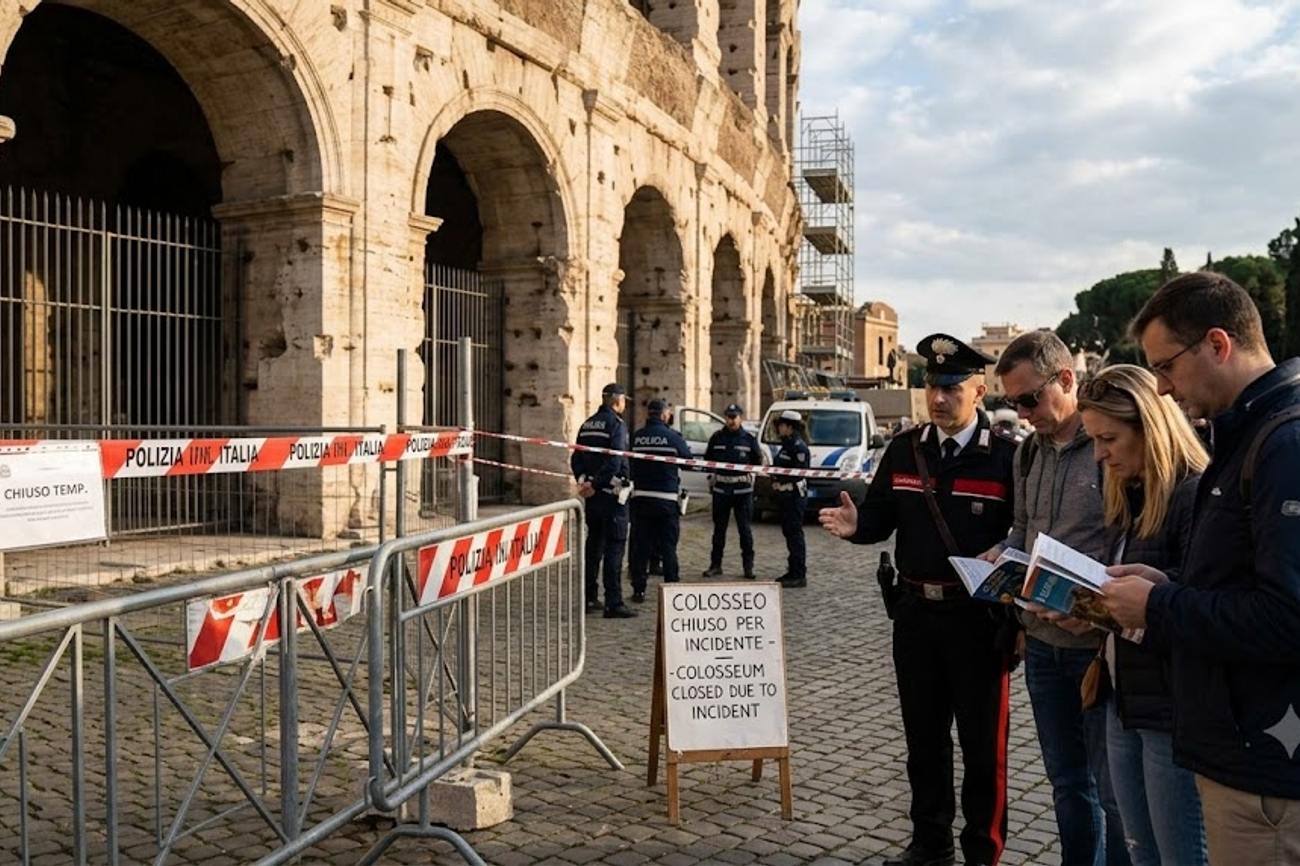
Image generated by AI
A 10-metre fall resulting in the death of a 22-year-old specialist worker has forced the immediate closure of the Colosseum Archaeological Park. The fatality occurred shortly after midnight between Tuesday and Wednesday, involving Andrea Moretti, a high-altitude rope-access professional tasked with installing a new lighting system within the ancient amphitheatre.
Fatal Infrastructure Failure in the Eternal City
The incident occurred during overnight maintenance, a period when the monument is typically devoid of tourists but active with technical crews. Moretti, whose expertise lay in complex rope-work, fell from a significant height while executing infrastructure upgrades. Despite immediate intervention by emergency responders, he was pronounced dead at the scene.
The immediate aftermath saw a tiered response from Italian authorities. Initially, the Ministry of Culture ordered the closure of only the second level—the specific site of the fall. However, this was rapidly escalated to a full-scale shutdown of the entire Colosseum Archaeological Park. This expansion served two purposes: it allowed the Carabinieri, the public prosecutor, and workplace-safety officials to conduct a forensic investigation without civilian interference, and it mitigated a burgeoning crowd-management crisis. Because thousands of tourists had already entered the site during the first admission window, officials feared that an abrupt halt to entry would create dangerous concentrations of people at the Piazza del Colosseo.
Operational Shutdown and Data Breakdown
The closure has evolved from a temporary safety measure into a period of official mourning and solidarity. While early reports suggested a brief disruption, the official park notification now confirms a closure extending through 25 September 2026.
The scale of this disruption is magnified by the sheer volume of traffic the site handles. For a monument that attracts between 14 million and 15 million visitors annually, any cessation of activity creates a vacuum in the local economy.
| Metric | Detail |
|---|---|
| Casualty | Andrea Moretti (22 years old) |
| Fall Distance | Approximately 10 metres |
| Closure Window | 24 September to 25 September 2026 |
| Annual Visitor Volume | 14 million to 15 million |
| Refund Status | Automatic processing for affected bookings |
| Primary Cause | Fatal workplace accident during lighting installation |
Expert Analysis: The Hidden Cost of Heritage Maintenance
For travelers booking trips to Rome, the direct consequence of this event is a reminder that "static" monuments are actually high-maintenance industrial sites. The Colosseum is not merely a ruin; it is a fragile structure requiring constant technical intervention from architects, engineers, and rope-access specialists to remain safe for the millions who walk its corridors.
The pricing pressure and logistical strain created by such closures ripple far beyond the ticket gate. When an "anchor" attraction like the Colosseum closes, the secondary impact hits boutique hotels, licensed guides, and transport providers who synchronize their entire business model around the park's entry slots. Because the official booking system requires reservations up to 30 days in advance, a sudden closure creates a massive administrative backlog.
More critically, this tragedy exposes the tension between visitor experience and worker safety. While the International Air Transport Association (IATA) manages safety in the skies, heritage sites manage it across uneven surfaces and restricted access points. The installation of modern lighting—essential for tourism and security—requires workers to operate in positions that are inherently precarious. The fact that this occurred in a high-profile site suggests that the "invisible" infrastructure of tourism carries a human risk that is rarely discussed in travel brochures.
Furthermore, the broader Italian workplace safety data provided by the National Institute for Insurance against Accidents at Work (INAIL) suggests a systemic challenge. With 597,710 workplace accident claims in 2025—a 1.4% increase from the 589,571 claims in 2024—there is a clear upward trend in industrial incidents. While Italy's fatal accident rate of 1.20 per 100,000 workers is slightly below the EU-27 average of 1.23, the increase in overall claims indicates a volatile environment for the specialized contractors who maintain Italy's cultural assets.
The sudden closure of the Rome Colosseum has left tourists stunned and seeking alternative attractions, with many turning to the Italian National Tourism Board for information on other historical sites and landmarks to visit in the area. The incident has raised concerns about workplace safety and the impact on the local tourism industry. As investigations into the incident continue, tourists are advised to check the official website for updates on the Colosseum's reopening.
Key Takeaways
- Immediate Closure: The Colosseum Archaeological Park is closed through 25 September 2026 following a fatal fall by a 22-year-old contractor.
- Automatic Refunds: Visitors with bookings for the closure dates do not need to file manual claims; refunds are being processed automatically by the park.
- Economic Ripple Effect: With up to 15 million annual visitors, the closure disrupts a massive ecosystem of local guides, hotels, and restaurants.
- Safety Trends: This incident occurs amid a rising trend in Italian workplace accidents, with claims increasing by 1.4% between 2024 and 2025.
- Verification Required: Travelers are urged to bypass third-party ticket agents and verify operational status directly via the official park website.
FAQ: Colosseum Closure 2026
Do I need to apply for a refund for my Colosseum ticket? No. The Colosseum Archaeological Park has stated that refunds for all admissions scheduled during the closure period will be processed automatically.
When will the Colosseum reopen to the public? The current official notice extends the closure through 25 September 2026. Visitors should monitor the official website for updates regarding the resumption of normal operations.
How do I check if my specific entry time is affected? Check the official park booking system. Because tickets are reserved for specific time slots, any booking falling within the closure dates is invalidated.
Is the rest of Rome's archaeological sites closed? No. The closure specifically affects the Colosseum Archaeological Park. Other sites in the city remain operational unless otherwise stated by the Ministry of Culture.
The silence at the Piazza del Colosseo serves as a stark reminder that the preservation of antiquity often demands a modern, and sometimes deadly, price.
Tags: Colosseum Archaeological Park, Andrea Moretti, Rome Tourism 2026, INAIL Italy, Ministry of Culture Italy, Heritage Conservation Safety
Related Travel Guides
This article is for informational purposes. Flight routes, passenger regulations, visa rules, and transit advisories are subject to change by airlines and aviation authorities. Readers are advised to verify schedules and travel documentation with relevant carriers and border agencies before departure.
Related Stories
Eurowings vs Ryanair on Germany to Rome Routes: Seat Space, Baggage Math, and Travel Guide

Jet Airways vs. Boeing NCLAT Battle: Why Manufacturer Litigation Offers No Quick Ticket Refunds for Indian Travel Agents