
Rising Airfares and Fuel Costs Force Forty-Five Percent of Americans to Cancel Summer Vacation Plans as Geopolitical Tensions Escalate
A survey reveals 45% of Americans are skipping summer vacations due to rising airfares and high fuel prices, driven by geopolitical oil shocks in 2026.

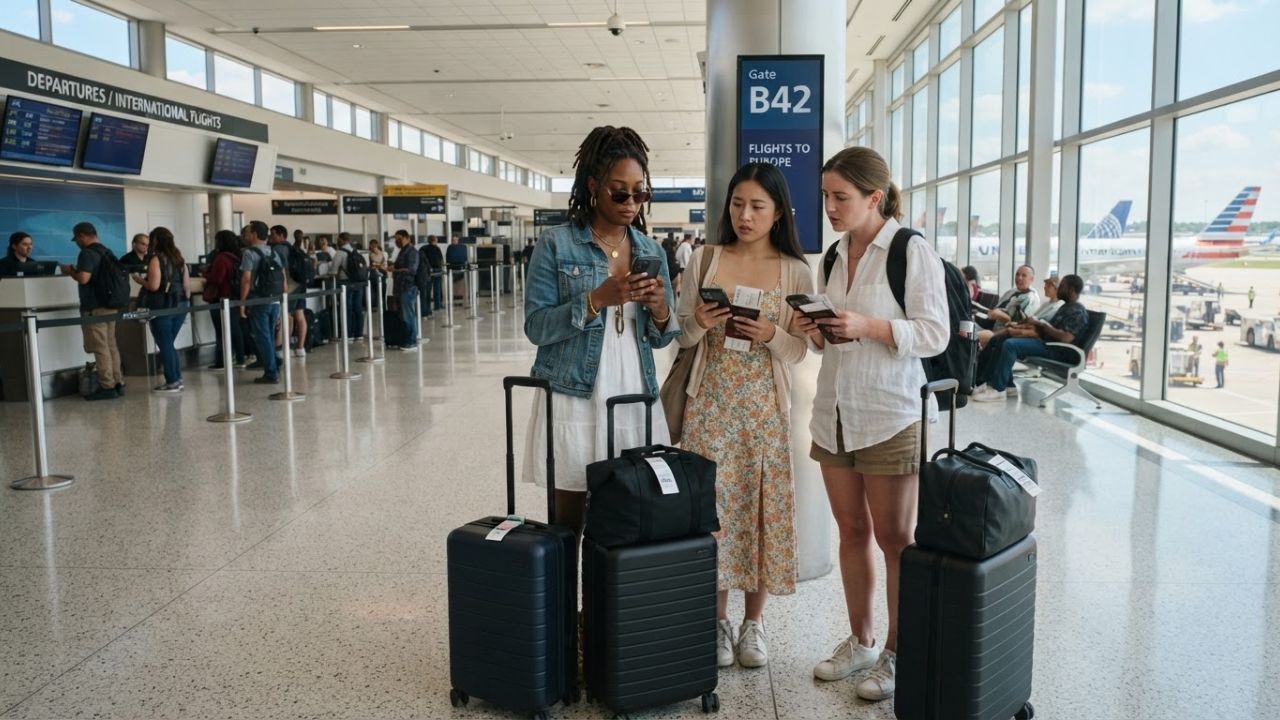
Image generated by AI
[Washington, July 9, 2026] — A sharp rise in standard living costs is forcing many households to cancel their summer travel plans. A recent consumer survey indicates that forty-five percent of American holidaymakers are actively skipping their vacations.
This reduction in travel is confirmed by government transportation data. During the Fourth of July weekend, the Transportation Security Administration recorded a two-point-three percent decline in passenger traffic.
Only 7.3 million individuals traveled by air during the holiday weekend compared to the previous year. This downward trend shows that middle-class families are treating flights as an unaffordable luxury.
Geopolitical Conflicts Pressure Global Crude Oil Markets
The primary driver of rising airfares is the volatility in global oil markets. Tensions in the Middle East, including the collapse of the US-Iran ceasefire, have pushed energy prices upward.
Following announcements regarding potential military strikes, benchmark crude oil prices surged by nearly five percent in a single trading session. This increase led to immediate shortages in wholesale aviation fuel.
Because airlines operate on thin profit margins of one to three percent, higher fuel costs are passed directly to passengers. Ticket prices have risen in proportion to the cost of crude oil.
Domestic Airlines Cut Routes to Protect Profit Margins
Several airlines are struggling to maintain financial stability amid these energy price shocks. Spirit Airlines ceased all flight operations in May, filing for bankruptcy court protection.
The budget carrier cited mounting fuel debts and geopolitical conflicts as the primary causes of its collapse. Other major airlines are adjusting their strategies to survive the downturn.
United Airlines has warned investors that domestic ticket prices could rise by twenty percent. Meanwhile, American Airlines has cut several domestic routes in August and September to conserve fuel.
Airspace Restrictions Extend Flight Paths and Raise Fares
Military conflicts in Ukraine and the Middle East have also limited the availability of efficient air corridors. The European Union Aviation Safety Agency has ordered airlines to avoid designated combat zones.
To bypass these restricted airspaces, carriers are flying longer, less efficient routes. These detours require significantly more fuel, which increases operating costs.
For example, British Airways has raised fares by eight percent to cover the cost of these longer routings. The extended flight times have also increased crew fatigue and scheduling delays.
High Fuel Prices Reshape the American Road Trip
While flying has become expensive, driving does not offer cheap alternatives. Although petrol prices have dropped from their May peak of $4.48, motorists are still paying an average of $3.79 per gallon.
These fuel costs have changed the financial planning for family road trips. However, road travel remains the dominant choice for those who still want to travel.
The American Automobile Association projected that 61.4 million individuals would travel by car during the holiday weekend. Highways remained congested as families chose regional driving trips over long-haul flights.
Energy Bottlenecks Impact International Tourism Markets
The impact of the energy crisis is affecting international economies. Because one-fifth of the global oil supply passes through the Strait of Hormuz, blockades create severe bottlenecks in Asia.
Major importing nations like China and India are facing higher energy acquisition costs. In Europe, high fuel taxes have further reduced consumer purchasing power.
For instance, motorists in the United Kingdom are paying £1.49 per litre for standard fuel. These global price hikes are reducing discretionary spending and impacting international tourism.
The table below summarizes the economic and fuel metrics impacting summer travel:
| Indicator / Metric | Value | Reference details |
|---|---|---|
| US Vacation Cancellation Rate | 45% | Percentage of travelers skipping planned summer trips |
| July 4th TSA Passenger Volume | 7.3 million | A 2.3% decline compared to the previous year |
| Crude Oil Price Shock | +5% | Immediate single-day trading session jump |
| Airlines Standard Profit Margin | 1% to 3% | Average operating margin for commercial carriers |
| US Petrol Price Average | $3.79 / gallon | Down from peak of $4.48 in mid-May |
| AAA Holiday Road Trip Projection | 61.4 million | Estimated drivers during Independence Day holiday |
| UK Fuel Price Average | £1.49 / litre | Standard fuel cost at the pump |
Key Takeaways
- Travel Reductions: Forty-five percent of Americans are canceling summer trips due to high travel costs.
- Airline Failures: Spirit Airlines filed for bankruptcy in May citing fuel debts and airspace conflicts.
- Route Reductions: American Airlines cut domestic flights in August and September to conserve fuel.
- Road Trip Costs: Road trips remain expensive with gas prices averaging $3.79 per gallon.
Why This Matters
This shift in consumer behavior shows that the post-pandemic travel boom has ended. During the early 2020s, passengers were willing to pay high prices to travel, but inflation has exhausted household savings.
Our analysis of the flight data indicates that the bankruptcy of Spirit Airlines is the first of several structural alignments. Budget carriers are highly sensitive to fuel shocks because they cannot easily offset costs with premium class ticket sales.
Additionally, the loss of direct routes will make regional destinations harder to reach. Travelers should expect fewer flight options and higher prices for the foreseeable future.
Future Outlook
Market trends suggest that travel costs will remain elevated throughout the year. Even if oil prices stabilize, airlines will need time to rebuild their balance sheets and restore cut routes.
Additionally, tourism boards must focus on promoting local destinations to attract staycationers. Adapting to these new travel patterns will be necessary for regional economies that rely on visitor spending.
Related Travel News Guides
- AAA July 4th Travel Alert: Peak Highway Hours and Safety Guidelines for Independence Day
- America250 Tourism Surge: Norfolk, Philadelphia, and Maricopa Counties Lead Heritage Travel Boom
- Middle East Air Travel Disrupted as Flydubai, Emirates, and Akasa Air Cancel Twenty-Two Flights and Delay One Hundred Seventy-Eight
Disclaimer
This article is for informational and educational purposes only. It does not constitute legal, financial, or professional advice. While we strive to provide accurate and up-to-date information, travel policies, regulations, and conditions change rapidly. Always verify information with official sources before making travel decisions. Nomad Lawyer makes no representations about the accuracy, reliability, completeness, or suitability of the information provided. Readers should consult qualified professionals for advice specific to their circumstances. The views expressed in this article are those of the author and do not necessarily reflect the views of Nomad Lawyer.
Preeti Gunjan
Contributor & Community Manager
A passionate traveller and community builder. Preeti helps grow the Nomad Lawyer community, fostering engagement and bringing the reader experience to life.
Learn more about our team →