
Rio de Janeiro Streets Explode with World Cup Murals as Brazil's Neighbourhoods Transform into Living Art Galleries in 2026
Rio de Janeiro's residential districts are erupting into massive street art installations ahead of the 2026 FIFA World Cup, transforming entire neighbourhoods into open-air galleries through community-led mural projects.

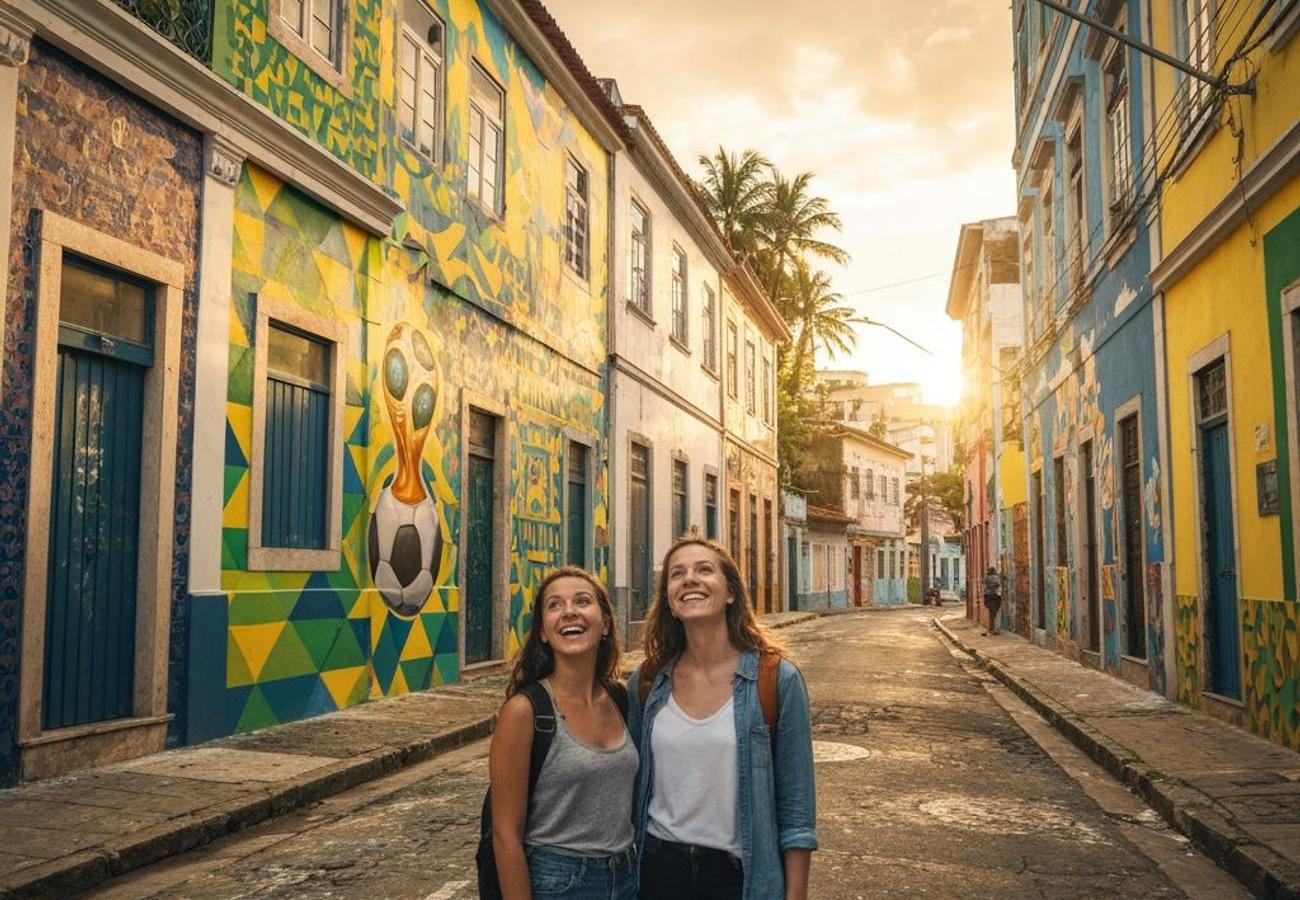
Image generated by AI
Streets as Canvas: Rio's Explosive World Cup Transformation
Rio de Janeiro is experiencing a visual revolution. Entire neighbourhoods across Tijuca, Saúde, and Rocinha are being swallowed by massive mural projects, their walls, staircases, and facades bleeding with Brazilian green and yellow. What was once neutral urban infrastructure is now a pulsating canvas of national pride and football passion ahead of the 2026 FIFA World Cup.
The transformation is staggering in scale. Street after street becomes a continuous open-air gallery, with murals connecting across entire blocks to form cohesive visual narratives. This isn't isolated street art—it's a neighbourhood-wide reimagining of public space as collective expression.
Reddit: "The whole city feels alive when you walk through these areas during World Cup season. It's not just paint on walls—it's the entire community saying something together." — r/travel
When Communities Become Artists
What makes Rio's World Cup aesthetic uniquely powerful is how it's created. These aren't commissioned works imposed from above. In districts like Rocinha, residents themselves coordinate the painting initiatives, contributing labour, materials, and design decisions. Families work side by side. Children paint alongside adults. Multiple street sections get worked simultaneously to meet community deadlines.
This model of grassroots artistic production runs deep in Rio's DNA. The murals serve dual purposes—they're art and social infrastructure. A neighbourhood painting together isn't just creating beauty; it's reinforcing bonds, strengthening collective identity, and affirming that public space belongs to the people who live there.
The process intensifies during major tournaments. What might have been a gradual background phenomenon suddenly crystallizes into coordinated, large-scale action. Streets transform in weeks, not months.
Football Embedded in Every Brushstroke
Walk through these neighbourhoods and the visual language is unmistakable. Player silhouettes freeze mid-celebration. Stadium scenes pulse across facades. Abstract interpretations of movement and joy dominate compositions. Brazil's national colours—that iconic green and yellow—create visual continuity from one district to the next.
These aren't decorative choices. They're declarations of identity. Each mural reinforces shared cultural themes tied to football, transforming the city into a symbolic representation of national sporting pride. The repetition across neighbourhoods creates something larger than individual artworks—it creates a city-wide statement.
The Informal Tourism Phenomenon
From a tourism perspective, something unexpected happens. These painted streets become informal cultural attractions without formal boundaries, ticketing systems, or structured pathways. Visitors don't enter a designated "art district"—they simply move through residential neighbourhoods and encounter living galleries.
The experience is defined by immersion rather than observation. You're not looking at culture from a distance; you're walking through it. Artistic expression coexists with everyday routines—laundry hanging beside murals, kids playing under painted walls, vendors operating beneath towering abstractions of football glory.
Cultural tourism trends increasingly favour this authenticity over curated experiences. Neighbourhoods like Rocinha offer exactly that—direct engagement with how communities actually live, celebrate, and express themselves.
Beyond Rio: A National Pattern
While Rio remains the epicentre, this phenomenon spreads across Brazil. Other cities adopt similar coordinated painting initiatives during World Cup cycles, extending football-themed murals into diverse regional contexts. This indicates a wider cultural pattern where major tournaments trigger nationwide visual transformation.
The scalability of community-led street art demonstrates how sporting events can mobilize creative energy across entire nations. Each locality adapts the tradition to its own environment while maintaining symbolic references tied to football and national identity.
Visual Saturation as Urban Experience
The aesthetic is deliberately intense. Large mural surfaces combine figurative and abstract elements in layered compositions emphasizing movement, energy, and celebration. Dense colour application creates visual saturation—the built environment becomes immersive, impossible to ignore.
This isn't subtle design. It's maximalist expression. Streets feel alive, vibrating with the visual intensity of a nation preparing to compete on a global stage. The high-octane aesthetic transforms how neighbourhoods are perceived and navigated during tournament periods.
Temporary Art, Lasting Impact
Here's what matters: these murals are temporary. They fade. Rain wears them. The tournament ends and neighbourhoods gradually return to their previous appearance. Yet their cultural significance endures long after the paint peels.
The process strengthens community collaboration. It reinforces neighbourhood identity. It contributes to Rio's broader cultural narrative as a city where sport and artistic expression are fundamentally intertwined. UNESCO recognizes street art as significant cultural expression, and what Rio creates during World Cup periods demonstrates exactly why.
These painted streets also shape external perceptions of Rio as a destination. The city becomes globally recognized as a space where public landscape is repeatedly reimagined through collective artistic activity. Visitors leave with stories not just about football, but about the creativity, passion, and community that surrounds it.
As the 2026 World Cup progresses, these streets will continue functioning as focal points for informal gatherings, local celebrations, and community interaction. Rio's living canvas proves that sporting events, at their best, mobilize entire cities to create something beautiful together.
Street art doesn't just decorate cities—it declares who we are.
Related Travel Guides
Disclaimer
This article is for informational and educational purposes only. It does not constitute legal, financial, or professional advice. While we strive to provide accurate and up-to-date information, travel policies, regulations, and conditions change rapidly. Always verify information with official sources before making travel decisions. Nomad Lawyer makes no representations about the accuracy, reliability, completeness, or suitability of the information provided. Readers should consult qualified professionals for advice specific to their circumstances. The views expressed in this article are those of the author and do not necessarily reflect the views of Nomad Lawyer.
Raushan Kumar
Founder & Lead Developer
Full-stack developer with 11+ years of experience and a passionate traveller. Raushan built Nomad Lawyer from the ground up with a vision to create the best travel and law experience on the web.
Learn more about our team →