
Qantas Superjumbo Makes Rare Detour to London Gatwick in Unexpected Charter Operation
Breaking airline news and aviation industry updates for 2026.

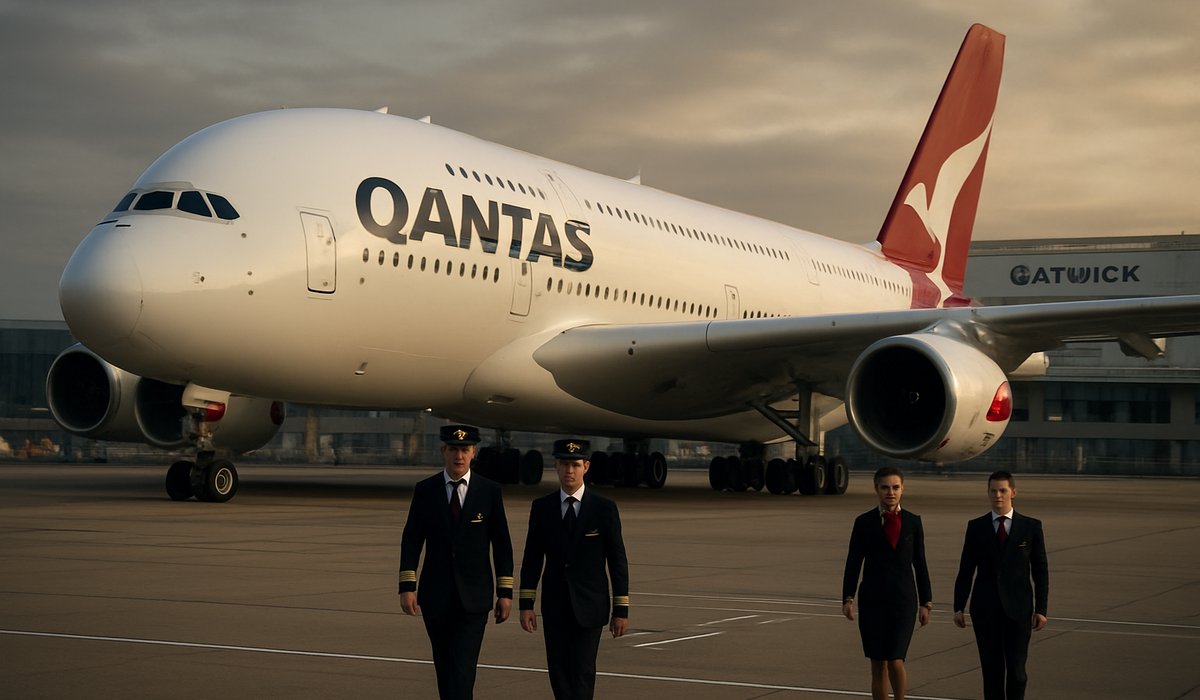
Image generated by AI
Qantas Superjumbo Makes Rare Detour to London Gatwick in Unexpected Charter Operation
The Australian carrier's iconic A380 breaks from routine, landing at secondary UK hub in notable shift from traditional Heathrow operations
Unexpected Arrival Turns Heads at London's Secondary Airport
A Qantas Airbus A380 superjumbo executed an unusual landing at London Gatwick Airport this week, marking a striking departure from the aircraft's established operational pattern. The four-engine aircraft, registered as Charles Ulm, touched down on April 20 as part of a one-off charter mission, according to aviation tracking sources. The arrival represents a notable anomaly, as Qantas's fleet of A380s typically operates exclusively from London Heathrow Airport, the airline's primary European gateway.
Why This Matters for Aviation Operations
The unexpected touchdown at Gatwick—London's second-largest airport by passenger volume—has reignited discussions within the aviation industry about aircraft deployment flexibility and charter market dynamics. While the A380 remains one of the world's most capable wide-body aircraft, such diversions to secondary hubs are uncommon due to the superjumbo's specialized infrastructure requirements and runway capacity constraints.
The Charles Ulm, named after aviation pioneer Charles Ulm, exemplifies Australia's flagship carrier's premium long-haul capabilities. Qantas operates a limited A380 fleet, making each aircraft movement significant for route planning and hub utilization analysis. The aircraft's presence at Gatwick rather than its customary Heathrow berth suggests either maintenance scheduling considerations or specific charter client requirements that necessitated the alternative routing.
Aviation Spotters Take Notice
The landing immediately attracted attention from the global aviation enthusiast community, with plane spotters documenting the rare appearance at the West Sussex airport. Such deviations from standard operational patterns provide valuable data for aviation analysts tracking fleet deployment strategies and airport utilization trends across European hubs.
For Qantas, maintaining operational flexibility across multiple airports—particularly in congested airspace such as London's—underscores the carrier's commitment to servicing both scheduled and charter demand. The incident highlights how even flagship routes and premium aircraft can adapt to market needs and special operational requirements.
Looking Ahead
As airlines worldwide continue navigating complex European airspace restrictions and airport capacity constraints, the ability to deploy superjumbo aircraft across alternative hubs may become increasingly valuable. Whether this represents a one-time anomaly or signals broader shifts in Qantas's European operational strategy remains to be seen.
FAQ: Understanding Rare Aircraft Movements and Airline Operations
Q1: Why would a Qantas A380 normally operate only from London Heathrow? Heathrow is Qantas's primary European hub with dedicated facilities, slot availability, and infrastructure optimized for the airline's long-haul operations from Australia. The airport's premium status aligns with the A380's premium positioning.
Q2: What operational constraints does the A380 face at secondary airports like Gatwick? The A380 requires extended runways, specialized ground handling equipment, and gate facilities. Not all airports maintain these capabilities, limiting where airlines can efficiently deploy the aircraft.
Q3: How do charter operations differ from scheduled service for airlines like Qantas? Charter flights are single, one-off missions operated for specific clients or purposes, whereas scheduled services follow published timetables. Charters offer greater routing flexibility.
Q4: What are the financial implications of diverting aircraft from primary hubs? Diversions incur additional positioning costs, ground handling fees, and crew expenses, but may be justified by premium charter revenues or maintenance scheduling efficiency.
Q5: Could this signal changes to Qantas's European operations? While unlikely, increased Gatwick deployments could emerge if slot availability at Heathrow tightens or if charter demand strengthens at London's secondary airport.
Related Travel Guides
Flight Delay Compensation Guide 2026
Understanding Airline Route Changes
Airport Security Process Updated (2026)
External Resources
Disclaimer
This article is for informational and educational purposes only. It does not constitute legal, financial, or professional advice. While we strive to provide accurate and up-to-date information, travel policies, regulations, and conditions change rapidly. Always verify information with official sources before making travel decisions. Nomad Lawyer makes no representations about the accuracy, reliability, completeness, or suitability of the information provided. Readers should consult qualified professionals for advice specific to their circumstances. The views expressed in this article are those of the author and do not necessarily reflect the views of Nomad Lawyer.
Raushan Kumar
Founder & Lead Developer
Full-stack developer with 11+ years of experience and a passionate traveller. Raushan built Nomad Lawyer from the ground up with a vision to create the best travel and law experience on the web.
Learn more about our team →