
Range Aircraft Airbus A350 Breaks 18-Hour Non-Stop Flight Barrier in 2026
The Airbus A350 redefines ultra-long-haul aviation by enabling routine 19,000-kilometer non-stop flights approaching 18 hours, shattering conventional aircraft limits in 2026.

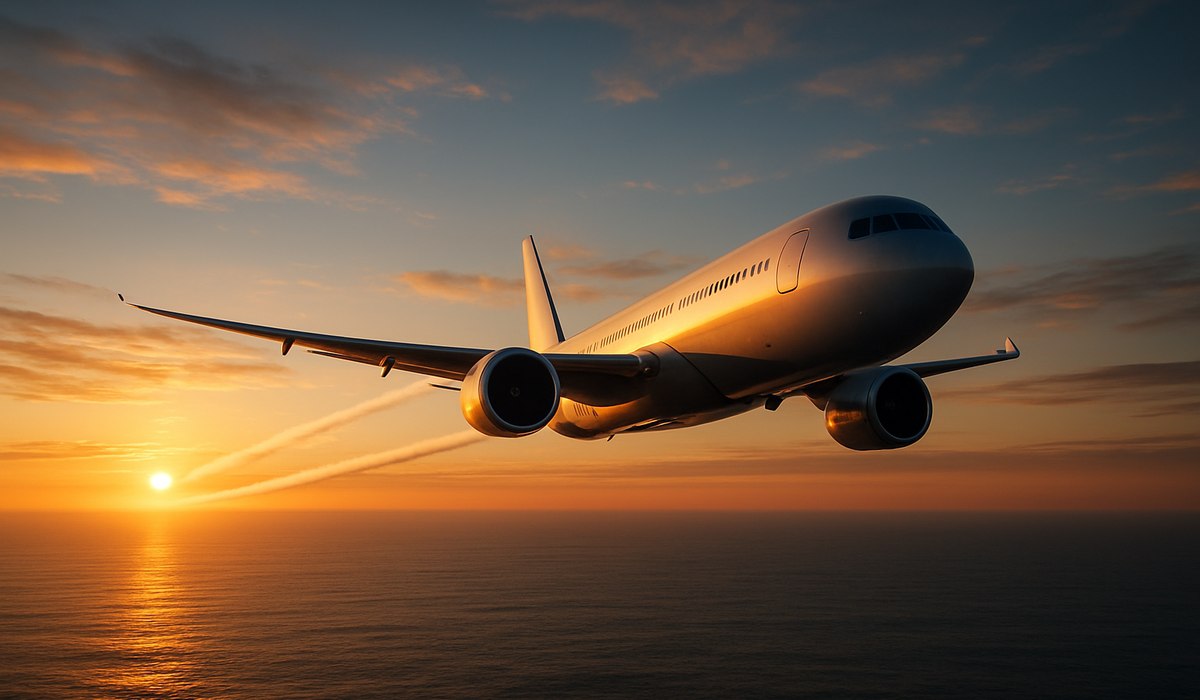
Image generated by AI
The A350 Shatters Commercial Aviation Boundaries
The Airbus A350 is fundamentally transforming ultra-long-haul aviation by achieving what industry veterans once deemed impossible: sustained 19,000-kilometer non-stop operations lasting nearly 18 hours. This wide-body aircraft represents the pinnacle of modern aeronautical engineering, where every design decision serves one critical purpose—extending endurance beyond conventional aircraft limits. Airlines worldwide are now scheduling previously impossible routes as standard services, with passengers experiencing day-length flights to distant continents. The range aircraft revolution centers on the A350's revolutionary architecture, which combines lightweight composite materials, advanced propulsion systems, and aerodynamic optimization to push the absolute boundaries of what commercial aviation can achieve.
Engineering at the Edge: How the A350 Operates Beyond Normal Limits
The Airbus A350 succeeds by operating at the extreme edge of its performance envelope, where conventional wisdom surrenders to advanced physics. Every system aboard this range aircraft functions with precision calibrated for maximum efficiency. The fuselage employs carbon-fiber composite construction, reducing structural weight by up to 25 percent compared to aluminum predecessors. Engines consume fuel at optimized rates during cruise phases, while avionics monitor atmospheric conditions in real-time to identify altitude bands offering minimal air density resistance.
Pilots flying the A350 across its maximum range navigate through carefully calculated flight plans developed using sophisticated meteorological data. Route planning software identifies optimal wind patterns, accounting for jet streams that can reduce flight times by hours. The aircraft's fly-by-wire system constantly adjusts control surfaces for minimal drag, maintaining precise pitch angles that maximize lift-to-weight ratios. Systems integration across all aircraft functions ensures no power wastage occurs. For technical specifications, aviation enthusiasts can reference detailed performance data at the FAA's official aircraft certification database.
Weight Optimization and Fuel Efficiency: The Mathematics of Endurance
Achieving extended range requires obsessive attention to weight management, where every kilogram impacts maximum endurance capabilities. The A350 carries approximately 138,000 liters of fuel—roughly half its maximum take-off weight—distributed across multiple tank configurations to optimize center-of-gravity positioning. Engineers specified premium-grade aviation fuel with enhanced energy density, providing maximum thermal energy during combustion phases.
Interior configuration directly impacts aircraft range performance. Airlines operating maximum-endurance flights often eliminate heavy galley equipment, reduce seat configurations to essential capacity, and minimize onboard supplies to absolute minimums. Cargo hold ventilation systems operate at reduced power. Insulation materials balance thermal protection against unnecessary weight. Structural components undergo rigorous analysis, with engineers identifying every fastener, bracket, and wire bundle for potential weight reduction. The mathematics prove relentless: reducing aircraft weight by 500 kilograms extends range by approximately 400 kilometers, enabling marginal routes to become viable services.
Thermodynamic and Aerodynamic Challenges of Ultra-Long-Haul Flight
Extended flight durations create severe thermal stresses that most aircraft never experience. The A350's range capabilities depend equally on managing aerodynamic drag as fuel efficiency. Wings maintain laminar airflow through specially designed surface geometry, reducing turbulent boundary layers that dissipate energy. The fuselage employs natural laminar flow principles throughout its profile, further minimizing resistance across the 73-meter length.
Cabin pressurization systems must maintain passenger comfort during altitude adjustments required for optimal fuel consumption. The aircraft typically cruises at 43,000 feet where atmospheric pressure represents only 11 percent of sea-level conditions, yet cabin environments remain safe at altitude equivalence of 6,000 feet. Thermal management proves equally critical—avionics and engine components generate tremendous heat during 18-hour operations, requiring sophisticated cooling systems that cannot sacrifice efficiency.
Structural fatigue analysis indicates that sustained high-altitude flight imposes cumulative stress on aircraft frames. Maintenance intervals extend considerably longer than typical wide-body operations. Engineers incorporated aluminum-lithium alloys in select components, providing superior fatigue resistance. These thermodynamic and aerodynamic optimizations collectively define why the A350 dominates the ultra-long-haul market when competitors cannot match its range specifications. For additional regulatory oversight, consult the US Department of Transportation's aviation consumer protection guidelines.
The Future of Non-Stop Global Routes: What's Next for Aviation
The A350's capability to exceed 18-hour non-stop flights opens previously impossible route networks. Airlines now schedule services connecting London to Australia, Singapore to New York, and Tokyo to São Paulo without intermediate stops—routes that fundamentally reshape global connectivity. This expansion creates opportunities for business travelers seeking efficient connections and leisure passengers pursuing distant destinations.
Future derivatives of the range aircraft family will likely extend these capabilities even further. Airbus has indicated that next-generation A350 variants may achieve 20,000-kilometer ranges, approaching flights lasting 20 hours. Competing manufacturers, particularly Boeing, are developing alternative platform approaches to capture this market segment. Technological advances in synthetic fuels, improved engine thermodynamic cycles, and advanced materials science promise continued expansion of what constitutes feasible commercial aviation. The competitive landscape driving innovation ensures that passenger experiences will continuously improve alongside aircraft limits expansion. Real-time flight monitoring platforms like FlightAware enable travelers to track ultra-long-haul operations and monitor performance data throughout extended journeys.
Key Data Table: A350 Ultra-Long-Haul Performance Specifications
| Specification | Value | Impact on Range |
|---|---|---|
| Maximum Take-Off Weight | 280,000 kg | Determines maximum fuel capacity |
| Fuel Capacity | 138,000 liters | Direct extension of flight duration |
| Cruise Altitude Capability | 43,000 feet | Reduces atmospheric drag resistance |
| Fuselage Composite Ratio | 53% | Weight reduction vs. aluminum |
| Maximum Endurance Flight Duration | 17 hours 55 minutes | Current operational limit |
| Typical 19,000 km Flight Duration | 17 hours 30 minutes | Achievable with optimal conditions |
| Engines (Rolls-Royce Trent XWB-84) | 84,600 lbf thrust | Superior fuel efficiency performance |
What This Means for Travelers
Ultra-long-haul aviation through the A350's expanded range creates tangible advantages for international travelers:
-
Direct Connectivity Expansion — Access previously unavailable non-stop routes, reducing total travel times by 8-12 hours including ground connections and layover periods.
-
Reduced Jet Lag Exposure — Single-flight experiences eliminate circadian disruption from multiple time zone changes, improving arrival condition significantly.
-
Enhanced Comfort Optimization — Airlines equipping A350s for maximum-range operations increasingly invest in premium cabin configurations, wider seats, and improved environmental controls for extended durations.
-
Pricing Transparency — Premium pricing for ultra-long-haul routes gradually stabilizes as competition increases, potentially improving value propositions for business and leisure segments.
-
Schedule Predictability — Non-stop operations reduce weather-related delays compared to multi-stop itineraries, improving arrival reliability significantly.
-
Luggage Certainty — Direct flights eliminate baggage transfer risks, ensuring belongings reach final destinations without intermediate handling.
Travelers should monitor airline announcements for new A350-operated routes, as major carriers continuously expand service networks utilizing this aircraft's extraordinary range capabilities.
FAQ: Common Questions About Ultra-Long-Haul Aircraft Range
What exactly defines an aircraft's maximum range? Maximum range represents the farthest distance
Disclaimer
This article is for informational and educational purposes only. It does not constitute legal, financial, or professional advice. While we strive to provide accurate and up-to-date information, travel policies, regulations, and conditions change rapidly. Always verify information with official sources before making travel decisions. Nomad Lawyer makes no representations about the accuracy, reliability, completeness, or suitability of the information provided. Readers should consult qualified professionals for advice specific to their circumstances. The views expressed in this article are those of the author and do not necessarily reflect the views of Nomad Lawyer.
Preeti Gunjan
Contributor & Community Manager
A passionate traveller and community builder. Preeti helps grow the Nomad Lawyer community, fostering engagement and bringing the reader experience to life.
Learn more about our team →