
Railway Direct Platform Entry Banned for Waitlisted Passengers in India
India's railway system blocks direct platform access for waitlisted travelers in March 2026, reshaping ticket confirmation requirements for international visitors.

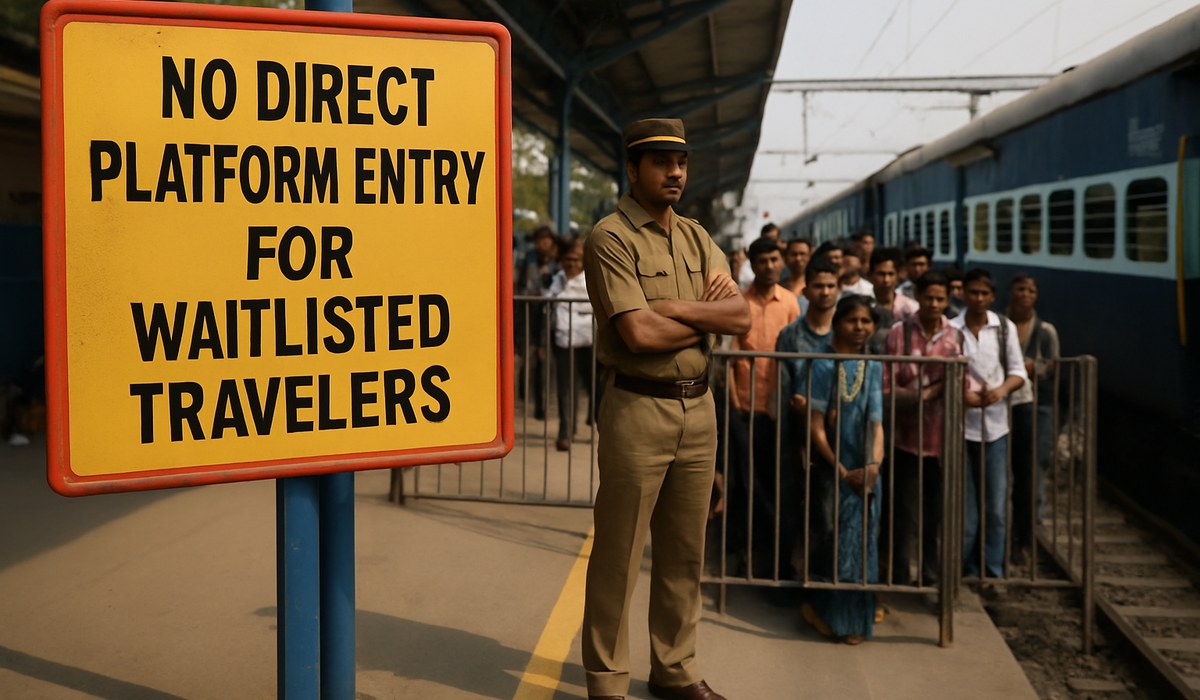
Image generated by AI
**> Quick Summary
• Indian Railways has implemented new protocols preventing passengers with waitlisted tickets from accessing platforms directly • The policy affects millions of travelers annually across India's 68,000-kilometer rail network serving over 8 billion passengers • International visitors planning multi-city India itineraries must now confirm all bookings before departure dates • Alternative booking strategies and contingency plans become essential for foreign tourists relying on rail transportation**
If you're planning rail travel through India with a waitlisted ticket, prepare for a fundamental change: railway platforms are now off-limits until your booking is confirmed, a policy shift that's redefining passenger flow management across one of the world's busiest rail networks. The protocols introduced this March represent India's most significant adjustment to station access rules in nearly two decades, directly impacting how international travelers navigate the country's primary surface transportation infrastructure.
India's railway system carries more daily passengers than the entire population of Australia. The new restrictions address long-standing security and crowd management concerns at major stations including New Delhi, Mumbai Central, Chennai Egmore, and Kolkata Howrah. Station masters across 7,325 railway stations have received instructions to deny platform entry to anyone holding reservations still on the waitlist queue at departure time.
What the New Railway Protocol Means for International Travelers
The railway direct platform entry ban fundamentally alters how foreign visitors must approach India travel planning. Previously, passengers could enter platforms regardless of ticket status, often boarding trains hoping for last-minute confirmations or seat upgrades from conductors. That practice has now ceased entirely.
Railway Protection Force officers stationed at platform entrances now scan every ticket presented. Travelers holding waitlisted reservations receive immediate denial of entry, regardless of their waitlist position. A traveler ranked number three on the waitlist faces identical restrictions as someone positioned at number 156.
This represents more than administrative housekeeping. Ministry of Railways data from February 2026 showed that unauthorized platform crowding at 48 major stations exceeded safe capacity thresholds by an average of 73% during peak travel seasons. The new protocols directly respond to those conditions.
For international visitors unfamiliar with India's complex reservation system, this creates immediate planning challenges. The Indian railway booking platform processes approximately 6.8 million transactions daily, with waitlist percentages varying dramatically by route, class, and season. Popular tourist corridors like the Delhi-Agra-Jaipur Golden Triangle circuit regularly show waitlist rates exceeding 40% during winter months.
Foreign travelers should now verify current visa requirements for India alongside understanding these railway access changes, particularly those planning extended stays dependent on rail connectivity between major tourism destinations.
How Waitlist Restrictions Affect Multi-City India Itineraries
International tourists typically structure India visits around sequential city experiences: arriving in Delhi, moving to Jaipur, continuing to Mumbai, then Goa, and so forth. Railways traditionally provided the most economical and authentic transportation option for these multi-stop journeys.
The waitlist entry restrictions now force travelers into binary planning scenarios. Either you hold confirmed reservations before reaching each station, or you must arrange alternative transportation entirely. The middle ground—arriving hopefully with waitlisted tickets—no longer functions as a viable strategy.
Consider a common tourist scenario: You've booked the Shatabdi Express from Delhi to Agra with a waitlist status of RAC-14 (Reservation Against Cancellation). Under previous protocols, you could enter New Delhi Railway Station, position yourself near the platform, and board if your status cleared. Current rules prevent platform access until your ticket shows confirmed status, which might occur minutes before departure—or not at all.
Railway officials project the new protocols will reduce platform congestion by approximately 22-28% during peak periods. That's positive for confirmed passengers but creates significant complications for flexible travelers who previously relied on standby possibilities.
Tourism industry representatives in Rajasthan and Goa have expressed concerns about the policy's impact on independent travelers who form the backbone of off-season visitation. These travelers often purchase multiple waitlisted tickets across different routes, planning to use whichever confirms first—a strategy now requiring complete recalibration.
Similar to challenges posed by airport operational disruptions affecting transit plans across different transportation modes, railway access restrictions demand backup strategies at every stage of multi-city itineraries.
Visa and Extended Stay Considerations for Rail-Dependent Travel
The railway platform entry changes carry particular significance for travelers on longer-term India visas. Business visitors, volunteer workers, and digital nomads often spend months traversing India with flexible schedules dependent on available rail connections.
Foreign nationals holding six-month or one-year tourist visas who previously used waitlisted bookings as flexible planning tools must now completely restructure their approach. The railway system's advance reservation period extends up to 120 days, but booking patterns show most tourists finalize train travel only 7-15 days ahead.
That gap between when confirmations typically materialize and when travelers actually need to move creates friction. A German tourist visiting Kerala backwaters might decide to next visit Hampi based on weather conditions and personal preference, attempting a booking just days in advance. Winter season routes in Karnataka frequently show full availability, pushing late bookers onto waitlists.
These travelers now face stark choices: either plan with rigid timelines matching confirmed availability patterns, or abandon railways for costlier private transportation. Neither option aligns well with the spontaneous travel style that many extended-stay visitors prefer.
United States passport holders should review latest India travel advisories when planning rail-dependent itineraries, as the State Department's India travel guidance now includes transportation infrastructure considerations alongside traditional safety information.
Understanding how business travel value metrics are evolving in Asia becomes relevant here, as the railway restrictions impact cost-efficiency calculations for business travelers previously relying on flexible rail options between Indian commercial centers.
Alternative Booking Strategies and Contingency Planning
Savvy travelers are already developing workarounds. The most straightforward approach involves booking only Tatkal tickets—emergency quota reservations that open just one day before departure and always provide confirmed status, albeit at premium pricing roughly 150% above standard fares.
Another strategy uses the tourism quota reserved on major routes. International travelers can access these reservations through Indian Railways' International Tourist Quota system, though this requires physical presence at designated railway booking offices with passport documentation. The process takes 45-90 minutes but guarantees confirmed status across most popular routes.
Third-party booking platforms like Cleartrip, MakeMyTrip, and Ixigo have introduced waitlist probability calculators showing historical confirmation rates by route and class. A waitlist position of WL-15 on the August Kranti Rajdhani might show 87% historical confirmation probability, while the same position on the Karnataka Express might show just 43%.
These tools help travelers assess risk, but they don't eliminate the fundamental challenge: without confirmed status, platforms remain inaccessible.
Some experienced India travelers now advocate for hybrid transportation planning—confirmed train reservations on major routes, private car services for secondary connections, and budget airline options for time-sensitive segments. This approach costs approximately 40-60% more than all-rail itineraries but provides certainty the railway protocols now demand.
Travelers should check real-time India travel restrictions before finalizing booking approaches, as entry requirements and internal travel regulations continue evolving alongside infrastructure policies.
The broader transportation landscape described in the comprehensive travel outlook for March 2026 shows similar trends across multiple countries, where post-pandemic infrastructure adjustments prioritize confirmed bookings over flexible access.
Preparing for India's Railway Reality in 2026 and Beyond
Railway officials emphasize these protocols serve multiple objectives beyond crowd management. Security screening becomes more effective when platform access limits to confirmed passengers. Emergency evacuation procedures improve with reduced overcrowding. Customer satisfaction scores increase when confirmed passengers aren't competing with waitlisted hopefuls for limited seating and storage space.
Critics argue the policies disproportionately affect budget travelers and domestic passengers from rural areas who rely on waitlist strategies for essential travel. International tourists possess greater financial flexibility to adapt, though the changes still require significant adjustment.
Ministry of Railways has signaled no plans to reverse the protocols. Instead, officials are expanding infrastructure to process more reservations in confirmed status from initial booking. Investments totaling ₹740 billion ($8.9 billion USD) announced in the 2026-27 railway budget specifically target increased confirmed capacity across 185 high-demand routes.
For travelers visiting India over the next 12-24 months, these changes represent the new baseline. The days of arriving at stations with flexible waitlist tickets and spontaneous platform access have definitively ended.
Smart planning now starts with understanding route-specific confirmation patterns, booking well in advance for peak-season travel, and maintaining backup transportation options when railway confirmations prove elusive. Those who adapt to the new protocols will still find India's railway network remarkably comprehensive and economical. Those who don't risk finding themselves stranded at station entrances with valid tickets but no platform access.
FAQ: India Railway Waitlist Rules for Foreign Visitors
Can I enter an Indian railway station at all with a waitlisted ticket? Yes, you can enter station buildings and waiting areas, but you cannot access the platforms where trains arrive and depart until your ticket shows confirmed status. Station entrances remain open, but platform gates have security checkpoints enforcing the new restrictions.
What happens if my waitlist clears after my train has departed? Your ticket becomes invalid for that specific train departure. Indian Railways does not provide automatic rebooking. You must either book a new ticket for a later departure (subject to availability) or claim a refund following standard cancellation procedures, which typically process within 7-10 business days.
Do these rules apply to all ticket classes including first class AC? Yes, the railway direct platform entry restrictions apply uniformly across all classes—Sleeper, AC 3-tier, AC 2-tier, AC 1st class, and executive chair car. Ticket class determines comfort and pricing but not platform access rules under the new protocols.
Are there any exceptions for international tourists with confirmed hotel bookings? No formal exceptions exist based on hotel confirmations or foreign passport status. The sole criterion for platform entry is having a confirmed railway reservation. However, tourists can use the International Tourist Quota system at designated booking offices to secure confirmed tickets more easily than general quota bookings.
How long before departure should I arrive if my ticket is still waitlisted? Arrive at least 45-60 minutes early to monitor your confirmation status. Most waitlist movements occur 30-120 minutes before departure as other passengers cancel. Position yourself near the platform entrance with access to the railway app or website to check status updates every few minutes. If confirmation occurs, you'll need time to navigate to the correct platform.
Related Articles:
Disclaimer
This article is for informational and educational purposes only. It does not constitute legal, financial, or professional advice. While we strive to provide accurate and up-to-date information, travel policies, regulations, and conditions change rapidly. Always verify information with official sources before making travel decisions. Nomad Lawyer makes no representations about the accuracy, reliability, completeness, or suitability of the information provided. Readers should consult qualified professionals for advice specific to their circumstances. The views expressed in this article are those of the author and do not necessarily reflect the views of Nomad Lawyer.
Preeti Gunjan
Contributor & Community Manager
A passionate traveller and community builder. Preeti helps grow the Nomad Lawyer community, fostering engagement and bringing the reader experience to life.
Learn more about our team →