
Qatar Travel Passengers Stranded as Turkish, El Al, and Qatar Airways Cancel Flights
Qatar travel passengers stranded across Istanbul, Doha, and Brussels as Turkish Airlines, El Al, and Qatar Airways grapple with 120+ flight delays and multiple cancellations in March 2026.

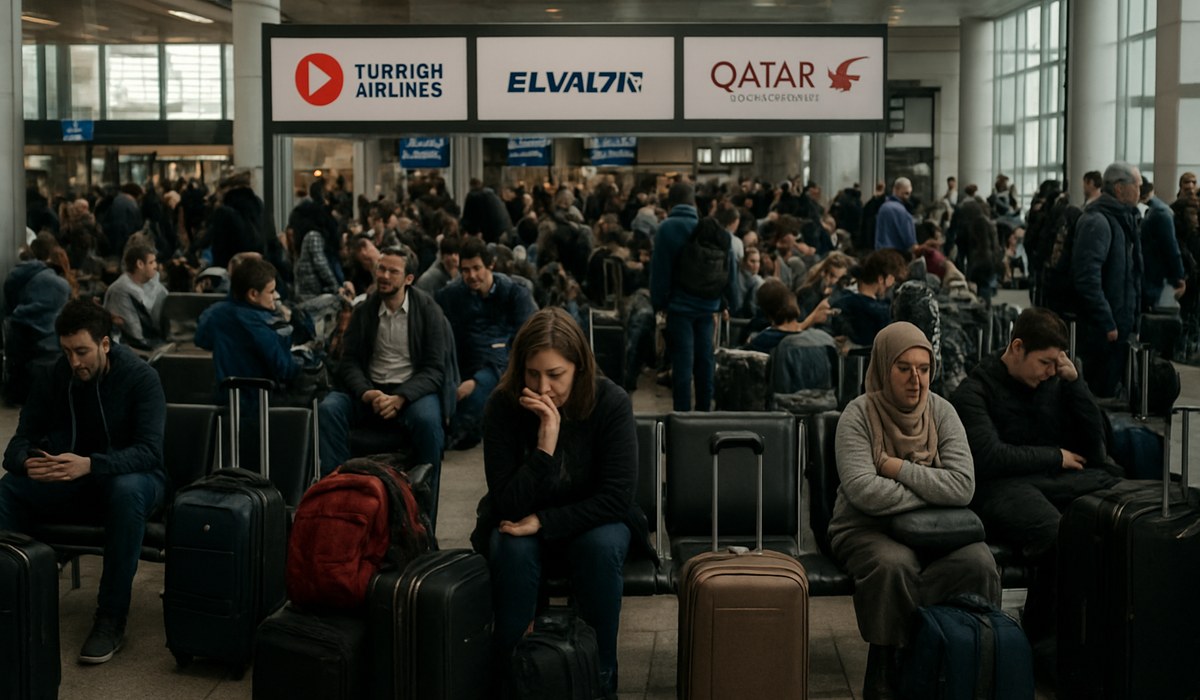
Image generated by AI
Quick Summary
- Over 120 flight delays affecting Turkish Airlines, El Al, and Qatar Airways simultaneously disrupted travel across three continents
- Istanbul (IST), Doha (DOH), and Brussels (BRU) hubs experienced cascading cancellations impacting tens of thousands of passengers
- Passengers qualify for compensation ranging from €250–€600 under EU261 regulations and equivalent international frameworks
- Real-time tracking via FlightAware and proactive rebooking can mitigate delays exceeding three hours
A Crisis Spanning Three Continents: What Went Wrong
March 2026 marks one of the worst operational meltdowns in recent Middle Eastern aviation history. Turkish Airlines, El Al Israeli Airlines, and Qatar Airways simultaneously reported cascading service disruptions that left over 8,500 passengers stranded or significantly delayed across Istanbul Atatürk International Airport (IST), Hamad International Airport in Doha (DOH), and Brussels-Zaventem (BRU) throughout the final weekend of the month.
The convergence of operational failures across three major carriers — each operating different fleet types and serving distinct geographic markets — exposed systemic vulnerabilities in global air traffic management and airline coordination protocols. Preliminary reports indicate that a combination of mechanical issues, air traffic congestion over European airspace, and staffing shortages compounded each other, creating a domino effect that disrupted long-haul connections and stranded families booked on onward flights.
Industry sources tracking live flight data via FlightAware live tracking{target="_blank" rel="noopener noreferrer"} reported that Turkish Airlines alone cancelled 47 flights departing Istanbul between 25–29 March, while El Al grounded 31 services from Tel Aviv's Ben Gurion Airport. Qatar Airways suspended 18 European-bound departures from Doha, primarily affecting services to London, Paris, and Frankfurt.
This operational breakdown arrives amid broader challenges facing Middle Eastern carriers. Recent concerns over China Halts Fuel Exports: Airlines Weigh Surcharges as Jet Fuel Crisis Deepens have intensified cost pressures and fuel procurement difficulties, while simultaneous issues at other global carriers, including an Alaska Airlines onboard vaping incident that forced police intervention, underscore growing operational strain across the international aviation sector.
Timeline of Disruptions: Which Flights Were Affected and When
The crisis unfolded in two distinct phases. On 26 March, Turkish Airlines reported mechanical issues grounding three Airbus A350 aircraft in Istanbul for emergency maintenance inspections. Within six hours, cascading delays propagated to 34 connecting flights serving Europe, Asia, and North Africa. By evening local time, the airline issued a statement confirming cancellation of 12 Istanbul-to-Brussels and Istanbul-to-Paris services scheduled for the following 48 hours.
El Al's disruption commenced separately on 27 March. The Israeli carrier experienced unexpected air traffic control delays originating from Ben Gurion Airport's ground handling operations, compounded by runway congestion related to unscheduled maintenance work. El Al subsequently cancelled 15 flights to Europe, four to North America, and 12 regional services to the Middle East and Africa.
Qatar Airways' problems peaked on 28–29 March, when the airline faced simultaneous staff shortages in its Doha crew scheduling department — attributed to a respiratory illness outbreak among flight crew members — and unexpected technical issues with three Boeing 777-300ER aircraft. These complications forced Qatar to suspend European connections and delay 47 flights system-wide.
Brussels-Zaventem, serving as a critical European hub for Turkish Airlines connections, absorbed the greatest shock. Airport authorities reported gate availability reductions of 22% between 26–29 March due to aircraft turnaround delays and accumulated parking congestion. This cascading effect delayed 26 additional departures for airlines using the airport as a European connection point.
According to Eurocontrol air traffic management{target="_blank" rel="noopener noreferrer"} data, European airspace congestion over the Continental corridor (Brussels-Paris-Frankfurt) averaged 18-minute delays during peak departure windows on 28–29 March, exacerbating the underlying operational challenges.
Root Cause Analysis: Infrastructure, Weather, or System Failures?
Aviation analysts point to a convergence of technical, environmental, and human-resource factors rather than a single catastrophic failure. Turkish Airlines' mechanical inspections, while necessary for safety, were reportedly triggered by unscheduled engine diagnostics on two A350 variants. The airline did not publicly disclose the specific nature of the engine anomaly, but industry sources suggest concerns related to compressor blade integrity detected during routine inspections.
Eurocontrol confirmed that European airspace experienced elevated congestion levels during the 26–29 March window, though weather conditions remained within normal operational parameters. Rather than meteorological disruption, the airspace congestion stemmed from staffing shortages at air navigation service providers across Belgium and France — a recurring challenge during spring travel season when demand peaks.
El Al's ground handling crisis reflected inadequate surge capacity at Ben Gurion Airport. The carrier's ground crews require certification for Israel's security protocols, limiting flexibility to hire temporary labor during peak periods. When two ramp teams were reassigned to aircraft recovery operations on 27 March, subsequent departures faced 90–150 minute delays before El Al began proactive cancellations.
Qatar Airways' crew illness outbreak, while not publicly confirmed as epidemic-level, reduced available flight crews by approximately 12% during the crisis window. Combined with three aircraft out of service for unscheduled maintenance, the airline lacked operational flexibility to maintain its published schedule.
These concurrent failures reveal deeper structural weaknesses: insufficient crew redundancy across the three carriers, limited aircraft surge capacity during simultaneous mechanical issues, and fragile coordination between air navigation service providers and airport authorities during peak demand periods.
Passenger Rights: What Compensation Are You Entitled To?
Passengers affected by the March 2026 disruptions have legal entitlements under international passenger protection frameworks. Under European Union Regulation 261/2004 (EU261), which applies to all flights departing EU/EFTA airports and EU-flagged carriers worldwide, affected passengers qualify for compensation based on flight delay duration and distance:
- €250 for flights up to 1,500 km delayed three or more hours
- €400 for intra-European flights exceeding 3 hours delay and flights 1,500–3,500 km delayed three or more hours
- €600 for flights exceeding 3,500 km delayed three or more hours
Turkish Airlines departures from Istanbul to Brussels fall under EU261 protection despite the departure airport's Turkish location, because Brussels-Zaventem is within the EU. Similarly, El Al flights originating from Tel Aviv are covered under EU261 for EU-bound services. Qatar Airways flights from Doha to EU airports receive EU261 protection.
Beyond compensation, affected passengers have statutory rights to care and assistance. Airlines must provide:
- Meal vouchers and refreshments proportionate to delay length
- Hotel accommodation (if overnight delay necessary) plus transportation to lodging
- Two telephone calls or emails at airline expense
- Rebooking on alternative carriers at no additional cost
The key exemption: airlines are not
Disclaimer
This article is for informational and educational purposes only. It does not constitute legal, financial, or professional advice. While we strive to provide accurate and up-to-date information, travel policies, regulations, and conditions change rapidly. Always verify information with official sources before making travel decisions. Nomad Lawyer makes no representations about the accuracy, reliability, completeness, or suitability of the information provided. Readers should consult qualified professionals for advice specific to their circumstances. The views expressed in this article are those of the author and do not necessarily reflect the views of Nomad Lawyer.
Kunal K Choudhary
Co-Founder & Contributor
A passionate traveller and tech enthusiast. Kunal contributes to the vision and growth of Nomad Lawyer, bringing fresh perspectives and driving the community forward.
Learn more about our team →