
Qatar Marine Travel Alert: High Seas and Dust Warnings Impact Gulf Tourism in October 2026
Qatar has issued urgent offshore warnings for high waves and strong winds, while fog in Saudi Arabia and varying sea states in Bahrain and Kuwait create a fragmented travel risk profile across the Arabian Gulf.

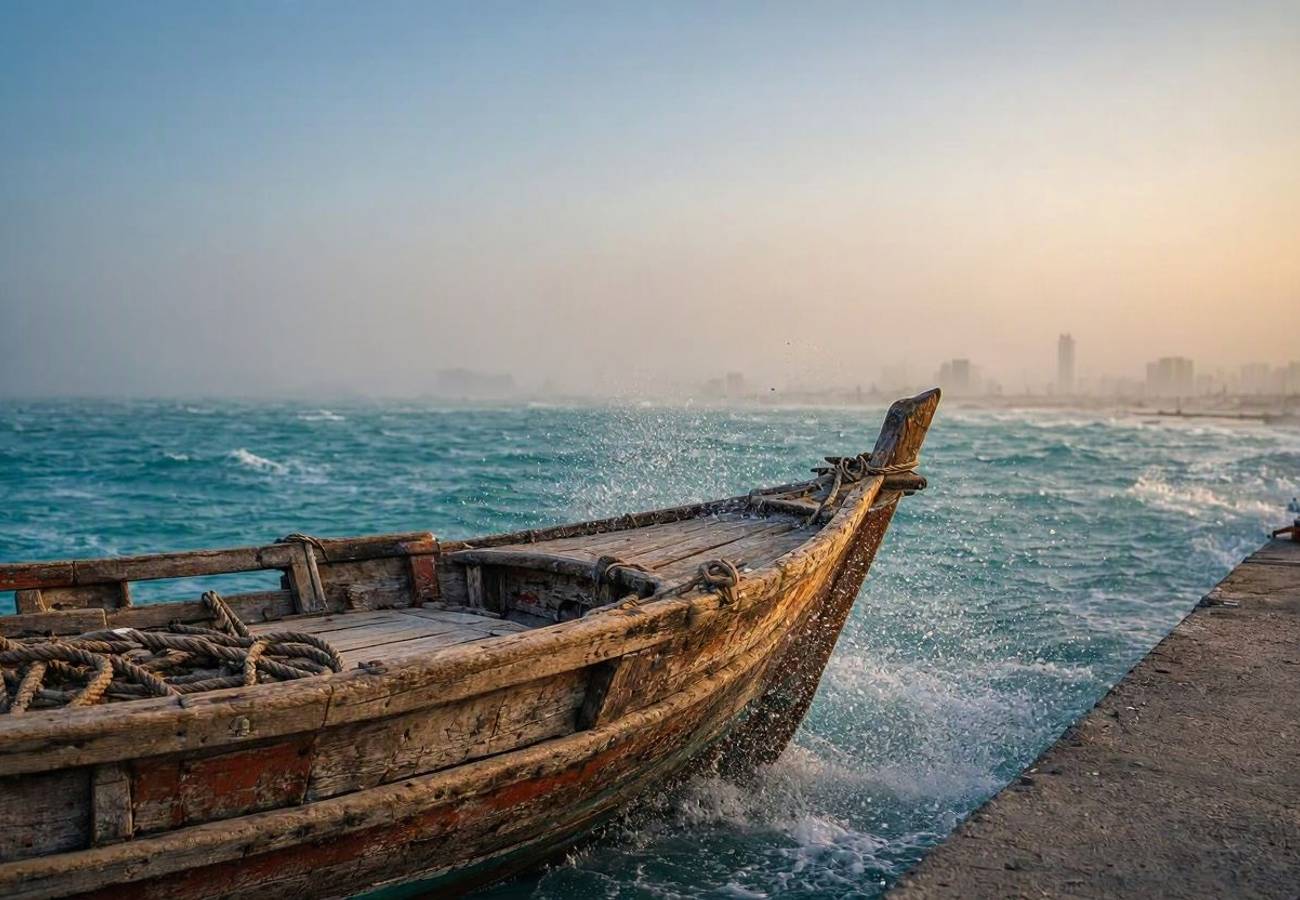
Image generated by AI
[Doha, October 5, 2026] — Qatar has implemented an urgent offshore warning for strong winds and high waves, specifically targeting marine activities in northern waters. The alert, issued by the Qatar Meteorology Department, remained in effect until 06:00 local time on Monday, October 5, signaling significant risks for small craft and tourism-based sea excursions.
While Qatar faced acute offshore instability, the broader Arabian Gulf region is experiencing fragmented weather patterns. Rather than a unified regional shutdown, travelers are facing a patchwork of localized hazards: dense fog in Saudi Arabia's Eastern Province, moderate wind surges in Bahrain, and relatively stable conditions in Kuwait. This variance requires tour operators and independent travelers to verify destination-specific data rather than relying on general regional forecasts.
Atmospheric Triggers and Marine Risks
The primary disruption in Qatar is driven by north-westerly offshore winds and suspended dust, which have compromised visibility and sea stability. In northern sectors, wind gusts reached 22 knots late Sunday night, pushing offshore wave heights to 7 feet.
These conditions directly impact high-exposure tourism activities. Dhow cruises, yacht charters, and deep-sea fishing excursions are the most vulnerable to these shifts. The Qatar Civil Aviation Authority (QCAA) remains the authoritative body for these updates, providing the real-time data necessary for maritime navigation and aviation safety.
Regional Weather Variance: October 5, 2026
The following data outlines the divergent weather risks currently affecting the four primary Gulf markets.
| Market | Official Status | Wind Conditions | Sea State | Primary Hazard | Operational Impact |
|---|---|---|---|---|---|
| Qatar | Formal Warning (until 06:00) | Offshore NW 5–15 kt; Gusts 22 kt (North) | Offshore 2–4 ft; up to 7 ft (North) | Suspended dust; visibility 4–9 km | High risk for small craft and offshore tours |
| Bahrain | No Formal Warning | NW 10–15 kt; peaking at 15–20 kt | Offshore 3–5 ft; Inshore 1–2 ft | High humidity and heat | Monitoring required for comfort and timing |
| Kuwait | No Formal Warning | Day: NE/Variable 8–32 km/h; Night: NW 6–26 km/h | 1–4 ft (Day); 1–3 ft (Night) | Coastal humidity | Moderate to low marine risk |
| Saudi Arabia | Fog Warning (Dammam) | SW to NW 10–30 km/h | Light; 0.5–1 meter | Dense fog in Eastern Province | Reduced visibility for road and surface transfers |
What This Means for Travelers
For those currently booking or executing travel within the Gulf, these weather patterns translate into three distinct operational risks:
1. Marine Activity Cancellations (Qatar & Bahrain): Travelers in Doha should expect potential cancellations or rescheduling of boat-based tours. Even in Bahrain, where no formal warning is active, 3-to-5-foot offshore seas can cause significant discomfort and timing delays for smaller vessels.
2. Surface Transfer Delays (Saudi Arabia): The fog signal for Dammam and the Eastern Province is a road-safety issue, not a maritime one. Travelers moving between coastal cities or heading to airports in this region should account for slower transit times and reduced visibility on highways.
3. Visibility and Health (Regional): Suspended dust in Qatar and high humidity in Kuwait and Bahrain can affect travelers with respiratory sensitivities. Checking the air quality index alongside the marine forecast is advised.
Future Outlook and Monitoring
The immediate warning window for Qatar expired at 06:00 on October 5. However, the instability of the north-westerly winds suggests that conditions can shift rapidly. Travelers are urged to avoid assuming that the expiration of a morning warning implies a clear day.
Moving forward, the divergence between Saudi Arabia's fog and Qatar's high seas highlights the danger of "blanket" travel planning. B2B operators managing multi-city Gulf itineraries must maintain separate communication channels with suppliers in each country to ensure passenger safety and itinerary viability.
FAQ: Gulf Travel Weather 2026
Are all flights in the Gulf delayed due to this weather? No. The current alerts primarily target marine activities (Qatar/Bahrain) and road visibility (Saudi Arabia). Aviation is generally unaffected, though passengers should check with their airlines for any specific visibility-related delays in Dammam.
Can I still take a dhow cruise in Doha today? You must check the latest QCAA update. While the formal warning expired at 06:00 on October 5, residual sea states in northern waters may still lead operators to cancel trips for safety.
Is the fog in Saudi Arabia affecting all cities? No. The fog warning is specific to Dammam and coastal portions of the Eastern Province. Other regions of Saudi Arabia are not currently under this specific visibility alert.
What is the difference between a "warning" and a "forecast" in Bahrain? Bahrain is currently reporting "Warning Nil," meaning there is no emergency alert. However, the forecast still predicts 15-20 knot winds, which can still impact the comfort of small-boat excursions.
Stay alert: In the Gulf, the difference between a calm harbor and a 7-foot swell can be a matter of a few nautical miles.
Related Travel Guides
Disclaimer
This article is for informational and educational purposes only. It does not constitute legal, financial, or professional advice. While we strive to provide accurate and up-to-date information, travel policies, regulations, and conditions change rapidly. Always verify information with official sources before making travel decisions. Nomad Lawyer makes no representations about the accuracy, reliability, completeness, or suitability of the information provided. Readers should consult qualified professionals for advice specific to their circumstances. The views expressed in this article are those of the author and do not necessarily reflect the views of Nomad Lawyer.
Naina Thakur
Contributor & Travel Specialist
Travel enthusiast and legal writer covering visa regulations, responsible tourism, and cultural journeys across global destinations.
Learn more about our team →