
Heathrow Airport Deploys £1 Billion CT Scanner Upgrade: New 2-Litre Liquid Limits and Security Rules 2026
Heathrow Airport's £1 billion investment in 3D CT scanning technology eliminates the 100ml liquid limit and electronics unpacking requirements across all terminals.

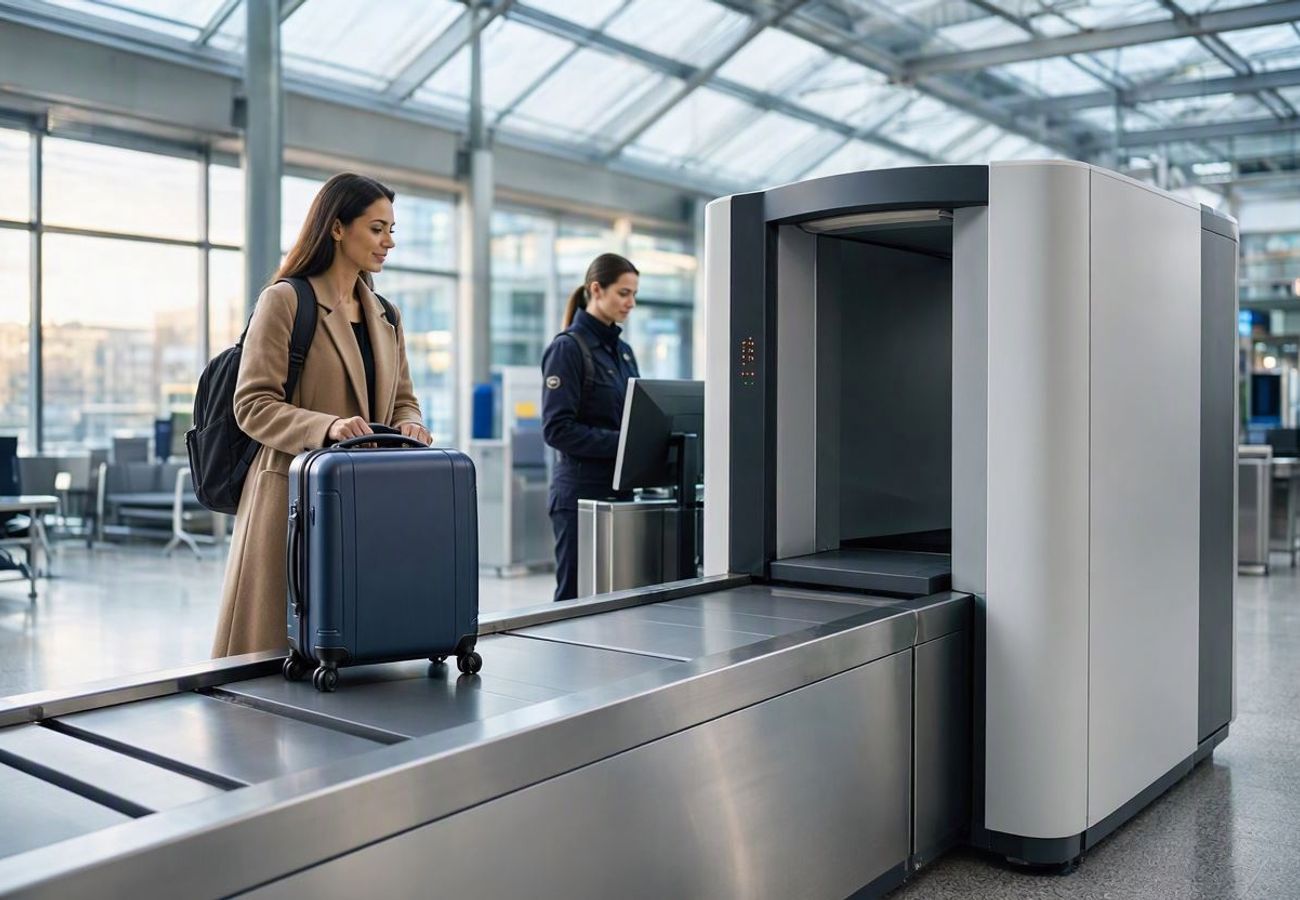
Image generated by AI
A £1 billion investment in 3D Computed Tomography (CT) infrastructure has fundamentally altered the security experience at London Heathrow, effectively ending the era of the 100ml liquid restriction and the mandatory removal of electronics from carry-on bags. This technological overhaul, now active across Terminals 2, 3, 4, and 5, aims to eliminate the primary bottlenecks that have historically plagued one of the world's busiest aviation hubs ahead of peak travel surges.
The Shift to Volumetric Imaging
The transition from traditional 2D X-ray systems to high-definition 3D CT scanners represents a shift in how aviation security identifies threats. While legacy scanners produced flat, overlapping images that often required manual bag searches, the new CT technology captures hundreds of high-resolution images by rotating around the luggage. This allows security personnel to digitally "slice" through layers of a bag and analyze molecular densities in a 360-degree rendering.
Because the scanners can distinguish between benign organic materials and potential explosives with higher precision, the Civil Aviation Authority (CAA) and airport operators can now permit larger volumes of liquids and keep electronics stowed.
Updated Security Protocols and Volume Limits
The most significant change for the passenger is the retirement of the 100ml ceiling. Travelers are no longer required to consolidate toiletries into a single, clear, resealable plastic bag.
Comparison of Security Requirements: Legacy vs. Next-Gen CT
| Security Feature | Traditional Heathrow Protocol | Next-Gen CT Scanning (2026) |
|---|---|---|
| Liquid Container Limit | Maximum 100ml per item | Up to 2 litres per container |
| Plastic Bag Requirement | Mandatory 1-litre clear bag | No clear plastic bag required |
| Electronics Handling | Laptops/Tablets removed from bags | Electronics remain inside luggage |
| Tray Preparation | High level of sorting/unpacking | Minimal unpacking required |
| Screening Speed | Slower due to manual sorting | Streamlined, high-throughput |
| Passenger Experience | High stress, manual labor | Reduced friction, faster transit |
Critical Logistics for Hand Luggage and Gear
While the "unpacking" phase has been reduced, specific rules remain regarding the nature of items carried.
Electronics and Power: Laptops, e-readers, and cameras can stay in bags. However, portable power banks and electronic cigarettes must be kept in hand luggage—never in checked hold baggage. A critical operational requirement is that all devices must be fully charged; security reserves the right to prohibit any device that cannot be powered on for a routine check.
The "Two-Bag" Standard: The airport maintains a strict two-item cabin baggage limit. To avoid delays, bags must not exceed 56cm × 45cm × 25cm (22in × 18in × 10in).
Metal and Vacuum Containers: A specific caveat exists for hydro-flasks and double-walled thermos bottles. Because the density of double-skinned metal can obstruct imaging, these containers must be completely empty. Security officers may require these to be placed loose in a tray rather than inside a backpack to ensure a clear volumetric scan.
Expert Analysis: The "Return-Flight Trap"
For travelers booking international itineraries, the primary risk is not the departure from London, but the return. While London Heathrow and other hubs like Birmingham and Edinburgh have adopted this technology, the vast majority of global airports still utilize 2D X-ray systems.
For travelers booking a round-trip, the direct consequence is a potential loss of property. If a passenger carries a 500ml bottle of skincare or a large beverage outbound from Heathrow, that same item will likely be confiscated by security at a foreign airport or a smaller UK regional terminal on the return leg. The pricing pressure this creates is an invisible "tax" on the traveler—the cost of replacing high-value liquids that were legal to carry in one direction but prohibited in the other.
Furthermore, the elimination of the clear plastic bag is a significant environmental win, removing millions of single-use plastics from the waste stream annually, but it requires travelers to be more organized with their internal bag packing to avoid spills.
Key Takeaways
- Liquid Limit: Increased from 100ml to 2 litres per container; clear plastic bags are no longer required.
- Electronics: Laptops and tablets can remain inside bags during screening at all Heathrow terminals.
- Battery Safety: Power banks and e-cigarettes must stay in carry-on luggage and must be fully charged.
- Metal Flasks: Must be empty and may need to be placed in a separate tray due to metal density.
- Return Warning: Most international airports still enforce the 100ml limit; items over this size will likely be seized on return flights.
FAQ: Heathrow Security 2026
Do I still need to take my laptop out of my bag at Heathrow? No. With the new CT scanners in Terminals 2, 3, 4, and 5, laptops, tablets, and large electronics can remain inside your carry-on luggage.
Can I bring a 500ml bottle of water through security? Yes, you can carry liquids in containers up to 2 litres. However, reusable metal flasks must be completely empty before entering the queue.
Will these rules apply when I fly back to London? Not necessarily. Most airports worldwide still use old scanners and enforce the 100ml limit. Check the specific rules of your departure airport to avoid confiscation.
What happens if my phone or laptop is dead during screening? Security may prohibit the device from entering the aircraft if it cannot be powered on to verify its function during routine checks.
The luxury of time in the terminal is finally replacing the anxiety of the security queue.
Related Travel Guides
Disclaimer
This article is for informational and educational purposes only. It does not constitute legal, financial, or professional advice. While we strive to provide accurate and up-to-date information, travel policies, regulations, and conditions change rapidly. Always verify information with official sources before making travel decisions. Nomad Lawyer makes no representations about the accuracy, reliability, completeness, or suitability of the information provided. Readers should consult qualified professionals for advice specific to their circumstances. The views expressed in this article are those of the author and do not necessarily reflect the views of Nomad Lawyer.
Kunal K Choudhary
Co-Founder & Contributor
A passionate traveller and tech enthusiast. Kunal contributes to the vision and growth of Nomad Lawyer, bringing fresh perspectives and driving the community forward.
Learn more about our team →