
Qatar Airways Retires A380 Superjumbos From Five Key Routes as Carrier Restructures Fleet Strategy
Breaking airline news and aviation industry updates for 2026.

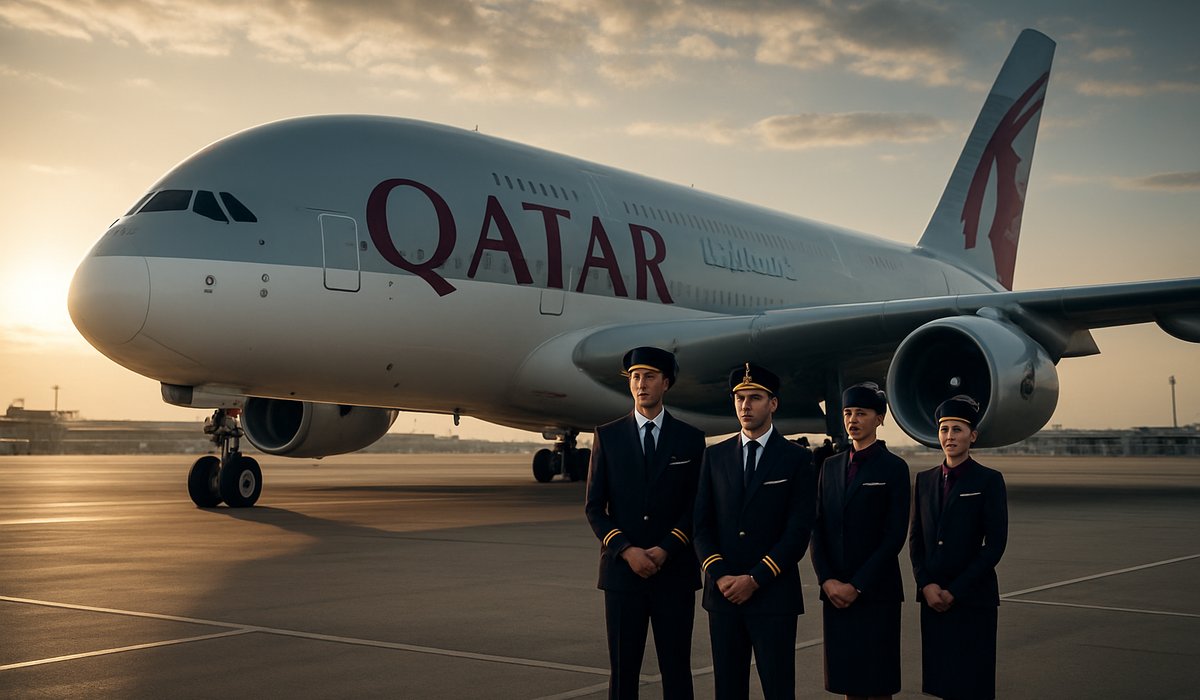
Image generated by AI
Qatar Airways Retires A380 Superjumbos From Five Key Routes as Carrier Restructures Fleet Strategy
The oneworld carrier pulls double-deck aircraft from major international services amid shifting demand patterns and evolving aviation economics
A380 Withdrawal Marks Strategic Pivot for Doha-Based Carrier
Qatar Airways has discontinued Airbus A380 operations across five international routes, signaling a broader recalibration of its fleet deployment strategy. The Doha-based airline, which maintains a fleet of eight operational superjumbos—each configured with 517 passenger seats—has made the decision to redeploy these massive aircraft away from specific markets as demand patterns shift across its global network.
The move comes as the carrier evaluates route profitability and passenger load factors. Two additional A380 frames have already been permanently retired from service and will not return to commercial operations, according to sources familiar with the airline's fleet planning.
Strategic Fleet Repositioning in Competitive Market
The decision reflects broader industry trends wherein carriers are reassessing ultra-large aircraft utilization. While the A380 remains a prestige asset and powerful branding tool on premium routes, airlines increasingly face pressure to optimize capacity deployment based on fluctuating travel demand and fuel cost considerations.
Qatar Airways, as a oneworld alliance member, operates one of the world's most significant A380 fleets outside of Emirates and Singapore Airlines. The airline's restructuring suggests a move toward greater flexibility, potentially favoring wide-body twin-engine jets that offer superior fuel efficiency and operational economics on moderate to high-capacity routes.
A380 Market Faces Persistent Challenges
The superjumbo sector continues navigating headwinds stemming from elevated jet fuel prices and changing post-pandemic travel patterns. While premium leisure and international business travel have rebounded, point-to-point demand doesn't consistently justify the A380's approximately 500-seat configuration across all markets.
Qatar Airways' fleet optimization aligns with broader aviation industry dynamics, where carriers balance capacity expansion with cost management. The withdrawal from five specific routes allows the airline to redeploy its remaining eight operational A380s to higher-demand corridors, potentially maximizing revenue yield and operational efficiency.
The carrier has not publicly disclosed which specific routes will lose A380 service, though the decision underscores ongoing evaluations within the aviation industry regarding aircraft deployment strategies.
FAQ: Qatar Airways A380 Retirements and Aviation Fleet Strategy
1. Why is Qatar Airways removing A380s from certain routes? Fleet optimization and demand-based capacity planning. Airlines periodically reassess aircraft deployment to maximize profitability, particularly when smaller wide-body jets may better suit market conditions.
2. How many A380s does Qatar Airways still operate? Eight operational superjumbos remain in the carrier's active fleet, each accommodating 517 passengers in a three-class configuration.
3. What does A380 retirement mean for airline passengers? Affected routes will transition to alternative aircraft, potentially offering slightly reduced capacity but potentially more frequent services or better scheduling options.
4. Are A380s being phased out industry-wide? No. While Airbus discontinued A380 production, existing fleets remain operational. However, airlines are strategically deploying them on ultra-premium routes where capacity and prestige justify operational costs.
5. How do jet fuel prices impact aircraft deployment decisions? Elevated fuel costs increase operating expenses per flight hour, making larger aircraft economically viable only on high-demand, long-distance routes with strong load factors.
Related Travel Guides
Flight Delay Compensation Guide 2026
Understanding Airline Route Changes
Airport Security Process Updated (2026)
External Resources
Disclaimer
This article is for informational and educational purposes only. It does not constitute legal, financial, or professional advice. While we strive to provide accurate and up-to-date information, travel policies, regulations, and conditions change rapidly. Always verify information with official sources before making travel decisions. Nomad Lawyer makes no representations about the accuracy, reliability, completeness, or suitability of the information provided. Readers should consult qualified professionals for advice specific to their circumstances. The views expressed in this article are those of the author and do not necessarily reflect the views of Nomad Lawyer.
Raushan Kumar
Founder & Lead Developer
Full-stack developer with 11+ years of experience and a passionate traveller. Raushan built Nomad Lawyer from the ground up with a vision to create the best travel and law experience on the web.
Learn more about our team →