
Qantas Perth–London Nonstop Service Pushes Boeing 787-9 to Operational Limits on Ultra-Long-Haul Corridor
Operating QF9 and QF10 direct between Australia and the UK requires precise payload management and fuel density calculations.

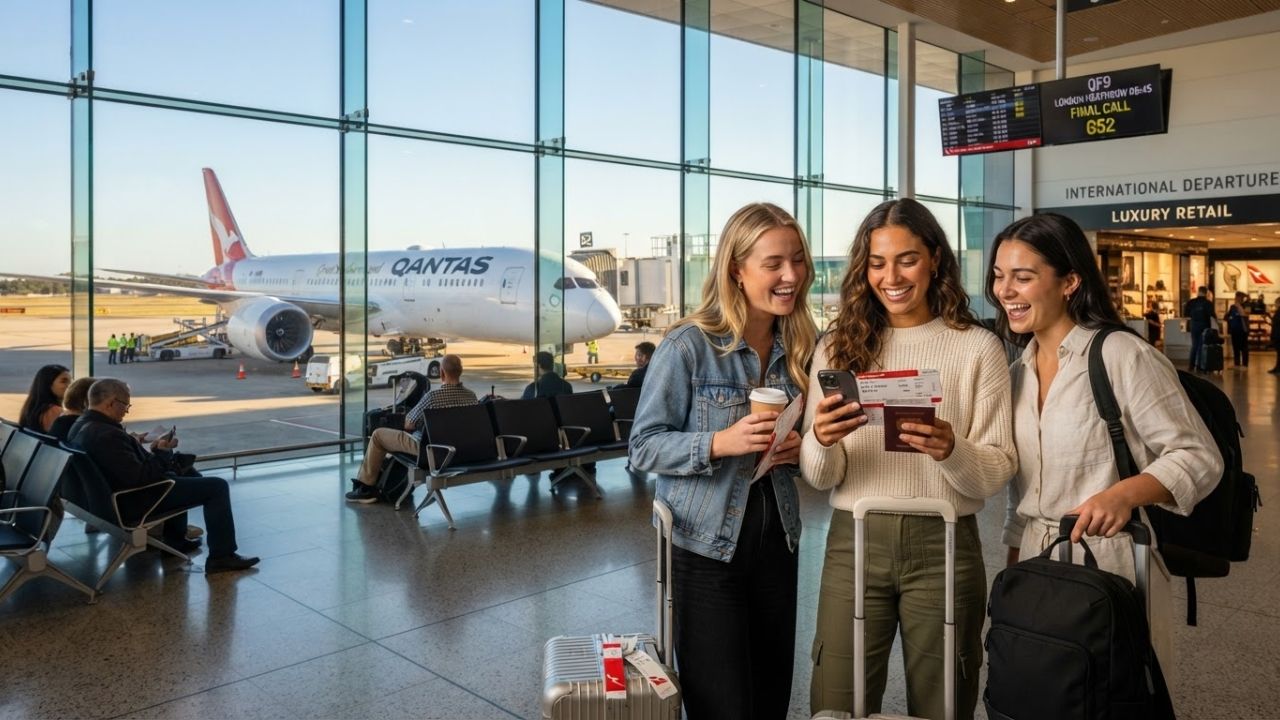
Image generated by AI
[Perth, July 8, 2026] — Qantas flights QF9 and QF10 represent one of the longest scheduled commercial services in the global aviation sector. Connecting Perth with London Heathrow, this direct flight bypasses traditional hubs in the Middle East and Southeast Asia. The service allows passengers to cover approximately 14,500 kilometers in 17 hours and 30 minutes.
However, operating at this distance leaves thin margins for error. The Boeing 787-9 Dreamliner must carry high fuel loads to meet regulatory safety reserves. This weight requirement forces flight dispatchers to balance passenger capacity, cargo volume, and local weather forecasts.
To ensure safety, Qantas must monitor daily wind patterns and runway temperatures. Under certain conditions, flights depart with empty seats to preserve range. This operational decision is a necessity for managing ultra-long-haul performance.
Engineering and Weight Constraints of the Dreamliner
The Boeing 787-9 is built with lightweight carbon composites and fuel-efficient engines to maximize flight range. Its official range capability is approximately 7,830 nautical miles under standard test conditions. The Perth–London routing closely matches this maximum operational distance.
In real-world operations, wind resistance and routing changes consume additional fuel. To guarantee sufficient reserves for potential diversions, the aircraft must depart near its maximum takeoff weight (MTOW). Every kilogram of passenger weight or cargo reduces the allowable fuel capacity.
Consequently, Qantas limits commercial cargo on this route. The airline also monitors passenger baggage weights to prevent exceeding structural limits. These limits highlight the trade-offs required to maintain direct air links between hemispheres.
How Ambient Heat Impacts Fuel Mass and Density
Ambient temperature at the departure airport affects the performance of long-range flights. During hot summer months in Western Australia, track temperatures at Perth Airport can rise significantly. This heat directly impacts the thermodynamics of jet fuel.
Aviation fuel expands as temperature increases, reducing its density. Because fuel tanks have a fixed volume, they hold slightly less fuel mass when the liquid is warm. This reduction in fuel mass limits the total energy available for the flight.
To offset this reduction, flight dispatchers may reduce the payload. Leaving seats empty helps the airline keep the aircraft within safety margins. The empty seats provide the flexibility needed to carry the required fuel mass.
Passenger Experience and Cabin Engineering Enhancements
Spending over 17 hours on a single aircraft requires a focus on passenger health. The Boeing 787-9 is engineered with cabin features to reduce jet lag and physical fatigue:
- Lower cabin altitude: The composite fuselage allows for a cabin pressure equivalent to 6,000 feet, which is lower than older aluminum aircraft.
- Higher humidity levels: Improved moisture controls help prevent dry skin, eyes, and respiratory passages.
- Quieter operations: Engine design and cabin insulation reduce interior noise levels during flight.
- Dynamic lighting: LED systems simulate natural day and night cycles to help adjust sleep patterns.
Qantas also structures its dining schedules to help passengers adapt to destination time zones. Cabin service is timed to encourage rest during optimal periods of the flight.
QF9 / QF10 Route Parameters and Performance Metrics
| Performance Parameter | Route & Aircraft Specification | Operational Impact & Mitigation |
|---|---|---|
| Route Distance | ~14,500 kilometers (~7,830 nautical miles) | Pushes Boeing 787-9 close to its theoretical range limit |
| Average Flight Duration | 17 hours 30 minutes | Requires strict crew rotations and cabin comfort planning |
| Aircraft Type | Boeing 787-9 Dreamliner | Lightweight composite fuselage allows for increased fuel efficiency |
| Fuel Density Dynamics | Temperature-dependent expansion (Perth heat) | Reduces total fuel mass capacity, requiring payload adjustments |
| Payload Management | Dynamic passenger and cargo caps | Flights may depart with empty seats to preserve fuel reserves |
| Regulatory Reserves | Mandatory ETOPS and diversion margins | Restricts cargo weights to ensure fuel margin for emergency landing |
Key Takeaways
- Ultra-long-haul limits: The Perth–London flight operates at the limit of the Boeing 787-9's range.
- Payload reductions: Qantas occasionally departs with empty seats to stay within safety margins.
- Temperature sensitivity: Warm runway temperatures in Perth reduce jet fuel density and total allowable mass.
- Hub avoidance: The direct service removes the need for connections in the Middle East or Singapore.
- Cabin design: Lower cabin altitude and higher humidity help passengers manage fatigue during the 17.5-hour flight.
Why This Matters
Our analysis of the flight data indicates that the operational parameters of QF9 highlight the economic trade-offs of ultra-long-haul travel. Direct flights command premium fares from business travelers seeking to save time. However, carrying the weight of the fuel required for a 17.5-hour flight reduces the commercial payload.
Furthermore, the impact of fuel expansion highlights the influence of local climate on route planning. As global average temperatures rise, airlines operating near range limits will face more weight restrictions. This will require carriers to adjust their pricing models to cover the cost of empty seats.
The success of the route has encouraged Qantas to pursue even longer direct flights under Project Sunrise. These planned routes will connect Sydney and Melbourne directly with London and New York. To achieve this, the airline will rely on custom Airbus A350-1000ULR aircraft, which offer greater range than the 787-9.
Industry Outlook
Market trends suggest that airlines will continue to replace multi-stop routes with direct point-to-point services. Engine manufacturers will focus on improving fuel efficiency to expand the range of mid-size widebodies. In the short term, Qantas will continue to prioritize passenger comfort and precise weight management to maintain the reliability of its Australian direct services.
FAQ
Why does Qantas leave seats empty on the Perth–London flight? Empty seats reduce the aircraft's weight, allowing it to carry the additional fuel required to cover the 14,500-kilometer distance safely under varying wind conditions.
How long is the nonstop flight between Perth and London? The flight takes approximately 17 hours and 30 minutes, depending on wind directions and routing changes.
How does warm weather affect the flight? Warm temperatures cause jet fuel to expand and lose density. This means the fuel tanks hold less fuel mass, sometimes requiring weight cuts before departure.
Which aircraft operates the QF9 and QF10 routes? Qantas operates these ultra-long-haul flights using the Boeing 787-9 Dreamliner, which is designed for efficient long-distance travel.
Related Travel Guides
- Breaking Airline News: Emirates SkyCargo Deploys Massive Freighter Fleet to Almaty to Shield Kazakhstan from Winter Travel Chaos
- Widespread Delays Hit Minneapolis–Saint Paul International Airport as Major Carriers Struggle with Operational Disruptions
- Southwest Airlines Cuts Over 100 Jobs as Chicago O'Hare Exit Marks Major Network Restructuring
Disclaimer
This article is for informational and educational purposes only. It does not constitute legal, financial, or professional advice. While we strive to provide accurate and up-to-date information, travel policies, regulations, and conditions change rapidly. Always verify information with official sources before making travel decisions. Nomad Lawyer makes no representations about the accuracy, reliability, completeness, or suitability of the information provided. Readers should consult qualified professionals for advice specific to their circumstances. The views expressed in this article are those of the author and do not necessarily reflect the views of Nomad Lawyer.
Kunal K Choudhary
Co-Founder & Contributor
A passionate traveller and tech enthusiast. Kunal contributes to the vision and growth of Nomad Lawyer, bringing fresh perspectives and driving the community forward.
Learn more about our team →