
Qantas Seeks 99-Year Unlimited Flights as Australia-Canada Open Skies Deal Rewrites Transpacific Aviation
In an audacious filing, Qantas Airways has requested 99-year unlimited capacity rights between Australia and Canada under a landmark open-skies agreement. With the Sydney-Vancouver 787 Dreamliner route as its cornerstone, the deal could reshape transpacific competition and tourism flows.

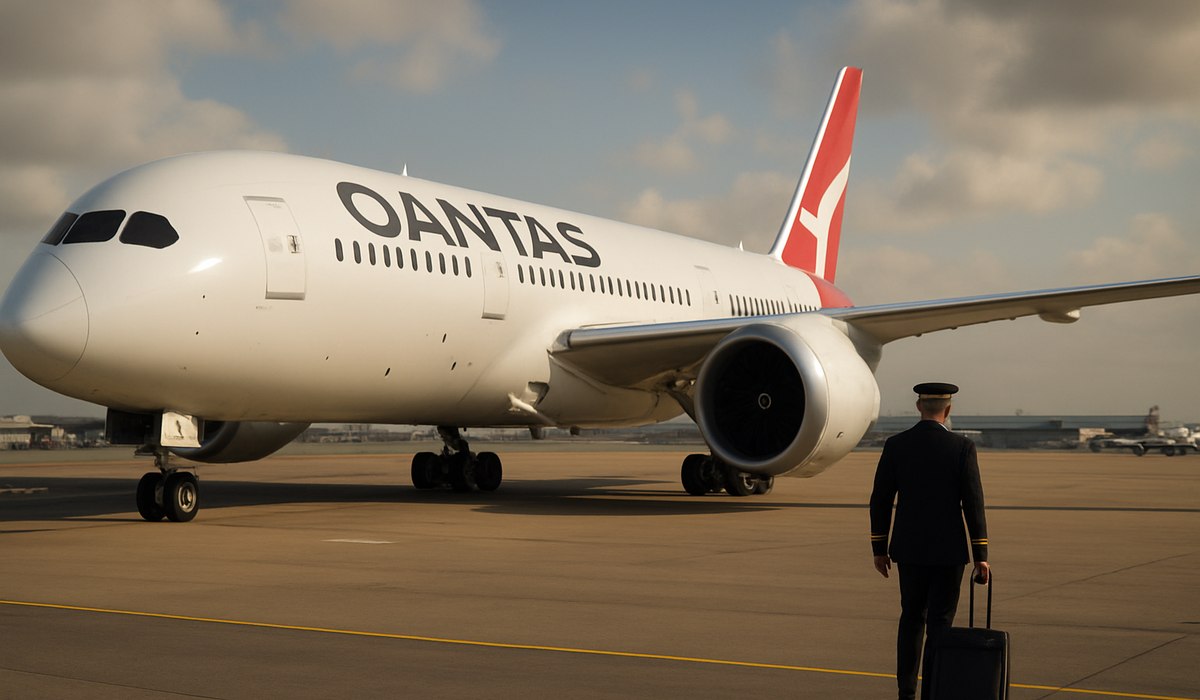
Image generated by AI
The 99-Year Power Play: Qantas Moves to Dominate the Transpacific
In a filing that has sent aviation regulators and competitors scrambling, Qantas Airways has formally requested unlimited passenger capacity rights on routes between Australia and Canada for an extraordinary 99-year period. The audacious application—encompassing Qantas itself, its low-cost subsidiary Jetstar, and codeshare partners including American Airlines and WestJet—arrives as the landmark Australia-Canada Open Skies Agreement takes effect in 2026.
This isn't merely an airline scheduling adjustment. It is among the most aggressive capacity claims in modern bilateral aviation history. By securing a near-century-long guarantee of unrestricted market access, Qantas is positioning itself to permanently dominate the transpacific corridor linking Oceania with North America—a route structure worth hundreds of millions in annual revenue.
What the Open Skies Agreement Actually Changes
Prior to the 2026 agreement, Australian and Canadian airlines operated under rigid bilateral capacity caps that capped the total number of seats carriers from each nation could deploy. These Cold War-era restrictions artificially suppressed competition, limited consumer choice, and inflated pricing.
The new framework eliminates these constraints entirely:
- Unlimited frequency rights on agreed city-pair routes for carriers from both nations
- No seat capacity restrictions, allowing airlines to scale based purely on market demand
- Expanded codeshare permissions, enabling deeper network integration with third-country partners
- Enhanced cargo rights alongside passenger capacity freedoms
For travelers, the immediate implication is straightforward: more flights, more competition, and statistically lower fares on the Australia-Canada corridor.
The Sydney-Vancouver Backbone
Qantas's current tactical centerpiece is its daily Sydney (SYD) to Vancouver (YVR) service, operated on the Boeing 787 Dreamliner with 236 seats per flight. Vancouver serves as the critical geographic bridge, connecting into Qantas's broader Oneworld alliance partner network spanning the entire North American continent.
Under the open skies regime, Qantas has the regulatory freedom to:
- Increase Sydney-Vancouver frequency beyond daily service
- Launch direct services from Melbourne or Brisbane to Vancouver or Toronto
- Deploy Jetstar on lower-yield leisure routes, creating a dual-brand assault on the market
- Leverage codeshare agreements with American Airlines for seamless US onward connections and WestJet for deeper Canadian domestic penetration
Air Canada's Counter-Strategy
The open skies agreement is fundamentally bilateral—meaning Air Canada receives identical unlimited access to Australian airports. The Canadian flag carrier currently operates:
- Sydney to Vancouver (direct)
- Brisbane to Vancouver (seasonal)
- Sydney to Toronto (pending route development)
Air Canada also coordinates with Air New Zealand on indirect routings connecting the two nations via Auckland. With capacity restrictions removed, Air Canada is widely expected to increase frequency on its Sydney service and potentially launch Melbourne-Vancouver or Sydney-Toronto direct operations.
The competitive dynamics could ignite a genuine transpacific fare war—a scenario that overwhelmingly benefits consumers.
What Guests Get
- Unrestricted seat availability as airlines scale capacity to meet actual demand rather than regulatory caps
- Potential fare reductions as intensified Qantas vs Air Canada competition drives pricing down
- 787 Dreamliner cabin comfort with advanced pressurization and humidity systems reducing jet lag
- Seamless North American connectivity via Oneworld (American Airlines) and WestJet codeshares
- Dual-brand access through Qantas (premium) and Jetstar (budget) offering different price-point options
Australia-Canada Open Skies: Competitive Landscape
| Carrier | Current Routes | Aircraft | Open Skies Opportunity |
|---|---|---|---|
| Qantas | Sydney–Vancouver (daily) | Boeing 787 Dreamliner | Unlimited capacity, 99-year application |
| Jetstar | No current Canada service | Potential deployment | Low-cost leisure market entry |
| Air Canada | Sydney/Brisbane–Vancouver | Boeing 787 | Unrestricted frequency increase |
| Air New Zealand | Auckland–Vancouver (connecting) | Boeing 787 | Indirect competition via NZ hub |
| WestJet | No Australia service | Codeshare via Qantas | Canadian domestic feed connectivity |
What This Means for Travelers
If you routinely travel between Australia and Canada—whether for business, education, family visits, or tourism—the 2026 Open Skies agreement represents the single most significant improvement in connectivity in decades. Historically, the route was characterized by limited frequency, inflated premium cabin pricing, and minimal carrier competition. That paradigm is ending.
Practically, begin monitoring fare trends closely over the next 6-12 months. The initial deployment of additional capacity by both Qantas and Air Canada should trigger competitive pricing pressure that benefits consumers, particularly in economy and premium economy classes. Furthermore, if Jetstar enters the market, budget-conscious travelers will gain access to no-frills transpacific crossings at price points previously unimaginable on this route.
FAQ: Qantas Open Skies Deal
What does a "99-year" application actually mean? It means Qantas is requesting regulatory authorization to operate unlimited flights between Australia and Canada for the next 99 years without needing to reapply for capacity rights. This effectively locks in permanent market access, providing the airline with unparalleled long-term planning certainty.
Will Jetstar actually fly to Canada? While no specific Jetstar Canada routes have been announced, the open skies application explicitly covers Qantas's subsidiaries. The leisure travel market between Australia and Canada—particularly Vancouver—is a strong candidate for Jetstar's low-cost, high-density model.
Does this mean cheaper flights to Australia from Canada? Most likely, yes. The removal of capacity restrictions enables airlines to deploy more seats, and competitive pressure between Qantas and Air Canada should drive fare reductions, particularly on heavily contested corridors like Sydney-Vancouver.
Related Travel Guides
Sydney to Vancouver: The Complete Flight Guide for 2026
Oneworld Alliance Benefits: Maximizing Points on Transpacific Routes
Disclaimer
This article is for informational and educational purposes only. It does not constitute legal, financial, or professional advice. While we strive to provide accurate and up-to-date information, travel policies, regulations, and conditions change rapidly. Always verify information with official sources before making travel decisions. Nomad Lawyer makes no representations about the accuracy, reliability, completeness, or suitability of the information provided. Readers should consult qualified professionals for advice specific to their circumstances. The views expressed in this article are those of the author and do not necessarily reflect the views of Nomad Lawyer.
Raushan Kumar
Founder & Lead Developer
Full-stack developer with 11+ years of experience and a passionate traveller. Raushan built Nomad Lawyer from the ground up with a vision to create the best travel and law experience on the web.
Learn more about our team →