
Qantas London-Perth Flight Diverts to Karratha: Ultra-Long-Haul Fuel Risks
A Qantas Boeing 787 diverted to Karratha Airport due to strong headwinds on the London-Perth route, validating new regio

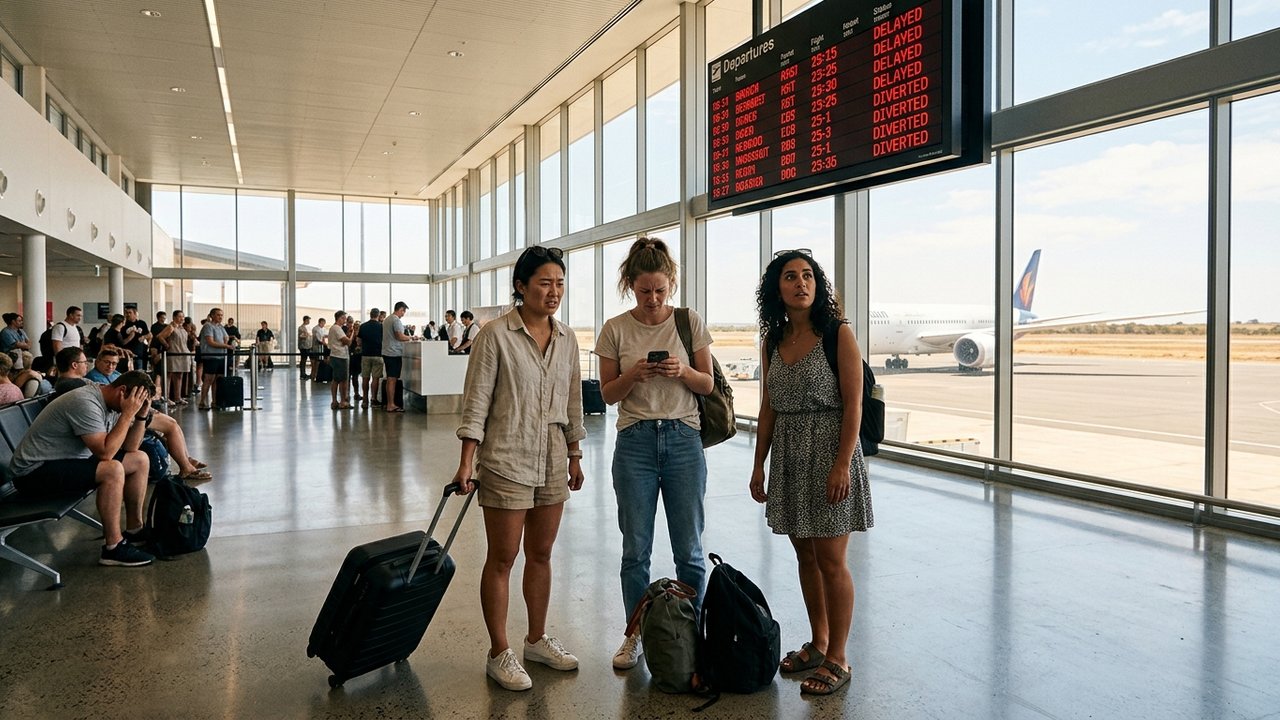
Image generated by AI
The Core Development
On June 23, 2026, Qantas flight QF10, operating from London Heathrow to Perth, was forced to deviate from its flight path. After 16 hours in the air, the crew encountered stronger-than-anticipated headwinds, which accelerated fuel consumption beyond the initial flight plan.
To maintain mandatory safety fuel reserves, the flight diverted to Karratha Airport. The aircraft remained on the ground for approximately one hour for refueling before completing its journey to Perth. No emergency was declared, and the diversion was categorized as a precautionary operational decision.
Key Facts Breakdown
- Aircraft: Boeing 787 Dreamliner.
- Route: London Heathrow (LHR) to Perth (PER).
- Diversion Point: Karratha Airport (approx. 1,500 km north of Perth).
- Primary Cause: Increased fuel burn due to high-altitude headwinds.
- Duration of Stop: Approximately 60 minutes.
- Infrastructure Status: Karratha had recently been designated as an "alternate international airport" with upgraded widebody runway capabilities.
Flight Operational Data
| Metric | Detail |
|---|---|
| Flight Number | QF10 |
| Total Flight Time | 17+ Hours |
| Diversion Distance | ~1,500 km from destination |
| Aircraft Type | Boeing 787 Dreamliner |
| Trigger Event | Atmospheric variance / Headwinds |
Why This Matters (Analysis)
Industry observers note that this incident is less about a single flight delay and more about the systemic risks of ultra-long-haul (ULH) aviation. Our analysis indicates three primary industry implications:
1. The "Safety Valve" Strategy The use of Karratha Airport proves that regional hubs are evolving from domestic feeders into strategic international assets. By designating secondary airports as "alternate international" nodes, Australia is creating a distributed safety network that reduces the risk of fuel-critical situations on extreme-range routes.
2. The Persistence of Atmospheric Volatility Despite the efficiency of the Boeing 787, the event confirms that atmospheric shifts—specifically jet stream variance—remain a hard constraint. Even with advanced predictive modeling, the margin for error on 17-hour sectors is slim, necessitating rigid adherence to fuel reserves.
3. Stress-Testing Project Sunrise This diversion serves as a live rehearsal for Qantas's "Project Sunrise," which intends to launch non-stop flights from Sydney to London and New York using Airbus A350-1000s. The Karratha event validates the necessity of a layered contingency network; as flight durations push toward 20 hours, the reliance on distributed infrastructure will become a baseline requirement for operational viability.
Industry Outlook
Expect a surge in regional airport upgrades across the Asia-Pacific region as carriers expand ULH networks. Market trends suggest that "alternate airport" designations will become a key metric in route profitability and risk assessment. For operators, the focus will shift from optimizing the primary route to mapping "safe-haven" corridors to mitigate the unpredictability of high-altitude weather patterns.
Related Travel Guides
Disclaimer
This article is for informational and educational purposes only. It does not constitute legal, financial, or professional advice. While we strive to provide accurate and up-to-date information, travel policies, regulations, and conditions change rapidly. Always verify information with official sources before making travel decisions. Nomad Lawyer makes no representations about the accuracy, reliability, completeness, or suitability of the information provided. Readers should consult qualified professionals for advice specific to their circumstances. The views expressed in this article are those of the author and do not necessarily reflect the views of Nomad Lawyer.
Raushan Kumar
Founder & Lead Developer
Full-stack developer with 11+ years of experience and a passionate traveller. Raushan built Nomad Lawyer from the ground up with a vision to create the best travel and law experience on the web.
Learn more about our team →