
Bypassing Domestic Travel Chaos: Qantas Unveils Striking A321XLR 'Coral Sea' to Shield Passengers from Severe Fleet Disruptions
As aging narrowbody aircraft increasingly trigger severe flight cancellations and massive terminal congestion, Qantas aggressively deploys its newest A321XLR to completely bypass domestic travel chaos.

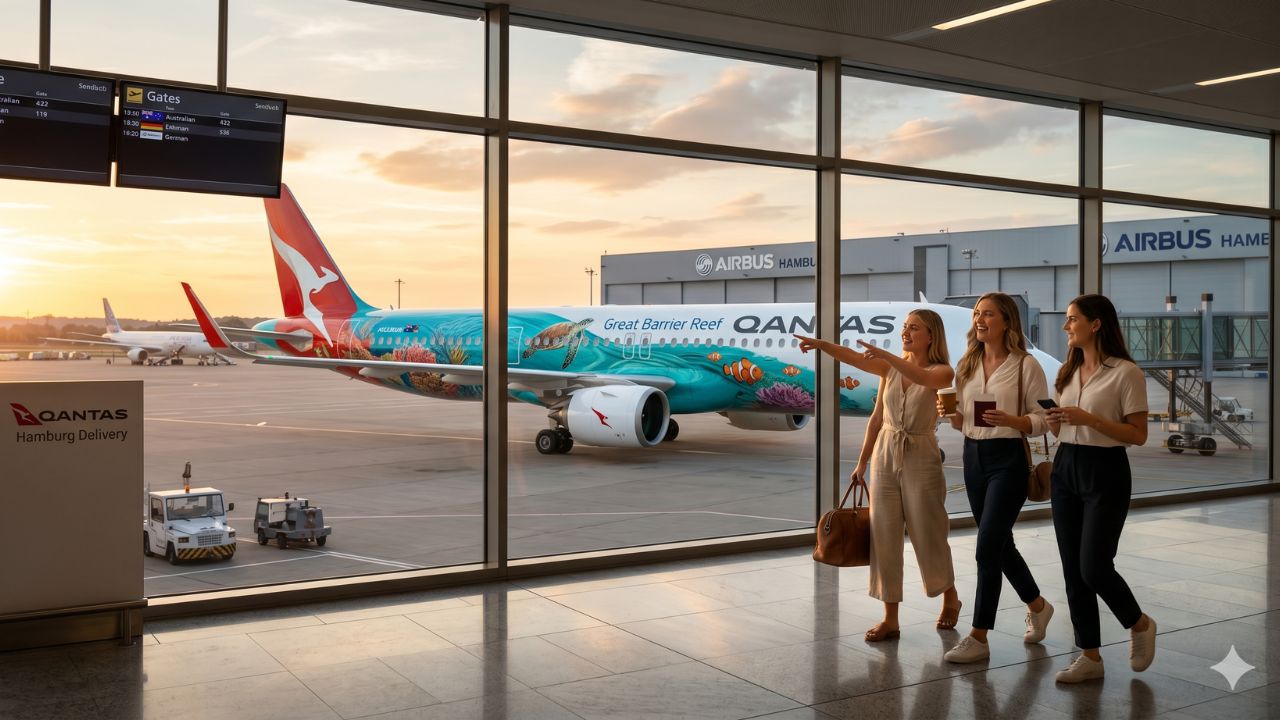
Image generated by AI
A Massive Strategic Upgrade to Defeat Regional Gridlock
While massive sectors of the global passenger network frequently battle highly unpredictable labor shortages, synchronized logistical bottlenecks, and extreme weather phenomena, horrific commercial fleet degradation remains the absolute most terrifying catalyst for sudden, cascading airport disruptions. Delivering highly urgent, breaking airline news, verified Oceanic aviation trackers confirm that a massive strategic operational milestone has actively been achieved to completely shield vulnerable domestic and regional tourists from severe travel chaos across the highly volatile Australian aviation network. Today, June 3, 2026, highly positive operational news forcefully emerged from Hamburg, Germany, as Qantas officially unveiled "Coral Sea"—its seventh spectacular Airbus A321XLR—marking a massive turning point in the eradication of aging aircraft breakdowns.
While desperate travelers usually attempt to navigate sudden, terrifying flight cancellations caused by mechanical failures on 20-year-old legacy jets, these exclusive aviation updates reveal a highly systemic, incredibly protective capacity upgrade designed to entirely bypass the decaying domestic transit grid. Verified aerospace data confirms that this massive 44-meter-long flying canvas, adorned with a breathtaking Great Barrier Reef livery, is a direct response to the grueling transit conditions passengers currently face. This highly lucrative logistical upgrade actively promises to rescue the travel itineraries of thousands of incredibly vulnerable passengers, violently slashing mechanical delays in favor of a highly streamlined, ultra-efficient narrowbody that can effortlessly execute massive transcontinental routes without the horrific threat of mid-air diversions or grounded airframes.
Expanded Overview: The Scale of the Transcontinental Expansion
The sudden, highly publicized execution of this massive aerospace delivery serves as an undeniable example of how rapidly a legacy carrier can completely insulate its passenger base from extreme mechanical transit pressure. The massive "Coral Sea" rollout has explicitly drawn international attention to the incredibly complex, highly fragile operational ecosystem that links Australia's domestic hubs. For a massive continental corridor heavily reliant on incredibly robust flight schedules, forcing exhausted travelers to endure sudden grounded flights due to failing Boeing 737s heavily exposes them to terrifying delays and severe missed connections.
The terrifying reality of the current transit crisis is found in the sheer volume of aging connecting aircraft abruptly knocked out of alignment during peak vacation seasons. By actively procuring a massive 48-aircraft fleet of cutting-edge Airbus A321XLRs, Qantas intends to permanently rescue thousands of vulnerable passengers from a terrifying logistical puzzle. This massive strategic maneuver instantly bypasses the paralyzed inbound and outbound traffic of secondary transit hubs. Because the A321XLR is uniquely engineered to fly over 3,000 kilometers further than its predecessors, Qantas can actively route passengers directly between distant cities, completely bypassing congested intermediate mega-hubs where unmanageable waves of terminal congestion routinely destroy flight itineraries.
Section-Wise Breakdown of the Connectivity Solution
Bypassing Domestic Hub Gridlock
The arrival of the Airbus A321XLR marks a major departure from highly vulnerable fleet dynamics, specifically accelerating the aggressive retirement of legacy Boeing 737 airframes that have plagued regional routes with increasing mechanical delays. Since Qantas historically pioneered the A321XLR's entry into the Asia-Pacific market in September 2025, the type has been systematically deployed across high-demand corridors to instantly eradicate flight cancellations. The aircraft is poised to execute high-capacity cross-continental flights, explicitly linking Brisbane and Perth. This allows transcontinental travelers to completely bypass connecting through chaotic East Coast hubs, ensuring they reach Western Australia without suffering severe travel chaos.
A Flying Fortress Against Travel Chaos
The stunning visual identity of the "Coral Sea" aircraft serves as both an environmental tribute and a highly visible symbol of modern reliability. Both sides of the lengthy 44-meter fuselage are adorned with intricate depictions of sea turtles, vibrant clownfish, and complex coral formations native to the Great Barrier Reef. Beyond the paint, this aircraft represents a $10 million corporate commitment through the Reef Restoration Fund. As the aircraft travels globally, it guarantees increased fuel efficiency, significantly quieter cabin environments, and drastically lowered carbon emissions—all while providing the absolute mechanical reliability required to defeat unprecedented regional travel chaos.
Supercharging Queensland Tourism
The strategic deployment of the "Coral Sea" coincides with a massive operational expansion within Queensland, a state utterly dependent on functional aviation links to survive. The Great Barrier Reef alone was visited by over 2.3 million travelers over the past year, generating a staggering $44 billion in visitor spending. With Qantas and Jetstar aggressively launching 10 brand-new routes in 2025, deploying the A321XLR supercharges this network growth. Furthermore, the A321XLR will explicitly shield international tourists when it launches the highly anticipated direct route connecting Brisbane with Manila in the Philippines this October, eradicating the need for highly vulnerable multi-stop Asian layovers.
Verified A321XLR Delivery and Tourism Data
To fully comprehend the massive operational scale and strategic deployment dictating this highly protective intercontinental solution, the following tables explicitly detail the exact aircraft metrics and tourism financial impacts driving the "Coral Sea" expansion:
The Airbus A321XLR 'Coral Sea' Operational Profile
| Aircraft Metric | Verified Operational Data | Defense Against Travel Chaos |
|---|---|---|
| Aircraft Type | Airbus A321XLR (7th Delivery) | Ultra-long-range single-aisle efficiency. |
| Fuselage Length | 44 Meters | Features massive Great Barrier Reef livery. |
| Range Advantage | +3,000 Kilometers vs. Legacy Jets | Bypasses congested intermediate hubs entirely. |
| Target Transcon Route | Brisbane to Perth | Eradicates East Coast terminal layovers. |
| Target Int'l Route | Brisbane to Manila (Oct Launch) | Direct connection shielding global tourists. |
Queensland Tourism Economic Impact (2025-2026)
| Tourism Metric | Verified Financial / Traffic Data | Aviation Dependence |
|---|---|---|
| Great Barrier Reef Visitors | >2.3 Million Annual Travelers | Requires extreme flight reliability to sustain volume. |
| Total Visitor Spending | >$44 Billion Generated | Local economy collapses without massive airlift. |
| Qantas Group Operations | >1,600 Weekly Return Flights | Absolutely critical for maintaining regional supply lines. |
| Route Network Expansion | 10 Brand-New Routes Launched | Aggressively targets high-yield leisure demographics. |
Passenger Impact: Navigating the Non-Stop Solution
For the modern commuter attempting to navigate this highly volatile domestic network, the passenger impact of this massive fleet modernization is completely liberating. Reliable, technologically advanced hardware is the absolute backbone of cross-country business travel.
- Eradicate Mechanical Flight Cancellations: Because aging Boeing 737s are being violently phased out, passengers are no longer subjected to terrifying last-minute flight cancellations caused by decades-old engine components failing on the tarmac.
- Bypass Congested Terminals: By utilizing the A321XLR's extreme range on routes like Brisbane to Perth, passengers completely bypass chaotic, overcrowded terminals in Sydney or Melbourne, massively reducing the risk of missing connecting flights.
- Enjoy Unprecedented Comfort: Passengers boarding the "Coral Sea" will instantly experience a re-imagined flying environment characterized by larger overhead bins, state-of-the-art seating architecture, and advanced inflight entertainment, severely reducing the physical exhaustion of transcontinental travel.
Conclusion: A Highly Protective Fleet Upgrade
The massive, highly publicized rollout of the Airbus A321XLR "Coral Sea" represents a severe, incredibly vital upgrade for the Australian travel sector. By actively allowing passengers to completely bypass critical flight disruptions caused by aging aircraft breakdowns, this next-generation jet guarantees an incredibly smooth, highly protective travel experience. As operational teams frantically execute multi-stage ferry flights from Hamburg to Australia to integrate the jet into the active fleet, international and domestic tourists are heavily urged to aggressively book flights specifically operated by the A321XLR, prepare to support vital marine conservation efforts, and fully expect this aircraft to revolutionize regional access while eradicating unprecedented domestic travel chaos.
Key Takeaways
- Massive Fleet Overhaul: Qantas has unveiled "Coral Sea," its seventh Airbus A321XLR, as a critical weapon in its 48-aircraft order to replace aging, highly vulnerable regional jets.
- Stunning Conservation Livery: The aircraft emerged from Hamburg, Germany, featuring a spectacular Great Barrier Reef design to promote environmental sustainability and marine conservation.
- Bypassing Travel Chaos: The A321XLR can fly 3,000 km further than its predecessors, allowing it to execute non-stop routes (like Brisbane-Perth and Brisbane-Manila) that completely bypass congested intermediate layover hubs.
- Protecting a $44 Billion Economy: The highly reliable aircraft is heavily deployed in Queensland, ensuring that the 2.3 million annual visitors to the Great Barrier Reef do not suffer severe flight cancellations.
- Passenger Survival Tactics: Travelers are aggressively urged to check the aircraft type when booking transcontinental Australian flights and select the A321XLR to completely avoid the mechanical delays associated with legacy airframes.
Disclaimer: The specific aircraft ranges, delivery schedules, and tourism spending metrics presented in this report are based on verified aerospace and government data regarding Qantas and Queensland in June 2026. Official airline routing, fleet deployment strategies, and local domestic aviation policies are highly volatile and subject to continuous, real-time update based on active manufacturing timelines, fluctuating travel demand, and sudden operational shifts. Prospective passengers are urgently advised to fiercely monitor their specific booking status and verify active aircraft assignments directly via the airline's official portal prior to booking transcontinental travel.
Disclaimer
This article is for informational and educational purposes only. It does not constitute legal, financial, or professional advice. While we strive to provide accurate and up-to-date information, travel policies, regulations, and conditions change rapidly. Always verify information with official sources before making travel decisions. Nomad Lawyer makes no representations about the accuracy, reliability, completeness, or suitability of the information provided. Readers should consult qualified professionals for advice specific to their circumstances. The views expressed in this article are those of the author and do not necessarily reflect the views of Nomad Lawyer.
Kunal K Choudhary
Co-Founder & Contributor
A passionate traveller and tech enthusiast. Kunal contributes to the vision and growth of Nomad Lawyer, bringing fresh perspectives and driving the community forward.
Learn more about our team →