
Portugal Political Stability Faces Three-Election Test in 2026
Portugal's political stability comes under scrutiny as three elections in three years challenge its democratic resilience. What does this mean for digital nomads and relocating professionals in 2026?

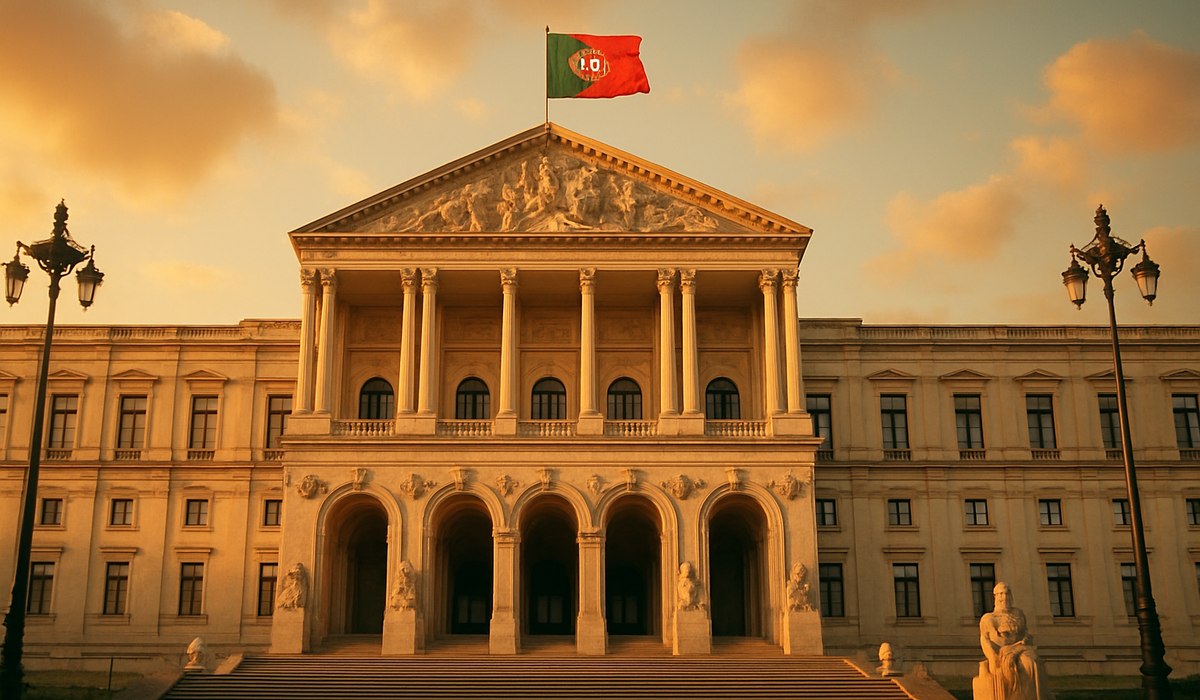
Image generated by AI
Portugal's Democratic Foundation Tests Its Limits
Portugal, long regarded as a beacon of political stability within the European Union, now faces its most significant institutional test since the 1974 Carnation Revolution democratized the nation. Three general elections within 36 months have triggered widespread concern among relocating professionals, digital nomads, and foreign investors assessing long-term risk. While the country's core democratic institutions remain robust, the compressed election cycle signals fundamental shifts in Portuguese politics that could reshape the relocation landscape for years to come.
The pattern began in November 2023 when Socialist Prime Minister António Costa resigned amid a corruption investigation. This resignation triggered the first early election in March 2024, which produced a fragmented parliament dominated by the centre-right Democratic Alliance (AD) with only one-third of 230 seats. A minority government subsequently collapsed in March 2025, prompting a second early election in May 2025. This unprecedented volatility represents a departure from Portugal's historical norm of stable, majority-government legislatures completing their four-year mandates.
Portugal's Democratic Foundation and Historical Stability
Portugal's transition to democracy fifty years ago established one of Europe's most resilient constitutional frameworks. The post-1974 system created a parliamentary democracy with semi-presidential characteristics, featuring separated powers between the President and Prime Minister designed to prevent executive overreach.
For decades, political power alternated predictably between the Socialist Party (PS) and the Social Democratic Party (PSD), with both demonstrating commitment to EU alignment, fiscal responsibility, and institutional norms. This bipartisan consensus underpinned Portugal's integration into the European Union in 1986 and its adoption of the euro in 2002. Governance ratings from the World Bank consistently positioned Portugal above global averages on rule of law and government effectiveness metrics. International investors viewed the country as a stable, low-corruption jurisdiction within the eurozone, supporting foreign direct investment and tourism flows. This historical context explains why recent political volatility has caught many relocators and businesses off guard.
Recent Political Volatility: Three Elections in Three Years
The compression of three major elections into 36 months marks Portugal's most turbulent democratic period since 1976. Understanding this timeline is essential for assessing current relocation risk and future political trajectory.
The March 2024 election delivered the closest result in Portuguese history. The AD secured only 80 of 230 parliamentary seats—far below the 116 required for a working majority. This fragmented outcome forced the AD into reliance on issue-by-issue parliamentary support from smaller parties, including the Greens and left-wing Bloco de Esquerda. This arrangement, termed a minority government, created constant negotiating pressure and policy uncertainty. By March 2025, mounting frustrations over spending priorities and immigration policy triggered a parliamentary confidence vote, which the government lost. President Marcelo Rebelo de Sousa subsequently dissolved parliament and called a second early election for May 2025, making three electoral contests in 30 months. This pattern reflects deeper structural changes in Portuguese party politics beyond simple incumbent unpopularity. The traditional PS-PSD two-party dominance has fractured, with the right-wing populist Chega party emerging as the third-largest political force and gaining parliamentary leverage in coalition arithmetic. Neither major party can command majority support independently, fundamentally altering how minority governments must operate.
Institutional Resilience and Long-Term Risk Assessment
Despite political volatility, Portugal's constitutional institutions have demonstrated genuine resilience under pressure. The country's legal architecture includes multiple safeguards preventing democratic backsliding or institutional breakdown.
Independent courts, a professional civil service, and constitutional checks remain firmly embedded in Portuguese governance. The Constitutional Court actively reviews legislation for compliance with democratic norms, and the presidency retains veto authority over parliamentary decisions. Recent government collapses have occurred entirely through constitutional procedures—no extra-legal crises, military intervention, or authoritarian posturing has emerged. This adherence to democratic procedures under stress reassures international observers about Portugal's fundamental stability.
Sovereign credit ratings validate this institutional assessment. S&P and Fitch upgraded Portugal's long-term debt rating to A/A− in 2024-2025, with stable outlooks. These upgrades reflect declining public debt ratios and analyst confidence that mainstream Portuguese parties, regardless of electoral composition, will maintain EU-aligned fiscal and economic policies. The European Central Bank treats Portuguese sovereign debt as relatively secure, maintaining favorable refinancing conditions. For relocating professionals evaluating long-term residency, this institutional continuity suggests that property rights, contract enforcement, and regulatory predictability should remain reasonably protected despite shorter-term political changes. Policy implementation may slow or shift direction with each government change, but fundamental legal frameworks should persist.
What This Means for Relocating Digital Nomads and Remote Workers
Portugal's relocation appeal rests on three pillars: affordable living costs, EU market access, and quality of life. Political instability affects this calculus in specific, measurable ways worth analyzing before committing to relocation.
Cost of Living Impact: Minority governments and coalition uncertainty historically create fiscal pressures in developed democracies. Portugal may face pressure to reduce spending on subsidies, housing programs, or healthcare—areas affecting remote worker budgets. Tax policy could shift with each new government, creating planning uncertainty for freelancers and entrepreneurs.
Visa and Residency Policy: Immigration and digital nomad visa frameworks remain subject to parliamentary change. The D7 Passive Income Visa and the growing digital nomad community depend on stable regulatory interpretation. Coalition disagreements over immigration could accelerate or reverse policy changes affecting non-EU relocators.
Currency and Economic Growth: The euro insulates Portugal from exchange rate volatility, providing stability for dollar or pound earners. However, policy delays and regulatory uncertainty could slow economic growth, affecting long-term job market conditions and inflation.
Professional Services Stability: Banking, legal, and accounting services remain reliable despite political changes. EU financial regulation provides baseline stability for business operations and investment management.
Healthcare and Utilities: Portugal's public healthcare and utility systems remain constitutionally protected. Political changes affect pricing and service quality incrementally, not catastrophically.
Key Data Table: Portugal's Political Stability Metrics 2024-2026
| Metric | 2024 Value | 2025 Value | 2026 Projection | Impact on Relocators |
|---|---|---|---|---|
| Elections (3-year period) | 1 (March) | 2 (March + May) | Likely 1-2 more | Policy uncertainty, visa delays |
| Parliamentary majority threshold | 116 seats | 116 seats | 116 seats | Ongoing coalition dependency |
| AD seat count (March 2024) | 80 | 80 | TBD | Minority government reliance |
| Chega party representation | Rising | Third force | Growing leverage | Anti-immigration risk |
| Sovereign debt rating | A− (stable) | A (stable) | A/A− projected | Low financial crisis risk |
| Rule of law ranking (World Bank) | Above average | Above average | Maintained | Contract enforcement reliable |
| Government composition | AD minority | AD minority | TBD | Coalition instability continues |
| Public debt ratio | Declining | Declining | ~85% GDP | Sustainable fiscal path |
| Euro membership | Full | Full | Full | Currency stability assured |
What This Means for Travelers
1. Plan for Regulatory Delays: Government transitions typically extend processing times for visas, permits, and administrative approvals. Budget extra weeks when applying for D7 visas, tax identification numbers, or business registrations.
2. Monitor Tax Policy Changes: Coalition governments frequently adjust tax rates, deductions, and social contributions to maintain fiscal balance. Review Portugal's latest tax code before relocating, and consult local accountants quarterly.
3. Maintain Currency Diversification: While the euro provides stability, income diversification across currencies (USD, GBP) hedges against potential euro fluctuations from fiscal policy disputes.
4. Secure Long-Term Housing Contracts: Political volatility occasionally triggers
Disclaimer
This article is for informational and educational purposes only. It does not constitute legal, financial, or professional advice. While we strive to provide accurate and up-to-date information, travel policies, regulations, and conditions change rapidly. Always verify information with official sources before making travel decisions. Nomad Lawyer makes no representations about the accuracy, reliability, completeness, or suitability of the information provided. Readers should consult qualified professionals for advice specific to their circumstances. The views expressed in this article are those of the author and do not necessarily reflect the views of Nomad Lawyer.
Kunal K Choudhary
Co-Founder & Contributor
A passionate traveller and tech enthusiast. Kunal contributes to the vision and growth of Nomad Lawyer, bringing fresh perspectives and driving the community forward.
Learn more about our team →