
Portugal Selects Lufthansa for €1.2 Billion TAP Air Portugal Stake: South Atlantic Hub Dynamics and European Consolidation Explored

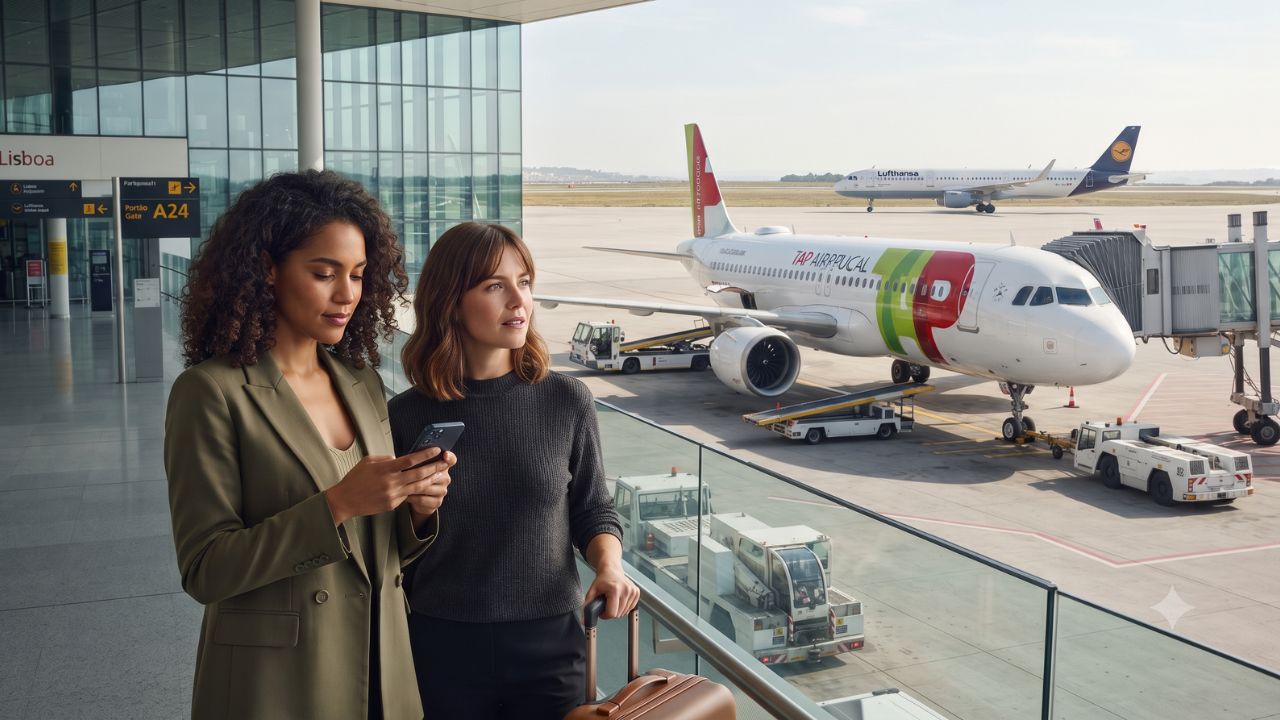
Valued at an initial enterprise transaction benchmark of €1.201 billion, the German aviation consortium Lufthansa Group has been selected by Portugal as the preferred strategic buyer for up to 49.9% of state-owned flag carrier TAP Air Portugal. Formally confirmed on 14 October 2026 by the Government of Portugal (XXV Governo Constitucional), the decision concludes a contested international tender that saw Lufthansa outmaneuver rival bids from Franco-Dutch group Air France-KLM by delivering a financial offer up to 16% higher than competing packages. Under the approved framework, the Portuguese Republic retains a 50.1% controlling majority and five of nine board seats, establishing rigid operational safeguards for Lisbon’s transatlantic hub, regional island connectivity, and domestic aviation employment.
The agreement marks a decisive phase in the restructuring of European commercial aviation. Following state aid repayments and post-pandemic balance sheet recovery, TAP’s value lies in its dominant share of corridors linking the Iberian Peninsula to Brazil and Portuguese-speaking Africa. By integrating TAP alongside previous acquisitions including ITA Airways, Swiss, Austrian Airlines, and Brussels Airlines, Lufthansa Group consolidates its position as Europe’s largest airline conglomerate, constructing a resilient Star Alliance gateway across the South Atlantic.
Strategic Bid Architecture and National Sovereignty Safeguards
The privatization began on 10 July 2025 when Lisbon set terms for selling a minority stake, followed by invitations for binding proposals in April 2026 and final improved offers on 30 September 2026. While technical evaluations rated Lufthansa and Air France-KLM comparably, financial terms determined the outcome. Lufthansa submitted a base reference valuation of €1.025 billion, supplemented by €58 million in capital adjustments and €118 million for employee shares, totaling €1.201 billion. The competing bid reached €1.038 billion, with another €100 million contingent upon future performance. The selected offer stood up to 16% higher upfront, narrowing to roughly 6% when conditional earnouts are included.
TAP AIR PORTUGAL PRIVATIZATION BID COMPARISON MATRIX
| Entity / Facility | Delays | Cancellations | Details |
|---|---|---|---|
| Bid Parameter | Selected Lufthansa Term | Competing Air France-KLM | Strategic Differentiation |
| Equity Acquired | 44.9% (expandable to 49.9%) | 45.0% to 49.9% proposed | State maintains 50.1% |
| initial minority purchase | minority stake acquisition | majority boardroom vote | |
| Upfront Valuation | €1.025 billion reference | €1.038 billion reference | Lufthansa delivered cash |
| Benchmark | price + adjustments | valuation package | certainty with no risk |
| Employee & Capital | €58M adjustments + €118M | €100M deferred earnout | Guaranteed capital pool |
| Reserves | employee share allotment | subject to EBITDA targets | without contingent debt |
| Total Transaction | €1.201 billion | €1.138 billion | Selected offer up to 16% |
| Valuation | (Fully confirmed upfront) | (Subject to contingencies) | higher upfront cash yield |
| Alliance Stability | Existing Star Alliance | Requires SkyTeam Alliance | Avoids multi-hundred-M |
| Integration | partner carrier alignment | migration and IT upheaval | alliance transfer penalty |
To safeguard national sovereignty, the Portuguese state embedded strict governance conditions into the agreement:
- Boardroom Representation: The Portuguese state retains five of nine seats on the board of directors, including the right to appoint the corporate chair.
- Equity Structure: Lufthansa acquires 44.9%, potentially rising to 49.9% if employees leave their 5% reserved share allotment unpurchased.
- Hub and Brand Permanence: The brand, corporate headquarters, and Lisbon flight hub of TAP Air Portugal are permanently preserved.
- Autonomous Island Guarantees: Mainland air connections to Madeira and the Azores are legally protected against service cuts.
The transaction also includes an industrial offset package: Lufthansa will invest approximately €300 million in a maintenance and aeronautical engineering facility in Santa Maria da Feira, generating 700 technical jobs. Additionally, eight aircraft will be permanently based at Porto's Francisco Sá Carneiro Airport to support northern regional travel.
European Airline Consolidation and South Atlantic Hub Dynamics
The integration of TAP Air Portugal into the Lufthansa Group represents a major realignment of international long-haul passenger flows between Europe and the Americas.
THE EUROPEAN CONSOLIDATION MAP: LUFTHANSA GROUP EXPANSION
               [Frankfurt / Munich Hubs] (Mainline Lufthansa)
               [Zurich Hub] (Swiss International Air Lines)
               [Vienna Hub] (Austrian Airlines)
               [Brussels Hub] (Brussels Airlines)
               [Rome Fiumicino Hub] (ITA Airways)
               [Lisbon Humberto Delgado Hub] (TAP Air Portugal) <=== NEW SOUTH ATLANTIC GATEWAY
                                 |
                 +---------------+---------------+
                 |                               |
                 v                               v
    [Brazilian Mega-Corridor]        [Lusophone African Feeder]
 (11 Non-Stop Brazilian Cities)   (Angola, Mozambique, Cape Verde)
Historically, European network mega-groups have concentrated on distinct geographic spheres of influence:
- International Airlines Group (IAG): Dominates North and South Atlantic corridors through British Airways at London Heathrow and Iberia at Madrid-Barajas.
- Air France-KLM: Commands transatlantic routes to North America and extensive historical routes across Francophone Africa from Paris CDG and Amsterdam Schiphol.
- Lufthansa Group: Traditionally dominant across Central Europe, North America, and Asia via Frankfurt, Munich, Zurich, and Vienna, but lacked a natural southwestern European coastal gateway into South America.
By acquiring a strategic stake in TAP Air Portugal, Lufthansa secures immediate dominance over the South Atlantic air corridor. TAP is the leading European carrier serving Brazil, operating direct flights connecting Lisbon and Porto to 11 major Brazilian metropolitan centers: São Paulo (GRU), Rio de Janeiro (GIG), Brasília (BSB), Salvador da Bahia (SSA), Recife (REC), Fortaleza (FOR), Belo Horizonte (CNF), Belém (BEL), Natal (NAT), Porto Alegre (POA), and Maceió (MCZ).
In addition, TAP provides established routes into Portuguese-speaking African nations, including Angola (Luanda), Mozambique (Maputo), Cape Verde, and São Tomé and Príncipe. Travelers originating in Germany, Switzerland, Austria, and Scandinavia will be able to connect through Lisbon to South America and West Africa without routing through congested airports in Madrid or Paris.
The Brazilian Mega-Corridor: Comprehensive City Pair Breakdown
The strategic prize within the TAP transaction is its dominant footprint across South America's largest economy. Unlike other European carriers whose Brazilian operations are restricted almost entirely to São Paulo and Rio de Janeiro, TAP serves as a primary regional connector for secondary Brazilian states:
- Southeast Brazil (Economic Centers): Operating multiple daily widebody rotations between Lisbon and São Paulo Guarulhos (GRU) alongside double-daily flights to Rio de Janeiro Galeão (GIG), TAP captures corporate executives, diplomatic personnel, and financial delegations. In Minas Gerais, direct flights to Belo Horizonte Confins (CNF) link Portugal straight into Brazil's mining, metallurgy, and agricultural belts.
- Northeast Brazil (Tourism and Cultural Capitals): TAP operates non-stop widebody and long-range narrowbody flights connecting Lisbon directly to Salvador da Bahia (SSA), Recife (REC), Fortaleza (FOR), Natal (NAT), and Maceió (MCZ). These coastal cities attract European holidaymakers seeking warm tropical beaches, colonial Afro-Brazilian heritage, and eco-resorts.
- Northern and Amazonian Gateways: The direct service to Belém (BEL) in Pará provides direct access to the Amazon River basin, facilitating research expeditions, bio-economy commerce, and eco-tourism.
- Central Capital Connection: Non-stop services to Brasília (BSB) provide direct diplomatic and administrative access between the federal government of Brazil and European institutions.
TAP AIR PORTUGAL BRAZILIAN NETWORK MATRIX (DIRECT FROM LISBON & PORTO)
| Brazilian Gateway | Airport Code | Weekly Frequency | Operating Aircraft | Passenger Segment |
|---|---|---|---|---|
| São Paulo | GRU (Guarulhos) | 18 to 21 Flights | Airbus A330-900neo | Corporate, Trade |
| Rio de Janeiro | GIG (Galeão) | 10 to 14 Flights | Airbus A330-900neo | Tourism, Corporate |
| Belo Horizonte | CNF (Confins) | 6 to 7 Flights | Airbus A330-900neo | Mining, Industry |
| Brasília | BSB (J. Kubitschek | 5 to 7 Flights | Airbus A330-900neo | Diplomatic, Govt |
| Salvador da Bahia | SSA (Dep. L. Ed.) | 6 to 7 Flights | Airbus A330-900neo | Cultural, Leisure |
| Recife | REC (Guararapes) | 7 Flights (Daily) | Airbus A330-900neo | Coastal, VFR |
| Fortaleza | FOR (Pinto Martins | 7 Flights (Daily) | Airbus A330-900neo | Beach Resort, Trade |
| Belém | BEL (Val-de-Cans) | 4 to 5 Flights | Airbus A321LR | Amazon Eco-Tourism |
| Natal | NAT (S. G. Amaran) | 4 to 5 Flights | Airbus A321LR | Leisure, Holiday |
| Maceió | MCZ (Zumbi Palmar) | 3 Flights Weekly | Airbus A321LR | Tropical Beaches |
| Porto Alegre | POA (Salgado Filho | Seasonal Resumption | Airbus A330-900neo | Agro-Business, VFR |
Onboard Cabin Specifications and Transatlantic Hard Product
Passengers traveling across the South Atlantic on TAP Air Portugal encounter modern cabin amenities tailored for long-distance comfort:
- Executive Class (Lie-Flat Business): Configured in a 1-2-1 layout on the Airbus A330-900neo, Executive Class features Stelia Solstys III full-flat bed suites measuring 78 inches in length. Every passenger enjoys direct unobstructed aisle access, individual universal power sockets, USB-A and USB-C charging ports, noise-canceling headsets, and a 16-inch high-definition in-flight entertainment touchscreen.
- Regional Culinary Program: TAP’s Business Class dining showcases regional Portuguese gastronomy curated by Michelin-starred guest chefs under the "Taste the Stars" program. Meals are paired with certified DOC wines originating from the Douro, Alentejo, and Dão viticultural valleys, introducing international passengers to Portugal's rich winemaking heritage.
- EconomyXtra and Standard Economy: Economy seating provides ergonomic Recaro slimline seats equipped with personal USB charging and adjustable headrests. EconomyXtra passengers enjoy enhanced legroom with a 34-inch seat pitch, dedicated overhead storage bins, and priority boarding privileges.
- High-Speed Satellite Wi-Fi: The entire A330neo and A321LR fleet is equipped with satellite connectivity, offering complimentary messaging for texting applications (WhatsApp, iMessage) and tiered high-speed streaming passes for corporate travelers.
Fleet Roadmap and Long-Term Capacity Commitments (2026–2035+)
A cornerstone of the Portuguese government's negotiation mandate was a binding commitment to long-term fleet growth and industrial infrastructure development.
TAP AIR PORTUGAL FLEET EVOLUTION & EXPANSION BLUEPRINT
| Column 1 | Column 2 | Column 3 | Column 4 | Column 5 |
|---|---|---|---|---|
| Time Horizon | Operational Fleet | Primary Aircraft | Network Deployment | Strategic Target |
| Current Fleet | ~96 Aircraft | A330-900neo, A321LR, | Transatlantic Long | High-frequency |
| Benchmark (2026) | (All-Airbus) | A320neo, A319/A320 | Haul & European Fe | Brazilian corridor |
| Medium-Term Target | 117 Aircraft | Influx of A321XLR & | Expansion at Porto | Decentralize north |
| Horizon (2035) | (Expanded Widebody | Additional A330neo | (8 based aircraft) | point-to-point hops |
| Long-Term Horizon | 130+ Aircraft | Next-gen widebody & | Worldwide Star | Full integration |
| (Post-2035) | (Consolidated) | sustainable airframes | Alliance deployment | with Lufthansa Group |
The Role of Long-Range Single-Aisle Aircraft
TAP was an early global pioneer in deploying long-range narrowbody aircraft on long-distance transoceanic sectors. Operating the Airbus A321LR (Long Range), TAP successfully connected Lisbon and Porto to secondary cities in Brazil (such as Belém and Natal) and the East Coast of North America (Newark, Boston, Washington Dulles, and Montreal).
Under Lufthansa's investment plan, TAP will accelerate the induction of next-generation Airbus A321XLR (Extra Long Range) aircraft. These airframes allow the carrier to:
- Open Thin Point-to-Point Routes: Serve secondary destinations in South America and the Caribbean where passenger volume cannot support a 300-seat widebody aircraft, while maintaining profitable daily or four-times-weekly schedules.
- Strengthen the Porto Hub: Basing eight modern aircraft permanently at Porto’s Francisco Sá Carneiro Airport (OPO) allows TAP to expand direct European and transatlantic flights from northern Portugal, fulfilling government regional development goals.
- Industrial Support at Santa Maria da Feira: The planned €300 million maintenance, repair, and overhaul (MRO) engineering complex in Santa Maria da Feira provides high-skill technical capabilities, servicing Airbus aircraft across the entire Lufthansa Group inventory.
Regulatory Scrutiny and Lisbon Airport Infrastructure Bottlenecks
While the Portuguese Council of Ministers has formally selected Lufthansa Group, the transaction must clear comprehensive regulatory examinations before closing, which is expected between early and mid-2028.
THE REGULATORY CLEARANCE ROADMAP (2026 - 2028):
[Oct 14, 2026: Preferred Investor Selection]
                      |
                      v
[Q1 2027: Definitive Contractual Signing]
                      |
                      v
[European Commission (DG COMP) Antitrust Review] <==== Scrutiny of Lisbon (LIS) Slots
                      |
                      v
[ANAC National Civil Aviation Authority Review]
                      |
                      v
[Early to Mid-2028: Financial & Operational Closing]
European Commission Competition Review (DG COMP)
The European Commission’s Directorate-General for Competition will conduct an exhaustive antitrust audit. Regulators will focus on two primary competitive dimensions:
- Overlap on Central European Routes: Routes connecting Lisbon and Porto to Frankfurt, Munich, Zurich, Vienna, and Brussels will see substantial market concentration, as TAP and Lufthansa Group airlines currently operate competing services.
- Slot Divestiture Remedies: Lisbon Humberto Delgado Airport (LIS) operates at physical runway capacity, constrained by a single runway and congested terminal facilities. Low-cost rivals—most notably Ryanair and easyJet—will lobby European regulators to mandate that TAP and Lufthansa surrender valuable takeoff and landing slots at Lisbon as a condition for merger approval.
- Precedent from Previous Mergers: In approving Lufthansa's acquisition of ITA Airways and IAG’s integration proposals, the European Commission mandated slot concessions on specific hub-to-hub routes and guaranteed access for competing airlines on long-haul corridors. Similar remedy packages are anticipated for the TAP transaction.
Lisbon Airport Long-Term Strategy: The Alcochete Transition
A critical backdrop to TAP's privatization is Portugal's decision to construct a new international airport to replace Humberto Delgado Airport. The Portuguese government has selected the Alcochete site on the southern bank of the Tagus River to build the future Luís de Camões Airport.
Until the new airport opens in the mid-2030s, TAP must maximize operational efficiency within Lisbon's existing physical footprint. Lufthansa's proven expertise in managing multi-hub flight wave banks across Frankfurt and Munich will help TAP optimize its banked flight connections, improving punctuality and baggage transfer reliability.
Macroeconomic Tourism Context and Traveler Practicalities
The strategic rationale for privatizing TAP Air Portugal is rooted in the country's expanding visitor economy. Official data published by the National Statistical Institute of Portugal (INE) highlights the scale of international travel demand:
PORTUGAL TOURISM SECTOR BENCHMARKS (AUGUST 2026 RECORDINGS)
| Entity / Route | Metrics | Operational Status |
|---|---|---|
| Statistical Indicator | Official Value Recorded | Year-on-Year Growth & Trajectory |
| Total Overnight Hotel Stays | 10.9 Million Overnight Stays | Sustained summer peak demand |
| Non-Resident Foreign Stays | 7.0 Million Stays (64.2% Share) | Primary driver of tourism receipts |
| Monthly Hospitality Revenue | €1.1 Billion in Accommodation Sales | 4.6% Expansion over August 2025 |
| Core International Inbound | United States, United Kingdom, | High long-haul transatlantic demand |
| Source Markets | Germany, Spain, and Brazil | supported by TAP direct corridors |
Foreign visitors account for nearly two-thirds of all overnight stays in Portugal, generating over €1.1 billion in monthly accommodation revenues. Maintaining reliable air connectivity is essential for sustaining this economic momentum.
What the Announcement Means for Travelers Today
Passengers holding current tickets or planning upcoming journeys on TAP Air Portugal should note the following operational realities:
- Schedules and Ticketing Remain Unchanged: The selection of Lufthansa as a preferred buyer is an ownership transaction step. It does not alter existing flight operations, routes, baggage policies, or passenger ticketing terms.
- Loyalty Programs Stay Separate in the Short Term: TAP Miles&Go remains an active frequent flyer program. Both TAP and Lufthansa are already founding members of Star Alliance, meaning passengers can continue earning and redeeming miles across both carriers today. Deeper loyalty integration—such as reciprocal tier recognition within Lufthansa’s Miles & More ecosystem—will unfold gradually as regulatory approvals are completed through 2028.
- Passport, Visa, and Border Procedures: The transaction does not alter Portuguese or Schengen immigration rules. European Union and international travelers continue to clear border control under standard European border protocols.
Frequently Asked Questions
What did the Portuguese government announce regarding TAP Air Portugal?
On 14 October 2026, the Portuguese government selected Lufthansa Group as the preferred investor to acquire a minority stake of up to 49.9% in flag carrier TAP Air Portugal, valuing the transaction at €1.201 billion.
Does the Portuguese state retain control of the airline?
Yes. The Portuguese Republic maintains a 50.1% controlling majority and appoints five of the nine board directors, including the board chairperson, preserving national sovereignty over airline operations.
Will TAP Air Portugal change its name, headquarters, or hubs?
No. Under binding governance conditions, the TAP Air Portugal brand, corporate headquarters, and primary Lisbon flight hub are permanently preserved, alongside protected air connections to Madeira and the Azores.
When will the Lufthansa acquisition of TAP be finalized?
The transaction must complete definitive contracts and obtain regulatory clearances from European competition authorities and Portugal's civil aviation agency, with formal closing anticipated in early to mid-2028.
Related Travel Guides
- Frontier Airlines Enters South America With Orlando-Colombia Expansion: Daily Bogotá Flights and Post-Spirit Network Realignment
- Aeroméxico and European Carriers Launch Transatlantic Routes for 2027: Milan, Paris, and the 75% Domestic Consolidation of Grupo Más Vuelos
- Taiwan Deploys NT$10 Million Tourism Subsidies with EVA Air and Klook: Decentralising Foreign Footfall to Southern Scenic Zones
Disclaimer
This article is for informational and educational purposes only. It does not constitute legal, financial, or professional advice. While we strive to provide accurate and up-to-date information, travel policies, regulations, and conditions change rapidly. Always verify information with official sources before making travel decisions. Nomad Lawyer makes no representations about the accuracy, reliability, completeness, or suitability of the information provided. Readers should consult qualified professionals for advice specific to their circumstances. The views expressed in this article are those of the author and do not necessarily reflect the views of Nomad Lawyer.
Kunal K Choudhary
Co-Founder & Contributor
A passionate traveller and tech enthusiast. Kunal contributes to the vision and growth of Nomad Lawyer, bringing fresh perspectives and driving the community forward.
Learn more about our team →