
Portugal Strike Chaos: Flight Cancellations, Metro Shutdowns Hit Travelers
On June 3, 2026, a nationwide general strike paralyzed Portugal's transport networks, canceling hundreds of flights and suspending metro services across Lisbon, Porto, and Faro.

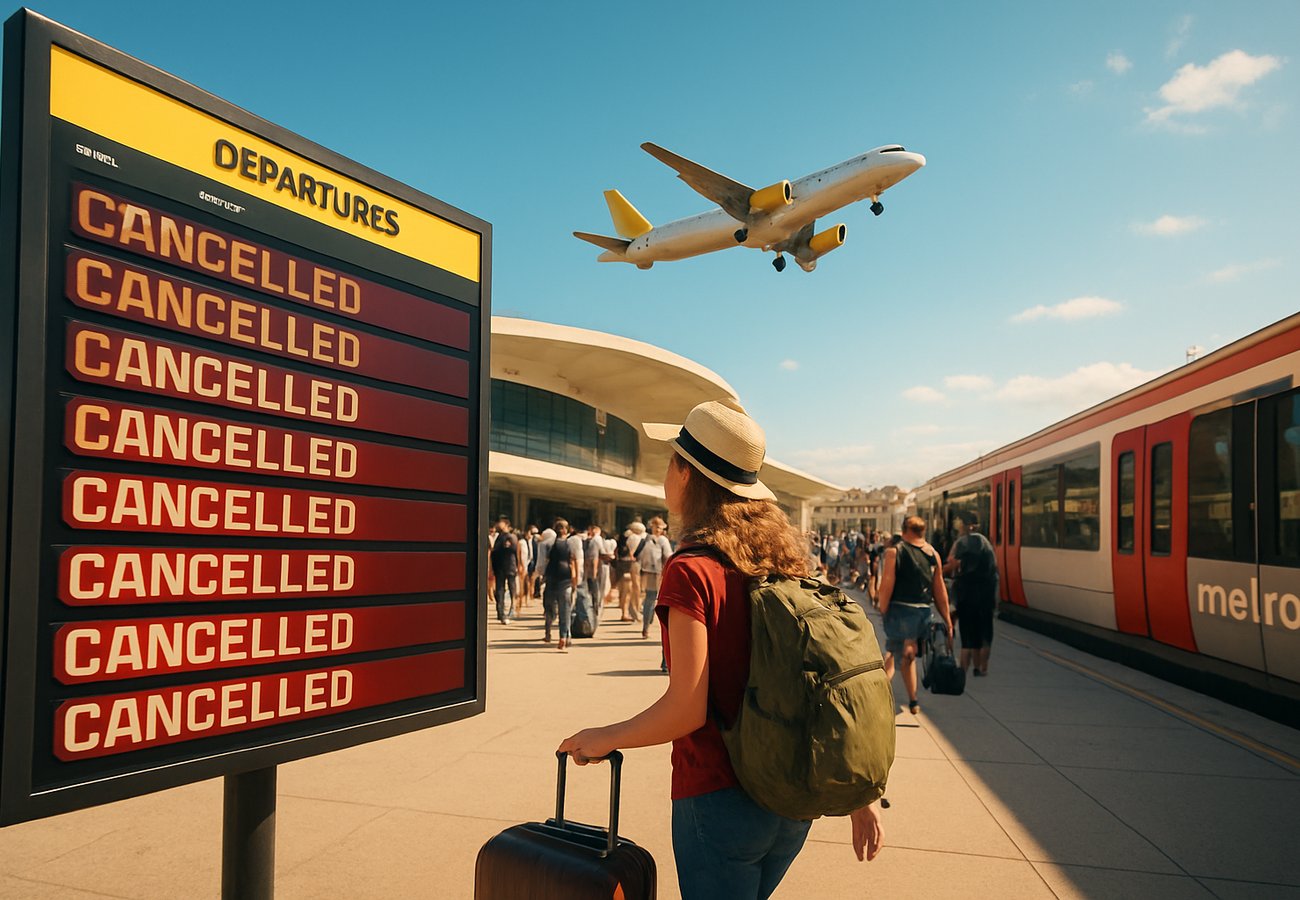
Image generated by AI
The Day Portugal Stopped Moving
June 3, 2026 marked one of the most significant single-day shutdowns in Portugal's recent history. A nationwide general strike called by major trade unions brought the country's transport networks, public services, and essential sectors to a grinding halt. What started as a labor protest over proposed law reforms escalated into a travel nightmare affecting thousands of domestic and international passengers.
Major cities including Lisbon, Porto, Faro, Funchal, and Ponta Delgada fell under the strike's ripple effects. The coordinated action mobilized workers across healthcare, education, aviation, public administration, and transport—essentially every sector a traveler depends on.
Metro Networks Flatlined Across Portugal
The most visible impact hit urban transportation hard. In Lisbon, the metro system shut down entirely, leaving commuters and travelers stranded without their primary transit option. Porto Metro operated on a skeletal limited schedule, while buses and suburban services were either delayed or completely suspended.
Reddit: "I was stuck at Oriente station for hours. No trains, no metro, no nothing. Had to pay €40 for a cab to get to the airport." — r/travel
This wasn't a minor inconvenience—it was a complete transportation collapse in Portugal's two largest cities. Taxis and rideshares became the only viable options, creating massive demand surges and pricing spikes that frustrated travelers already on edge about making their flights.
The Rail System Paralyzed
National rail services suffered extensive disruptions as staff participated in the strike. Long-distance, regional, and suburban train schedules were slashed to bare minimums. Passengers with pre-booked tickets faced cancellations with limited rebooking options, as rail staff walked off the job.
Travel corridors connecting Lisbon, Porto, Coimbra, Braga, Faro, and inland regions essentially froze. Those who had planned overland journeys were forced to pivot entirely—renting cars or scrambling for last-minute bus seats. The strain on alternative transport options was immediate and overwhelming.
Intercity bus services operated by commercial providers were among the few reliable options still running, though demand exploded and many routes filled to capacity within hours.
Airports Descend Into Chaos
Airports bore the brunt of the strike's impact. Cabin crew, ground handling staff, and airport personnel walked out, leaving Lisbon Humberto Delgado Airport, Porto Francisco Sá Carneiro Airport, Faro Airport, and regional airports in the Azores and Madeira severely understaffed.
Despite minimum service agreements designed to keep essential operations running, hundreds of flights were cancelled or delayed. Passengers endured extended waiting times at check-in counters, delayed boarding procedures, and logistical chaos when trying to reschedule flights. Airlines implemented rebooking protocols, but the volume of affected travelers far exceeded capacity on alternative flights.
The aviation sector felt the squeeze hardest. Domestic regional flights connecting smaller destinations were hit particularly hard, forcing travelers to abandon air travel for ground transportation that was also struggling under strike conditions.
Government Services Ground to a Halt
Public offices across Portugal operated at minimum capacity or closed entirely. Government centers, citizen service offices, and civil registry operations suspended most in-person appointments. If you needed a passport, visa, or civil document processed on June 3, you were out of luck.
Authorities did maintain minimum service provisions for truly urgent matters—emergency civil registration acts, urgent citizenship paperwork, emergency marriages, and legally required procedures continued at select locations. But finding an open office willing to process your request was like searching for a working taxi during rush hour.
The saving grace? Digital public services remained fully operational. Citizens who could handle transactions online—civil registration requests, documentation submissions, administrative functions—faced no disruption. This was crucial for tech-savvy travelers who could bypass physical office visits entirely.
Healthcare and Schools Shuttered
Schools and universities across Portugal suspended operations as teaching and support staff participated in the strike. Families traveling with school-age children or planning educational visits had to scramble.
Healthcare facilities operated under skeleton crews. Emergency care continued, but non-urgent appointments, elective surgeries, and routine consultations were postponed. Hospitals in Lisbon, Porto, Faro, and other major cities operated with reduced capacity, creating real challenges for visitors requiring medical services.
The Real-World Impact on Travelers
I spoke with several travelers stuck in Portugal that day. The consensus was brutal: flexibility became your only asset. Metro shutdowns forced reliance on taxis and rideshares—expensive and unreliable. Train cancellations meant renting cars or claiming a seat on packed intercity buses. Airport delays turned a three-hour connection into a six-hour ordeal with zero margin for error.
Road congestion spiked as everyone shifted to alternative transport modes simultaneously. Travelers attempting to reach airports, ports, and urban centers found highways choked with traffic. Check-in and security procedures moved at a crawl due to reduced staffing, even when passengers managed to reach the airport.
Those requiring administrative services faced digital-or-nothing scenarios. Non-essential in-person services were largely impossible to access.
What Travelers Need to Know Going Forward
The June 3, 2026 strike serves as a stark reminder that industrial action can paralyze travel infrastructure with minimal warning. If you're planning trips to Portugal during volatile labor periods, consider these contingencies:
Monitor official schedules obsessively. Check flight, train, and metro schedules in real-time and confirm alternatives before departure. Don't assume anything will run as scheduled.
Build in buffer time. Add 2-3 hours to any urban transit—what normally takes 30 minutes might take 90. Plan airport arrivals earlier than normal, even for domestic flights.
Leverage digital government services. Complete any administrative tasks online before you arrive or at the airport. Don't count on in-person office availability during strikes.
Adjust city itineraries flexibly. School and hospital closures mean some attractions may have limited hours or operations. Verify before visiting.
Consider ground alternatives to flying. Intercity buses and rental cars provided more reliable options than aviation during the strike, though they weren't perfect.
Despite the disruption, essential services continued under minimum staffing protocols, and digital platforms provided uninterrupted access. Travelers who remained flexible and monitored official advisories navigated the chaos more successfully than those who ignored updates or assumed standard service levels would continue.
The lesson is clear: Portuguese labor actions don't discriminate between locals and tourists—preparation and adaptability are your only shields against travel chaos.
Related Travel Guides
Singapore Airlines Extends Massive Dubai Flight Cancellations Amid Severe Middle East Travel Chaos
Vietnam Joins China in Major Summer Expansion—UK Routes Launch
Disclaimer
This article is for informational and educational purposes only. It does not constitute legal, financial, or professional advice. While we strive to provide accurate and up-to-date information, travel policies, regulations, and conditions change rapidly. Always verify information with official sources before making travel decisions. Nomad Lawyer makes no representations about the accuracy, reliability, completeness, or suitability of the information provided. Readers should consult qualified professionals for advice specific to their circumstances. The views expressed in this article are those of the author and do not necessarily reflect the views of Nomad Lawyer.
Preeti Gunjan
Contributor & Community Manager
A passionate traveller and community builder. Preeti helps grow the Nomad Lawyer community, fostering engagement and bringing the reader experience to life.
Learn more about our team →