
Travel Poland Joins Five Nations Issuing Cuba Warnings March 2026
Poland becomes sixth Western nation in March 2026 to issue high-level Cuba travel warnings alongside Canada, UK, Sweden, Ireland and Australia amid economic turmoil.

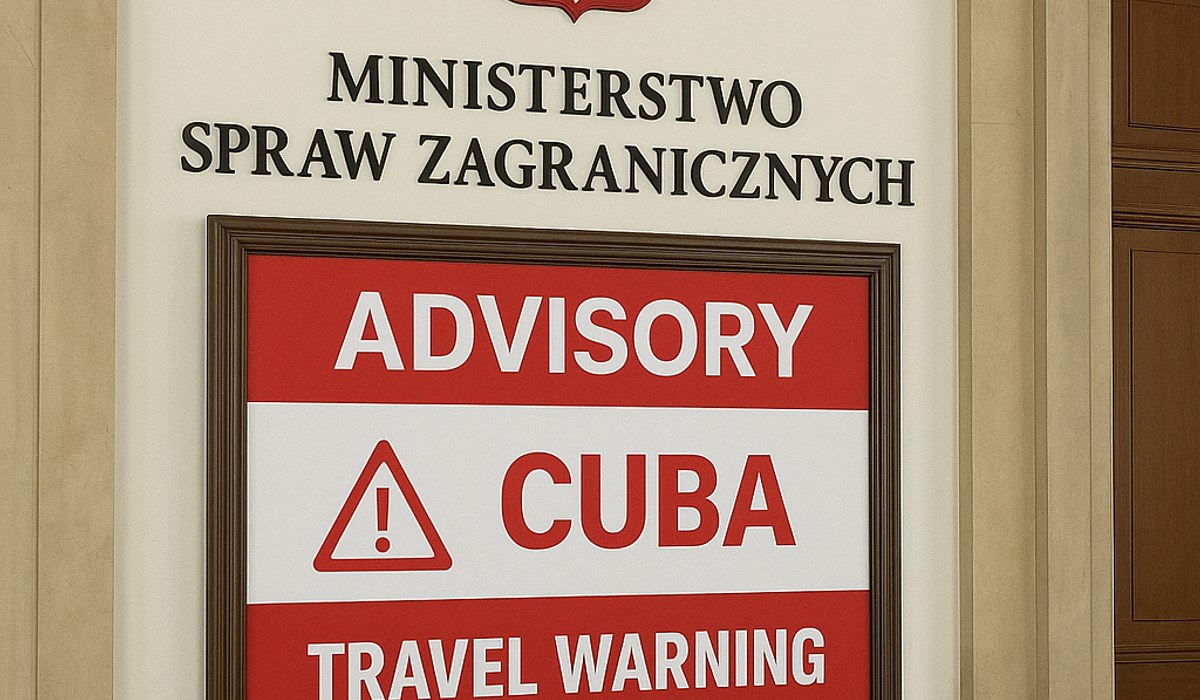
Image generated by AI
Quick Summary
- Poland issued high-level travel warnings for Cuba on March 28, 2026, joining Canada, the UK, Sweden, Ireland, and Australia
- Six major Western powers now advise against non-essential travel to the Caribbean nation citing economic instability and infrastructure breakdown
- Cuba's tourism sector faces collapse with hotel closures, fuel shortages, and widespread power outages affecting visitor safety
- Travelers with existing bookings face cancellation decisions as tour operators activate contingency protocols across Europe and North America
When Poland became the sixth major Western power to issue high-level travel warnings for Cuba on March 28, 2026, it marked a tipping point that threatens to isolate the Caribbean nation from international tourism just as peak season approaches. Warsaw's Ministry of Foreign Affairs joined Canada, the United Kingdom, Sweden, Ireland, and Australia in advising citizens to reconsider or avoid non-essential travel to the island, citing deteriorating economic conditions that have crippled basic infrastructure supporting the tourism industry.
The coordinated nature of these advisories—all issued within a three-week window—represents an unprecedented diplomatic response to Cuba's escalating crisis. Poland's decision carries particular weight as Polish passport holders have increasingly sought Caribbean destinations over the past five years, with Cuba ranking among the top three island choices for European adventure travelers according to preliminary 2025 data.
Tourism officials across the Caribbean are now monitoring whether this cascade of warnings signals a broader shift in how Western governments assess travel risk to politically isolated destinations struggling with economic sanctions and domestic infrastructure collapse.
Six Nations, One Message: Understanding the Coordinated Travel Warnings
Each of the six countries has issued advisories ranging from "exercise high degree of caution" to "reconsider travel," with language specifically addressing Cuba's inability to guarantee basic services that travelers expect. Canada's advisory, updated March 10, explicitly mentions "widespread shortages of food, medicine, and fuel" that have left tourists stranded without access to essential supplies. The UK Foreign Office followed on March 15 with warnings about "frequent and prolonged power outages affecting hotels and tourist facilities."
Australia's Department of Foreign Affairs and Trade escalated its Cuba assessment to Level 2 ("exercise a high degree of caution") on March 18, directly referencing the country's economic deterioration and limited consular support capabilities in Havana. Sweden and Ireland issued parallel warnings March 22 and 24 respectively, both highlighting transportation disruptions and healthcare system breakdowns that could leave foreign nationals without emergency medical access.
Poland's entry into this group on March 28 completes what travel security analysts are calling an "informal coalition response" to Cuba's crisis. According to the UN World Tourism Organization crisis management protocols, when multiple major source markets issue simultaneous high-level warnings, it typically triggers mandatory risk reassessments by international airlines, cruise operators, and resort chains.
The advisories share common themes: infrastructure failure, fuel scarcity, unreliable medical services, and limited ability for foreign governments to provide consular assistance due to Cuba's restricted diplomatic environment. None cite immediate violent threats or natural disasters, instead pointing to systemic economic collapse that has eroded the country's capacity to support foreign visitors.
What These Warnings Mean for Travelers with Existing Cuba Bookings
Travelers holding reservations for Cuba travel between April and August 2026 now face complex decisions about whether to proceed, postpone, or cancel entirely. Travel insurance policies vary significantly in coverage for government advisories that stop short of absolute travel bans. Most standard policies provide full refunds only when advisories reach "do not travel" status, which none of the six countries have issued for Cuba.
However, several major European tour operators have proactively offered rebooking options without penalties. German-based TUI and British operator Thomas Cook (operating under new ownership since its 2019 bankruptcy) both announced March 27 that customers with Cuba packages can switch to alternative Caribbean destinations through May 31 without change fees. These moves came before Poland's advisory but anticipate broader industry response to the mounting warnings.
The compounding effect of recent disruptions adds complexity to the decision calculus. As detailed in our coverage of China's fuel export halt impacting Caribbean airline routes, aviation fuel scarcity has already forced European carriers to reduce Cuba flight frequencies by approximately 30% since February. Air France suspended its Paris-Havana route entirely on March 20, citing "operational challenges" that industry analysts directly link to fuel availability concerns.
Travelers should immediately contact their booking agents to understand specific cancellation and modification terms. Those who purchased "cancel for any reason" insurance upgrades—typically 40% more expensive than standard policies—have the clearest path to full refunds. Others may need to demonstrate that changed circumstances materially affect their planned itinerary, which the cluster of six government warnings substantially supports.
The Skift's analysis of geopolitical travel disruptions notes that tour operators generally honor government travel advisories as legitimate grounds for penalty-free cancellation, even when not strictly required by contract terms, to preserve customer goodwill and avoid negative publicity.
The Economic Collapse Behind the Advisories: Cuba's Tourism Crisis Explained
Cuba's tourism infrastructure is experiencing system-wide failure driven by decades of underinvestment, intensified US economic sanctions, and the Venezuelan economic crisis that eliminated a crucial source of subsidized petroleum. The island welcomed 2.1 million international visitors in 2025, down 35% from its pre-pandemic 2019 peak of 4.3 million, according to preliminary Cuban government statistics.
Hotel closures have accelerated throughout early 2026. The National Association of Cuban Hoteliers reported March 15 that 18% of the country's registered hotel rooms—approximately 11,000 units—are currently offline due to maintenance backlogs, spare parts shortages, and inability to guarantee electrical power or water supply. Major international chains including Spain's Meliá Hotels International and France's Accor have quietly reduced their Cuban portfolio since January.
Power grid failures have become routine. Havana experienced rolling blackouts lasting six to twelve hours daily throughout March, with resort areas in Varadero and Cayo Coco receiving priority but still facing interruptions that disrupt air conditioning, elevators, and water pumping systems. The Cuban Electric Union acknowledged March 23 that generating capacity currently meets only 65% of national demand during peak hours.
Food supply disruptions affect tourist facilities alongside the general population. Several all-inclusive resorts in Varadero reported switching to severely limited menu options in February after suppliers failed to deliver contracted provisions. Social media posts from travelers in early March showed breakfast buffets offering only bread, coffee, and limited fruit selections rather than the varied spreads advertised in promotional materials.
The World Travel & Tourism Council's latest Caribbean impact report estimates Cuba's tourism revenue will decline by $1.8 billion in 2026 compared to 2025—a 42% year-over-year drop that represents approximately 7% of Cuba's total GDP. This contraction creates a vicious cycle where reduced tourism income further limits the government's ability to import fuel, food, and maintenance supplies needed to support the sector.
US embargo enforcement has intensified pressure. The Biden administration maintained Trump-era restrictions that limit American tourism, eliminate cruise ship visits, and constrain financial transactions. New Treasury Department guidance issued in January 2026 expanded sanctions targeting entities involved in Cuba's petroleum sector, further constricting fuel availability for transportation and hotels.
Alternative Caribbean and Latin American Destinations for Spring 2026
Travelers reconsidering Cuba bookings have multiple Caribbean alternatives offering similar cultural experiences, beach quality, and colonial architecture without the infrastructure concerns. The Dominican Republic stands as the most direct substitute, with increased airlift from European and Canadian gateways and expanding all-inclusive resort capacity in Puerto Plata and Punta Cana regions.
Mexico's Riviera Maya continues to attract travelers seeking Caribbean beach combinations with cultural heritage. The Yucatán Peninsula offers Mayan archaeological sites that rival Cuba's colonial history appeal, along with reliable infrastructure and extensive resort options spanning budget to ultra-luxury categories. Direct flight availability from major European cities has expanded 15% since 2024.
Colombia's Caribbean coast presents an increasingly popular choice for travelers seeking authentic cultural immersion. Cartagena delivers colonial architecture rivaling Havana's historic districts, while beach destinations like Tayrona National Park and the Rosario Islands offer pristine coastal experiences. Infrastructure quality exceeds Cuba's current standard, though some regions still require careful itinerary planning.
For European travelers specifically affected by Poland, Sweden, and Ireland's advisories, Spain remains a compelling Mediterranean alternative. Our analysis of Spain's cost of living for extended Caribbean alternatives shows that regions like Andalusia and the Balearic Islands deliver similar climate, beach quality, and cultural richness at comparable or lower costs than Caribbean travel when factoring in shorter flight times.
Adventure travelers prioritizing unique cultural experiences over beach destinations should consider the emerging appeal outlined in our coverage of Southeast Asia emerging as alternative for adventure travelers. Vietnam, Thailand, and the Philippines offer exceptional value, diverse landscapes, and improving infrastructure that increasingly competes with Caribbean offerings.
Jamaica has actively marketed itself to travelers abandoning Cuba bookings, emphasizing stability, British Commonwealth ties, and English-language ease. The Jamaica Tourist Board launched a March campaign specifically targeting European markets with promotional packages offering 20-30% discounts for bookings made before April 15.
FAQ: Cuba Travel Warnings 2026
Q: Can I still legally travel to Cuba despite these warnings? A: Yes, the advisories from Poland, Canada, Sweden, Ireland, Australia, and the UK are recommendations, not legal prohibitions. Citizens of these countries remain free to travel to Cuba but should understand their governments strongly caution against it and may provide limited consular assistance once there. US citizens face different restrictions—they can only travel under specific authorized categories, not for pure tourism.
Q: Will my travel insurance cover cancellation based on these government advisories? A: Coverage depends entirely on your policy type. Standard travel insurance typically covers cancellations only when governments issue absolute "do not travel" orders, which haven't been declared for Cuba. However, "cancel for any reason" policies usually provide 50-75% reimbursement regardless of the reason. Contact your insurer directly with your policy number to confirm specific coverage before making cancellation decisions.
Q: Are the warnings based on safety threats or just infrastructure problems? A: These advisories focus primarily on infrastructure collapse and economic deterioration rather than violent crime or political instability. The warnings cite power outages, fuel shortages, food scarcity, limited medical services, and unreliable transportation—all conditions that could leave travelers stranded without basic necessities rather than in immediate physical danger.
Q: How long might these travel warnings remain in effect? A: Government advisories typically remain active until conditions demonstrably improve. Cuba's economic challenges stem from structural issues—decades of underinvestment, US sanctions, and lost Venezuelan petroleum subsidies—that won't resolve quickly. Realistic projections suggest these warnings could persist throughout 2026 and potentially into 2027 unless significant policy changes occur or international economic support materializes.
Q: What should I do if I'm currently in Cuba when these warnings were issued? A: Monitor your country's embassy communications, register with your government's traveler notification system if you haven't already, and maintain larger cash reserves than normal since ATM and credit card services are unreliable. Keep portable battery chargers for phones, stock non-perishable food items, and ensure your return flight is confirmed with recent reconfirmation. Consider departing earlier than planned if your hotel experiences sustained power or water outages affecting basic comfort and safety.
Related Articles:
Disclaimer
This article is for informational and educational purposes only. It does not constitute legal, financial, or professional advice. While we strive to provide accurate and up-to-date information, travel policies, regulations, and conditions change rapidly. Always verify information with official sources before making travel decisions. Nomad Lawyer makes no representations about the accuracy, reliability, completeness, or suitability of the information provided. Readers should consult qualified professionals for advice specific to their circumstances. The views expressed in this article are those of the author and do not necessarily reflect the views of Nomad Lawyer.
Raushan Kumar
Founder & Lead Developer
Full-stack developer with 11+ years of experience and a passionate traveller. Raushan built Nomad Lawyer from the ground up with a vision to create the best travel and law experience on the web.
Learn more about our team →