
Poland and Finland Accelerate Transition to F-35 Stealth Jets Replacing Russian MiG-29 Fleets in 2026
Poland and Finland are leading a strategic shift in European air defense by replacing Soviet-era Russian jets with F-35 Lightning II fleets to enhance NATO interoperability.

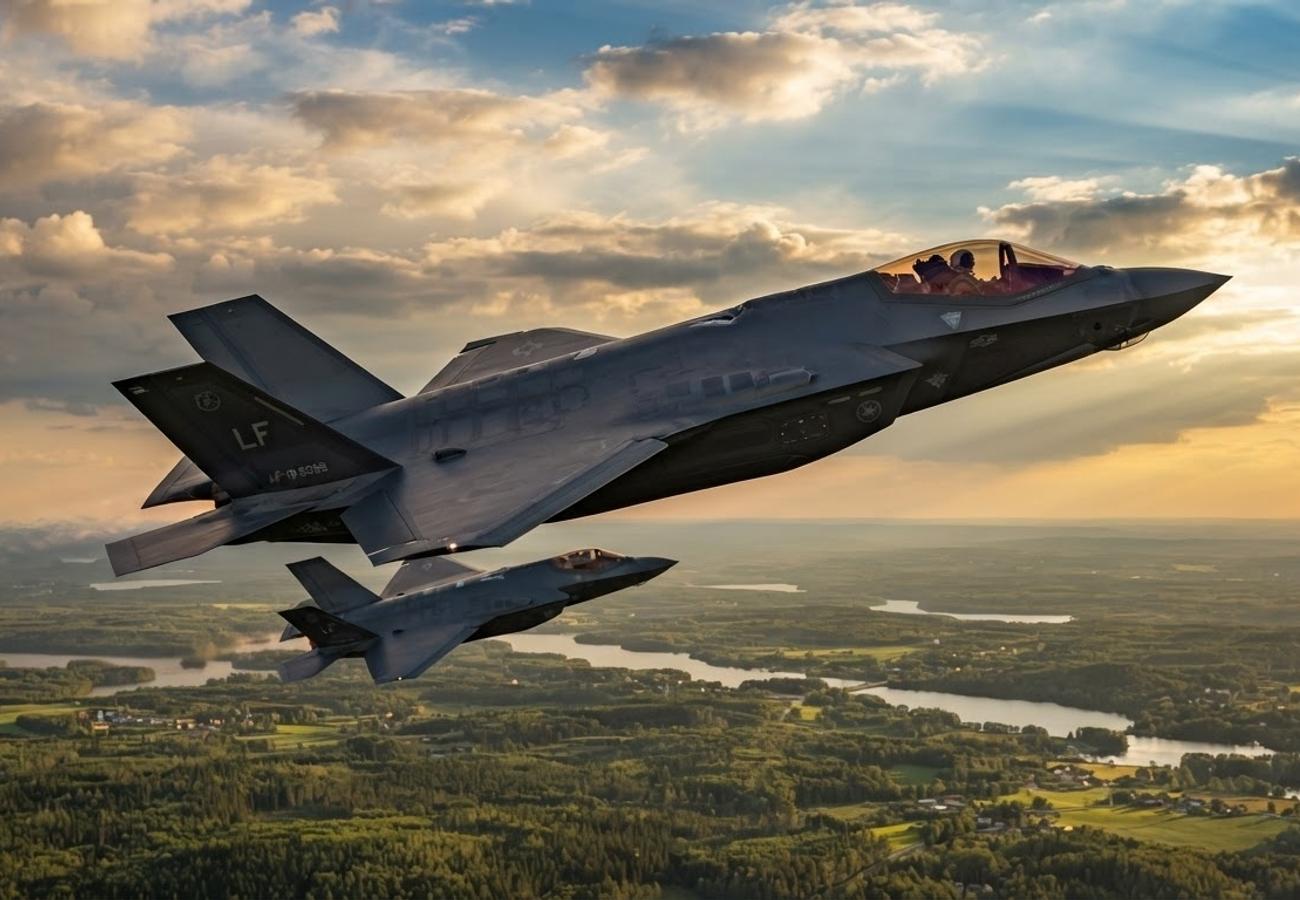
Image generated by AI
The air power map of Europe is undergoing a fundamental realignment as Poland and Finland accelerate the deployment of F-35 fleets, systematically erasing Russian and Soviet-era fighter designs from their national inventories.
Strategic Transition in Eastern and Northern Europe
The shift toward a shared fifth-generation Western standard is now operational. Poland has officially integrated its first F-35A Lightning II fighters, while Finland is preparing for a large-scale rollout to secure NATO's northern flank.
This transition is not merely a hardware upgrade but a strategic decoupling from Russian-origin technical data, spare parts, and overhaul capacities.
Poland: The End of the MiG-29 Era
Poland has reached a critical milestone in its defense modernization. On 22 May 2026, three F-35s arrived at the 32nd Tactical Air Base in Łask, marking the first operational fifth-generation jets on Polish soil.
Data from the Polish Senate confirms the following procurement and divestment figures:
- Total Order: 32 F-35 aircraft.
- Delivery Timeline: All units scheduled for delivery by the end of the decade.
- Divestment: Total retirement of the MiG-29 Fulcrum fleet.
- Ukraine Support: Poland had already supplied 14 MiG-29s by 2023, with plans finalized in late 2025 to donate all remaining Soviet-era aircraft.
Finland: Securing the Arctic Frontier
Finland is executing a 64-jet program to replace its aging Boeing F/A-18 Hornet fleet. According to the Finnish Ministry of Defence, the transition follows a strict timeline:
- Initial Deliveries: Commencing in 2026.
- Operational Entry: Aircraft will enter home bases between 2028 and 2030.
- Industrial Integration: F-35 engines will be assembled in Nokia, with front fuselage sections produced in Jämsä.
The deployment is critical for NATO deterrence given Finland's extensive land border with Russia and its proximity to the Arctic.
European Aviation Impact Breakdown
The move toward the F-35 is part of a wider continental trend. Our analysis shows 13 European countries are now participants in the F-35 program as either partners or foreign military sales customers.
| Country | Previous/Concurrent Fleet | Transition Status |
|---|---|---|
| Poland | MiG-29 (Russian) | Operational (First jets arrived May 2026) |
| Finland | F/A-18 Hornet (US) | Deliveries starting 2026 |
| Slovakia | MiG-29 (Russian) | Transitioning to F-16 |
| Others | Various 4th Gen | Germany, Belgium, Denmark, Norway, Italy, Netherlands, Czech Republic, Greece, Romania |
Passenger Rights & Regional Airspace Advisory
While these developments primarily concern military aviation, the shift in air defense assets has direct implications for civilian airspace management and regional stability.
For the international traveler, this means:
- Airspace Restrictions: Increased joint military exercises in Poland and Finland may lead to temporary NOTAMs (Notices to Air Missions), potentially causing minor rerouting of civilian flights.
- Airport Access: Military open days at bases like Łask may increase local traffic and temporary restrictions around military installations.
- Flight Safety: The transition to networked, stealth-capable sensors improves the overall integrated air and missile defense (IAMD) of the region, enhancing the security environment for commercial corridors.
Our analysis of current NATO protocols suggests that the standardization of the F-35 fleet reduces the risk of interoperability failures during cross-border air policing missions, which historically could lead to airspace congestion or coordination delays.
Industry Analyst View
The consolidation around a single fifth-generation platform creates a powerful "network effect." With over 1,150 F-35s in service worldwide and more than one million flight hours accumulated, the ecosystem now spans North America, Europe, and the Indo-Pacific (including Japan, South Korea, and Singapore).
The most significant advantage is the software-driven upgrade path. Block improvements allow for the introduction of new sensors and electronic-warfare tools without altering the airframe. This ensures that front-line states in Europe can modernize their capabilities synchronously, rather than relying on fragmented national procurement cycles.
For Russia, this shift represents a diminishing aerospace footprint. The loss of export opportunities and the end of dependence on Russian maintenance hubs for former Warsaw Pact states significantly reduce Moscow's diplomatic and technical leverage in Central Europe.
The era of the Soviet-designed fighter in Europe is effectively closing, replaced by a digitally integrated stealth network.
Related Travel Guides
Disclaimer
This article is for informational and educational purposes only. It does not constitute legal, financial, or professional advice. While we strive to provide accurate and up-to-date information, travel policies, regulations, and conditions change rapidly. Always verify information with official sources before making travel decisions. Nomad Lawyer makes no representations about the accuracy, reliability, completeness, or suitability of the information provided. Readers should consult qualified professionals for advice specific to their circumstances. The views expressed in this article are those of the author and do not necessarily reflect the views of Nomad Lawyer.
Raushan Kumar
Founder & Lead Developer
Full-stack developer with 11+ years of experience and a passionate traveller. Raushan built Nomad Lawyer from the ground up with a vision to create the best travel and law experience on the web.
Learn more about our team →