
Travel Chaos at Phoenix Sky Harbor: 163 Delays Ground American Airlines, Southwest, and JetBlue on Routes to Chicago, New York, and LA
Phoenix Sky Harbor International Airport reports 163 flight delays and 2 cancellations on April 11, 2026, affecting American Airlines, Southwest, and JetBlue on major U.S. routes.

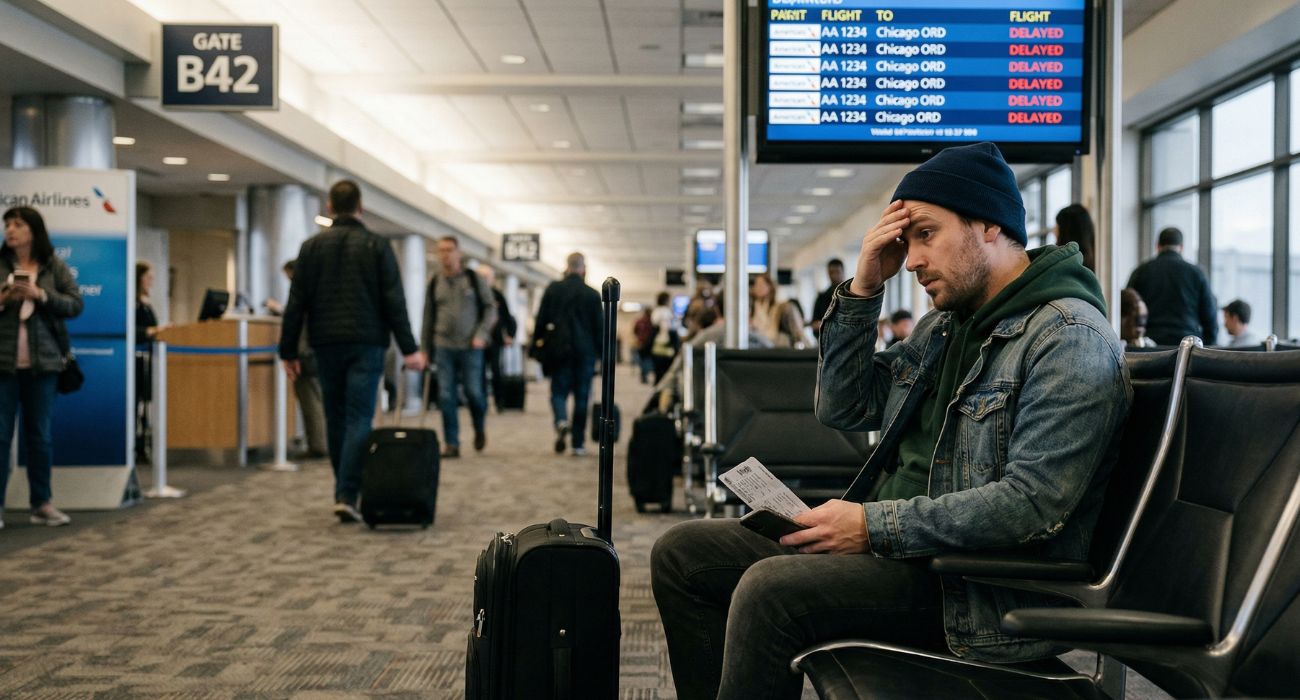
Image generated by AI
**> Quick Summary
- Phoenix Sky Harbor International Airport (PHX) records 163 flight delays and 2 cancellations on April 11, 2026
- Major carriers affected include American Airlines, Southwest Airlines, and JetBlue
- Disruptions impact routes to Los Angeles, Chicago, New York, Dallas, and San Francisco
- Root cause is cumulative network strain across the U.S. airline system in post-Easter recovery period
- Passengers advised to arrive early, monitor flights closely, and request compensation for qualifying delays**
Travel Chaos at Phoenix Sky Harbor: 163 Delays Ground American Airlines, Southwest, and JetBlue on Routes to Chicago, New York, and LA
PHOENIX — Phoenix Sky Harbor International Airport (PHX) plunged into operational turmoil on April 11, 2026, as a sweeping wave of schedule disruptions left hundreds of passengers stranded and scrambling for alternatives. A staggering 163 flight delays and 2 outright cancellations were recorded across the airport's terminals, with the brunt of the chaos falling on major carriers including American Airlines, Southwest Airlines, and JetBlue. Passengers bound for Los Angeles, Chicago, New York, Dallas, and San Francisco faced the most severe impacts, as departure boards filled with amber delay notices and gate areas swelled with frustrated travelers.
This disruption at one of America's most heavily trafficked airports underscores ongoing strain across the U.S. aviation network as the industry continues to absorb the operational aftereffects of peak Easter travel demand.
The Scale of Today's Disruption
The combined total of 163 delays and 2 cancellations represents a significant and well-above-average disruption day for Phoenix Sky Harbor, which processes hundreds of departures and arrivals daily across its two major terminals — Terminal 3 and Terminal 4. Even a modest cluster of late flights can trigger a domino effect that compounds hour by hour throughout the day.
According to real-time flight tracking data and airport operations status summaries, the disruptions were concentrated primarily in domestic departures, with delays ranging from 15-minute gate holds to multi-hour pushbacks that rendered connecting flight itineraries effectively impossible. The 2 cancellations, while numerically small, added a separate layer of disruption for passengers who faced the far more complicated process of rebooking on an already strained network.
The Federal Aviation Administration (FAA) defines a reportable delay as any departure or arrival occurring 15 or more minutes later than scheduled, and tracks these events continuously through its Airport Status Information System.
What These Numbers Mean for Passengers
For the tens of thousands of travelers who move through Phoenix Sky Harbor on a typical day, 163 delays represents a lived experience of repeated departure board refreshes, crowded gate waiting areas, and anxious calls to airlines, hotels, and waiting family members. Even a 15–30 minute gate hold can cascade into a chain reaction when an inbound aircraft is running late, the crew hits its duty-hour limits, or a connecting bank of flights at a downstream hub is missed.
At a network hub the size of PHX, those chains can stretch across dozens of cities simultaneously — turning a single delayed rotation in the morning into a multi-city ripple effect by evening. Passengers bound for transcontinental destinations were particularly vulnerable to cascading missed connections.
Root Cause: System Strain, Not a Single Event
Critically, today's disruption at Phoenix Sky Harbor was not caused by a single airport-wide shutdown, extreme weather event, or FAA ground stop. Instead, operational logs and flight-tracking data point to a more insidious cause: cumulative network strain across the U.S. airline system this spring.
When aircraft and crews are delayed at upstream airports earlier in the day, those same aircraft arrive late into PHX, compressing turnaround windows and pushing subsequent departures back. American Airlines, Southwest Airlines, and JetBlue — all operating high-frequency, tight-rotation schedules — are particularly vulnerable to this type of cascading disruption. A delay in Dallas or Chicago in the morning becomes a delay out of Phoenix by afternoon, without any single failure point at the local level.
Post-Easter disruptions continue to ripple through the national network, with aircraft still not fully repositioned to their normal bases and crew scheduling still reflecting the strain of peak holiday travel.
Airlines at the Center of the Storm
| Airline | Primary Affected Routes | Disruption Type |
|---|---|---|
| American Airlines | PHX → Chicago (ORD), New York (JFK/LGA), Dallas (DFW) | Multiple delays |
| Southwest Airlines | PHX → Los Angeles (LAX), San Francisco (SFO), Denver (DEN) | Rolling delays |
| JetBlue | PHX → New York (JFK), Boston (BOS) | Delays |
| Delta Air Lines | PHX → Atlanta (ATL), Minneapolis (MSP) | Delays |
| United Airlines | PHX → Chicago (ORD), Denver (DEN), Houston (IAH) | Delays |
Southwest Airlines, with its unmatched volume of short-haul domestic rotations out of PHX, faced the broadest operational exposure. Its point-to-point network model means a delay on any single leg has immediate knock-on effects across the full day's rotation schedule. American Airlines, operating Phoenix as a major connecting hub, experienced pressure on its transcontinental routes to New York and Chicago. JetBlue, which has significantly expanded its domestic footprint in recent years, also found its PHX operations caught in the system-wide web of delays.
Passenger Experience: Crowds, Queues, and Missed Connections
On the ground inside Terminal 3 and Terminal 4, the human cost of today's disruption was evident. Concourses filled with travelers dragging roller bags between departure gates, anxiously studying overhead flight boards that cycled through a parade of yellow delay notices. Customer service desks for American, Southwest, and JetBlue reported extended queues as passengers sought rebooking assistance, compensation information, or answers about when their flights would actually depart.
For travelers with tight connecting itineraries — particularly those routing through PHX to reach New York, Chicago, or Los Angeles — the delays translated directly into missed connections, forcing airlines to scramble for next-available seating on already-full services. Ground transport bookings, hotel reservations, and business meeting schedules all fell victim to the cascading effects of a disruption day that began before most passengers had finished their morning coffee.
The airport's social media feeds and customer service contact centers were overwhelmed with inquiries, reflecting the scale of passenger impact.
Why Phoenix Sky Harbor Magnifies Disruptions
Phoenix Sky Harbor is not simply Arizona's largest airport — it consistently ranks among the top 10 busiest airports in the United States by passenger volume, handling well over 40 million passengers annually. Its role as a primary hub for American Airlines and a high-frequency base for Southwest means that any significant disruption at PHX reverberates through flight networks across the entire country.
The airport's operational importance in the western U.S. aviation network means that localized disruptions have outsized cascading effects. Passengers connecting through PHX to reach the East Coast, international destinations, or major business centers face amplified vulnerability to delays and cancellations.
FAA Guidance and Official Resources
The FAA's Airport Status Information System provides real-time departure and arrival delay data for PHX and all major U.S. airports, categorizing delays by cause — weather, National Airspace System (NAS) issues, carrier-controlled factors, or security. Passengers seeking official status information are directed to check flyskyhabor.com or their airline's app for gate-level updates.
Under the U.S. DOT's Airline Customer Service Dashboard, American Airlines, Southwest, and JetBlue are all committed to providing meal vouchers for delays of 3 or more hours within the airline's control, and hotel accommodation for overnight delays where the carrier is responsible. Passengers should proactively request these benefits at the airline service desk rather than waiting to be offered them.
Broader U.S. Aviation Context
Today's PHX disruption mirrors a pattern of elevated delay clusters that have been recorded at major U.S. hubs throughout April 2026. Earlier this week, the national aviation system logged over 3,000 delays in a single day, with airports including Atlanta, Chicago O'Hare, Dallas/Fort Worth, and Seattle-Tacoma all reporting above-normal disruption levels in the post-Easter travel recovery period.
The IATA has noted that spring 2026 represents one of the more operationally complex periods in recent years, with high passenger demand, ongoing air traffic controller recruitment challenges, and the tail end of winter weather systems all converging on a network with limited spare capacity.
What Travelers Should Do Now
- Check real-time flight status via your airline app or the FAA's official airport status tool before leaving for the airport
- Arrive earlier than usual — budget an extra 60–90 minutes beyond your normal arrival window given current delay clustering at PHX
- Protect your connections — alert your airline immediately if your PHX delay puts a connecting flight at risk so they can flag you for priority rebooking
- Request meal vouchers proactively — for delays of 3+ hours within airline control, you are entitled to food and beverage compensation under DOT commitments
- Monitor the FAA advisory board — if a ground delay program is issued for PHX, expect further pushbacks across all carriers operating at the airport
The Road Back to Normal
Disruptions of this scale at Phoenix Sky Harbor are not permanent — as inbound aircraft and crews return to schedule, the backlog clears and normal operations resume. However, for the hundreds of passengers whose travel plans were upended on April 11, the disruption had real consequences for their journeys and schedules.
The PHX disruption serves as a vivid reminder that in modern aviation, every flight is part of an intricate, interdependent network — and when that network is under strain, even the most routine journeys can become stressful experiences. Travelers planning to fly through Phoenix in the coming days are strongly advised to monitor their flights closely, build buffer time into their plans, and approach the journey with patience.
Frequently Asked Questions
How many flights were delayed at Phoenix Sky Harbor on April 11, 2026? Phoenix Sky Harbor recorded 163 flight delays and 2 cancellations on April 11, 2026. Delays ranged from 15-minute gate holds to multi-hour pushbacks depending on the severity of network disruptions.
Which airlines were most affected by the PHX disruption? American Airlines, Southwest Airlines, and JetBlue were the primary carriers experiencing disruptions. American faced pressure on transcontinental routes to New York and Chicago. Southwest experienced rolling delays across its high-frequency domestic network. JetBlue also faced delays on its Northeast routes.
What routes from Phoenix were most disrupted? Flights to Los Angeles, Chicago, New York, Dallas, and San Francisco experienced the most significant impacts on April 11. These are among PHX's highest-traffic corridors, and cascading effects were amplified on routes with tight connection windows.
Why does Phoenix Sky Harbor's disruption affect so many other cities? Phoenix Sky Harbor ranks among the top 10 busiest U.S. airports and serves as a major hub for American Airlines and a high-frequency base for Southwest. Delays at PHX cascade through the national network as affected aircraft and crews are repositioned to downstream hubs.
What compensation am I entitled to if my flight was delayed? Under U.S. DOT rules, you are entitled to meal vouchers for delays of 3 or more hours within the airline's control. For overnight delays where the carrier is responsible, you may also be entitled to hotel accommodation. Request these benefits proactively at the airline service desk.
Should I add extra buffer time for flights through Phoenix in coming days? Yes. Given the post-Easter recovery strain continuing across the U.S. aviation network, it is advisable to arrive 60–90 minutes earlier than normal and to avoid booking connecting flights with less than 90-minute windows at PHX until delays normalize.
Disclaimer
This article is for informational and educational purposes only. It does not constitute legal, financial, or professional advice. While we strive to provide accurate and up-to-date information, travel policies, regulations, and conditions change rapidly. Always verify information with official sources before making travel decisions. Nomad Lawyer makes no representations about the accuracy, reliability, completeness, or suitability of the information provided. Readers should consult qualified professionals for advice specific to their circumstances. The views expressed in this article are those of the author and do not necessarily reflect the views of Nomad Lawyer.
Kunal K Choudhary
Co-Founder & Contributor
A passionate traveller and tech enthusiast. Kunal contributes to the vision and growth of Nomad Lawyer, bringing fresh perspectives and driving the community forward.
Learn more about our team →