
Phoenix Arizona Historic Buildings: 5 Architectural Gems
Phoenix Arizona historic buildings showcase remarkable architectural heritage beyond desert landscapes. Discover five stunning structures redefining the city's cultural identity in 2026.

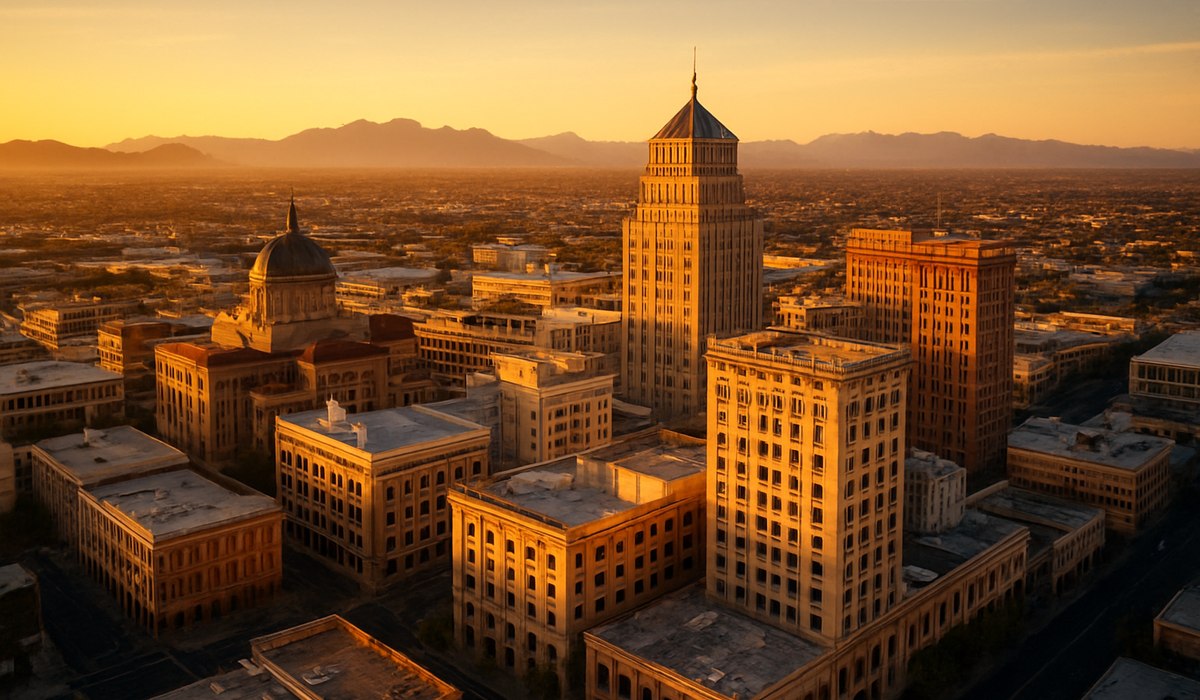
Image generated by AI
Beyond Desert Horizons: Phoenix's Architectural Renaissance
Phoenix Arizona historic buildings represent far more than relics of the past. While the Sonoran Desert's dramatic landscape draws millions annually, the city's architectural heritage offers location-independent professionals and cultural travelers profound experiences rooted in design excellence. This 2026 building season reveals renewed interest in preservation efforts and adaptive reuse projects that position Phoenix as an emerging architectural destination alongside traditional heritage centers.
The resurgence reflects broader travel trends favoring authentic cultural engagement. Digital nomads increasingly seek cities where architectural history intersects with modern amenities, and Phoenix delivers precisely that combination. From Spanish Colonial Revival structures to Art Deco masterpieces, these five historic buildings demonstrate why architecture enthusiasts should prioritize Phoenix on their itineraries.
Rosson House: Victorian Elegance in the Desert
The Rosson House stands as Phoenix's most recognizable Victorian mansion, constructed in 1895 and now anchoring Heritage Square downtown. This iconic structure exemplifies Queen Anne architecture with turrets, wraparound porches, and intricate detailing that commands attention from passing visitors. Its meticulous restoration in 1987 established preservation standards throughout Arizona, making it essential viewing for architecture students and enthusiasts alike.
Visitors touring the Rosson House gain firsthand insight into late-nineteenth-century Phoenix life while appreciating the craftsmanship defining pre-statehood Arizona. The house's museum operations offer guided tours highlighting architectural elements and historical context. Located in the heart of downtown Phoenix, the building anchors heritage tourism efforts that have revitalized surrounding neighborhoods. Period furnishings and interpretive exhibits create immersive experiences unavailable through photographs alone.
For travelers interested in architectural history, the Rosson House provides foundational understanding of how Victorian design principles adapted to Arizona's climate. The restoration itself represents a significant achievement in historic preservation methodology. Learn more about Heritage Square Phoenix for current visiting hours and special event programming.
Arizona Biltmore Hotel: Art Deco Grandeur
The Arizona Biltmore Hotel, opened in 1929, stands among America's most distinctive Art Deco structures. Frank Lloyd Wright's influence shaped its distinctive architectural language, incorporating geometric patterns and organic design principles that distinguished the property from contemporary luxury hotels. This National Historic Landmark remains operational today, seamlessly blending historic preservation with modern hospitality standards.
The building's copper roof, intricate tilework, and sculptural ornamentation reflect meticulous attention to decorative detail characteristic of 1920s design aspirations. Architecture historians debate Wright's precise involvement, yet consensus acknowledges his creative influence throughout the property's design. The lobby's soaring ceilings and carefully curated artworks create environments justifying the Arizona Biltmore's designation as architectural heir to Arts and Crafts movements.
Travelers needn't stay overnight to appreciate the building's significance. Public areas welcome architectural enthusiasts, and guided tours provide professional interpretation of design elements and construction techniques. The property's original specifications demonstrate how Arizona buildings incorporated cooling strategies and light-filtering systems predating modern HVAC technology. Visit the Arizona Biltmore official website for architectural tour availability and special exhibitions.
Phoenix City Hall: Mission Revival Statement
Completed in 1927, Phoenix City Hall exemplifies Mission Revival architecture adapted for civic purposes. Its copper dome, arched entryways, and decorative glazed tiles showcase Spanish Colonial influences reinterpreted through American design sensibilities. The building's symmetrical facade and carefully proportioned fenestration demonstrate architectural principles balancing aesthetic appeal with functional municipal requirements.
The copper dome, now patina-green with age, has become emblematic of Phoenix's skyline since the building's completion. Interiors feature marble, terrazzo, and ornamental plasterwork representing significant investment in civic architecture during the city's rapid growth period. The building's structural integrity and preservation status ensure continued visibility for future generations. Restoration efforts undertaken in recent decades have stabilized original materials while accommodating modern building systems.
Digital nomads and architecture photographers find Phoenix City Hall exceptionally photogenic, particularly during golden hour when southwestern light accentuates geometric elements. Interior public spaces remain accessible during business hours, allowing visitors to examine craftsmanship unavailable from exterior viewpoints. The building functions as active government headquarters while maintaining its status as architectural landmark. Discover more about Phoenix's civic heritage through the City of Phoenix official history page.
Palmer House: Territorial Period Significance
The Palmer House, constructed in 1896, represents Territorial-period domestic architecture predating Arizona's 1912 statehood. This modest Queen Anne-influenced residence demonstrates how middle-class Phoenicians lived during the city's transformation from frontier settlement to established municipality. The building's simple elegance contrasts with grander Victorian specimens, offering perspective on diverse architectural expressions within the same historical moment.
Now operated as a museum and educational venue, the Palmer House provides intimate glimpses into daily life circa 1890s Phoenix. Original furnishings, period-appropriate textiles, and household implements contextualize architectural features within authentic residential settings. The building's modest scale and straightforward design reveal practical considerations governing domestic architecture in hot, developing territories where resources remained limited compared to eastern American cities.
Architecture historians value the Palmer House for its documentary clarity regarding construction techniques, material availability, and regional adaptations to climate conditions. The structure's survival demonstrates how buildings initially considered temporary often become valuable historical resources. Educational programming and community events held at the Palmer House connect contemporary Phoenix residents with territorial-era heritage. Explore Heritage Square Phoenix's complete offerings for information about the Palmer House and companion historic properties.
Heard Museum Building: Art Deco Indigenous Arts Showcase
The Heard Museum, while primarily known for its exceptional Native American art collections, occupies a 1929 Art Deco structure deserving architectural recognition independently from its contents. The building's clean lines, geometric ornamentation, and carefully composed facades reflect period design principles. The structure harmoniously integrates multiple exhibition spaces while maintaining exterior visual coherence, a achievement not guaranteed when designing museums serving curatorial functions.
The Heard Museum's architectural significance extends beyond decorative elements to innovative spatial planning accommodating rapidly expanding art collections. The building's evolution through multiple additions demonstrates sensitive expansion respecting original design intentions while addressing contemporary museum standards. Phoenix Arizona historic buildings like the Heard represent how architecture and mission align when institutions maintain respect for foundational design principles.
Visitors experiencing the Heard encounter architecture that enhances rather than competes with artistic presentations. Natural lighting, circulation patterns, and material selections demonstrate sophisticated museum design predating modern environmental control systems. The building houses transformative cultural experiences alongside architectural merit. Learn more about the Heard Museum's architectural heritage and exhibitions for current programming and exhibition information.
Phoenix Arizona Historic Buildings: Data Overview
| Building Name | Construction Year | Architectural Style | Current Status | Historic Designation | Public Access |
|---|---|---|---|---|---|
| Rosson House | 1895 | Queen Anne Victorian | Museum/Heritage Site | National Register | Guided Tours |
| Arizona Biltmore Hotel | 1929 | Art Deco/Wright Influence | Operating Hotel | National Historic Landmark | Public Areas |
| Phoenix City Hall | 1927 | Mission Revival | Active Government | Local Landmark | Business Hours |
| Palmer House | 1896 | Queen Anne Territorial | Educational Museum | National Register | Limited Hours |
| Heard Museum | 1929 | Art Deco | Operating Museum | Local Landmark | Daily Public |
What This Means for Travelers
Phoenix Arizona historic buildings offer compelling reasons to extend urban itineraries beyond desert recreation and outdoor activities. Consider these actionable approaches:
-
Schedule dedicated architecture walking tours combining downtown historic properties with urban parks. Heritage Square's concentrated location enables efficient multi-building exploration within 90-minute timeframes.
-
Visit during off-peak morning hours (Tuesday-Thursday, before 10 AM) to minimize
Disclaimer
This article is for informational and educational purposes only. It does not constitute legal, financial, or professional advice. While we strive to provide accurate and up-to-date information, travel policies, regulations, and conditions change rapidly. Always verify information with official sources before making travel decisions. Nomad Lawyer makes no representations about the accuracy, reliability, completeness, or suitability of the information provided. Readers should consult qualified professionals for advice specific to their circumstances. The views expressed in this article are those of the author and do not necessarily reflect the views of Nomad Lawyer.
Raushan Kumar
Founder & Lead Developer
Full-stack developer with 11+ years of experience and a passionate traveller. Raushan built Nomad Lawyer from the ground up with a vision to create the best travel and law experience on the web.
Learn more about our team →