
Philippines Slashes Airport Fees Boosting PAL, Cebu Pacific Tourism Surge
Philippine government cuts airport charges at CAAP-operated airports amid jet fuel spike from $90.87 to $188.2 per barrel, aiding Philippine Airlines, Cebu Pacific, and Japan-South Korea carriers to fuel tourism boom despite Middle East tensions.

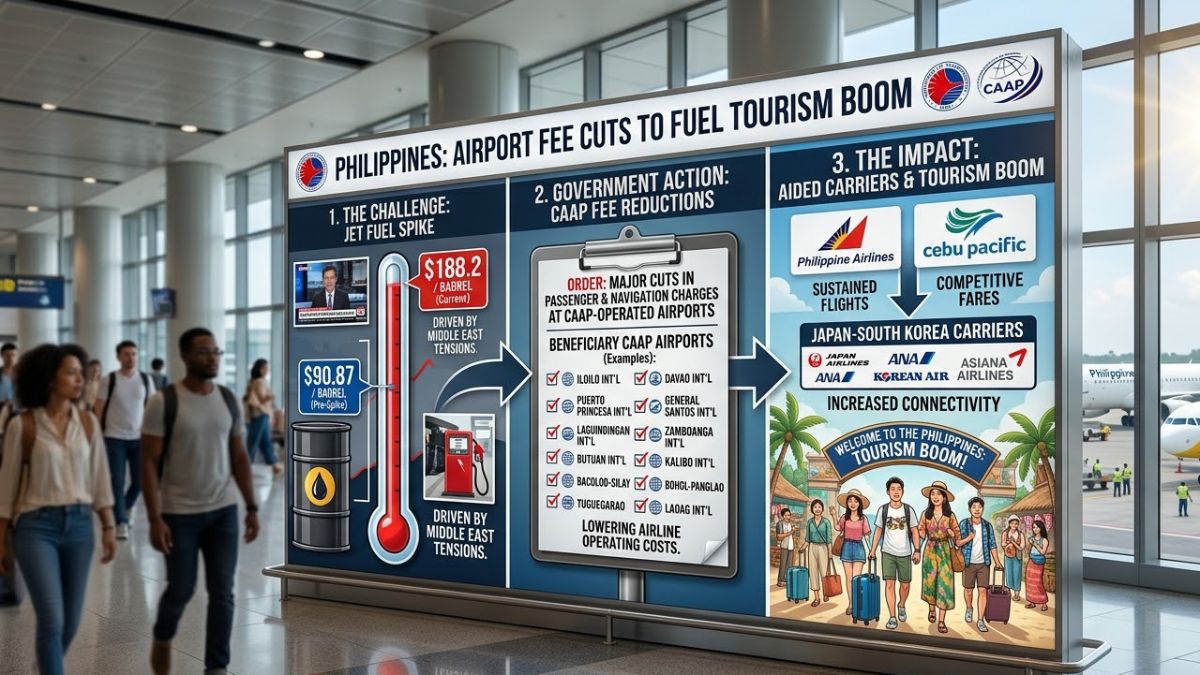
Image for illustrative purposes
Quick Summary
- Philippines Government Action: President Marcos directs CAAP to slash passenger service charges (PSC) and navigation fees at all 30+ state-run airports to counter jet fuel jump from $90.87 to $188.2 per barrel.
- Airlines Benefiting: Philippine Airlines, Cebu Pacific, and carriers from Japan-South Korea set for passenger surge and lower costs.
- Traveler Impact: Faster 15-day CAB fuel surcharge reviews enable quicker fare drops; current Level 8 surcharges hit ₱253-₱6,208.
- What's Next: Measures stabilize fares ahead of Holy Week; ongoing monitoring of Middle East oil volatility.
Philippine Airlines and Cebu Pacific stand to gain significantly from the government's bold move to reduce airport charges at Civil Aviation Authority of the Philippines (CAAP)-operated airports. This decision counters soaring jet fuel prices driven by Middle East conflicts, promising a tourism surge from Japan and South Korea despite global oil volatility.
Acting Transportation Secretary Giovanni Lopez issued the directive, ordering cuts to Passenger Service Charges (PSC), landing fees, parking fees, and airport navigation charges across all CAAP-managed gateways nationwide. Jet fuel costs have skyrocketed from $90.87 per barrel on February 19 to $188.2 per barrel by March 9, pressuring airlines to raise fares.
Why This Matters for Airlines and Tourism
The fee reductions directly lower operating costs for carriers like Philippine Airlines (PAL) and Cebu Pacific, enabling them to maintain competitive pricing. Regional airlines from Japan and South Korea, key tourism drivers to the Philippines, will benefit as lower costs support increased flights and passenger volumes.
This intervention arrives ahead of peak travel periods like Holy Week, bolstering the Philippines' tourism recovery. By easing airline burdens, the government aims to keep air travel affordable, igniting a hospitality boom in a fuel-stressed market.
President Ferdinand “Bongbong” Marcos Jr. emphasized shielding Filipino travelers from oil price spikes tied to geopolitical tensions. The measures form part of broader economic cushions, including faster fare adjustments to pass on fuel savings quickly.
Per-Airline and Initiative Breakdown
Philippine Airlines (PAL) and Cebu Pacific Gains
Local flag carrier Philippine Airlines and low-cost rival Cebu Pacific operate extensively through CAAP airports like Laoag International Airport, Zamboanga International Airport, and Davao International Airport. Reduced PSC and navigation fees will trim their expenses, supporting route expansions to high-demand markets from Japan and South Korea.
Industry observers predict these carriers will see passenger surges as lower costs translate to stable or reduced fares. Airlines have welcomed the nimbler system, which balances operational survival with consumer protection.
Japan and South Korea Carrier Boost
Carriers from Japan and South Korea, major sources of inbound tourism, face the same fuel pressures but now gain from slashed airport fees. This positions the Philippines as a more attractive destination amid regional competition, fueling hotel and hospitality sector growth.
The policy encourages more frequent flights from these markets, where demand for Philippine beaches and cities remains strong. Reduced charges at CAAP's 30 airports nationwide amplify the appeal.
Civil Aeronautics Board (CAB) Fuel Surcharge Reforms
The CAB has slashed its fuel surcharge evaluation period from one month to 15 days. This allows airlines to reflect jet fuel declines in ticket prices rapidly, preventing overcharges.
For tickets booked April 1–15, Level 8 surcharges apply: domestic flights range from ₱253 (short routes <200 km) to ₱787 (long hauls >1,000 km); international from ₱835 (Hong Kong/Taiwan) to ₱5,913 (US) or ₱6,208 (>14,000 km).
Key Facts at a Glance
| Detail | Data |
|---|---|
| Jet Fuel Price Rise | $90.87/barrel (Feb 19) to $188.2/barrel (Mar 9) |
| Airports Affected | All 30+ CAAP-operated, e.g., Laoag (LAO), Zamboanga (ZAM), Davao (DVO) |
| Fees Reduced | PSC, navigation, landing, parking charges |
| CAB Review Cycle | Shortened to 15 days from 1 month |
| Current Surcharge Level | Level 8 (Apr 1-15 bookings): ₱253-₱6,208 |
| Trigger | Middle East conflicts disrupting oil supply |
What This Means for Travelers
Passengers booking with Philippine Airlines, Cebu Pacific, or Japan-South Korea airlines can anticipate more stable fares despite fuel hikes. The 15-day CAB cycle ensures quicker relief when oil prices dip, ideal for Holy Week and summer travel.
Domestic travelers on short routes save via lower surcharges, while international visitors from Asia benefit from cost-competitive gateways. Lock in fares now, as analysts warn of short-term pinches from Brent crude above $100/barrel.
Tourism operators expect a hospitality boom, with more affordable access drawing crowds to Philippine destinations. The government monitors markets, promising further steps if volatility persists.
Challenges and Risks
Fuel prices remain volatile, with Middle East tensions potentially sustaining high costs. Even with fee cuts, Level 8 surcharges double prior rates, impacting budgets during peak seasons.
Implementation across CAAP's network requires swift execution to deliver immediate relief. Airlines must balance cost savings with service reliability amid global supply disruptions.
Longer-term, sustained oil spikes could pressure the policy's effectiveness, though faster reviews provide agility.
Frequently Asked Questions
What airport fees is the Philippines government cutting?
The Civil Aviation Authority of the Philippines (CAAP) will reduce Passenger Service Charges (PSC), airport navigation charges, landing fees, and parking fees at all 30+ CAAP-operated airports nationwide, including Laoag, Zamboanga, and Davao, to lower airline costs amid jet fuel surges.
How do the new CAB fuel surcharge rules affect ticket prices?
CAB shortened reviews to 15 days from one month, allowing faster fare adjustments. For April 1–15 bookings, Level 8 applies: ₱253-₱787 domestic, ₱835-₱6,208 international—quick drops follow if fuel stabilizes.
Which airlines benefit most from these Philippines airport fee cuts?
Philippine Airlines, Cebu Pacific, and carriers from Japan and South Korea gain from lower operating costs at CAAP airports, boosting passenger numbers and tourism despite Middle East-driven fuel hikes.
Will airfares drop immediately after the fee reductions?
Not immediately—current Level 8 surcharges reflect high fuel at $188.2/barrel, but 15-day CAB cycles and fee cuts enable quicker reductions ahead of Holy Week; monitor via FlightAware or airline sites.
- Check your flight status via airline app or FlightAware before heading to the airport.
- Contact your airline directly to rebook — activate disruption waivers proactively via app.
- Know your rights — US DOT mandates full cash refunds on cancelled flights, not just vouchers.
- Keep all receipts for meals, hotels, or alternative transport — may be reimbursable.
- Consider alternative airports — e.g., Ninoy Aquino International Airport (NAIA) for Manila routes.
Related Travel Guides
Philippine Airlines New Routes 2026 Cebu Pacific Holy Week Fare Guide Japan to Philippines Tourism Surge
Disclaimer
This article is for informational and educational purposes only. It does not constitute legal, financial, or professional advice. While we strive to provide accurate and up-to-date information, travel policies, regulations, and conditions change rapidly. Always verify information with official sources before making travel decisions. Nomad Lawyer makes no representations about the accuracy, reliability, completeness, or suitability of the information provided. Readers should consult qualified professionals for advice specific to their circumstances. The views expressed in this article are those of the author and do not necessarily reflect the views of Nomad Lawyer.
Kunal K Choudhary
Co-Founder & Contributor
A passionate traveller and tech enthusiast. Kunal contributes to the vision and growth of Nomad Lawyer, bringing fresh perspectives and driving the community forward.
Learn more about our team →