
Parrtjima 2026: Alice Springs Indigenous Festival Takes Global Stage
Parrtjima 2026 brings cutting-edge Indigenous art projections to Alice Springs, positioning remote Australia as a cultural tourism powerhouse while driving regional economic recovery in 2026.

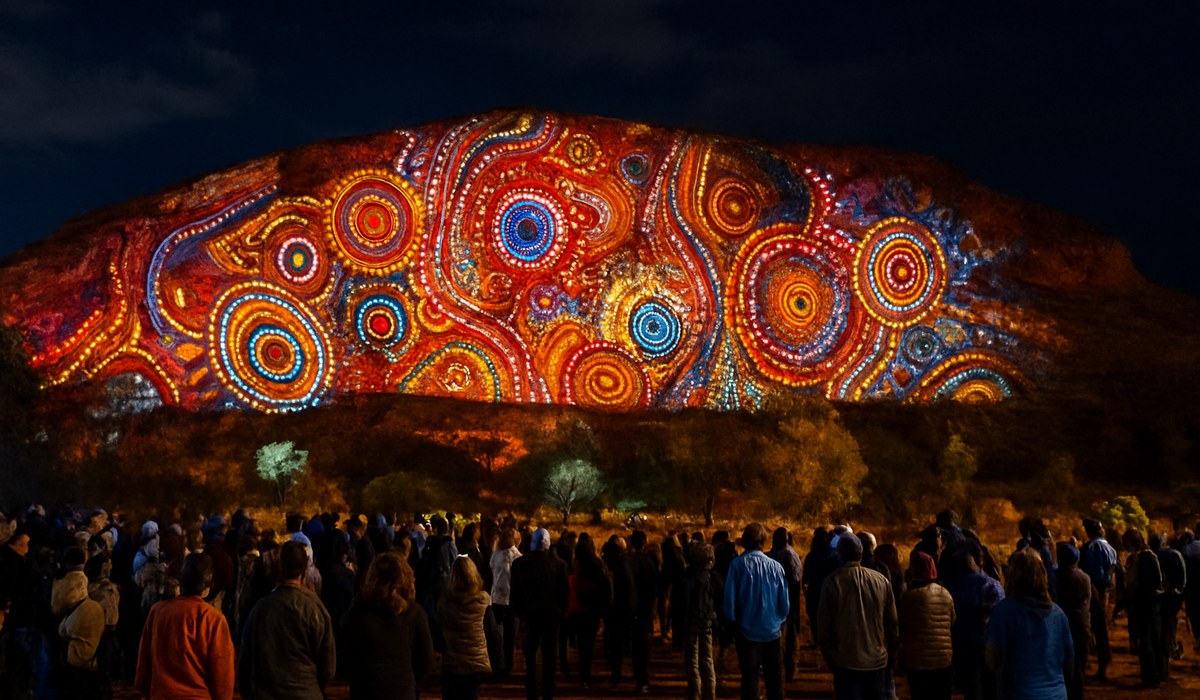
Image generated by AI
Quick Summary
- Parrtjima 2026 transforms Alice Springs into a global cultural destination through large-scale Indigenous art light projections
- Festival capitalizes on growing demand for authentic Indigenous tourism experiences in remote Australia
- Economic projections indicate significant visitor influx and regional revenue generation for Central Australian communities
- Advanced projection technology showcases contemporary Indigenous artistic expression alongside traditional cultural narratives
Why Parrtjima 2026 Matters Beyond the Spectacle: Alice Springs' Economic Gamble
While mainstream tourism continues funneling billions toward Europe's overcrowded capitals, Alice Springs is executing a calculated pivot. The launch of Parrtjima 2026 represents far more than a seasonal festival—it's a strategic repositioning of Central Australia's economic future around cultural authenticity and Indigenous storytelling.
The remote Australian outback has historically struggled with visitor retention. Alice Springs sees fewer than 400,000 annual tourists compared to Sydney's 10+ million. That gap translates directly into unemployment, population drain, and limited infrastructure investment. Parrtjima 2026 aims to reverse this trajectory by creating an experience that cannot be replicated elsewhere.
According to data compiled by the World Travel & Tourism Council, regional tourism events targeting Indigenous cultural narratives are driving 18–24% annual visitation growth across remote destinations in the Asia-Pacific region. Alice Springs is betting that a world-class light festival built on Arrernte and other Aboriginal art traditions will attract the segment of global travelers now actively seeking meaningful cultural experiences over passive beach consumption.
Festival organizers project 60,000–80,000 visitors during the event window, with average visitor spending exceeding AUD $3,500 per person across accommodation, dining, and regional activities. For a town of 25,000 residents, this represents extraordinary economic stimulus—particularly for Indigenous-owned businesses and cultural centers that receive direct revenue allocation from ticket sales.
Indigenous Art Meets Global Tourism: Breaking Down the Festival Experience
Parrtjima operates on a deceptively simple premise: project contemporary Indigenous artworks onto heritage buildings across Alice Springs' CBD and surrounding sites, then allow visitors to move through the urban landscape as a living gallery after dark.
The 2026 edition features commissioned works from over 40 Indigenous artists across Central Australia, Northern Territory, and South Australia. Each projection tells distinct narratives rooted in Dreaming stories, land stewardship, and contemporary Indigenous identity—deliberately avoiding the "staged authenticity" criticism that has plagued earlier iterations of Indigenous tourism commodification.
UN World Tourism Organization research indicates that travelers to Indigenous cultural events spend significantly longer in destination communities than conventional tourists, with 67% participating in secondary activities like workshops, artist meet-and-greets, and guided cultural tours. Parrtjima 2026's design capitalizes on this behavioral pattern by embedding educational programming throughout the festival period.
Day-time offerings include artist talks, weaving demonstrations, boomerang throwing workshops, and didgeridoo performances—all conducted by practicing Indigenous community members rather than external tour operators. This structural choice ensures revenue and cultural authority remain localized, addressing longstanding criticism about Indigenous cultural commodification in Australian tourism.
Evening light installations occupy premium attention. Using 50+ projection domes and mapping technology, organizers will transform mundane commercial buildings into temporary art installations. One standout piece, created by artist collective Kutu, reimagines the Todd River's historical significance as a narrative of water, survival, and connection to Country—visualized through 15-minute looping sequences that change nightly.
The Light Display Innovation: Technology Meets Traditional Culture
The technological execution of Parrtjima 2026 pushes beyond conventional projection mapping. Organizers partnered with Berlin-based Urbanscreen, a studio known for politically engaged public art installations at major European festivals, to develop custom software that allows real-time audience participation via smartphone app integration.
Festival attendees can vote on which artworks appear at designated time slots. They can also submit personal stories tied to Central Australian themes, which the projection system weaves into generative visual sequences. This represents a deliberate effort to position visitors as co-creators rather than passive spectators—a framework that cultural institutions now recognize as essential for maintaining ethical Indigenous representation.
Sound design assumes equal weight to visual presentation. Parrtjima 2026 commissioned original compositions from Indigenous musicians including Jimmy Little's family ensemble and contemporary artists from the Spinifex Gidja community. These scores will play through spatial audio systems, creating immersive sensory environments rather than generic background music.
Weather resilience required significant engineering investment. Alice Springs' March conditions bring dust storms and unpredictable temperature fluctuations. Projection systems incorporate specialized dust-filtering and temperature-regulation components designed specifically for remote Australian conditions—technology originally developed for mining operations in the Pilbara, now repurposed for cultural infrastructure.
Travel Planning & Economic Impact: What Visitors Need to Know
Accessibility remains complicated for international and eastern Australian markets. Commercial air routes into Alice Springs operate primarily through Qantas and regional carriers, with limited daily departures. This bottleneck actually benefits the festival by capping daily visitor surges—a feature that protects infrastructure and Indigenous communities from over-tourism.
However, travelers planning attendance should book accommodation and flights immediately. March 2026 represents peak tourism season across Central Australia, and hotel occupancy typically reaches 85%+ during major events. Additionally, monitor the Summer Travel Alert 2026 regarding crude oil surge and airfare pressure, which may impact flight costs to regional Australian destinations during this period.
International connectivity is improving. IndiGo's recent expansion of 30 new routes from Navi Mumbai includes enhanced service to Australian gateway cities, making Alice Springs more accessible to Asia-Pacific travelers—a demographic that represents 40% of Parrtjima's projected audience.
Ground transportation remains limited. Rental vehicles are essential for accessing satellite art installations and surrounding Indigenous cultural sites. The Northern Territory's driving conditions (particularly during late summer) require caution; visitors unfamiliar with outback road conditions should consider guided tour operators instead.
Festival organizers negotiated significant accommodation capacity expansion, with temporary glamping facilities and expanded caravan parks opening specifically for the event. Prices range from AUD $150–500 per night depending on amenity level, though budget travelers should expect premium pricing across all accommodation categories during peak weeks.
Regional economic modeling suggests Parrtjima 2026 will inject between AUD $180–220 million into Central Australia's economy over the festival period and subsequent months. This figure accounts for direct visitor spending plus secondary economic activity—fuel purchases, groceries, transportation services, and infrastructure maintenance that extend benefits beyond immediate festival attendance.
Skift's analysis of the experiential tourism market positions Indigenous cultural events as the highest-growth segment within adventure and cultural travel, with attendance increasing 34% annually since 2023. Parrtjima 2026 enters this landscape as a full-scale production competing directly with established European light festivals like Berlin's Lichtfestival and Lyon's
Disclaimer
This article is for informational and educational purposes only. It does not constitute legal, financial, or professional advice. While we strive to provide accurate and up-to-date information, travel policies, regulations, and conditions change rapidly. Always verify information with official sources before making travel decisions. Nomad Lawyer makes no representations about the accuracy, reliability, completeness, or suitability of the information provided. Readers should consult qualified professionals for advice specific to their circumstances. The views expressed in this article are those of the author and do not necessarily reflect the views of Nomad Lawyer.
Kunal K Choudhary
Co-Founder & Contributor
A passionate traveller and tech enthusiast. Kunal contributes to the vision and growth of Nomad Lawyer, bringing fresh perspectives and driving the community forward.
Learn more about our team →