Paris Beats Amsterdam and Barcelona in AI Rankings of Attractive Urban Travel Destinations

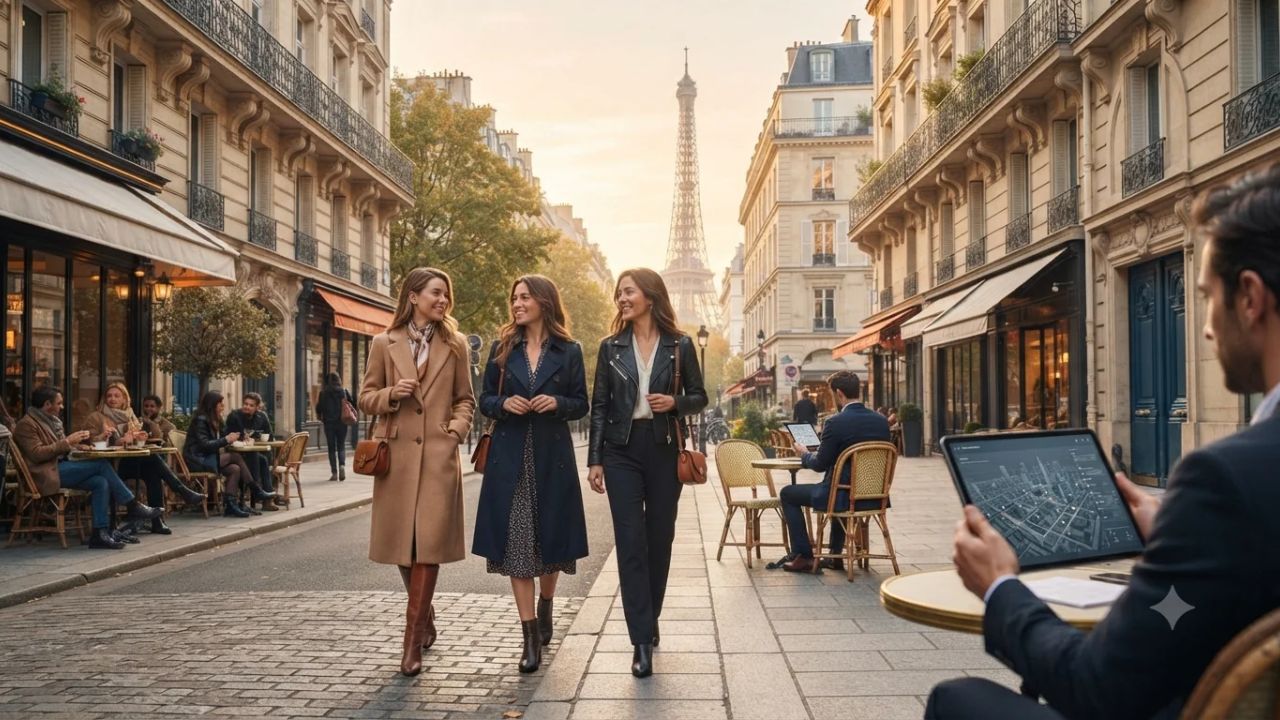
In a groundbreaking convergence of artificial intelligence, computer vision, and urban tourism geography, Paris has been ranked as the world’s most visually attractive city centre, outperforming Amsterdam, Barcelona, Vienna, and Saint Petersburg in a massive academic study evaluating more than three million street-level images across 162 cities in 70 countries. Published on November 24, 2026, by researchers at Corvinus University of Budapest and the Toulouse School of Economics (TSE), the "StreetPulse" research project deploys deep-learning neural networks to quantify the aesthetic and experiential allure of public streetscapes across seven foundational dimensions: visual beauty, walkability, historical character, perceived safety, environmental comfort, urban vibrancy, and perceived affluence. While Paris secured the top global ranking for historic central districts with an aggregate score of 6.29 out of 10, the study reveals stark geographic divergence across broader metropolitan zones, where Geneva claimed the world’s highest wider-urban rating and Venice dominated alternative open-source imagery benchmarks.
The StreetPulse initiative represents an evolution in travel analytics, shifting tourism evaluation away from subjective promotional surveys, user-review aggregators, and raw footfall counts toward objective, algorithmic assessments of the built environment. By training convolutional neural networks (CNNs) and vision transformers (ViTs) on vast repositories of street photography captured from Google Street View, Mapillary, and Panoramax, the researchers isolated how architectural harmony, tree-canopy density, facade preservation, and active pedestrian zones shape the visual impressions of global visitors. The findings demonstrate that European urban planning models—characterized by mid-rise historical blocks, integrated ground-floor retail, and human-scaled walking networks—consistently outperform car-centric suburban layouts in fostering traveler satisfaction, pedestrian movement, and long-term tourism resilience.
However, international travel authorities and urban geographers urge travelers to interpret algorithmic aesthetics within practical operational contexts. While a destination may achieve an outstanding computational attractiveness score, digital beauty does not automatically translate into budget affordability, transit reliability, or travel safety. This distinction is starkly demonstrated in the StreetPulse rankings: Saint Petersburg achieved third place globally for historic street architecture, yet remains subject to strict Western government travel bans; Vienna ranked fifth in core attractiveness while implementing a year-long airport rail modernization; and Budapest placed tenth within its central two-kilometer ring but experienced a sharp drop in environmental comfort and urban vibrancy across peripheral districts.
| Urban Dimension / Evaluation Tier | 2026 StreetPulse Academic Benchmark | Research Source & Methodology | Global Tourism & Traveler Significance |
|---|---|---|---|
| Global Study Scope | 162 cities across 70 sovereign nations | Corvinus University & Toulouse School of Economics | Largest algorithmic assessment of global streetscapes to date |
| Visual Dataset Volume | Over 3.0 million georeferenced street images | Google Street View, Mapillary, Panoramax | Deep-learning evaluation of visible pedestrian environments |
| Analytical Dimensions | 7 core aesthetic and experiential metrics | Computer vision scoring algorithms | Quantifies visual beauty, walkability, safety, comfort, vibrancy |
| Top Global City Centre | Paris, France (Score: 6.29 / 10.0) | StreetPulse Primary Central Comparison | Haussmannian boulevard consistency and historic preservation |
| Second Global City Centre | Amsterdam, Netherlands | Canal ring urbanism and pedestrian priority | High consistency across central and wider urban zones |
| Third Global City Centre | Saint Petersburg, Russia | Imperial neoclassical palace architecture | Architectural prestige contrasted with geopolitical travel bans |
| Fourth Global City Centre | Barcelona, Spain | Cerda grid, Modernisme facades, Gothic Quarter | High pedestrian walkability paired with overtourism challenges |
| Fifth Global City Centre | Vienna, Austria | Ringstraße monumentalism and public cleanliness | High wider-urban score alongside 2026–2027 rail upgrades |
| Top Wider-Urban Winner | Geneva, Switzerland | Lakefront integration and pristine streetscapes | Direct 7-minute airport rail and exceptional urban cleanliness |
| Top Open-Data Winner | Venice, Italy | Canals, pedestrian bridges, zero road vehicles | Complete architectural enclosure on Mapillary/Panoramax |
Inside the StreetPulse Project: How AI Evaluates Destination Appeal
The StreetPulse research framework, developed jointly by urban economists and data scientists at Corvinus University of Budapest and the Toulouse School of Economics, represents a fundamental methodology shift in understanding destination appeal. For decades, destination marketing organizations (DMOs) relied on self-reported traveler questionnaires, TripAdvisor sentiment analysis, or hotel occupancy data to gauge destination appeal. These conventional metrics frequently conflate commercial marketing budgets with genuine urban environmental quality.
StreetPulse Computer Vision Processing Architecture:
┌─────────────────────────────────────────────────────────────┐
│ 1. DATA INGESTION: 3,000,000+ Georeferenced Street Images    │
│    - Google Street View APIs (Primary baseline dataset)     │
│    - Mapillary & Panoramax (Open-access comparative corpus) │
├─────────────────────────────────────────────────────────────┤
│ 2. COMPUTER VISION SEGMENTATION: Deep Neural Networks       │
│    - Semantic pixel parsing (Facada ratio, sky view, greenery)│
│    - Architectural facade profiling & active frontage index │
├─────────────────────────────────────────────────────────────┤
│ 3. MULTI-DIMENSIONAL SCORING: 7 Evaluative Pillars (Scale 1-10)│
│    - Visual Beauty          - Walkability                   │
│    - Historical Character   - Perceived Safety              │
│    - Environmental Comfort  - Urban Vibrancy                │
│    - Perceived Affluence                                    │
├─────────────────────────────────────────────────────────────┤
│ 4. SPATIAL BUFFERING: Radius-Based Geographic Modeling      │
│    - Central Historic Core (0–2 km radius)                  │
│    - Intermediate Urban Belt (2–5 km radius)                │
│    - Greater Metropolitan Area (Wider administrative boundary)│
└─────────────────────────────────────────────────────────────┘
The Seven Dimensions of Computational Attractiveness
To establish an objective grading matrix, the researchers decomposed urban environments into seven distinct visual and structural criteria:
- Visual Beauty: Measures compositional symmetry, architectural ornamentation, harmonic proportions, and harmonious color palettes across building facades.
- Walkability: Assesses the physical viability of pedestrian sightseeing, evaluating sidewalk widths, curb separation, continuous pavements, pedestrian crossings, and the absence of vehicular obstructions.
- Historical Character: Analyzes heritage elements including stone masonry, historic window styles, classical proportions, ironwork balconies, and the absence of generic modern industrial cladding.
- Perceived Safety: Evaluates visible markers associated with security, such as street illumination infrastructure, sightline visibility, graffiti-free surfaces, clean facade maintenance, and natural surveillance from active windows.
- Environmental Comfort: Quantifies urban greening, mature tree canopy coverage, public bench availability, cleanliness, noise-dampening architectural buffers, and shading.
- Urban Vibrancy: Detects street-level human activity, open-air café terraces, independent storefronts, animated window displays, and pedestrian movement.
- Perceived Affluence: Measures structural maintenance standards, high-end building materials, clean public spaces, and the visual absence of physical decay or neglected infrastructure.
Global Rankings: City Centres vs. Wider Urban Environments
A central conclusion of the StreetPulse study is that destination attractiveness is heavily dependent on the spatial boundaries applied during evaluation. Cities that showcase magnificent central historical cores often experience sharp declines in visual quality just a few kilometers outside their tourist hubs, whereas master-planned metropolitan centers maintain consistent aesthetic standards across outlying residential districts.
Comparative City Centre Attractiveness Rankings (StreetPulse 2026):
Rank 1: Paris, France               [=========================] Score: 6.29 / 10.0
Rank 2: Amsterdam, Netherlands      [========================]
Rank 3: Saint Petersburg, Russia    [=======================]
Rank 4: Barcelona, Spain            [======================]
Rank 5: Vienna, Austria             [=====================]
Rank 6: Prague, Czech Republic      [====================]
Rank 7: Florence, Italy             [====================]
Rank 8: Edinburgh, United Kingdom   [===================]
Rank 9: Stockholm, Sweden           [===================]
Rank 10: Budapest, Hungary          [==================] Score: 5.83 / 10.0
City Centre vs. Wider Urban Area Divergence
When the research team expanded their analysis from the central historic core (defined as a two-kilometer radius from the primary city hall or central square) to the entire continuous urban fabric, the global leaderboard shifted dramatically:
| Destination City | Primary City-Centre Rank | Wider Urban Area Rank | Alternative Global Rank (Open Data) | Primary Architectural & Spatial Character |
|---|---|---|---|---|
| Paris (France) | 1st | 4th | 2nd | Haussmannian boulevard grid, zinc mansard roofs |
| Amsterdam (Netherlands) | 2nd | 2nd | 3rd | Canal ring merchant houses, protected brick facades |
| Saint Petersburg (Russia) | 3rd | 18th | 8th | Imperial baroque and neoclassical stone palaces |
| Barcelona (Spain) | 4th | 8th | 5th | Cerda chamfered blocks, Catalan Modernisme |
| Vienna (Austria) | 5th | 3rd | 4th | Ringstraße monumentalism, imperial parklands |
| Budapest (Hungary) | 10th | 42nd | 26th | Neo-Renaissance grand boulevards vs outer industrial belts |
| Geneva (Switzerland) | 11th | 1st | 6th | High lakefront maintenance, clean modern urbanism |
| Venice (Italy) | Special Category | N/A | 1st | Complete canal matrix, zero cars, pure pedestrian stone |
Paris: The Global Benchmark for Pedestrian Grandeur
Securing the number-one global ranking with a score of 6.29 out of 10, Paris confirmed its reputation as the international gold standard for urban visual beauty. The AI models identified Baron Georges-Eugène Haussmann’s nineteenth-century urban transformation as the primary catalyst for the French capital's computational success.
Anatomy of Paris's Algorithmic Victory:
┌─────────────────────────────────────────────────────────────┐
│ 1. ARCHITECTURAL HARMONY: Strict Haussmannian Regulations   │
│    - Uniform cornice heights (typically six stories)        │
│    - Continuous wrought-iron balconies on 2nd and 5th floors│
│    - Dressed cream Lutetian limestone building facades      │
├─────────────────────────────────────────────────────────────┤
│ 2. PEDESTRIAN SCALE: Integrated Street-Level Living         │
│    - Wide sidewalks lined with double rows of plane trees   │
│    - Ground-floor zinc-counter cafés, bistros, and bakeries │
│    - Active street furniture (Morris columns, Wallace fountains)│
├─────────────────────────────────────────────────────────────┤
│ 3. DISTRICT EXCELLENCE: Historic Walkable Enclaves           │
│    - The Marais (4th arr.): Preserved 17th-century mansions │
│    - Latin Quarter (5th arr.): Medieval cobblestone lanes   │
│    - Saint-Germain-des-Prés (6th arr.): Literary café terraces│
└─────────────────────────────────────────────────────────────┘
The Power of Facade Continuity
The deep-learning algorithms registered exceptionally high marks for Paris across visual symmetry and pedestrian enclosure. Haussmann’s strict design codes—dictating uniform building heights proportional to street width, matching roof angles (45-degree zinc mansard slopes), and consistent stone dressings—create a rhythmic visual cadence that neural networks recognize as harmonious order.
Unlike modern high-rise cities where glass skyscrapers create chaotic street-level wind tunnels and blank concrete walls, central Paris provides human-scaled visual engagement. Ground floors are dedicated almost universally to commerce: boulangeries, floral boutiques, tabacs, and sidewalk brasseries. This structural vibrancy ensures that walking between cultural attractions—such as strolling from the Louvre through the Tuileries Garden to the Place de la Concorde—remains an aesthetically stimulating cultural activity in itself.
According to Paris je t’aime, the city's official tourism convention board, travelers who base their stays in central districts like the Marais, Saint-Germain-des-Prés, or the Opera district save an average of 45 minutes of daily transit time while enjoying immediate walking access to world-class dining and cultural institutions.
Amsterdam: Canal Ring Heritage and Human-Scaled Mobility
Ranking second in the primary city-centre evaluation, second in the wider urban comparison, and third in the alternative global dataset, Amsterdam demonstrated the greatest aesthetic consistency of any European capital analyzed in the StreetPulse project.
Amsterdam's Spatial Harmony Matrix:
┌─────────────────────────────────────────────────────────────┐
│ 1. THE GRACHTENGORDEL (17th-Century Canal Belt):            │
│    - Concentric waterways: Herengracht, Keizersgracht,      │
│      Prinsengracht (UNESCO World Heritage Site)             │
│    - Narrow brick townhouses with decorative roof gables    │
├─────────────────────────────────────────────────────────────┤
│ 2. ACTIVE PEDESTRIAN & CYCLING GEOMETRY:                    │
│    - Priority allocated to bicycles and pedestrians         │
│    - Absence of highway infrastructure in historical core   │
│    - Tree-lined canals acting as natural acoustic dampeners │
├─────────────────────────────────────────────────────────────┤
│ 3. WIDER URBAN COHESION: De Pijp and Oud-West               │
│    - Late 19th-century expansion zones mirror central scales│
│    - Vibrant market streets and neighbourhood park systems  │
└─────────────────────────────────────────────────────────────┘
Why Amsterdam Excels Across Wider Boundaries
While many cities suffer from disjointed, unwelcoming transitions when moving from historic centers to residential quarters, Amsterdam’s municipal planning has preserved human-scaled development across outer boroughs like De Pijp, Oud-West, and Plantage:
- Continuous Water Elements: Interconnected canals and stone humpback bridges weave nature into the built environment, providing calming reflections and cooling corridors that scored exceptionally high on the AI environmental comfort index.
- Controlled Commercial Signage: Municipal statutes prohibit glaring digital billboards, garish neon signs, and oversized commercial logos along historic waterways, ensuring that seventeenth-century brickwork remains the dominant visual feature.
- Pedestrian and Cycling Priority: By prioritizing cycling lanes (fietspaden) and dedicated walking promenades over motor vehicle traffic, Amsterdam minimizes visual clutter caused by surface parking lots and roadway congestion.
Saint Petersburg: High Architectural Prestige vs. Geopolitical Reality
The StreetPulse study placed Russia’s imperial capital, Saint Petersburg, in third position globally for city-centre visual attractiveness. Peter the Great’s baroque and neoclassical vision—showcasing the Winter Palace, Nevsky Prospect, the Moika Canal embankments, and the Peter and Paul Fortress—achieved high marks for monumental grandeur, spatial symmetry, and waterfront palace facades.
The Saint Petersburg Dichotomy:
┌─────────────────────────────────────────────────────────────┐
│ ALGORITHMIC RECOGNITION (STREETPULSE):                      │
│ - Global Rank: 3rd in Central Historic District             │
│ - Highlights: Monumental neoclassical symmetry, granite     │
│   embankments, baroque Italianate palace architecture       │
├─────────────────────────────────────────────────────────────┤
│ GEOPOLITICAL & TRAVEL REALITY (NOVEMBER 2026):              │
│ - UK FCDO Advisory: "ADVISE AGAINST ALL TRAVEL TO RUSSIA"   │
│ - US State Department: Level 4 Travel Advisory ("Do Not     │
│   Travel") due to armed conflict, arbitrary detention risks │
│ - Aviation Status: Severe EU/UK airspace closures, limited  │
│   indirect flight routing via third countries               │
│ - Travel Insurance: Comprehensive travel insurance void     │
└─────────────────────────────────────────────────────────────┘
An Essential Travel Distinction: Computational Beauty vs. Travel Viability
The inclusion of Saint Petersburg serves as a vital reminder for international travelers: algorithmic attractiveness evaluations assess physical street geometry and facade aesthetics, not political stability, legal protections, or personal safety.
Western governments—including the UK Foreign, Commonwealth and Development Office (FCDO), the US Department of State, Global Affairs Canada, and European Union foreign ministries—maintain active "Do Not Travel" advisories for the Russian Federation. Direct commercial air corridors between the European Union, the United Kingdom, and Russian airports remain suspended due to airspace sanctions. Western credit cards (Visa, Mastercard, American Express) are inoperable across Russian merchant terminals, and standard travel insurance policies are invalid in regions subject to official government travel warnings.
Travelers must separate the academic recognition of historic imperial architecture from the legal, personal security, and diplomatic realities of international travel.
Barcelona: Catalan Modernisme and Cerda’s Urban Grid
Ranking fourth in the primary global comparison, Barcelona represents Spain’s premier entry in the StreetPulse rankings. The city’s visual allure is underpinned by two distinct historical urban developments: the medieval density of the Gothic Quarter (Barri Gòtic) and the nineteenth-century grid system of the Eixample, designed by visionary urban planner Ildefons Cerdà.
Barcelona's Dual Aesthetic Typology:
┌─────────────────────────────────────────────────────────────┐
│ 1. THE EIXAMPLE EXPANSION (19th-Century Grid):              │
│    - Chamfered street corners (octagonal intersections)     │
│    - Broad tree-canopied avenues with dedicated bike paths  │
│    - Catalan Modernisme facades (Gaudí, Domènech i Montaner) │
├─────────────────────────────────────────────────────────────┤
│ 2. CIUTAT VELLA (Medieval Core):                            │
│    - Narrow pedestrian labyrinths of the Gothic Quarter     │
│    - Historic Roman walls and shaded plaza cafes            │
│    - Complete pedestrianization of key shopping corridors   │
└─────────────────────────────────────────────────────────────┘
The Spatial Genius of Chamfered Intersections
The computer vision algorithms identified Cerdà’s octagonal street corners—where building corners are cut off at 45-degree angles to create small open plazas at every intersection—as a major driver of Barcelona’s walkability and urban vibrancy scores. These chamfered intersections provide several spatial benefits:
- Improved sightlines that boost perceived safety for pedestrians.
- Space for neighborhood café terraces, loading zones, and bicycle docks without obstructing walking paths.
- Abundant natural light penetrating down to ground-floor promenades.
However, Barcelona’s immense popularity presents real-world challenges not captured by AI image models. Municipal tourism boards have introduced stringent controls on tourist apartments, cruise ship arrivals, and tour group sizes to mitigate overtourism in high-traffic zones like Las Ramblas and the Sagrada Família neighborhood, reinforcing that sustainable destination management requires balancing visual appeal with residential livability.
Vienna: Imperial Monumentalism and Practical Transit Realities
Ranking fifth for central district attractiveness and third across the wider metropolitan comparison, Austria’s capital, Vienna, represents an exceptional model of civic cleanliness, imperial preservation, and green urban planning. The city’s famous Ringstraße boulevard—encircling the historic Inner City (Innere Stadt) with landmark institutions including the Vienna State Opera, the Parliament, the City Hall (Rathaus), and the Hofburg Imperial Palace—achieved near-perfect scores for visual beauty, facade maintenance, and historical character.
Vienna Urban Performance and 2026–2027 Transit Advisory:
┌─────────────────────────────────────────────────────────────┐
│ STREETPULSE EVALUATION METRICS:                             │
│ - City-Centre Rank: 5th Globally (Ringstraße Grandeur)      │
│ - Wider Urban Rank: 3rd Globally (High suburban standards)   │
│ - Key Assets: Extensive public park systems, pristine streets│
├─────────────────────────────────────────────────────────────┤
│ PRACTICAL TRAVEL NOTICE: AIRPORT RAILWAY MODERNIZATION      │
│ - Active Period: September 2026 – October 2027              │
│ - Impacted Line: S-Bahn S7 airport line service disruptions │
│ - Recommended Alternative: Regional Express (REX7) trains to│
│   Wien Hauptbahnhof (Central Station)                       │
│ - Bus Alternative: Vienna Airport Lines express motorcoaches│
└─────────────────────────────────────────────────────────────┘
Navigating Vienna’s Airport Transit Modernization
While Vienna’s urban streetscapes offer an aesthetically pristine environment, visitors traveling to the Austrian capital during the 2026–2027 period must plan around significant transit upgrades.
Official bulletins from the Vienna Tourist Board (WienTourismus) and Austrian Federal Railways (ÖBB) confirm that a major modernization project on the suburban railway infrastructure connecting Vienna International Airport (VIE) with the city center is underway from September 2026 through October 2027.
During this construction window:
- Travelers should verify daily schedules for the local S-Bahn S7 line.
- Reliable alternative connections include the regional express REX7 running directly into Wien Hauptbahnhof (Vienna Central Station) and Wien Meidling.
- The Vienna Airport Lines (VAL) express bus fleet continues uninterrupted point-to-point service between the airport terminals, Morzinplatz/Schwedenplatz (providing direct access to the central historic core), and Westbahnhof.
Budapest: The Center-Periphery Divergence in Practice
Hungary’s capital, Budapest, provides one of the most compelling case studies in the entire StreetPulse study, demonstrating why travelers must understand the geographic boundaries of urban rankings.
In the primary two-kilometer city-centre assessment, Budapest entered the global top ten, securing tenth place with an impressive score of 5.83 out of 10. The architectural majesty of District V (Belváros-Lipótváros)—anchored by the Hungarian Parliament Building, St. Stephen’s Basilica, the Chain Bridge, and the Danube promenade—achieved high marks for historical character, stone masonry detail, and perceived safety.
Budapest's Spatial Drop-Off Gradient:
[Central Core: 0–2 km Radius]   ==================== Rank: 10th (Score: 5.83 / 10.0)
[Inner Ring: 2–5 km Radius]     =============== Rank: 15th
[Wider Metropolitan Area]       ======== Rank: 42nd (Steep decline in comfort & vibrancy)
[Open Data Alternative Ranking] =========== Rank: 26th
The Mechanism Behind the Drop-Off
When researchers expanded the assessment radius, Budapest's ranking dropped substantially:
- Central Core (0–2 km): Rank 10th. Protected historic facades, stone plazas, and active waterfront dining.
- Mid-Belt (2–5 km): Rank 15th. Includes grand residential boulevards (such as Andrássy Avenue) transitioning into dense nineteenth-century tenement blocks.
- Wider Metropolitan Area: Rank 42nd. Outer residential districts reflect post-war prefabricated concrete apartment complexes (panelház), industrial brownfields, and degraded road pavements that receive significantly lower ratings for environmental comfort, vibrancy, and perceived affluence.
For international travelers planning holidays to Budapest, this data delivers clear, actionable guidance: booking accommodations within the inner historical districts (Districts V, VI, and the Castle District of Buda) provides an exceptional, world-class pedestrian sightseeing experience. However, travelers venturing into outer suburban zones will encounter distinctly different urban landscapes requiring reliance on Budapest's extensive tram and metro network.
Airport Connectivity via the 100E Express
Travelers arriving at Budapest Ferenc Liszt International Airport (BUD) enjoy direct, affordable ground transport into the high-scoring historic core. The official 100E Airport Express bus operates continuously 24 hours a day, departing directly outside passenger terminals and reaching central hubs at Kálvin tér and Deák Ferenc tér in approximately 35 minutes, providing a straightforward link directly into Budapest's most attractive walking districts.
Geneva: Global Leader in Wider Urban Attractiveness
While Paris and Amsterdam dominated historic city-centre scores, Geneva emerged as the world’s number-one city in the wider urban attractiveness category.
Geneva: Anatomy of Wider Urban Excellence:
┌─────────────────────────────────────────────────────────────┐
│ 1. LAKEFRONT AND NATURAL INTEGRATION:                       │
│    - Lake Geneva (Lac Léman) quays and public bathing parks │
│    - Jet d'Eau fountain framed by Alpine mountain vistas    │
│    - Pristine public parks (Parc de La Grange, Parc des Eaux-Vives)│
├─────────────────────────────────────────────────────────────┤
│ 2. FLAWLESS CIVIC MAINTENANCE & INFRASTRUCTURE:             │
│    - Spotless sidewalk upkeep, zero litter, stone curbs     │
│    - Reliable public transport (trams, trolleybuses, mouettes)│
│    - High perceived safety and environmental comfort scores │
├─────────────────────────────────────────────────────────────┤
│ 3. WORLD-CLASS AIRPORT TRANSIT ACCESSIBILITY:               │
│    - Direct CFF/SBB train from Geneva Airport to Cornavin   │
│    - Journey Time: Exactly seven minutes                    │
│    - Ticket Price: CHF 3.00 for standard local Unireso zone │
└─────────────────────────────────────────────────────────────┘
Why Geneva Wins Beyond the Tourist Center
Geneva’s success across its entire metropolitan footprint reflects Switzerland’s rigorous standards of civic infrastructure, environmental greening, and strict urban maintenance. Whether walking along the luxury shopping avenues of the Rue du Rhône, exploring the diplomatic quarter surrounding the Palais des Nations, or strolling through residential districts like Carouge, the AI vision models detected:
- Pristine pavement maintenance free from surface cracks or debris.
- High tree canopy ratios providing cooling and environmental comfort.
- Low visual blight, with strict limits on outdoor advertising and graffiti.
- Flawless transit integration, where hybrid-electric trams and public passenger boats (mouettes) provide accessible, quiet transit across the harbor.
In addition, Geneva sets an international benchmark for airport-to-city mobility. Swiss Federal Railways (SBB/CFF) operates high-frequency train services connecting the underground terminal station at Geneva Airport (GVA) directly to the central Genève-Cornavin railway station in just seven minutes, with one-way standard tickets costing only CHF 3.00, allowing travelers to transition from baggage claim to lakeside promenade in under twenty minutes.
Venice: Complete Pedestrian Enclosure Dominates Open Data
In the alternative international StreetPulse assessment—which utilized open-access street imagery from Mapillary and Panoramax rather than Google Street View—the Italian canal city of Venice achieved the number-one ranking worldwide.
Venice: The Open-Data Benchmark for Architectural Purity:
┌─────────────────────────────────────────────────────────────┐
│ UNIQUE SPATIAL ATTRIBUTES:                                  │
│ - Complete Absence of Automobiles: Zero asphalt, zero cars  │
│ - Continuous Historic Fabric: 100% stone, marble, & brick   │
│ - Visual Enclosure: Narrow calli, stone bridges, & canals   │
│ - Pedestrian Orientation: Exclusively waterborne or footways│
├─────────────────────────────────────────────────────────────┤
│ PRACTICAL TRAVEL LOGISTICS:                                 │
│ - Primary Aviation Gateways: Venice Marco Polo (VCE) and    │
│   Treviso Airport (TSF)                                     │
│ - Airport Water Transfers: Alilaguna water boat lines direct│
│   from airport docks into central Venice (San Marco, Rialto)│
│ - Internal Transit: ACTV public water buses (*vaporetti*)    │
└─────────────────────────────────────────────────────────────┘
The Algorithmic Impact of Zero Cars
Venice’s dominant performance in open-source datasets illustrates how the complete exclusion of modern automotive infrastructure impacts computer vision algorithms.
Every street-level photograph captured within central Venice features:
- Historic stone masonry, Gothic and Renaissance arches, and weathered pastel plaster.
- Intimate pedestrian alleyways (calli) that provide dramatic vertical enclosure without vehicular noise or emissions.
- Waterway reflections from canals that elevate visual beauty scores.
However, Venice represents a distinctive travel environment that requires practical physical preparation. With hundreds of stone bridges featuring staircases, traditional wheeled luggage can be difficult to maneuver. Travelers should travel with compact, durable luggage, budget for public water bus (vaporetto) passes, or arrange Alilaguna water boat transfers from Venice Marco Polo Airport (VCE) directly to private hotel docks.
Strategic Insights for Global Tourism, Airlines, and Travelers
The findings of the StreetPulse project provide profound insights for tourism boards, airline commercial planners, urban designers, and independent travelers:
Multi-Stakeholder Implications of AI Urban Attractiveness Data:
┌─────────────────────────────────────────────────────────────┐
│ 1. FOR AIRLINES & TOUR OPERATORS:                           │
│    - Curate city-break packages highlighting walkable zones │
│    - Emphasize multi-destination rail links (Paris–Geneva)  │
├─────────────────────────────────────────────────────────────┤
│ 2. FOR MUNICIPAL TOURISM BOARDS:                            │
│    - Invest in pedestrian infrastructure & ground-floor retail│
│    - Expand green canopy coverage to elevate comfort scores │
├─────────────────────────────────────────────────────────────┤
│ 3. FOR INDEPENDENT TRAVELERS:                               │
│    - Select accommodations within high-scoring central rings│
│    - Verify practical travel warnings & airport rail updates│
└─────────────────────────────────────────────────────────────┘
What Travelers Must Evaluate Beyond AI Rankings
While artificial intelligence offers valuable insights into the aesthetic quality of city streets, international vacationers should treat algorithmic attractiveness as one component of a holistic travel evaluation:
- Government Travel Advisories: Always check official travel guidance from your national foreign ministry (e.g., UK FCDO, US State Department) regarding security situations and travel restrictions before making bookings.
- Infrastructure Upgrades: Confirm whether major transit modernization projects—such as Vienna’s 2026–2027 airport rail works—will impact your daily sightseeing or airport transit times.
- Accommodation Positioning: Recognize the "centre-periphery gradient." In cities like Budapest, staying within the central historic core maximizes walkability and visual charm, whereas booking budget hotels in outer districts may entail long commutes through less attractive post-war neighborhoods.
- Pedestrian Accessibility: Travelers with mobility limitations or families with strollers must research pavement surfaces, historic cobblestones, and transit step-free access, as automated image models do not systematically evaluate wheelchair accessibility.
Frequently Asked Questions
What is the StreetPulse AI city ranking project?
The StreetPulse project is an academic research study conducted by Corvinus University of Budapest and the Toulouse School of Economics. It utilizes artificial intelligence and computer vision neural networks to analyze more than three million street-level images across 162 cities in 70 countries, evaluating urban environments across seven distinct aesthetic and experiential dimensions.
Which city ranks as the world's most attractive city centre in the AI study?
Paris, France, achieved first place globally in the primary central district evaluation, securing an aggregate attractiveness score of 6.29 out of 10. The city was praised for its Haussmannian architectural harmony, uniform building heights, tree-lined boulevards, and vibrant street-level café culture.
How do Amsterdam and Barcelona perform in the rankings?
Amsterdam ranked second globally in the city-centre comparison, second across wider urban environments, and third in open-source datasets, demonstrating exceptional architectural and environmental consistency. Barcelona ranked fourth globally in the primary city-centre comparison, driven by the unique chamfered intersections of the Eixample district and the historic pedestrian core of the Gothic Quarter.
Why is Saint Petersburg ranked third, and is it safe to visit?
Saint Petersburg ranked third globally for the visual beauty of its neoclassical imperial palace architecture. However, this algorithmic score evaluates physical facades only. Western governments—including the UK FCDO and US State Department—maintain strict advisories against all travel to Russia due to the ongoing conflict in Ukraine, international airspace closures, and unpredictable legal risks.
Why does Budapest have different rankings across different areas?
Budapest ranked tenth globally within its central two-kilometer historic core (scoring 5.83 out of 10), reflecting the architectural grandeur of District V along the Danube. However, its ranking fell to 15th within a five-kilometer radius and 42nd across its wider metropolitan area, as outer districts feature post-war industrial architecture and degraded pavement conditions that score lower on comfort and vibrancy.
Which city leads the rankings for wider metropolitan environments?
Geneva, Switzerland, claimed first place globally in the wider urban attractiveness comparison. The city distinguished itself through exceptional street maintenance, extensive public lakeside parklands, low visual clutter, and direct seven-minute airport rail links to the central railway station.
Why did Venice win the alternative open-source ranking?
In the alternative dataset using Mapillary and Panoramax imagery, Venice, Italy, placed first worldwide. The city's complete absence of motorized road traffic, continuous historic stone masonry, pedestrian canal bridges, and architectural water reflections created unmatched visual enclosure and aesthetic purity.
What are the seven dimensions used by the AI to evaluate cities?
The StreetPulse deep-learning models evaluate streetscapes based on:
- Visual Beauty (symmetry, proportion, and color harmony).
- Walkability (sidewalk width, continuity, and pedestrian safety).
- Historical Character (heritage masonry, classical proportions, and ironwork).
- Perceived Safety (street lighting, clear sightlines, and absence of physical decay).
- Environmental Comfort (tree canopy coverage, public benches, and cleanliness).
- Urban Vibrancy (pedestrian activity, active storefronts, and café terraces).
- Perceived Affluence (high maintenance standards and structural investment).
What travel disruption affects visitors to Vienna during 2026–2027?
While Vienna ranked fifth for city-centre attractiveness, travelers should be aware that the primary S-Bahn S7 airport railway line is undergoing comprehensive modernization from September 2026 through October 2027. Travelers should utilize the regional express REX7 trains to Wien Hauptbahnhof or the Vienna Airport Lines express bus services during this period.
How can travelers travel from Budapest Airport to the high-scoring city centre?
Travelers landing at Budapest Ferenc Liszt International Airport (BUD) can take the dedicated 100E Airport Express bus, which runs 24 hours a day directly from terminal arrivals to central hubs at Kálvin tér and Deák Ferenc tér in approximately 35 minutes.
Related Travel Guides
- Germany Christmas Markets Target 170 Million Visits as Winter Travel Security Tightens - Discover how 3,250 historic German festive markets balance €4 billion in winter turnover with enhanced public safety protocols.
- South Africa Enriches Luxury Holiday Travel with Four Seasons Johannesburg Celebrations - Explore how luxury urban hillside resorts unite Cape Winelands botanical heritage with regenerative festive travel.
- Munich Airport Deploys 540 Workers and 175 Vehicles for Winter Flight Safety - Learn how Bavarian aviation authorities coordinate 24/7 de-icing operations to keep European runways safe during adverse winter weather.
- airBaltic Faces a Major Financial Setback Despite Strong Revenue Growth - Understand how jet fuel price swings, currency shocks, and fleet restructuring impact regional European aviation connectivity.
This article is for informational purposes. Flight routes, passenger regulations, visa rules, and transit advisories are subject to change by airlines and aviation authorities. Readers are advised to verify schedules and travel documentation with relevant carriers and border agencies before departure.
Related Stories
The AI Travel Planning Revolution: How Smart Algorithms Are Crafting Personalized Itineraries and Solving Overtourism

Paris and Bangkok Tourism Soars: Accor Launches ALL Concierge AI Tech – All You Need To Know