
Paraguay Opens Visa-Free Travel to 74 Countries: Exploring South America's Hidden Heartland in 2026

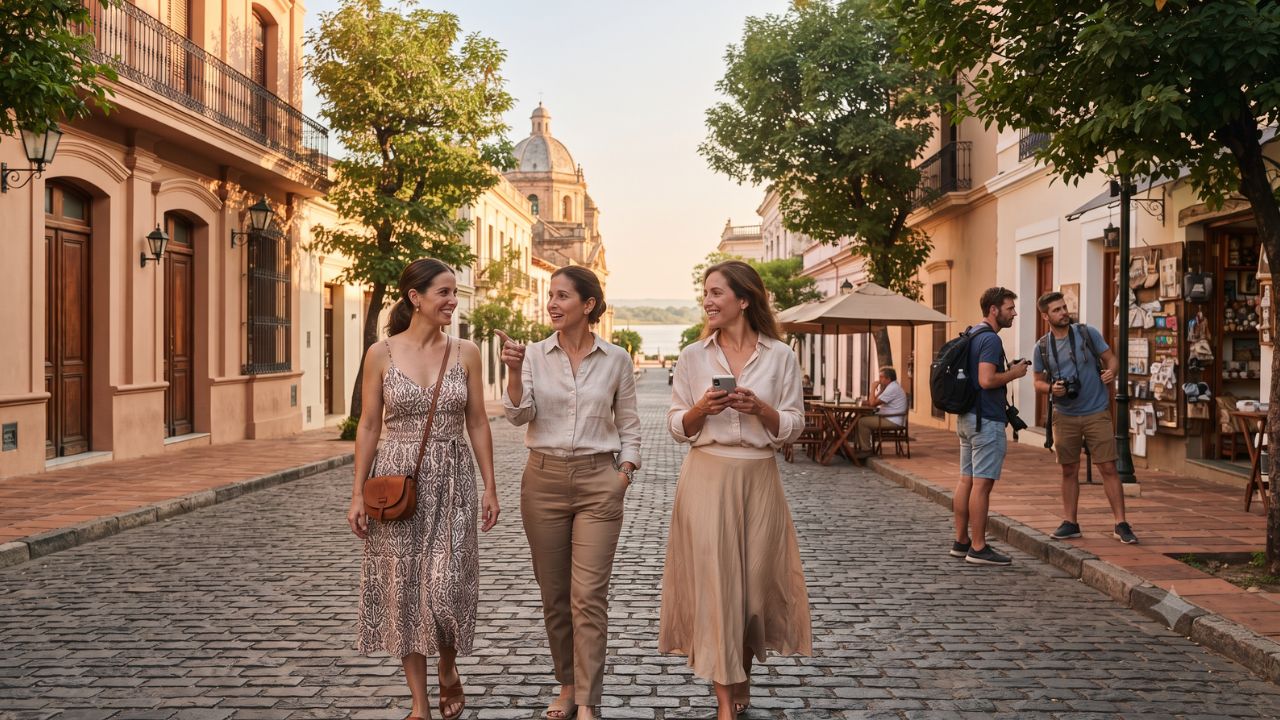
While over 90% of South American travelers bypass Paraguay on their rush between Rio de Janeiro and Buenos Aires, this landlocked nation is quietly shattering its own tourism records with an expansive open-border strategy. Welcoming passport holders from 74 countries without requiring a tourist visa as of October 2026—including travelers from France, Canada, and Oman—Paraguay recorded a staggering 1,303,250 international arrivals in the first quarter of 2026 alone, marking a 46% surge year-on-year. For independent cultural explorers, this dramatic opening reveals an authentic haven where bilingual Guaraní traditions, red-sandstone Jesuit ruins, and wild subtropical rivers remain wonderfully untouched by commercial mass tourism.
The Visa-Free Strategy Propelling Paraguay Toward 2037
Paraguay's rapid emergence as an international travel hub marks a defining turning point in South American tourism. Statistics compiled by immigration authorities show that cumulative arrivals reached approximately 3.2 million by August 2026. This trajectory builds upon the 3.6 million international travelers welcomed throughout 2025. Supported by steady visitor streams from neighboring Argentina and Brazil, accessible prices, and simplified overland frontier crossings, the national government has established a long-term strategic objective: welcoming 10 million international visitors annually by 2037.
The economic footprint of this influx is transforming local communities. The visitor sector currently generates between 1.5% and 2% of national GDP, contributing directly to a sovereign economy projected to reach US$60.54 billion in 2026. Having generated roughly US$723.8 million in historic annual visitor receipts, tourism is acting as an economic engine alongside broader national growth forecast between 3.7% and 4.4% for 2026.
The visa exemption framework grants seamless entry to citizens from 74 global jurisdictions. European visitors from Germany, Spain, Italy, the United Kingdom, Switzerland, and the Nordic nations enter stamp-free alongside North American travelers from the United States and Canada. Latin American neighbors, Asian travelers from Japan, South Korea, Singapore, and Taiwan, and Middle Eastern passport holders from Oman, Qatar, and the United Arab Emirates share the same simplified border access.
Connecting Paraguay: Strategic Airlines and International Gateways
Paraguay's aviation network is anchoring this regional expansion through five core carriers operating out of Silvio Pettirossi International Airport (ASU) in Luque, just outside Asunción. Direct transatlantic flights operated by Air Europa link Madrid Barajas directly with Asunción, providing travelers from across Europe with single-stop access. For North American and Caribbean travelers, Copa Airlines provides high-frequency connections via its Tocumen International Airport hub in Panama City.
Within the Southern Cone, domestic carrier Paranair connects Asunción with Buenos Aires and Montevideo, while LATAM Airlines provides arterial routes to Santiago de Chile and Lima. Brazil's GOL Linhas Aéreas maintains high-capacity services linking the capital directly to São Paulo. Beyond Asunción, regional airfields—including Guaraní International Airport (AGT) in Minga Guazú near Ciudad del Este, and Teniente Amín Ayub González International Airport (ENO) in Encarnación—provide internal connectivity for travelers exploring the Paraná River basin. Farther afield, Dr Augusto Roberto Fuster Airport in Pedro Juan Caballero serves the northern border, while Dr Luis María Argaña Airport in Mariscal Estigarribia anchors expeditions into the Gran Chaco wilderness.
| Regional Hub & Attraction | Geographic Setting | Primary Heritage & Experiential Focus | Recommended Duration |
|---|---|---|---|
| La Santísima Trinidad de Paraná | Itapúa Department, southern Paraguay | Red-sandstone Jesuit mission ruins (1706), stone carvings by Juan Prímoli, UNESCO World Heritage site. | Half Day (3–4 Hours) |
| Jesús de Tavarangue | 10 km north of Trinidad | Unfinished 18th-century Jesuit mission featuring Moorish-inspired stone arches and massive roofless nave. | 2–3 Hours |
| Salto del Monday | Presidente Franco, 10 km south of Ciudad del Este | 80-meter-high forested waterfall, wooden canopy walkways, ziplining, and evening swift flights. | Half Day (3–5 Hours) |
| Museo del Barro | Isla de Francia district, Asunción | Indigenous woodcarvings, Guaraní pottery, pre-Columbian ceramics, and political caricatures. | 2–3 Hours |
| Sambódromo Carnaval Encarnación | Avenida Costanera, Encarnación | Riverfront parade grounds hosting South America's most exuberant regional February carnival celebrations. | Evening Event |
For accommodations in Asunción, upscale hotels such as the 118-room Sheraton Asuncion Hotel, Dazzler by Wyndham Asunción, and Gran Bourbon Hotel Asunción cater to business and leisure arrivals near the World Trade Center and Shopping del Sol. Travelers seeking historic immersion prefer boutique properties like La Misión Hotel Boutique in Villa Morra or Palmaroga Hotel Asunción, situated along historic Palma Street in the capital's colonial downtown.
What Makes Paraguay Experientially Unique
Unlike other Latin American nations where European colonization eradicated local tongues, Paraguay stands as the Americas' only officially bilingual nation where the vast majority of the population speaks Guaraní alongside Spanish. Guaraní is heard everywhere: in traditional harp folk melodies, lively street markets, and family gatherings centered around the ritual of tereré—cold-brewed yerba mate infused with freshly crushed medicinal herbs (yuyos) and shared from a leather-wrapped guampa horn through a silver straw.
The nation's architecture and history reflect immense historical endurance. The country endured profound devastation during the War of the Triple Alliance (1864–1870) and the Chaco War (1932–1935), followed by the authoritarian rule of Alfredo Stroessner from 1954 to 1989. Today, a stable constitutional democracy allows visitors to explore 17th-century Jesuit reducciones, neoclassical colonial plazas, and remote Mennonite dairy colonies in the Chaco with complete tranquility.
Visitor Insider Tips: Living Like a Local in Paraguay
- Master the Ritual of Tereré: You cannot understand Paraguay without drinking tereré. Purchase a thermos, guampa, and bombilla at the open-air stalls along Calle Palma in Asunción. Request herbs like menta'i (field mint) or burrito crushed into cold ice water. When passed a guampa, drink the liquid entirely until the straw gurgles, hand it back, and remember that saying "gracias" means you do not want another round.
- Time Your Visit to Salto del Monday at Sunset: Located just 10 kilometers south of Ciudad del Este, the 80-meter cascades of Salto del Monday are far less crowded than nearby Iguazú Falls across the border. Arrive between 4:30 pm and 6:00 pm when thousands of great dusky swifts dive through the thundering mist to roost behind the falls.
- Savor Traditional Sopa Paraguaya and Chipa: Despite its name, sopa paraguaya is not a liquid soup; it is a rich, savory cornbread prepared with fresh curd cheese, onions, and lard. Pair it with warm chipa—dense, ring-shaped cassava starch rolls baked with anise seeds and hard cheese—purchased from street chiperas near the Asunción bus terminal.
- Base Yourself in Villa Morra or the Historic Waterfront: In Asunción, stay in Villa Morra for upscale dining, craft beer bars, and boutique shopping, or stay near the Costanera promenade along the Paraguay River to admire sunset views over the bay and walk to the Palacio de los López.
- Carry Local Guaraní Cash for Countryside Excursions: While credit cards are widely accepted across shopping malls in Asunción and Ciudad del Este, public long-distance buses, rural artisan stalls in Tobatí, and craft markets require cash in Paraguayan Guaraní (PYG).
Cultural and Environmental Context: Preserving Living Legacies
The architectural crown jewels of southern Paraguay are the Jesuit missions of La Santísima Trinidad de Paraná and Jesús de Tavarangue, protected through the UNESCO World Heritage Centre. Built during the 17th and 18th centuries as self-sustaining communities where Jesuit fathers and Indigenous Guaraní lived, worked, and composed baroque music together, these stone cities highlight indigenous craftsmanship through intricate passion-flower relief sculptures. Today, restoration guidelines managed by the Secretaría Nacional de Turismo prioritize conservation without commercial intrusion.
Environmentally, Paraguay's Gran Chaco represents the second-largest forested biome in South America after the Amazon, sheltering jaguars, giant anteaters, and tapirs. Balancing agricultural expansion with wilderness preservation remains a vital challenge. Responsible eco-tourism cooperatives and Indigenous-led reserves in the Chaco are providing vital income for native communities, proving that sustainable travel can protect biodiversity while celebrating ancient heritage.
FAQ: Visiting Paraguay Visa-Free in 2026–2027
Which travelers are eligible for visa-free entry to Paraguay?
Passport holders from 74 countries—including France, Canada, the United States, the United Kingdom, European Union states, Japan, Australia, and Oman—can enter visa-free for tourist stays of up to 90 days.
What is the best time of year to visit Paraguay?
The cooler, drier winter months from May to September are ideal, offering pleasant daytime temperatures between 18°C and 25°C. Summer (December to February) brings intense subtropical heat and vibrant Carnival festivals in Encarnación.
How do travelers reach Asunción from international hubs?
Direct flights arrive at Silvio Pettirossi International Airport from Madrid via Air Europa, from Panama City via Copa Airlines, and from São Paulo, Buenos Aires, and Santiago via LATAM, GOL, and Paranair.
Is Paraguay safe for solo independent travelers?
Yes. Paraguay is one of South America's most peaceful countries, with low violent crime rates. Standard urban caution in crowded border markets and basic Spanish or Guaraní greetings ensure a smooth trip.
In the quiet shade of ancient lapacho trees, Paraguay welcomes travelers not as hurried tourists, but as honored guests sharing a cold sip of tereré.
Related Travel Guides
Disclaimer
This article is for informational and educational purposes only. It does not constitute legal, financial, or professional advice. While we strive to provide accurate and up-to-date information, travel policies, regulations, and conditions change rapidly. Always verify information with official sources before making travel decisions. Nomad Lawyer makes no representations about the accuracy, reliability, completeness, or suitability of the information provided. Readers should consult qualified professionals for advice specific to their circumstances. The views expressed in this article are those of the author and do not necessarily reflect the views of Nomad Lawyer.
Preeti Gunjan
Contributor & Community Manager
A passionate traveller and community builder. Preeti helps grow the Nomad Lawyer community, fostering engagement and bringing the reader experience to life.
Learn more about our team →