
Boeing's 777X Gamble: Why the Aircraft Giant Is Building Uncertified Jets Ahead of Regulatory Approval
Breaking airline news and aviation industry updates for 2026.

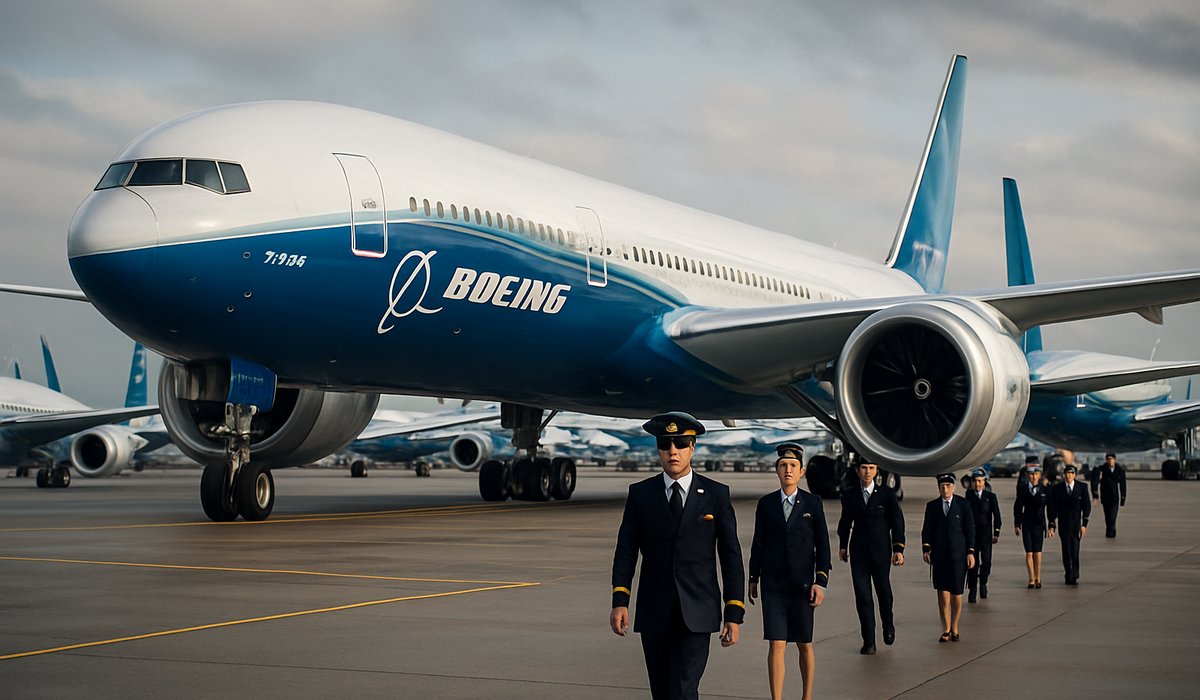
Image generated by AI
Boeing's 777X Gamble: Why the Aircraft Giant Is Building Uncertified Jets Ahead of Regulatory Approval
With over 20 aircraft already in production and no official airworthiness certificate in sight, Boeing faces a high-stakes manufacturing strategy as the 777X certification timeline slips further into uncertainty
The Certification Stalemate Reshaping Boeing's Production Strategy
Boeing has already constructed more than 20 examples of its next-generation 777X wide-body jet despite the aircraft remaining uncertified by aviation authorities—a bold industrial decision that underscores both the aerospace manufacturer's confidence in the program and the mounting pressure to maintain production momentum amid extended regulatory delays.
The 777X, designed as the flagship successor to Boeing's highly successful 777 family, represents a generational leap in long-range commercial aviation. Engineered to combine the proven operational reliability of its predecessor with cutting-edge aerodynamic improvements and fuel-efficient technologies, the aircraft has attracted significant interest from global carriers. Yet the path to commercial deployment has proven far more treacherous than initially anticipated.
Years of Delays Signal Broader Industry Challenges
Originally envisioned for entry into service years ago, the 777X certification timeline has stretched beyond expectations by at least seven years. This prolonged regulatory process reflects not only the complexity of certifying an aircraft of this magnitude but also the compounding effects of supply chain disruptions that have rippled through the aerospace sector since 2020.
The extended certification schedule stems from rigorous safety evaluation requirements imposed by aviation regulators, particularly the U.S. Federal Aviation Administration (FAA), which must validate every system, structural component, and operational parameter before granting airworthiness approval. These standards, while essential for passenger safety, have created a bottleneck that threatens to undermine Boeing's manufacturing efficiency and financial projections.
Production Ahead of Certification: Strategic Necessity or Calculated Risk?
Boeing's decision to advance manufacturing of over 20 aircraft prior to regulatory clearance reflects a deliberate strategy to maintain workforce continuity and supplier relationships while certification efforts continue. By keeping production lines operational, the company preserves institutional knowledge and avoids costly facility shutdowns—a particularly critical consideration given competitive pressures from Airbus and recovery demands following previous safety and quality control scandals.
However, this approach carries inherent risks. Should regulators identify unanticipated design modifications or safety concerns during final certification phases, Boeing could face costly retrofitting requirements across its inventory of unconventified aircraft, straining already-pressured finances and further delaying customer deliveries.
What Lies Ahead for Aviation's Most Anticipated Aircraft
The 777X represents Boeing's commitment to the wide-body, long-haul segment that remains central to international aviation networks. Once certified, the aircraft is expected to generate substantial revenue through orders from carriers worldwide seeking modern, efficient alternatives to aging fleets.
Industry observers remain cautiously optimistic that regulatory approval will ultimately advance, though the extended timeline reflects the new reality of modern aircraft certification in an era of heightened safety scrutiny and supply chain vulnerability.
Frequently Asked Questions
When will the Boeing 777X receive FAA certification? While Boeing has not announced a definitive certification date, current estimates suggest approval remains several years away, with the aircraft unlikely to enter commercial service before the mid-to-late 2020s.
Why is Boeing manufacturing 777X aircraft before certification? Boeing is maintaining production to preserve supply chain relationships, sustain workforce employment, and ensure manufacturing readiness for when certification is ultimately granted, avoiding costly facility shutdowns.
How many orders does the 777X have? The 777X has accumulated hundreds of orders from major international carriers, reflecting strong market demand for next-generation wide-body aircraft.
What caused the certification delays? The extended timeline results from rigorous FAA safety validation requirements, supply chain disruptions, and the technical complexity of certifying an advanced aircraft of this scale.
How does the 777X compare to competitors? The 777X competes directly with Airbus's A350 XWB, offering comparable fuel efficiency, range, and passenger capacity for transcontinental routes.
Related Travel Guides
- Thousands Stranded in China Amid Massive Flight Cancellations and Delays
- Escaping Asian Travel Chaos: South Korea and China Execute Massive 7-Year Flight Expansion to Shield Passengers from Regional Airport Disruptions
- FAA Suspends Parallel Landings at San Francisco Airport: 6-Month Runway Construction Slashes Arrival Rate
Disclaimer
This article is for informational and educational purposes only. It does not constitute legal, financial, or professional advice. While we strive to provide accurate and up-to-date information, travel policies, regulations, and conditions change rapidly. Always verify information with official sources before making travel decisions. Nomad Lawyer makes no representations about the accuracy, reliability, completeness, or suitability of the information provided. Readers should consult qualified professionals for advice specific to their circumstances. The views expressed in this article are those of the author and do not necessarily reflect the views of Nomad Lawyer.
Preeti Gunjan
Contributor & Community Manager
A passionate traveller and community builder. Preeti helps grow the Nomad Lawyer community, fostering engagement and bringing the reader experience to life.
Learn more about our team →