
Ottawa Joins Outaouais and Other Regions in Skyrocketing Canada Tourism With a Surge in Tourist Arrivals During the Third Quarter of 2026
Ottawa Joins Outaouais and Other Regions in Skyrocketing Canada Tourism With a Surge in Tourist Arrivals During the Third Quarter of 2026

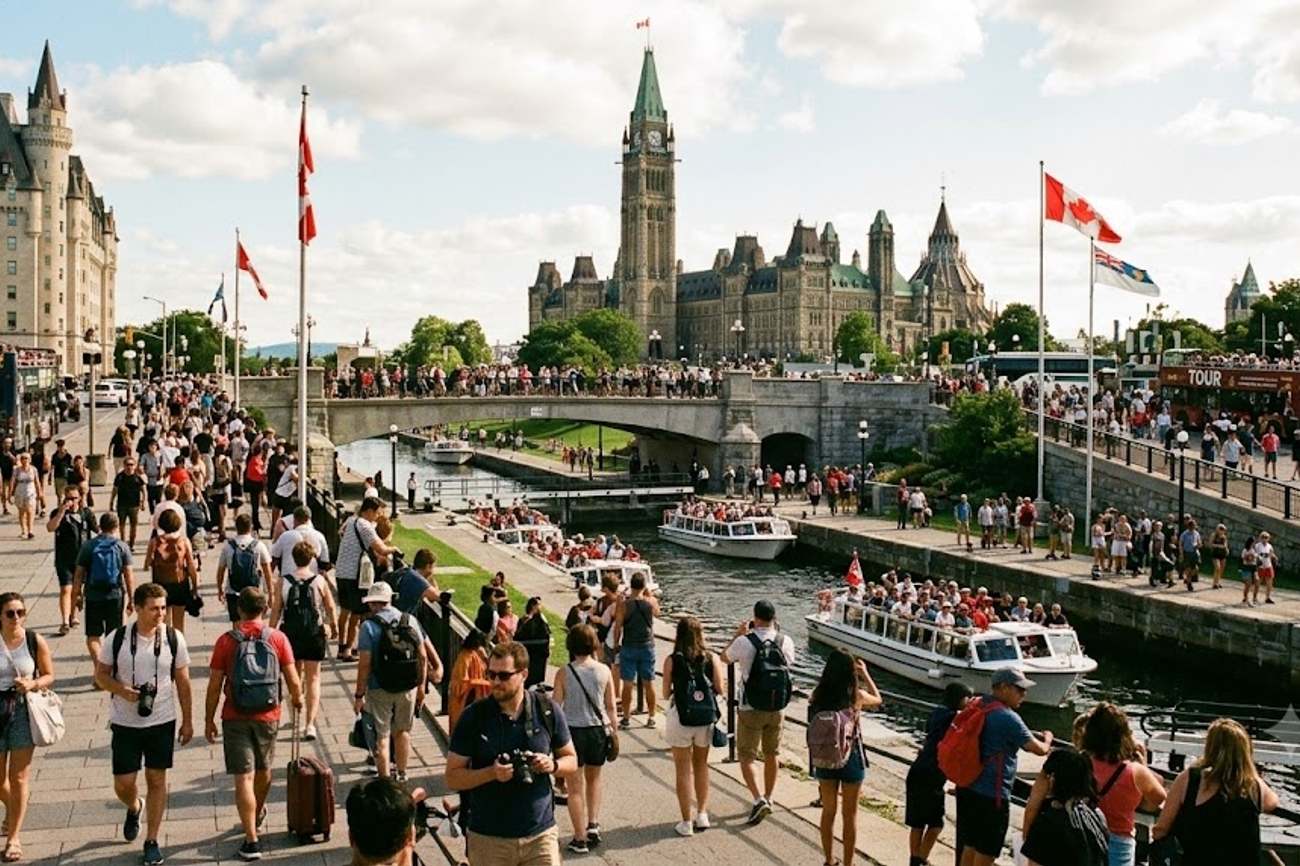
Image generated by AI
[Ottawa, September 15, 2026] — Canada’s visitor economy has reached an all-time high in the third quarter of 2026, driven by a historic surge in arrivals within the National Capital Region. Official data released today by Ottawa Tourism and Outaouais Tourism confirms that the period spanning June through August shattered previous benchmarks, transforming the Ottawa-Gatineau corridor from a transitional stopover into a primary global anchor destination.
The record-breaking performance is the result of a strategic alignment between municipal planning and aggressive international marketing, coinciding with the "Ottawa 200" bicentennial celebrations. These festivities, marking the 200th anniversary of Bytown's 1826 founding, acted as a primary catalyst for an influx of high-spending overseas travelers, American road-trippers, and domestic tourists. While the region successfully absorbed the demand, the surge has created significant bottlenecks, specifically manifesting as prolonged queues at regional airports and hotel check-in counters.
The Bicentennial Catalyst
The primary trigger for the Q3 2026 phenomenon was the "Ottawa 200" programming. By leveraging the city's heritage and history, the National Tourism Corporation successfully positioned the National Capital Region as a world-stage destination. This was not a sudden spike but the culmination of a growth trajectory that began in early 2026.
During the first quarter of 2026, Canada saw 990,000 trips by overseas residents, representing a 3.7% increase over the previous year. This momentum accelerated into the summer months, where the combination of favorable weather and a dense calendar of cultural events drove unprecedented footfall toward Parliament Hill, the Rideau Canal, and Gatineau Park.
Regional and National Impact
The growth in the National Capital Region—which integrates the urban center of Ottawa, Ontario, and the Outaouais region of Quebec—has disproportionately contributed to Canada's overall tourism recovery. The following data outlines the scale of the surge:
| Metric | Value / Figure | Period/Context |
|---|---|---|
| National Tourist Arrivals (July 2026) | 4.58 Million | Monthly Total |
| National Tourist Arrivals (June 2026) | 3.76 Million | Monthly Total |
| Ottawa Annual Visitor Volume | 9.8 Million | Estimated Yearly |
| Hotel Room Demand (Q3 2026) | +3% Year-over-Year | June to August |
| Non-Resident Spending (2025) | $32.0 Billion | Annual Total |
| Spending Growth (2025 vs 2024) | +12.4% | Annual Increase |
| Spending vs 2019 Benchmark | +36.7% | Post-Pandemic Growth |
The hospitality sector in Ottawa acted as the primary barometer for this growth. July 2026 specifically saw hotel demand surpass the previous record set in 2025. This spike in occupancy has led to increased Revenue per Available Room (RevPAR), providing hoteliers with the capital necessary for staffing increases and property renovations.
What This Means for Travelers
For those currently booking travel to Canada or visiting the National Capital Region, the "Golden Era" of tourism comes with specific operational challenges.
Air and Ground Transit Travelers should expect significant congestion. While the Ottawa International Airport and surrounding transport networks have scaled to meet demand, the sheer volume of Q3 arrivals has resulted in extended wait times for security and baggage claim. Early arrivals for flights are strongly recommended.
Accommodation Availability With hotel demand exceeding 2025 records, last-minute bookings in the urban core of Ottawa are increasingly difficult and expensive. Travelers are advised to look toward the Outaouais region or utilize the strategic visitor passes mentioned by tourism boards to navigate the city more efficiently.
Experience Management The shift from "day-tripping" to "multi-day stays" means that major attractions—specifically Parliament Hill and Gatineau Park—are operating at maximum capacity. Tourists should utilize digital booking systems where available to avoid the queues currently plaguing the region's hospitality and tourism infrastructure.
Infrastructure and Future Scaling
The resilience of Ottawa's hospitality workforce has been tested by the Q3 surge, yet the city has maintained high service standards despite the volume. The strategic deployment of accessible cultural programming has successfully converted short-term visitors into overnight guests, lengthening the average stay and increasing the direct economic injection into local businesses.
Moving forward, the Government of Canada and regional tourism bodies are analyzing the Q3 data to determine if the current infrastructure can sustain this level of growth into 2027. The focus is now shifting toward mitigating the "bottleneck" effect at airports and hotels to ensure that the visitor experience does not degrade as the region continues to compete on the global stage.
The success of the Ottawa-Outaouais corridor serves as a blueprint for other Canadian tourism corridors, proving that targeted heritage events combined with aggressive international marketing can redefine a city's economic potential.
FAQ: Ottawa Tourism Surge 2026
Why are there long lines at Ottawa hotels and airports right now? The region is experiencing a record-breaking influx of visitors due to the Ottawa 200 bicentennial celebrations and a general surge in international travel, which has temporarily overwhelmed capacity at key transit and hospitality hubs.
Is it still possible to find hotel rooms in Ottawa for late 2026? While demand is at an all-time high, rooms are available. However, due to record occupancy levels seen in July, it is highly recommended to book well in advance or explore accommodations in the Outaouais region.
What was the "Ottawa 200" event? It was a massive series of cultural and heritage celebrations marking the 200th anniversary of the founding of Bytown (now Ottawa) in 1826, designed to attract global dignitaries and heritage tourists.
How much did non-resident visitors spend in Canada recently? In 2025, non-resident visitors contributed $32.0 billion to the Canadian economy, a 12.4% increase over 2024 and 36.7% higher than 2019 levels.
The capital is no longer a stopover; it is the destination.
#OttawaTourism2026 #YOW #OutaouaisTourism #CanadaVisitorEconomy #Ottawa200 #NationalCapitalRegion
Related Travel Guides
- Kenya, Morocco, Tanzania, and Tunisia Fuel Africa Tourism Expansion as 58% of Industry Experts Forecast Strong Growth in 2026
- Canada Joins Chile, Peru, and Mexico as 2026 Americas Tourism Outlook Reveals Divergent Inbound Growth and Shifting Travel Flows
- United States Luxury Travel Spending Surges 45 Percent as Average Guided Trip Expenditure Reaches $20,800 Per Guest
Disclaimer
This article is for informational and educational purposes only. It does not constitute legal, financial, or professional advice. While we strive to provide accurate and up-to-date information, travel policies, regulations, and conditions change rapidly. Always verify information with official sources before making travel decisions. Nomad Lawyer makes no representations about the accuracy, reliability, completeness, or suitability of the information provided. Readers should consult qualified professionals for advice specific to their circumstances. The views expressed in this article are those of the author and do not necessarily reflect the views of Nomad Lawyer.
Preeti Gunjan
Contributor & Community Manager
A passionate traveller and community builder. Preeti helps grow the Nomad Lawyer community, fostering engagement and bringing the reader experience to life.
Learn more about our team →