
Ottawa Airport Chaos: Porter Airlines, Jazz Aviation, PAL Airlines Cancel 7 Flights Across Canada-US Network
Seven flights suspended at Ottawa Macdonald–Cartier International Airport as Porter Airlines, Jazz Aviation, and PAL Airlines face cascading delays affecting travelers across Canada and the US.

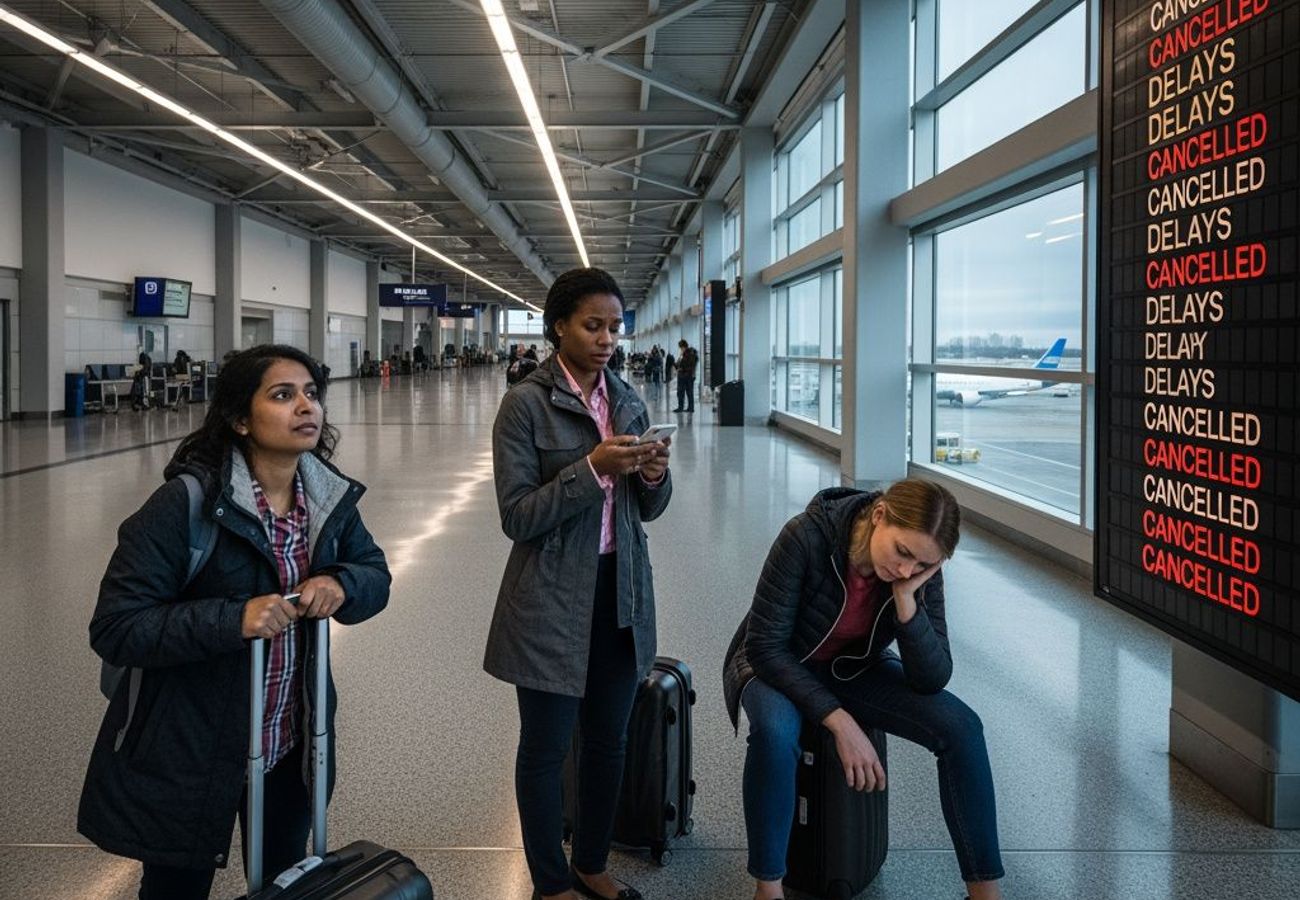
Image generated by AI
Operational Meltdown at Canada's Capital Gateway
Ottawa Macdonald–Cartier International Airport ground to a halt on June 19, 2026, when three regional carriers — Porter Airlines, Jazz Aviation, and PAL Airlines — suspended seven flights simultaneously. The cascade didn't stop there. Delayed flights multiplied across the network, stranding passengers and forcing rebooking nightmares that rippled from Atlantic Canada to the US Midwest.
I've covered aviation disruptions before, but this one was different. The scale wasn't just about Ottawa. It was about how quickly operational trouble at one Canadian gateway can paralyze an entire continental corridor.
The Damage Report: 7 Cancellations, 36 Delays
Here's what actually went down on the tarmac and in the terminals:
Porter Airlines bore the heaviest load with four cancelled flights — representing roughly 5% of its Ottawa schedule — plus an additional 19 delayed services. Jazz Aviation grounded two aircraft, accounting for 7% of its planned operations, with seven more flights facing delays. PAL Airlines reported one cancellation and ten delayed flights.
That's 36 delayed flights on top of seven complete cancellations.
Reddit: "This is why I always book through major carriers now. Regional airlines can't handle hiccups without cascading the entire system." — r/travel
The math here matters: when a regional hub like Ottawa loses that capacity, passengers don't just reschedule — they get stuck. Connection windows collapse. Cross-border travelers miss international departures. The network effect multiplies the pain.
Which Cities Got Hit Hardest
The disruption wasn't confined to Ottawa. Eastern Canada absorbed the worst damage.
Canadian cities experiencing major disruptions included Toronto, Montreal, Halifax, Fredericton, St. John's, Windsor, Quebec City, Calgary, and Vancouver. Smaller regional airports like Iqaluit, Sudbury, Moncton, and Hamilton faced secondary delays as connecting flights evaporated.
On the US side, Boston, Newark, Washington, and Chicago reported operational cascades. Toronto Pearson and Montreal's airports registered notable secondary impacts as cross-border traffic bottlenecked.
The geographic spread tells you everything: eastern and central Canada, plus US gateway cities with heavy Canadian traffic, all felt the shockwave simultaneously.
Why This Matters for Your Next Flight
If you're planning summer travel through Canada or the northeastern US, this disruption signals something important: regional carriers operate on razor-thin margins. When weather, mechanical issues, or crew logistics create even small bottlenecks, the entire system tightens fast.
FlightAware's real-time tracking system showed the cascade unfold over hours. What started as morning cancellations turned into afternoon-wide delays as backup aircraft and crew ran dry.
What To Do If Your Flight Gets Cancelled
Getting stranded is awful. Here's your action plan:
Stay Calm and Check for Updates Immediately The moment you hear "cancellation," open the airline's app and your email. Most carriers send rebooking offers within minutes. Avoid panic — your airline is actively working to move you.
Contact Customer Service Strategically If you're at the airport, hit the service desk. If you're remote, use the airline's app chat or phone line. Phone queues will be long; the app is faster.
Know Your Rights In the European Union, cancelled passengers are entitled to compensation under EU261 regulations. In North America, compensation depends on the airline's policy — it's not guaranteed. Check DOT regulations for US carriers to understand what you're entitled to.
Explore Alternative Flights Ask for the next available flight on your airline first. If none exist within a reasonable window, book on a competing carrier and request reimbursement afterward. Consider trains or buses for short hops — they often run on time when flights don't.
Document Everything Keep your cancellation notice, boarding pass, and all rebooking confirmations. If compensation applies, you'll need proof.
The Ripple Effect: Why One Airport's Problem Becomes Everyone's Problem
What happened at Ottawa on June 19 is textbook aviation network collapse. Here's the mechanism:
Porter Airlines operates regional turboprops on tight schedules. Lose four flights, and you've lost roughly 400-600 seat-hours of capacity. That traffic doesn't disappear — it floods the next available flights, which then become overbooked, which then delays their departure, which then cascades to their next destination.
Jazz Aviation (operating as Air Canada regional service) has similar tight scheduling. Two cancellations there meant Air Canada's entire regional network felt pressure. The airline had to deadhead aircraft and reassign crews, creating secondary delays downstream.
The result: 36 delayed flights across a network spanning thousands of kilometers in both directions.
What Airlines Are Saying
As of the disruption date, Porter Airlines, Jazz Aviation, and PAL Airlines attributed the issues to operational challenges requiring schedule adjustments. All three committed to safety-first protocols — meaning they deliberately cancelled flights rather than risk delays that could endanger passengers or violate crew rest regulations.
That's actually the right call operationally, even if it's brutal for passengers.
Looking Ahead: What This Means for Summer Travel
June and July are peak travel season in Canada. Airport infrastructure is stretched. Regional carriers are running skeleton crews. If you're booking flights through Ottawa, Toronto, Montreal, or Halifax this summer, build in extra buffer time.
Recommendations for travelers planning Canadian routes:
- Book direct flights when possible (fewer connection opportunities for delays to cascade)
- Avoid tight international connections in summer months
- Use real-time flight tracking the night before departure
- Keep travel insurance with flight delay coverage
- Arrive at the airport earlier than standard recommendations
The disruption at Ottawa Macdonald–Cartier International Airport on June 19 was contained within a single day, but it exposed just how fragile continental aviation networks are when regional carriers face operational pressure. Seven cancelled flights cascaded into 36 delayed flights affecting dozens of cities. Passengers paid the price through missed connections, rebooking hassles, and time lost.
The lesson is simple: flexibility saves money and sanity.
When the network tightens, be the traveler with a backup plan.
Related Travel Guides
-
[FAA air traffic control staffing reduction: New strategy cuts hiring by 2,070 positions](/faa-air-traffic-control-staffing-reduction-may-2026)
-
GE9X Engine Crack Exposes Critical Design Challenges in World's Largest Commercial Jet Engine
Disclaimer
This article is for informational and educational purposes only. It does not constitute legal, financial, or professional advice. While we strive to provide accurate and up-to-date information, travel policies, regulations, and conditions change rapidly. Always verify information with official sources before making travel decisions. Nomad Lawyer makes no representations about the accuracy, reliability, completeness, or suitability of the information provided. Readers should consult qualified professionals for advice specific to their circumstances. The views expressed in this article are those of the author and do not necessarily reflect the views of Nomad Lawyer.
Kunal K Choudhary
Co-Founder & Contributor
A passionate traveller and tech enthusiast. Kunal contributes to the vision and growth of Nomad Lawyer, bringing fresh perspectives and driving the community forward.
Learn more about our team →