
Air Canada and Porter Airlines Cancel Six Flights at Calgary International Airport Disrupting Routes to Yellowknife, Atlanta, Houston, Frankfurt
Six flight cancellations at Calgary International Airport involving Air Canada and Porter Airlines disrupted major domestic and international routes, affecting thousands of travellers.

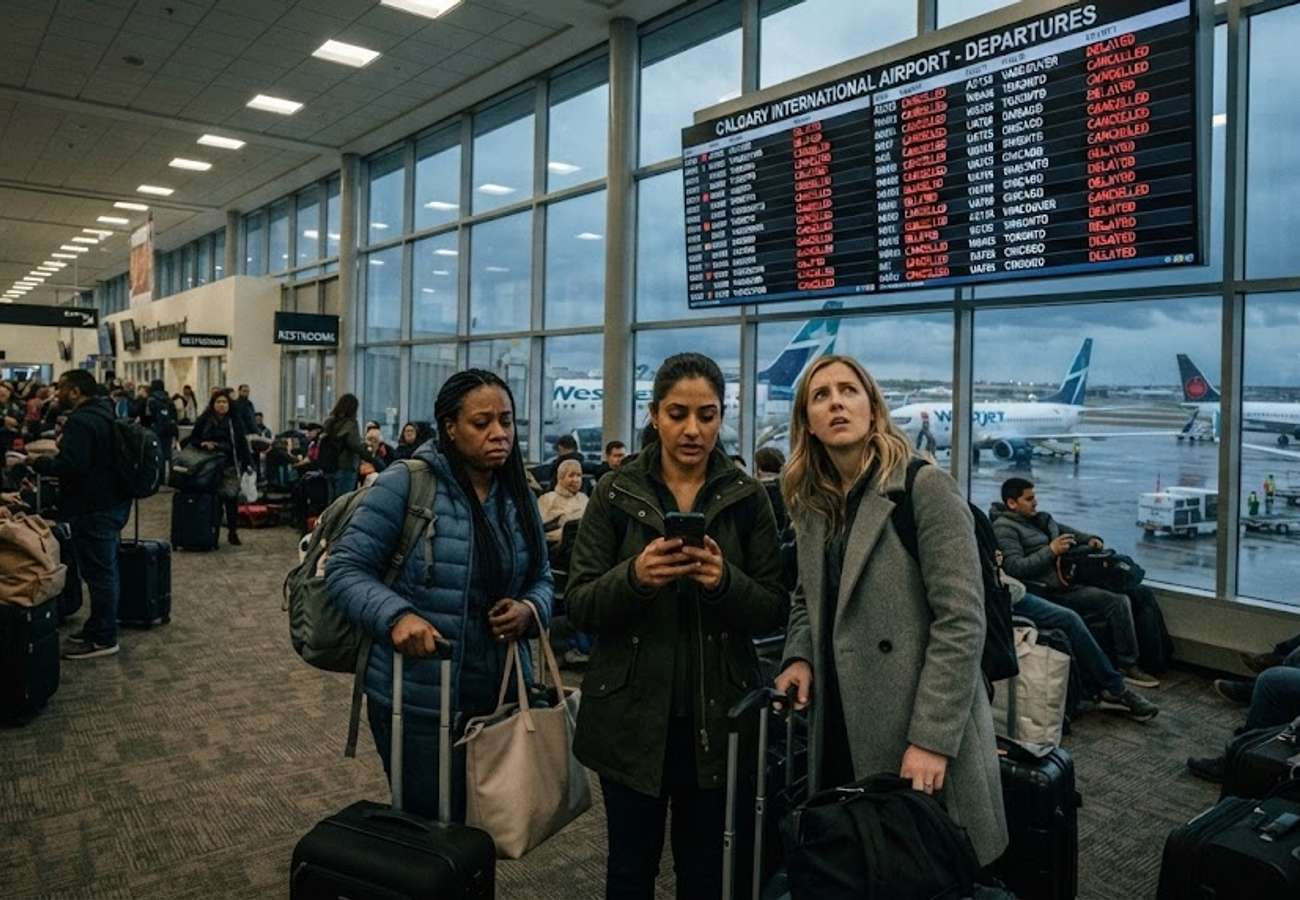
Image generated by AI
Western Canada's Busiest Hub Grinds to Halt
It was supposed to be a routine Thursday at Calgary International Airport, but instead, thousands of travellers found themselves caught in a cascading nightmare of cancellations and delays. Six flights were wiped off the board—Air Canada responsible for five cancellations, Porter Airlines for one—sending shockwaves through one of Canada's most critical western aviation hubs.
The disruptions weren't isolated to local traffic. They rippled across an expansive network: Yellowknife, Atlanta, Houston, Frankfurt, Saskatoon. Domestic connections fractured. International itineraries crumbled. And passengers—caught between airports, airports and home, homes and new destinations—were left scrambling for answers.
The Numbers Tell a Brutal Story
Air Canada cancelled five flights, representing roughly 9% of its scheduled operations at Calgary during the reporting period. That's not a minor hiccup—that's a meaningful chunk of capacity vanishing in real time. Porter Airlines added insult to injury, cancelling one additional flight and eating up 5% of its own service schedule.
But the cancellations were only half the story. According to FlightAware's real-time data, Air Canada logged seven additional delayed flights beyond the cancellations. Porter Airlines recorded four more delays. Together, the two carriers affected over 20 flight operations in a single day.
Reddit: "I was booked on an Air Canada flight out of Calgary that morning. No warning, no explanation for hours. Customer service was completely overwhelmed." — r/travel
Which Routes Took the Hardest Hit
The geographic footprint of disruption was staggering. Within Canada, Vancouver, Ottawa, Toronto, Montreal, Saskatoon, Edmonton, and Kelowna all reported cascading delays as connections failed to materialize. Passengers scheduled to connect through Calgary found themselves stranded or rebooked across multiple carriers.
Internationally, the situation spiralled further. Munich, Edinburgh, Frankfurt, Rome, and Keflavik (Iceland) all experienced knock-on delays as inbound flights arrived late or were cancelled entirely. Transatlantic travellers heading to Chicago, Detroit, Houston, Atlanta, Las Vegas, and Portland faced extended waits or alternative routing.
The Asian gateway suffered too: Incheon (South Korea) saw delayed arrivals as departures from Calgary slipped backward through the entire system.
What Air Canada and Porter Airlines Said—And What They Didn't
Both carriers cited operational issues but provided minimal detail about root causes. In today's air travel landscape, airlines are typically required to notify passengers quickly through multiple channels: email, SMS, and mobile apps. The standard practice is to offer rebooking on the next available flight, possible compensation under certain conditions, or refunds—though eligibility depends on jurisdiction and whether the cancellation falls within the airline's control.
For Canadian passengers, Air Canada operates under Canadian Transportation Agency (CTA) regulations, which mandate specific passenger protections. Porter Airlines, operating shorter regional routes, remains subject to the same standards.
Yet on the ground at Calgary, the real story unfolded in long queues at service desks, frustrated phone calls, and travellers making split-second decisions about how to salvage their journeys.
If Your Flight Gets Cancelled: Your Action Plan
When chaos hits, preparation matters. Here's what every traveller needs to do:
Stay Plugged In: Monitor your email, text messages, and the airline app constantly. Notifications can arrive within minutes of a cancellation being recorded. Don't assume you'll hear about changes through traditional channels—airlines now communicate primarily digitally.
Contact the Airline Immediately: Head to the service desk if you're at the airport. If you're not, call customer service or use the airline's online chat to avoid brutal wait times. Have your booking reference and ID ready.
Know Your Rights: In Canada, the CTA requires airlines to offer rebooking on the next available flight at no additional cost. EU passengers are entitled to compensation up to €600 (approximately CAD 850) under EU261 regulations for cancellations within the airline's control. US passengers have fewer federal protections but may have recourse under airline-specific policies.
Explore Alternatives: Ask about the next available flight. If timing doesn't work, consider booking with a competing carrier (you may need to pay upfront and claim reimbursement later), or explore trains, buses, or car rentals as backup options.
Document Everything: Take screenshots of cancellation notices, booking confirmations, and any communication with the airline. You'll need this paper trail for compensation claims.
The Bigger Picture: Why Calgary Matters
Calgary International Airport is no regional facility. It's a major western gateway serving over 17 million passengers annually pre-pandemic levels and continues recovering toward those figures. Disruptions here cascade across western North America within hours.
When Air Canada and Porter Airlines both experience operational issues on the same day, it suggests either a shared infrastructure problem (weather, air traffic control delays, a grounded aircraft fleet) or systemic strain. The airport authority doesn't typically disclose root causes publicly unless safety is compromised.
What we know: passengers suffered. Connections were missed. Hotel rooms were booked unexpectedly. Some travellers missed business meetings, family events, and medical appointments.
The Resilience Question
The disruption at Calgary highlights a fundamental vulnerability in modern air travel: concentration risk. A handful of cancellations at a major hub can paralyse an entire region's connectivity within hours. With just two carriers affected and six flights cancelled, over 1,000 passengers were likely rebooked, delayed, or stranded.
Airlines continue modernizing their scheduling and recovery systems, but weather, mechanical issues, and operational constraints remain unpredictable. For travellers, the lesson is simple: build flexibility into your itinerary, purchase trip insurance that covers airline-caused cancellations, and never assume a booking is guaranteed until wheels leave the tarmac.
When flying through major hubs, assume nothing and verify everything—twice.
Related Travel Guides
Disclaimer
This article is for informational and educational purposes only. It does not constitute legal, financial, or professional advice. While we strive to provide accurate and up-to-date information, travel policies, regulations, and conditions change rapidly. Always verify information with official sources before making travel decisions. Nomad Lawyer makes no representations about the accuracy, reliability, completeness, or suitability of the information provided. Readers should consult qualified professionals for advice specific to their circumstances. The views expressed in this article are those of the author and do not necessarily reflect the views of Nomad Lawyer.
Preeti Gunjan
Contributor & Community Manager
A passionate traveller and community builder. Preeti helps grow the Nomad Lawyer community, fostering engagement and bringing the reader experience to life.
Learn more about our team →