
Tornado Risk, Giant Hail, and Travel Chaos: Ohio Joins 7 States Under Easter Weekend Severe Storm Warning
A slow-moving, powerful low-pressure system is driving hail, damaging winds, and tornado risk across Ohio, Nebraska, Arkansas, Oklahoma, Missouri, Louisiana, and beyond through Easter weekend. Airports across the Plains and Great Lakes face mass delays, and highways throughout the Mississippi Valley are facing flash flooding.

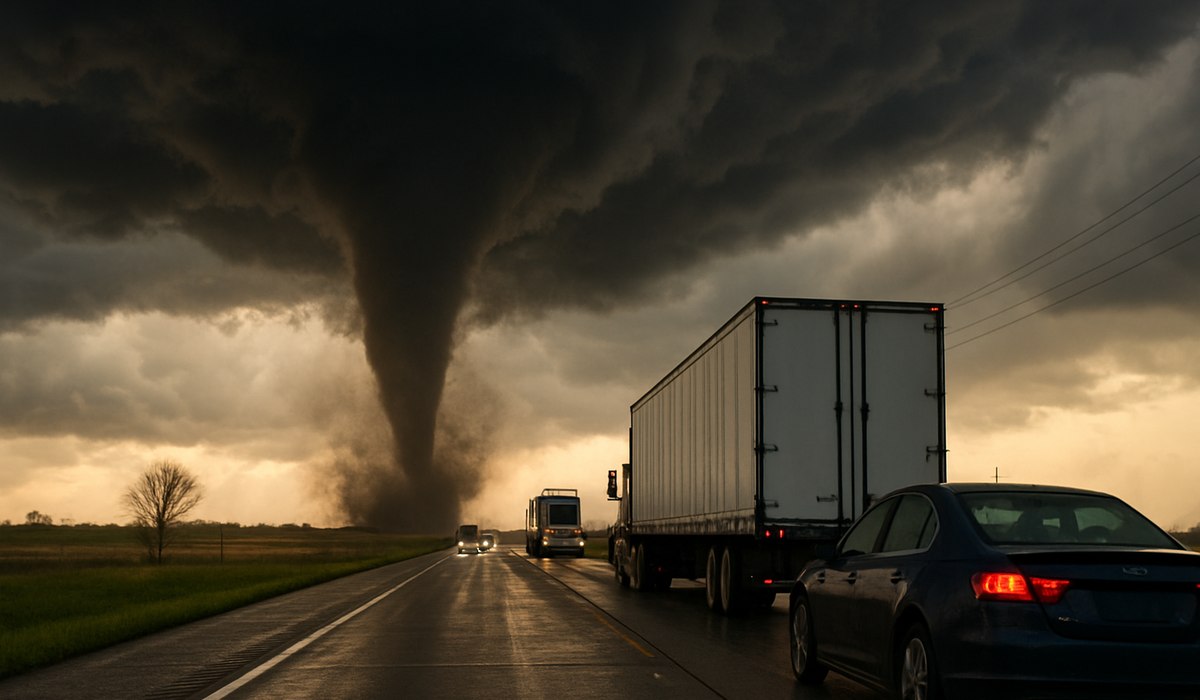
Image generated by AI
Eight States Face Violent Easter Weekend Weather: The Storm Behind the Chaos
A massive, slow-moving low-pressure system is systematically dismantling Easter weekend travel plans across eight US states simultaneously—and atmospheric scientists warn this is not a single storm event but a sustained, wave-driven outbreak that will deliver repeated rounds of violent weather across the same regions. Ohio now joins Nebraska, Arkansas, Oklahoma, Missouri, Louisiana, Kansas, and Texas under overlapping severe thunderstorm, hail, tornado, and flooding advisories from the National Weather Service.
The meteorological mechanics are textbook but brutal: warm, moisture-loaded air surging north from the Gulf of Mexico is colliding head-on with cold, dry air descending from the Rocky Mountain plateau. The resulting atmospheric instability is generating supercell thunderstorms capable of producing large hail, damaging wind gusts exceeding 70 mph, and isolated tornado development throughout the Central Plains, Midwest, and into the Great Lakes corridor.
The Multi-State Impact Zone: Where the Danger Is Highest
The severe weather corridor is advancing from southwest to northeast, with risk levels peaking in different regions across different days:
Day 1-2 (Highest Active Risk):
- Texas — Northern and central sectors under supercell and tornado watches
- Oklahoma — Full-state severe thunderstorm warning; tornado-favorable wind shear in place
- Arkansas — Large hail and damaging wind risk along I-40 corridor
Day 2-3 (Advancing Risk):
- Missouri — Tornado watch zones expanding northward; St. Louis airport operations affected
- Louisiana — Flash flooding and severe thunderstorm threats along the I-10 corridor
- Nebraska — Hail and wind damage risk across western districts
Day 3-4 (Great Lakes Escalation):
- Ohio — Severe thunderstorm risk spreading across the entire state; Columbus, Cleveland, and Cincinnati airport delays expected
- Illinois (Chicago area) — O'Hare and Midway face compounding ground delay program risk as the system pushes northeast
Why This Storm System Is Particularly Dangerous
The mechanism driving this outbreak creates a compounding risk structure that makes it more dangerous than a standard spring severe weather event:
The Slow Movement Problem: The parent low-pressure system is moving extremely slowly, allowing multiple rounds of severe storm development over the same geographic areas. This creates cumulative rainfall totals of 1-6 inches in some locations, with localized extremes potentially exceeding 8 inches—enough to trigger flash flooding even in areas with good drainage infrastructure.
The Easter Timing Problem: This outbreak is coinciding with one of the three-highest volume travel weekends of the year. Tens of thousands of Americans are actively on highways, in airports, and mid-journey when this system reaches its peak intensity, dramatically amplifying the risk exposure.
The Dual Hazard Structure: The storm simultaneously presents two distinct threat types. Northern sectors face the most severe convective activity (tornadoes, large hail, damaging winds). Southern and eastern sectors face the heavier precipitation totals, creating flash flood risk that is in some ways harder to avoid than convective threats.
Aviation Impact: Which Airports Face Ground Delays
The aviation ripple from this multi-state outbreak is already cascading through the national network:
- Chicago O'Hare (ORD) — Ground Delay Programs expected as the system pushes northeast into Illinois
- Dallas/Fort Worth (DFW) — Already experiencing traffic management initiatives
- St. Louis Lambert (STL) — Operating under increasing storm risk with potential ground delays
- Columbus (CMH) — Ohio storm evolution threatens arrivals flow
- Cleveland Hopkins (CLE) — Monitoring developing threat for Day 3 impact
What Guests Get
- NWS Wireless Emergency Alerts — Tornado warnings push automatically to all cellular devices in affected areas; ensure Do Not Disturb modes are disabled
- FAA real-time ground stop status at fly.faa.gov covering all affected hubs with traffic management initiatives in effect
- State emergency management resources — Oklahoma, Missouri, Arkansas, and Ohio all have activated emergency operations centers
- Airline weather waivers — Major carriers standard issue weather fee waivers for affected departure airports
Easter Weekend Severe Storm: State-by-State Threat Summary
| State | Threat Type | Highest Risk Period | Key Impact |
|---|---|---|---|
| Oklahoma | Tornado, large hail, damaging winds | Day 1-2 | I-40 corridor, Oklahoma City |
| Texas (North) | Tornadoes, supercells | Day 1-2 | DFW airport, I-35 corridor |
| Arkansas | Hail, damaging winds | Day 2 | I-40, Little Rock airport |
| Louisiana | Flash flooding, severe thunderstorms | Day 2-3 | New Orleans, I-10 |
| Missouri | Tornado watch zones, flooding | Day 2-3 | St. Louis, Kansas City |
| Nebraska | Hail, wind damage | Day 2-3 | Western districts |
| Ohio | Severe thunderstorms | Day 3-4 | Columbus, Cleveland, Cincinnati |
| Illinois | Ground delay risk at O'Hare | Day 3-4 | ORD, MDW airports |
What This Means for Travelers
If your Easter weekend itinerary places you on a highway or in an airport in any of these eight states during the storm's active window, aggressive contingency planning is not optional—it's survival travel strategy.
For road travelers: The 12-inches-of-moving-water rule is the critical threshold. Twelve inches of water is sufficient to stall most cars; 24 inches will sweep most vehicles off a road. If you encounter water of unknown depth across a roadway, turn around. No appointment, flight connection, or Easter Sunday dinner is worth the risk. Monitor the NOAA Weather Radio or the NWS mobile app for real-time tornado warnings in your county.
For air travelers: Diversions and extended ground delays are highly likely at affected hub airports. If you are connecting through Chicago, Dallas, or a Missouri/Ohio hub, build extraordinary schedule padding into your itinerary—or rebook proactively to avoid the highest-risk departure windows (late afternoon through midnight across Days 1-3, when convective activity peaks).
FAQ: Easter Severe Storm Warning
What is the difference between a Tornado Watch and a Tornado Warning? A Tornado Watch means conditions are favorable for tornado formation — be alert and ready to act. A Tornado Warning means a tornado has been detected by radar or spotted visually — take immediate shelter in the lowest floor interior room of a sturdy building. Do not attempt to drive away from a tornado.
Will my Easter flight be cancelled due to this storm? Ground delays are highly probable at affected hub airports. Full cancellations depend on storm severity and ground stop duration. Check your airline's app for weather waiver eligibility — most major carriers are already issuing them for impacted departure airports.
Is it safe to drive on Easter Sunday across the Plains? Highly situation-dependent. Monitor NWS conditions for your specific county before departing. The most dangerous driving windows will be during peak convective activity (late afternoon through midnight). If possible, delay departure to daytime morning hours on Day 4 as the system moves northeast.
Related Travel Guides
Disclaimer
This article is for informational and educational purposes only. It does not constitute legal, financial, or professional advice. While we strive to provide accurate and up-to-date information, travel policies, regulations, and conditions change rapidly. Always verify information with official sources before making travel decisions. Nomad Lawyer makes no representations about the accuracy, reliability, completeness, or suitability of the information provided. Readers should consult qualified professionals for advice specific to their circumstances. The views expressed in this article are those of the author and do not necessarily reflect the views of Nomad Lawyer.
Raushan Kumar
Founder & Lead Developer
Full-stack developer with 11+ years of experience and a passionate traveller. Raushan built Nomad Lawyer from the ground up with a vision to create the best travel and law experience on the web.
Learn more about our team →