
Oceania Travel Chaos: Sudden Flight Cancellations and 146 Massive Delays Paralyze Sydney, Wellington, and Christchurch as Air New Zealand and Qantas Struggle
As unexpected operational friction heavily degrades the trans-Tasman aviation network, major carriers across Australia and New Zealand are forced into a chaotic wave of sudden flight cancellations and devastating terminal delays.

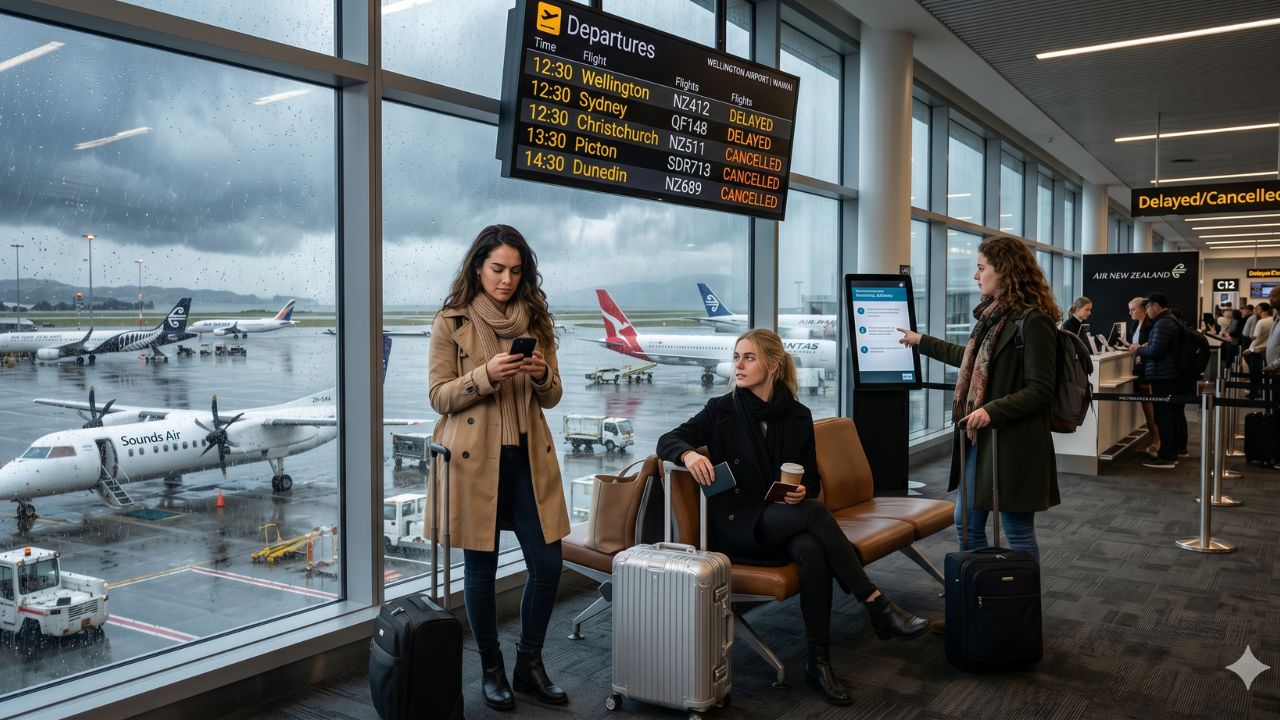
Image generated by AI
A Massive Operational Meltdown Plunges Oceania into Gridlock
While massive sectors of the global passenger network frequently battle highly unpredictable extreme weather events, synchronized logistical bottlenecks, and horrific fleet constraints, sudden, unmanageable terminal friction remains the absolute most terrifying catalyst for cascading airport disruptions. Delivering highly urgent, breaking airline news, verified trans-Tasman aviation trackers confirm that a catastrophic operational breakdown has actively generated severe travel chaos across the massive Oceania aviation network. Today, June 3, 2026, severe travel distress forcefully emerged following a brutal wave of 146 massive flight delays and 8 outright flight cancellations that violently tore through Sydney, Wellington, Christchurch, Dunedin, and Picton on June 2nd.
While desperate travelers usually attempt to navigate sudden, terrifying airport disruptions caused by isolated technical failures, these exclusive aviation updates reveal a highly systemic, incredibly destructive capacity failure that has entirely destabilized the Australia-New Zealand corridor. Verified transit data confirms that this massive operational collapse has severely restricted ground handling and air traffic flow across both massive international gateways and highly vulnerable regional airstrips. This horrific logistical meltdown is actively destroying the travel itineraries of thousands of incredibly vulnerable passengers, violently stranding domestic commuters and international tourists flying with major legacy carriers like Air New Zealand, Qantas, Virgin Australia, and Air Japan.
Expanded Overview: The Scale of the Trans-Tasman Crisis
The sudden, highly publicized execution of this massive regional operational lockdown serves as an undeniable example of how rapidly a heavily reliant transit network can completely disintegrate under unexpected pressure. The massive disruption has explicitly drawn international attention to the incredibly complex, highly fragile operational ecosystem that links Oceania's major economic centers. For a massive region heavily reliant on incredibly robust trans-Tasman and domestic flight schedules, even a brief period of ground handling friction requires incredibly precise management by airport authorities to prevent total collapse.
The terrifying reality of this crisis is found in the sheer volume of high-capacity aircraft abruptly knocked out of alignment. By instantly logging 154 combined disruptions across just five critical gateways, airlines are forcing thousands of vulnerable passengers into a terrifying logistical puzzle. This catastrophic reduction instantly paralyzes both inbound and outbound traffic, actively destroying hundreds of incredibly vulnerable connecting itineraries. When massive hubs like Sydney and critical regional connectors like Picton simultaneously fail, the localized ripple effects violently spiral into a massive, unmanageable wave of terminal congestion.
Section-Wise Breakdown of the Connectivity Crisis
The Sydney Super-Hub Bottleneck
Sydney Airport, acting as the absolute largest and most vital international hub in the region, suffered the most catastrophic volume of schedule alterations. A staggering 101 severe delays were aggressively recorded, alongside 2 complete flight cancellations executed by Air Japan. The massive number of delayed flights heavily reflected the incredibly dense, highly volatile traffic conditions managed by the terminal. Massive legacy carriers including Qantas (28 delays), Jetstar (23 delays), and Virgin Australia (12 delays) were violently forced off schedule, triggering massive check-in queues and absolutely devastating transfer windows for long-haul international passengers.
New Zealand Regional Meltdowns
Across the Tasman Sea, New Zealand's primary aviation infrastructure faced massive, cascading disruption. Christchurch International, serving as the critical primary gateway to the South Island, experienced notable operational friction, logging 25 severe delays and 1 flight cancellation, predominantly driven by Air New Zealand network struggles. Simultaneously, Wellington International, the nation’s capital hub, reported 12 severe delays and 3 complete cancellations—the highest number of outright cancellations among the monitored New Zealand hubs, largely impacting Sounds Air operations.
The Vulnerable Southern Outposts
The terrifying travel chaos did not spare the smaller, highly vulnerable regional transport links. Further south, Dunedin International was touched by the massive disruption, logging 7 delays and 1 cancellation. Even incredibly small commercial operations like Picton Aerodrome recorded identical headwinds, suffering 1 delay and 1 cancellation. This explicitly illustrates that both massive international long-haul operations and small, critical turboprop connections are incredibly vulnerable to sudden trans-Tasman scheduling failures.
Verified Oceania Disruption Data
To fully comprehend the massive operational scale and devastating delays dictating this highly volatile regional crisis, the following tables explicitly detail the exact cancellation metrics officially recorded across the impacted airports:
Sydney Airport (Australia) Disruption Matrix
| Affected Airline | Total Cancellations | Total Delays |
|---|---|---|
| Air Japan | 2 Cancellations (66%) | 0 Delays |
| Qantas | 0 Cancellations | 28 Delays (12%) |
| Jetstar | 0 Cancellations | 23 Delays (22%) |
| Virgin Australia | 0 Cancellations | 12 Delays (8%) |
| QantasLink & Regional Express | 0 Cancellations | 9 Delays Each |
| Other International Carriers (Korean Air, Qatar, Singapore, etc.) | 0 Cancellations | Multiple Delays Noted |
Christchurch International (New Zealand)
| Affected Airline | Total Cancellations | Total Delays |
|---|---|---|
| Air New Zealand | 1 Cancellation (0%) | 21 Delays (16%) |
| Jetstar / Singapore Airlines | 0 Cancellations | 1 Delay Each |
Wellington International (New Zealand)
| Affected Airline | Total Cancellations | Total Delays |
|---|---|---|
| Sounds Air | 3 Cancellations (11%) | 4 Delays (14%) |
| Air New Zealand | 0 Cancellations | 8 Delays (6%) |
Dunedin & Picton Airports (New Zealand)
| Airport & Airline | Total Cancellations | Total Delays |
|---|---|---|
| Dunedin: Air New Zealand | 1 Cancellation (5%) | 7 Delays (35%) |
| Picton: Sounds Air | 1 Cancellation (25%) | 1 Delay (25%) |
Passenger Impact: Navigating the Regional Meltdown
For the modern commuter attempting to navigate this highly volatile trans-Tasman network, the passenger impact of this massive scheduling failure is completely exhausting. Reliable scheduling is the absolute backbone of multi-city itineraries frequently booked by high-yielding international visitors.
- Anticipate Severe Tourism Compression: If massive delays become a regular feature of domestic travel, carefully planned itineraries are violently compressed, severely impacting local hospitality and guided tour operators heavily reliant on precise arrival windows.
- Missed Connection Liability: If passengers purchased separate tickets across different airlines for a multi-stop journey involving hubs like Sydney or Wellington, the massive financial risk of a missed connection is generally borne entirely by the traveler.
- Contact Carriers Promptly: Passengers must prepare for massive secondary disruptions. Do not wait in massive terminal queues. Immediately utilize official airline mobile apps to review available travel options, request digital rebooking, or secure mandatory emergency accommodation for overnight delays.
Conclusion: A Highly Volatile Transit Crisis
The massive, highly publicized operational breakdown across the Australia-New Zealand aviation network represents a severe, terrifying crisis for the regional travel sector. By actively forcing passengers to endure 154 critical flight disruptions across the most vital corridors, this operational friction guarantees an incredibly stressful, highly exhausting travel experience. As operational teams frantically battle this sudden logistical puzzle and severe ground handling backlog, passengers are heavily urged to aggressively monitor their bookings, thoroughly understand their carrier’s rebooking policies, and fully expect massive, cascading flight disruptions amidst unprecedented Oceania travel chaos.
Key Takeaways
- Massive Trans-Tasman Meltdown: A severe wave of operational friction violently disrupted Oceania's aviation network on June 2, causing 146 massive delays and 8 total flight cancellations.
- Sydney Hub Devastated: Sydney Airport absorbed the absolute highest volume of chaos, logging 101 severe delays and 2 Air Japan cancellations, violently impacting legacy carriers like Qantas and Jetstar.
- New Zealand Network Collapse: Major hubs including Christchurch and Wellington suffered 37 combined delays and 4 cancellations, heavily stranding Air New Zealand and Sounds Air passengers.
- Severe Tourism Impact: The massive schedule destabilization threatens to severely compress multi-city tourist itineraries, deeply harming regional hospitality sectors reliant on predictable arrival windows.
- Passenger Survival Tactics: Travelers are aggressively urged to check their flight status in real-time via official airline apps, avoid leaving the terminal unless instructed, and explicitly verify their travel insurance coverage regarding massive missed connection liabilities.
Disclaimer: The specific cancellation metrics, delayed flight volumes, and airline operational failures presented in this report are based on verified transit data compiled from FlightAware regarding the Oceania flight disruptions in June 2026. Official airline routing, terminal congestion levels, and local carrier compensation policies are highly volatile and subject to continuous, real-time update based on active airline directives, fluctuating ground handling capacity, and sudden air traffic control shifts. Prospective passengers are urgently advised to fiercely monitor their specific booking status and verify active flight schedules directly via the airline's official portal prior to airport arrival.
Disclaimer
This article is for informational and educational purposes only. It does not constitute legal, financial, or professional advice. While we strive to provide accurate and up-to-date information, travel policies, regulations, and conditions change rapidly. Always verify information with official sources before making travel decisions. Nomad Lawyer makes no representations about the accuracy, reliability, completeness, or suitability of the information provided. Readers should consult qualified professionals for advice specific to their circumstances. The views expressed in this article are those of the author and do not necessarily reflect the views of Nomad Lawyer.
Kunal K Choudhary
Co-Founder & Contributor
A passionate traveller and tech enthusiast. Kunal contributes to the vision and growth of Nomad Lawyer, bringing fresh perspectives and driving the community forward.
Learn more about our team →