
Northern Plains Storm Alert: Travel Safety Guide for 2026
Severe thunderstorm watches sweep North Dakota, South Dakota, Nebraska, and Wyoming. Learn how to navigate weather challenges, flight disruptions, and road trip safety across the Northern Plains this summer.

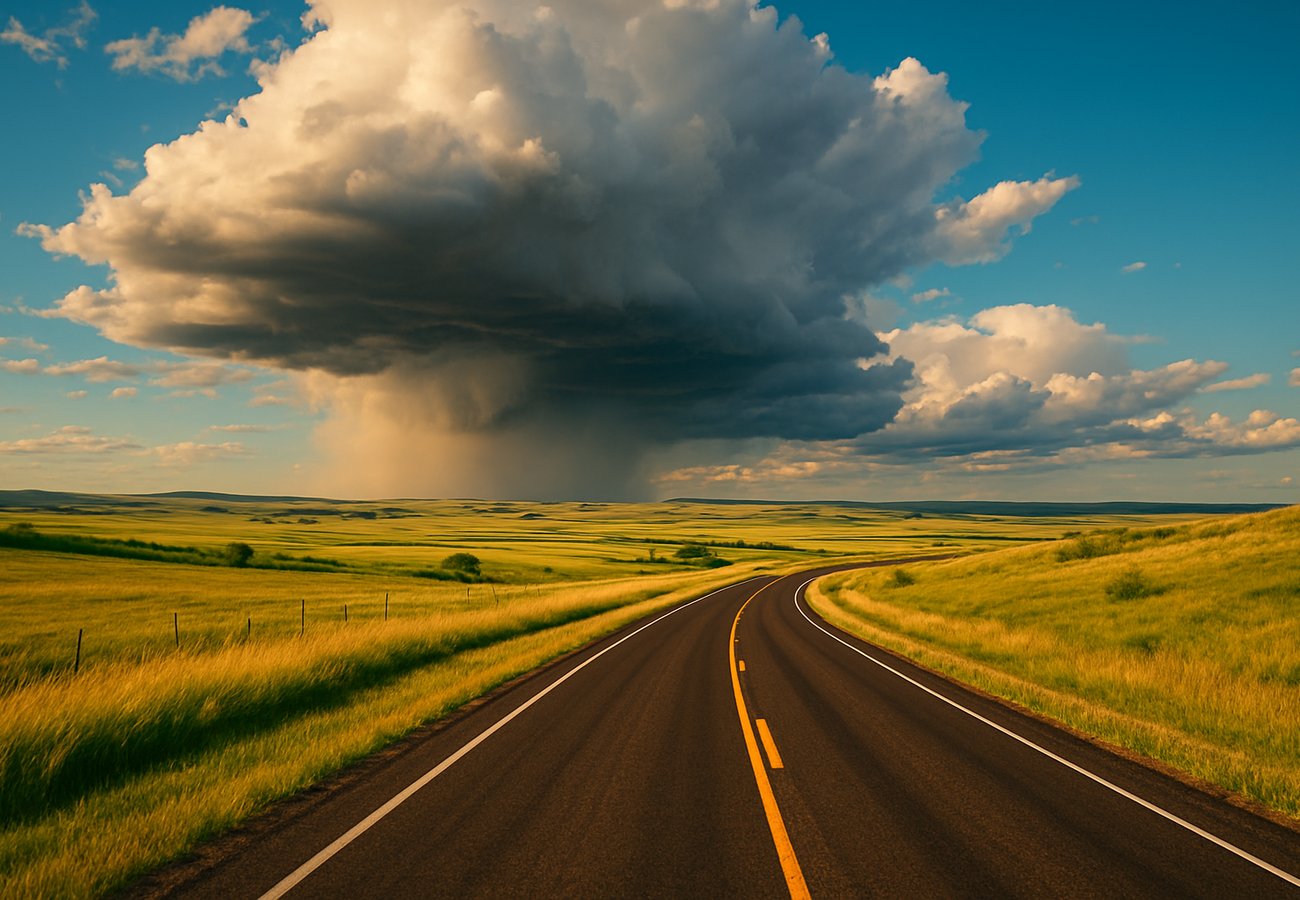
Image generated by AI
Severe Thunderstorm Watch Blankets the Northern Plains—Here's What Travelers Need to Know Right Now
A severe thunderstorm watch has been issued across a sprawling stretch of the Northern Plains, covering North Dakota, South Dakota, Nebraska, and Wyoming. For the estimated thousands of domestic and international travelers planning road trips, park visits, and outdoor adventures through these iconic landscapes this spring and summer, this advisory demands serious attention.
What we're looking at isn't just scattered showers. The National Weather Service is tracking the potential for large hail, damaging winds, heavy rainfall, and dangerous lightning — conditions that can reshape travel itineraries in hours and create genuine safety hazards for unprepared visitors.
Reddit: "Just drove through Nebraska during a watch last month. Hail the size of golf balls hit our rental car in literally 10 minutes. We had no warning until we saw the sky turn green." — r/RoadTrip
Why the Northern Plains Are Uniquely Vulnerable
The atmospheric setup across this region is textbook severe weather territory. When warm, unstable air masses collide with cold fronts descending from Canada, the result is rapid convection — the kind that spawns violent thunderstorms with minimal notice.
States like North Dakota, South Dakota, Nebraska, and Wyoming experience this collision zone effect intensely during late spring and early summer. Travelers often underestimate how quickly conditions deteriorate in wide-open terrain with limited shelter options.
The hazards are real and multifaceted:
Vehicle damage from baseball-to-golf-ball-sized hail. Comprehensive insurance is critical, but damage still derails trips.
Flash flooding in low-lying areas and road crossings. Rural highways can transform into temporary rivers within 15 minutes of heavy rainfall.
Damaging straight-line winds capable of toppling trees, closing roads, and disabling power infrastructure for hours.
Lightning strikes that pose life-threatening risks during outdoor activities — hiking, camping, fishing, and wildlife photography.
Flight disruptions at regional and hub airports serving the Plains, including Denver, Minneapolis, Chicago, and Omaha.
The Badlands, Devils Tower, and Teddy Roosevelt National Park: Beautiful—and Volatile
The Northern Plains attract adventure travelers for compelling reasons. Badlands National Park in South Dakota showcases otherworldly rock formations and unobstructed prairie vistas. Devils Tower in Wyoming draws climbers and photographers from around the world. Teddy Roosevelt National Park in North Dakota offers rugged terrain, wildlife viewing, and scenic byways that rival any American landscape.
But these same attractions — vast, exposed, treeless — offer nowhere to hide when severe weather rolls in. A photographer capturing the majesty of the Badlands can find themselves in genuine danger if a storm cell moves overhead unexpectedly.
Scenic byways across Nebraska's Sandhills, historic pioneer trails, and rural highways connecting small towns are equally vulnerable. The appeal is the openness. The liability is the exposure.
Understanding Severe Thunderstorm Watches vs. Warnings
Many travelers conflate these terms. They shouldn't.
A watch means atmospheric conditions favor severe thunderstorm development. A warning means severe weather is imminent or already occurring. The distinction matters for decision-making.
During a watch, you should:
Monitor radar and weather alerts constantly. Download the National Weather Service app and enable push notifications for your route.
Adjust your schedule proactively. If forecasts show severe storms crossing your planned route between 2 p.m. and 6 p.m., delay departure or reroute entirely.
Avoid exposed camping or outdoor activities. A tent offers zero protection from hail or lightning.
Identify sturdy shelter in advance. Know where buildings, caves, or substantial structures exist along your route.
International visitors especially should treat these advisories with the gravity they deserve. Unlike some weather systems, Plains thunderstorms can escalate from "looks cloudy" to "life-threatening" in 20 minutes.
Road Trip Reality: Your Flexibility Matters More Than Your Itinerary
The Northern Plains are road-trip country. Long stretches of scenic highway, minimal traffic, quirky roadside attractions, and small-town culture draw travelers from across the U.S. and abroad.
But flexibility becomes non-negotiable during severe weather watches.
Pre-departure weather checks are mandatory. Don't just glance at conditions. Pull up hourly radar forecasts. Identify storm cells along your planned route. If severe weather is predicted within 100 miles, seriously consider delaying departure.
Alternate routes save trips. If Interstate 90 is forecast to experience severe storms, take state highways farther north or south. Add 45 minutes to your drive time, but avoid the danger zone.
Low-water crossings are death traps. Never attempt to ford water flowing across roads, even if it appears shallow. Flash flooding can sweep vehicles off roads with shocking speed.
Driving after dark amplifies risk. Nocturnal storms are harder to see coming. Storm cells are harder to avoid. Nighttime driving across rural Plains highways during severe watches is reckless.
Flight Delays and Air Travel Complications
Severe thunderstorms across the Northern Plains don't just affect drivers. They ripple into aviation.
Denver International, Minneapolis-St. Paul International, Chicago O'Hare, and Omaha Eppley all serve the region and experience cascading delays when severe weather moves through. Even if your destination airport has clear skies, your flight might still be delayed if it's routing through a major hub affected by storms.
Expect:
Ground delays while cells move through airspace.
Flight diversions to alternate airports, sometimes 50+ miles away.
Increased turbulence in storm-affected corridors, even if your flight departs safely.
Crew and equipment repositioning delays that ripple through entire flight schedules.
Overbooking complications as airlines consolidate flights due to disruptions.
If you're flying into or out of the Northern Plains during a severe thunderstorm watch, build 2-3 hour buffers into connecting flights. Monitor your airline's app obsessively. Have a backup plan if your flight is cancelled.
Outdoor Adventures: When to Pivot and When to Stay Put
The outdoor appeal of the Northern Plains — hiking, wildlife photography, fly fishing, backcountry camping, scenic drives — is undeniable. But severe weather transforms these activities from recreational to potentially fatal.
Lightning is the killer. It strikes without warning, travels along the ground, and kills an estimated 20 people annually in the U.S. Never be the tallest object in an open field during a thunderstorm.
Hail causes injuries. Golf-ball-sized hail moving at 80+ mph will injure exposed skin and cause concussions.
Flash flooding drowns people. Canyon hikes, river crossings, and low-lying campgrounds flood faster than humans can evacuate.
During active severe weather watches:
Carry a weather radio or enable smartphone alerts with pinpoint location services.
Know where shelter exists. Before heading into parks, identify visitor centers, lodges, caves, or substantial structures within easy reach.
Pack protective gear. Waterproof jackets, sturdy boots, and hats aren't optional.
Avoid open fields, isolated trees, and exposed ridge tops during thunderstorms.
Defer river activities. Heavy rainfall upstream can cause sudden water level rises that trap swimmers and paddlers.
When in doubt, move activities indoors or postpone them. The Badlands aren't going anywhere.
Museums, Historical Sites, and Weather-Independent Culture
The Plains region compensates for weather volatility with rich indoor attractions. Native American heritage sites, pioneer museums, railroad collections, and roadside Americana offer educational and entertaining experiences regardless of sky conditions.
Rapid City's Museum of the Black Hills Indian, the Cheyenne Frontier Days Old West Museum, and Nebraska's Stuhr Museum of the Prairie Pioneer provide hours of immersive cultural experience while thunder rumbles outside.
Plan your itinerary to include weather-flexible attractions. Storm day? Spend 4 hours in a museum. Clear day? Hit the parks.
Lodging Strategy: Cluster Stays Near Attractions
Smart travelers add buffer days to Northern Plains itineraries. Build in flexibility by clustering accommodations near major attractions:
South Dakota trips: Base yourself in Rapid City or Sioux Falls for 2-3 days. Day-trip to Badlands, Mount Rushmore, and Devils Tower as weather allows.
Wyoming adventures: Stay in Cheyenne or Casper for a 4-5 day loop. Explore Devils Tower, scenic byways, and ranch experiences on clear windows.
North Dakota routes: Base near Medora or Bismarck. Teddy Roosevelt National Park visits are weather-dependent, so flexibility is essential.
Many travelers add 1-2 unscheduled nights to their itineraries specifically to absorb storm delays without sacrificing park time or rushing through attractions.
Preparedness for Roadside Emergencies
Rural Northern Plains highways offer stunning scenery but minimal infrastructure. Cell service is spotty. Distances between services can exceed 50 miles. When severe weather strikes, you're largely on your own.
Every vehicle crossing the Plains during severe weather watches should carry:
Water and non-perishable snacks (gallon per person, minimum).
First aid kit with trauma supplies.
Flashlight and extra batteries.
Jumper cables or portable jump starter.
Spare tire, jack, and lug wrench (verify they're present before departure).
Roadmap (GPS fails when cell towers are down).
Emergency blanket and warm jacket (temperature drops can accompany severe weather).
Tool kit with basic wrenches and screwdrivers.
Keep a charged backup battery pack for your phone. Download offline maps using Google Maps before departure. Store emergency numbers (AAA, highway patrol, park rangers) in your phone before entering areas with no cell coverage.
Photography and Storm Chasing: Respect the Risk
Many travelers find storm photography irresistible. Towering thunderheads rising over prairie horizons, lightning illuminating vast landscapes at dusk — the visual drama is unmatched.
But storm photography demands respect for the hazard.
Stay within established viewpoints and parking areas. Never exit your vehicle to photograph in open fields or high terrain.
Never position yourself near metal objects, tall trees, or isolated structures during lightning threats.
Use weather radar apps to track storm movement. Know when and where cells are moving.
Combine storm imagery with historical or cultural subjects for context and added protection (buildings, monuments, museums provide shelter).
Many travel photographers successfully capture storm drama while maintaining safety by timing shots during the storm's approach phase, before severe weather arrives, and by positioning themselves near substantial structures for quick shelter.
Family Travel Across the Plains: Age-Appropriate Adjustments
Families with young children, elderly members, or individuals with anxiety need additional planning.
Children and storms: Explain weather terminology clearly. Kids can understand "watch" and "warning" with simple analogies. Make shelter-seeking a game ("Let's find the safest place!") rather than a scary obligation.
Elderly travelers: Ensure accommodations have backup power. Some medications require refrigeration. Have medical supplies and medications readily accessible during potential disruptions.
Limited mobility: Choose attractions with accessible shelter, restrooms, and first aid stations. Don't be stranded in exposed areas if someone needs assistance.
Pet travel: Animals stress during severe weather. Keep pets secured in vehicles during storms. Ensure crates, carriers, and leashes are accessible for rapid shelter movement.
Build extra time into family itineraries. Stress and rushing amplify poor decision-making. A relaxed pace allows for weather flexibility without sacrificing the trip's quality.
Stay alert, stay flexible, and don't let a forecast ruin your Plains adventure—but respect the warning when the sky turns green.
Related Travel Guides
Airlines Launch 16 New Nonstop Routes in Historic Expansion Week—Here's What Travelers Need to Know
Travel Chaos Strikes Calgary International: WestJet and Air Canada Crippled by Massive Outages
Disclaimer
This article is for informational and educational purposes only. It does not constitute legal, financial, or professional advice. While we strive to provide accurate and up-to-date information, travel policies, regulations, and conditions change rapidly. Always verify information with official sources before making travel decisions. Nomad Lawyer makes no representations about the accuracy, reliability, completeness, or suitability of the information provided. Readers should consult qualified professionals for advice specific to their circumstances. The views expressed in this article are those of the author and do not necessarily reflect the views of Nomad Lawyer.
Raushan Kumar
Founder & Lead Developer
Full-stack developer with 11+ years of experience and a passionate traveller. Raushan built Nomad Lawyer from the ground up with a vision to create the best travel and law experience on the web.
Learn more about our team →