
Northern California Waterfront Town Tiburon Emerges as 2026 Bay Area Gem
Tiburon, a 9,000-resident Northern California waterfront town, captures travelers' attention in 2026 with Golden Gate Bridge views, historic charm, and upscale amenities—positioning itself as an underrated Bay Area escape.

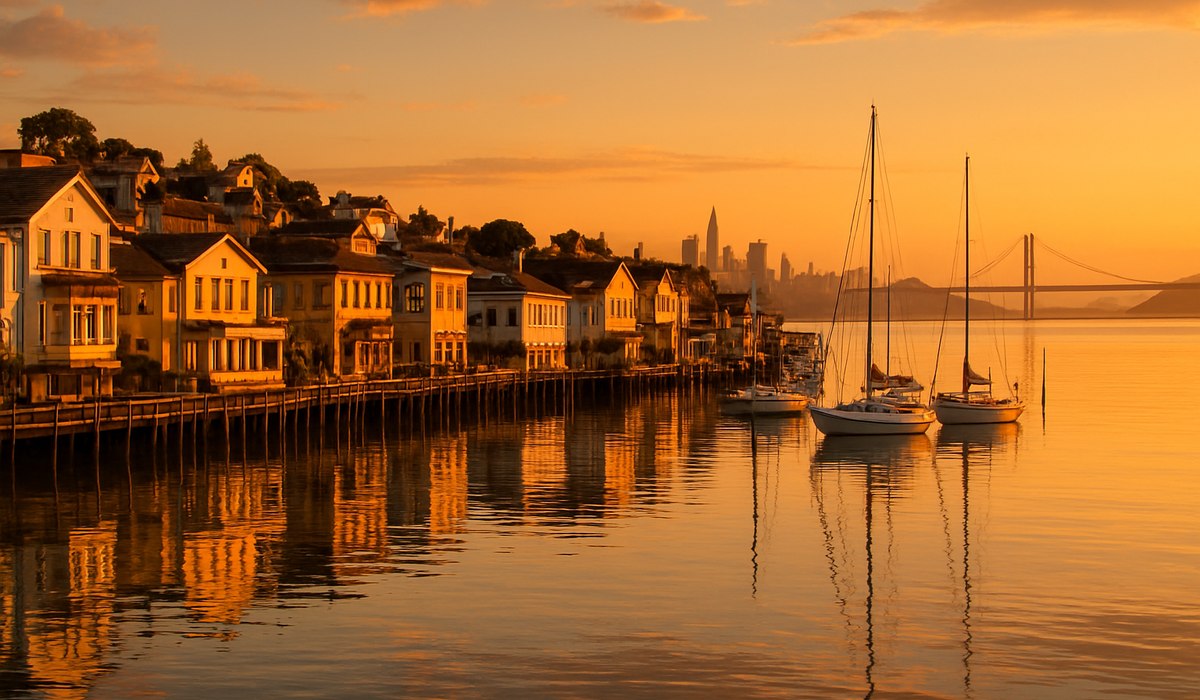
Image generated by AI
A Northern California Waterfront Town Gains Recognition as 2026's Underrated Bay Area Destination
Tiburon, a picturesque 9,000-resident community perched on the Tiburon Peninsula, is capturing nationwide traveler attention in 2026. Positioned 20 miles north of San Francisco, this Northern California waterfront town offers unobstructed vistas of the Golden Gate Bridge and San Francisco Bay—without the overcrowding of nearby urban centers. The combination of preserved industrial heritage, contemporary upscale dining and retail, and accessible outdoor recreation has positioned Tiburon as a compelling alternative for Bay Area visitors seeking authentic charm with modern amenities.
The momentum reflects broader 2026 travel trends favoring boutique destinations over mega-cities. Travel industry analysts note increased ferry bookings and vehicle traffic to Tiburon throughout spring, signaling that sophisticated travelers recognize the town's value proposition.
Why Tiburon Is Capturing Travelers' Attention
Tiburon's appeal stems from its distinctive positioning within the Bay Area landscape. The Northern California waterfront town manages rarity in contemporary travel: authentic historical character preserved alongside thoughtfully curated upscale developments. Since its 1775 naming by Lt. Juan Manuel de Ayala—derived from "Punta del Tiburon" due to regional shark populations—Tiburon has evolved through identifiable chapters.
The 1880s industrial boom introduced railroad terminals and ferry infrastructure that catalyzed economic development. Rather than erasing this heritage, contemporary Tiburon celebrates these artifacts. The town's careful restoration of downtown corridors maintains architectural authenticity while supporting contemporary commerce and hospitality. This intentional balance distinguishes Tiburon from gentrified Bay Area competitors, attracting travelers valuing substance over superficial renovation.
Local stewardship has prioritized public access to waterfront amenities, ensuring Bay views remain accessible without premium pricing—a competitive advantage against San Francisco proper. Community events like Friday Night on Main Street (seasonal summer programming featuring live music, outdoor dining, and street closure) generate organic foot traffic and authentic cultural experiences rather than manufactured tourist attractions.
Strolling Along Tiburon's Main Street and Ark Row
Downtown Tiburon centers on Main Street, a revitalized corridor hosting Ark Row—a distinctive retail and dining district housed within converted houseboats and "arks" dating to the late 1800s. This architectural preservation represents functional time travel; visitors browse contemporary boutiques and fine dining establishments while surrounded by authentic period structures reflecting the town's maritime industrial past.
Ark Row's waterfront positioning provides unobstructed panoramic views across San Francisco Bay toward the Golden Gate Bridge and Angel Island. The combination of shopping, dining, and scenery creates a walkable destination with minimal vehicular traffic disruption during optimal visiting hours. Summer Friday Night on Main Street events attract 1,000+ community members and visitors, transforming the corridor into an experiential destination featuring face painting, games, live performances, and temporary outdoor dining facilities.
The narrow pedestrian-scale infrastructure encourages exploration—most essential shops, restaurants, and waterfront parks cluster within 10-minute walking distances. This density supports sustainable travel patterns and reduces reliance on private vehicles within the town center, differentiating Tiburon from car-dependent Bay Area destinations.
Historic Character Meets Modern Amenities
Tiburon's competitive positioning derives from balanced preservation of historical infrastructure alongside contemporary service standards. The Northern California waterfront town maintains visible connections to its mid-1800s cattle ranching and dairy farming heritage, with environmental stewardship reflecting these agrarian roots through preserved open spaces and parkland management.
Simultaneously, visitor accommodations, restaurant dining, retail environments, and hospitality facilities meet upscale 2026 standards. This combination proves rare within Bay Area geography—most regional destinations either prioritize heritage conservation at expense of modern comfort, or conversely, demolish historical structures for contemporary development.
Shoreline Park and the adjacent Shoreline Boardwalk, anchored by ferry landing infrastructure, provide primary waterfront recreation areas. These facilities maintain functional connections to regional ferry service while offering contemporary walking paths, scenic viewing platforms, and seasonal programming. Parks infrastructure receives consistent investment reflecting local commitment to recreational public access.
Ring Mountain, positioned on the Tiburon Peninsula ridge, offers challenging hiking opportunities with panoramic Bay Area views encompassing multiple regional landmarks. The Old Rail Trail, following historic railroad corridors toward Blackie's Pasture, provides moderate recreational alternatives with historical narrative integration—locals guide visitors toward the former pasture of Blackie, a beloved community horse symbolizing Tiburon's human-scale identity.
Where to Dine and Shop in Downtown Tiburon
Ark Row concentrates Tiburon's most distinguished dining and retail establishments. The houseboats-turned-restaurants aesthetic creates distinctive ambiance unavailable within conventional restaurant structures. Menus reflect Bay Area culinary sophistication, incorporating locally sourced ingredients from Marin County agricultural producers and San Francisco Bay fisheries. Seasonal variation drives menu development—spring features fresh produce, while fall and winter highlight regional seafood and game preparations.
Boutique retail clustering along Main Street and Ark Row emphasizes independent ownership and curated product selection. Apparel, home furnishings, art galleries, and specialty food vendors occupy converted historic structures, creating shopping experiences that prioritize aesthetic environment alongside product quality. This retail philosophy attracts travelers prioritizing meaningful acquisitions over mass-market consumption.
Restaurant and retail density supports varied visit duration—lunch-focused travelers can experience Tiburon within 3-4 hours, while overnight and extended stays enable fuller exploration of dining options, shopping inventory, and recreational activities. Ferry arrivals and departures create natural rhythm to visitor experiences, with many travelers scheduling meal timing around transportation schedules.
Key Data Table: Tiburon at a Glance
| Metric | Details |
|---|---|
| Population | Approximately 9,000 residents |
| Location | Tiburon Peninsula, Marin County, Northern California |
| Distance from Downtown San Francisco | 20 miles (30-40 minutes by vehicle) |
| Primary Transportation Methods | Private vehicle via Golden Gate Bridge; Golden Gate Ferry; Angel Island Tiburon Ferry; bicycle via Golden Gate Bridge crossing |
| Primary Scenic Viewpoint | Shoreline Park, Shoreline Boardwalk, Hippie Tree swing location |
| Historic District | Ark Row (late 1800s houseboat structures) |
| Best Visiting Seasons | Spring (wildflower bloom) and fall (minimal coastal fog) |
| Summer Climate Challenge | "June Gloom"—excessive coastal fog July-August |
| Recreation Options | Ring Mountain hiking, Old Rail Trail, Paradise Beach State Park, Angel Island State Park |
| Community Events | Friday Night on Main Street (seasonal summer programming) |
| Accessibility | Wheelchair-accessible waterfront paths; limited historic structure accessibility |
What This Means for Travelers
1. Timing Optimization: Schedule Tiburon visits during spring (March-May) or fall (September-November) to maximize scenic visibility and navigate less congested ferry reservations. Summer fog blocks iconic Golden Gate Bridge photography through August.
2. Multi-Modal Transportation Planning: Book ferry services in advance during peak seasons; alternatively, time morning driving visits to avoid afternoon commute congestion on Highway 101 approaching the Golden Gate Bridge.
3. Hybrid Experience Strategy: Combine downtown Main Street and Ark Row experiences (2-3 hours) with outdoor recreation—Ring Mountain hikes, waterfront parks, or ferry crossings to Angel Island—to maximize day-trip value.
4. Ferry-Centric Itineraries: Golden Gate Ferry and Angel Island Tiburon Ferry services enable experiential travel without vehicle parking concerns; ferry journeys themselves provide iconic Bay Area scenery.
**5. Seasonal
Disclaimer
This article is for informational and educational purposes only. It does not constitute legal, financial, or professional advice. While we strive to provide accurate and up-to-date information, travel policies, regulations, and conditions change rapidly. Always verify information with official sources before making travel decisions. Nomad Lawyer makes no representations about the accuracy, reliability, completeness, or suitability of the information provided. Readers should consult qualified professionals for advice specific to their circumstances. The views expressed in this article are those of the author and do not necessarily reflect the views of Nomad Lawyer.
Preeti Gunjan
Contributor & Community Manager
A passionate traveller and community builder. Preeti helps grow the Nomad Lawyer community, fostering engagement and bringing the reader experience to life.
Learn more about our team →