
North Carolina Scenic Cycling Routes: Exploring 3,000 Miles from the Blue Ridge to the Outer Banks

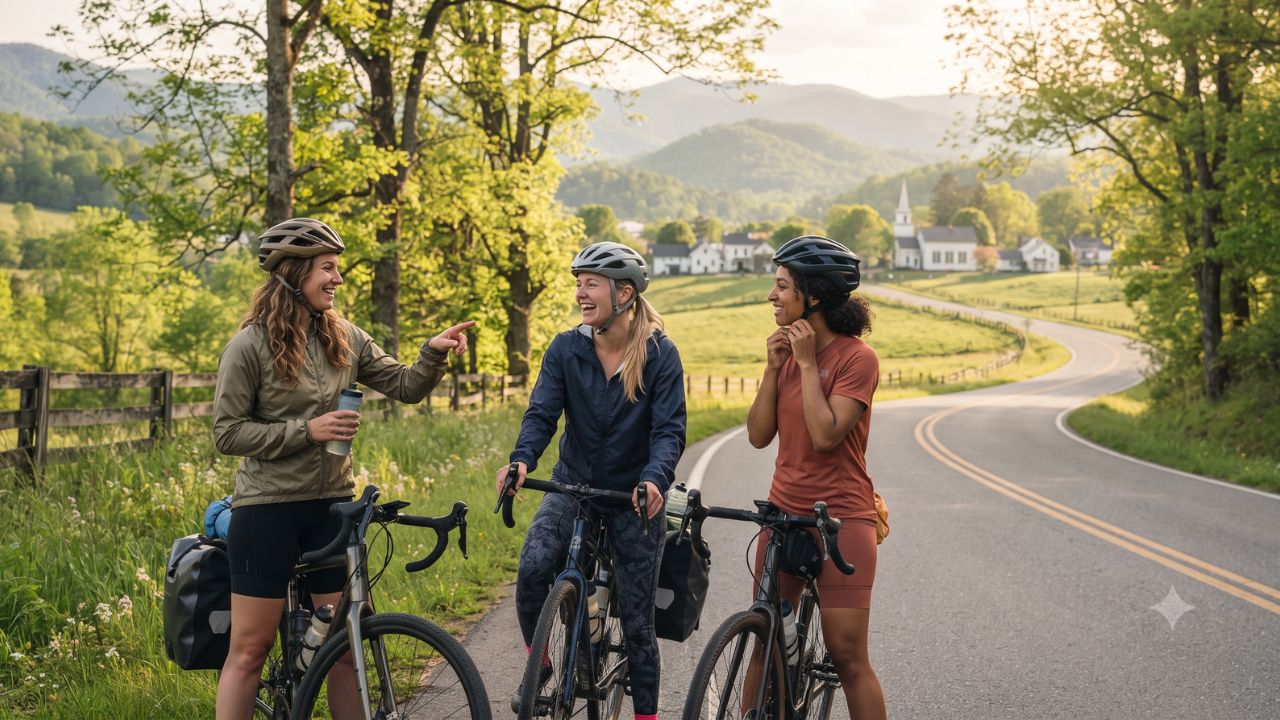
North Carolina maintains an officially designated 3,000-mile statewide bicycle network organized across nine numbered touring corridors. Rather than being confined to short municipal bike paths, these interlinked highways allow cyclists to pedal more than 700 continuous miles from the high alpine passes of the Great Smoky Mountains down to the barrier island shores of the Atlantic.
As experiential travel and rural exploration expand across the American Southeast, two-wheeled touring offers an intimate look at communities that conventional interstate travelers bypass. According to the North Carolina Department of Transportation (NCDOT), these nine corridors link working agricultural counties, colonial river ports, and mountain gaps, anchoring a visitor economy that the North Carolina Department of Commerce confirmed reached a record $37.2 billion in 2025.
Cross-State Expeditions: Mountains-to-Sea (NC 2) and North Line Trace
The crown jewel of the state system is the Mountains-to-Sea route, designated as NC 2. Spanning more than 700 miles, this long-distance route traverses the state's entire breadth:
- The High Country Descent: Starting along high mountain ridges bordering Tennessee—often overlapping sections of the Blue Ridge Parkway—riders negotiate demanding mountain climbs and cool forest descents.
- Piedmont Foothills and Farmland: The route transitions through rolling piedmont topography, connecting rural craft communities and historic textile hamlets.
- Coastal Plains to the Atlantic: Riders cross coastal wetlands and maritime forests before terminating along the windswept barrier islands of the Outer Banks.
For riders seeking an east-west journey along the northern border, the North Line Trace parallels the Virginia state line, tracing tobacco barns, pine forests, and quiet country lanes.
Coastal Heritage Along the Ports of Call Route (NC 3)
Running for approximately 300 miles between the Virginia and South Carolina state borders, the Ports of Call route (NC 3) hugs the historic waterways of the Albemarle and Pamlico Sounds. This route is defined by maritime heritage and well-preserved colonial towns:
- Edenton: Known as the first colonial capital of North Carolina, featuring the 1886 screw-pile Roanoke River Lighthouse along its protected waterfront harbor.
- Bath: North Carolina's oldest incorporated town (established in 1705), once frequented by the pirate Blackbeard.
- New Bern: The historic colonial capital situated at the confluence of the Neuse and Trent rivers, recognized as the birthplace of Pepsi-Cola.
- Wilmington and Southport: Southern coastal port cities known for oak-shaded historic districts, maritime riverwalks, and proximity to Cape Fear beaches.
In northeastern North Carolina, the quiet Roanoke-Chowan region—spanning communities like Ahoskie, Murfreesboro, and Winton—provides flat, low-traffic farm roads along the Chowan River. In Bertie County, where visitor spending surged 8.8% in 2025, cycle tourists encounter authentic rural hospitality away from mainstream resort corridors.
North Carolina Cycling Networks and Economic Impact
| Corridor or Metric | Mileage / Official Figure | Geographic Span & Key Towns | Terrain & Touring Profile |
|---|---|---|---|
| Statewide Designated Network | ~3,000 Miles | 9 Principal State Bike Routes | Mountain roads, rolling piedmont, coastal plains |
| Mountains-to-Sea (NC 2) | 700+ Miles | Blue Ridge Mountains to Outer Banks | High alpine climbs, elevation shifts, long-distance touring |
| Ports of Call (NC 3) | ~300 Miles | VA border to SC border (Edenton, New Bern) | Flat coastal terrain, sound views, historic river ports |
| Statewide Visitor Spending (2025) | $37.2 Billion (+1.3%) | $36.1B Domestic / $1.1B International | Supported 230,997 jobs with $9.8B payroll |
| County Growth Spread | 59 of 100 Counties | Broad rural gains (e.g., Bertie County +8.8%) | Disperses tourism spending directly to local diners & B&Bs |
| Historic Outer Banks Cycling Data | $60 Million Annual Impact | Outer Banks coastal bike pathways | Supported approximately 1,407 regional jobs |
Visitor Insider Tips
Touring North Carolina by bicycle requires strategic preparation and realistic route management:
- Distinguish Shared Roads from Dedicated Trails: NCDOT's 3,000-mile network comprises designated on-road routes, meaning cyclists share the pavement with vehicular traffic. Riders should equip bikes with high-visibility daylight running lights, rear radar detectors (such as Garmin Varia), and mirror mounts.
- Optimal Seasonal Windows: Spring (April to late May) and Autumn (late September to early November) offer mild temperatures and clear skies. Avoid mid-summer coastal tours when high humidity, heat indexes above 35°C (95°F), and afternoon thunderstorms complicate long days in the saddle.
- Join Organized Supported Rides: For travelers wanting logistical support without self-supported bikepacking bags, programs like Cycle North Carolina host annual multi-day Mountains-to-Coast rides, providing luggage transfers, rest stops, and mechanical support.
- Carry Comprehensive Repair Spares: Rural stretches through the Roanoke-Chowan or coastal marshlands can separate full-service bicycle shops by 40 to 60 miles. Carry two spare tubes, a tubeless plug kit, a mini-pump, and extra master chain links.
Cultural and Environmental Context
Bicycle tourism represents an environmentally sustainable economic engine for rural North Carolina. As state travel revenues generated more than $2.7 billion in local and state tax revenue in 2025, self-propelled travelers provide direct revenue to independent motels, family-owned barbecue smokehouses, and rural roadside fruit stands.
Furthermore, cycling along river basins like the Roanoke and Chowan fosters deep environmental awareness. These waterways sustain critical cypress swamp ecosystems and migratory bird flyways. Responsible cycle touring emphasizes Leave No Trace ethics, respecting agricultural working lands, and supporting community-based conservation initiatives across coastal North Carolina.
FAQ: Cycling in North Carolina 2026
How extensive is the North Carolina designated bicycle network?
The North Carolina Department of Transportation maintains roughly 3,000 miles of designated bicycle touring corridors spread across nine principal routes.
Are the bicycle routes fully separated from car traffic?
No. Most designated state bike routes use paved secondary public roads shared with motor vehicles, requiring defensive riding and visibility gear.
How long is the Mountains-to-Sea (NC 2) cycling route?
The NC 2 route extends for more than 700 miles, connecting western mountain ridges with the Atlantic barrier islands.
What are the top historic stops along the Ports of Call (NC 3) route?
Highlights include Edenton's 1886 Roanoke River Lighthouse, the historic port of Bath, New Bern's colonial waterfront, and the river streets of Wilmington and Southport.
From the mist-shrouded switchbacks of the Blue Ridge to the tidal breezes of the Albemarle Sound, exploring North Carolina on two wheels reveals America's rich heritage at the perfect speed.
Related Travel Guides
Disclaimer
This article is for informational and educational purposes only. It does not constitute legal, financial, or professional advice. While we strive to provide accurate and up-to-date information, travel policies, regulations, and conditions change rapidly. Always verify information with official sources before making travel decisions. Nomad Lawyer makes no representations about the accuracy, reliability, completeness, or suitability of the information provided. Readers should consult qualified professionals for advice specific to their circumstances. The views expressed in this article are those of the author and do not necessarily reflect the views of Nomad Lawyer.
Raushan Kumar
Founder & Lead Developer
Full-stack developer with 11+ years of experience and a passionate traveller. Raushan built Nomad Lawyer from the ground up with a vision to create the best travel and law experience on the web.
Learn more about our team →