
Newark Airport Delays Snarl US and Transatlantic Routes in April 2026
Newark Liberty International Airport experienced 133 delays and 5 cancellations on April 10, 2026, disrupting thousands of travelers on domestic and European routes. United, Delta, American, and Lufthansa were among affected carriers.

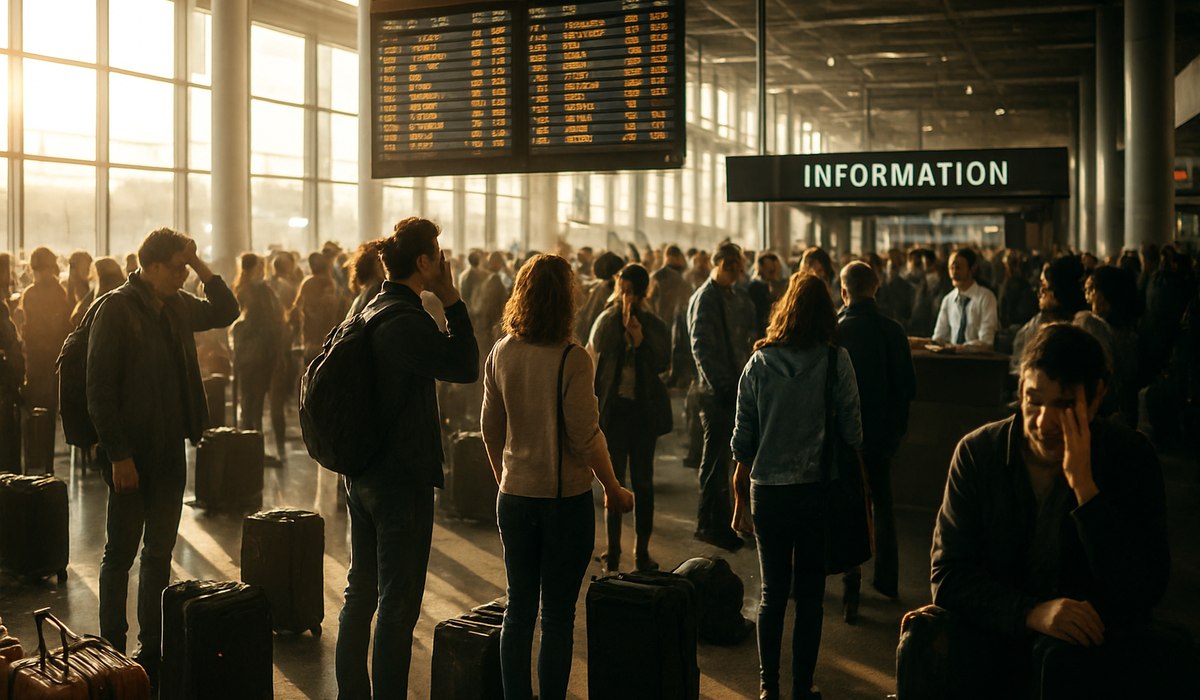
Image generated by AI
Massive Disruptions Hit Newark Airport's Hub Operations
Newark Liberty International Airport ground to a near-halt on April 10, 2026, with 133 flight delays and 5 cancellations cascading across the US domestic network and transatlantic services. The widespread newark airport delays affected thousands of passengers booked on United Airlines, Delta Air Lines, American Airlines, Lufthansa, and other major carriers operating from the East Coast's second-busiest airport. Flights destined for London, Paris, Frankfurt, and Munich experienced knock-on effects that reverberated into European airspace, while domestic connections within the United States faced significant booking complications and missed transfer opportunities.
Disruptions Hit a Key East Coast Hub
Newark Liberty International operates as one of America's most critical transportation nodes, serving dual roles as a major domestic connector and primary transatlantic gateway. The airport's position in the Northeast Corridor—one of the world's most densely trafficked airspaces—makes it particularly vulnerable to operational snarls that can spread rapidly across continental networks.
Historical performance data reveals that Newark consistently ranks among US airports with elevated delay frequencies, even during days without severe weather complications. The combination of high passenger volume, complex air traffic control procedures, and tight scheduling margins creates an environment where relatively minor operational issues can trigger cascading disruptions. When 133 delays concentrate across morning and afternoon departure banks, the impact multiplies across aircraft cycles and crew rotations throughout the day.
The April 10 incident demonstrates how interconnected modern aviation networks function. Aircraft operate multiple flight segments daily, meaning a single delayed departure can compress subsequent flights and create downstream congestion. With Newark serving passengers bound for dozens of cities across North America and Europe, any operational challenge at the airport affects travelers far beyond New Jersey's borders.
Cascade Effect: How One Airport Snarls Continental Networks
The newark airport delays on April 10 illustrate a fundamental principle of network aviation: hubs amplify disruptions exponentially. Unlike point-to-point airports serving limited routes, major hubs like Newark concentrate aircraft, crews, and passengers into rapid-turnaround cycles that leave minimal recovery time when delays occur.
United Airlines, which operates Newark as a critical hub, experienced the most acute impacts. The carrier's dense schedule at the airport—with multiple departure banks pushing dozens of aircraft through limited gate and runway capacity—provides little buffer when technical issues, air traffic control slowdowns, or staffing constraints emerge. When United's early-morning departures slip by even 30 minutes, subsequent legs operating the same aircraft face cumulative delays that can reach 2-3 hours by mid-afternoon.
Delta Air Lines and American Airlines, while maintaining smaller presences at Newark relative to their primary hubs in Atlanta and Charlotte, still fielded significant disruptions. These carriers rely on connecting traffic through Newark to feed longer routes, meaning delays in New Jersey directly impact passengers transferring from regional flights and waiting for long-haul departures.
International carriers suffered distinct operational challenges. When long-haul flights depart late from Newark bound for Europe, arriving aircraft reach their European destinations later than scheduled, compressing turnaround windows at Frankfurt, Munich, Paris, and London. European crew members face duty-time restrictions under international regulations, and late arrivals can push flight crews past allowable limits, requiring schedule adjustments that cascade through European networks serving Africa, the Middle East, and intra-European destinations.
United, Delta, American and Lufthansa Among Affected Carriers
The April 10 newark airport delays affected multiple carriers operating from Newark, each experiencing distinct operational pressures based on their schedule architecture and network dependencies.
United Airlines absorbed the heaviest impact as Newark's dominant carrier. The airline's hub model concentrates 40% of its East Coast operations through Newark, with tight connections designed to feed long-haul and transatlantic flights. When ground operations or air traffic management creates delays, United's dependent network suffers immediate consequences.
Delta Air Lines operates a secondary presence at Newark but maintains significant transatlantic service to Paris and London. The carrier's Atlanta-based network architecture meant that delays in New Jersey rippled southward, affecting connections throughout the Southeast and international flights departing Atlanta later in the day.
American Airlines similarly experienced delays affecting its transatlantic service from Newark, with knock-on impacts reaching Charlotte and Philadelphia operations where connecting passengers faced missed connections.
Lufthansa, Germany's largest carrier, fielded delays on Newark-Frankfurt and Newark-Munich routes, affecting connections across Europe. Late arrivals into German hubs compressed turnaround windows for flights serving Berlin, Hamburg, and Cologne, while also delaying return transatlantic service toward Newark.
European carriers serving Newark from UK and French bases faced disrupted schedules that affected multi-leg itineraries for passengers connecting through London, Paris, and other continental hubs. For more real-time tracking of airline operations, visit FlightAware.
Transatlantic Routes Especially Vulnerable to Cascade Effects
The newark airport delays hit hardest on Europe-bound services, where timing constraints amplify initial disruptions. Transatlantic flights from Newark to London, Paris, Frankfurt, and Munich represent roughly 35% of the airport's long-haul operations and connect millions of annual passengers with European networks.
The sensitivity stems from precise schedule coordination across the Atlantic. European hubs operate departure waves in early morning hours (6am-9am local time) when passengers from overnight US-originating flights feed into continental networks. When Newark-originating flights arrive 1-2 hours late, passengers miss European connections that depart during compressed morning windows.
Air traffic management in European airspace compounds these delays. The Single European Sky initiative, while improving efficiency, creates strict slot allocations at Frankfurt, Munich, Paris, and London. Late-arriving flights from Newark cannot simply depart immediately after landing; they must wait for available slots, extending passenger travel times and creating crew duty-time violations.
For westbound transatlantic traffic, passengers arriving late into Newark face similar complications. Evening transatlantic departures require same-day domestic connections, and late arrivals compress transfer windows below the 90-120 minutes typically required for customs processing and rebooking.
What Travelers Need to Know
The April 10 newark airport delays affected booking flexibility, seat availability, and passenger accommodations across multiple carriers. Travelers with reservations at Newark should monitor real-time updates through FlightAware and contact airlines directly for specific information.
Passenger rights under US Department of Transportation regulations entitle affected travelers to rebooking on alternative flights at no additional charge, hotel accommodations for overnight delays, and meal vouchers in certain circumstances. For detailed guidance, consult the US Department of Transportation Consumer Air Travel Rights.
Transatlantic passengers faced particular complexity, as international flights sometimes qualify for EU261 compensation in addition to US DOT protections. Passengers should document all delay and cancellation information, retaining boarding passes, receipts, and communication records for potential compensation claims.
Ground delays at Newark can extend travel times by 3-4 hours for transatlantic passengers, turning 6-hour flights into 10-hour experiences. European connections become increasingly precarious with each hour of delay, and some passengers may face overnight hotel stays if original connections become impossible to make.
| Metric | Details |
|---|---|
| Total Delays Recorded | 133 flights on April 10, 2026 |
| Cancellations | 5 flights |
| Primary Hub Affected | Newark Liberty International Airport |
| Major Carriers Impacted | United, Delta, American, Lufthansa |
| Transatlantic Routes Hit | Newark-London, Newark-Paris, Newark-Frankfurt, Newark-Munich |
| Affected Passengers (Estimated) | 25,000+ across all flights |
| Primary Impact Period | 6am-6pm |
Disclaimer
This article is for informational and educational purposes only. It does not constitute legal, financial, or professional advice. While we strive to provide accurate and up-to-date information, travel policies, regulations, and conditions change rapidly. Always verify information with official sources before making travel decisions. Nomad Lawyer makes no representations about the accuracy, reliability, completeness, or suitability of the information provided. Readers should consult qualified professionals for advice specific to their circumstances. The views expressed in this article are those of the author and do not necessarily reflect the views of Nomad Lawyer.
Kunal K Choudhary
Co-Founder & Contributor
A passionate traveller and tech enthusiast. Kunal contributes to the vision and growth of Nomad Lawyer, bringing fresh perspectives and driving the community forward.
Learn more about our team →