
New Zealand Cruise Industry Pushes for 18-Month Fee Notice to Drive Regional Recovery
The New Zealand Cruise Association advocates for 18 months' advance notice on port and operational fees to help global cruise lines budget deployment to New Zealand ports.

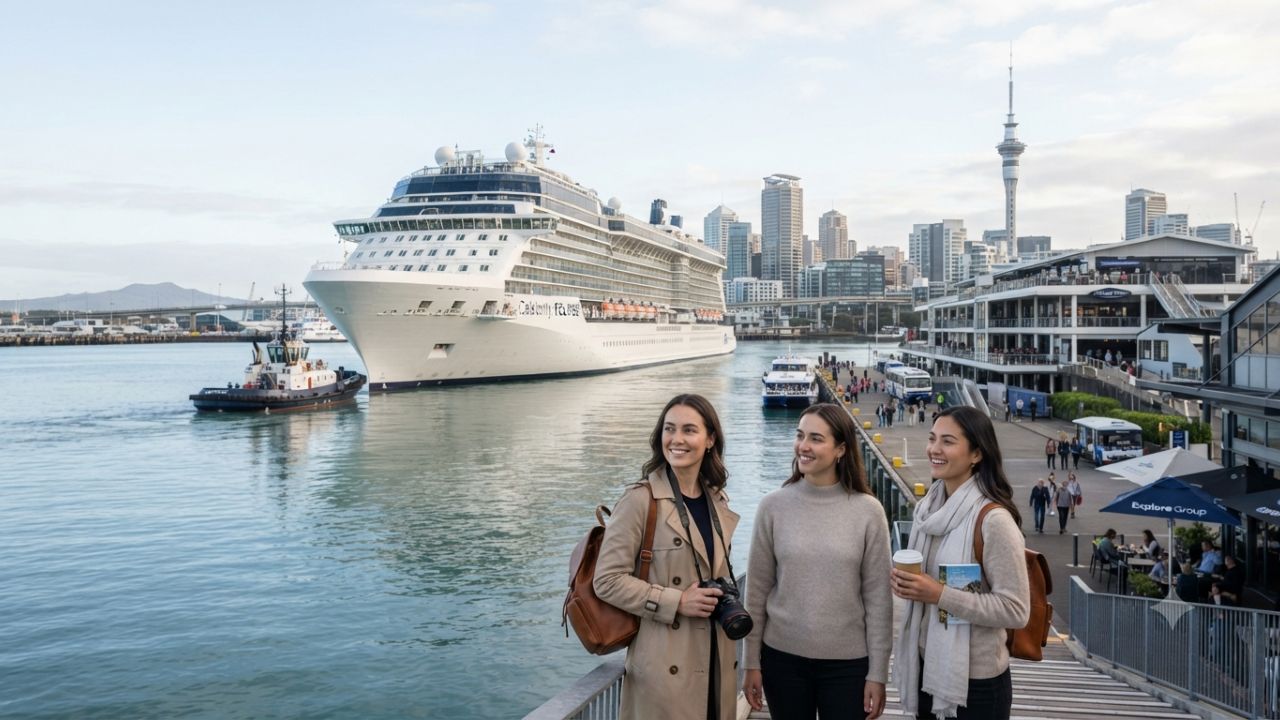
The New Zealand Cruise Association is seeking 18-month pricing visibility to help global cruise operators budget regional itineraries. Image credit: Port of Auckland
The New Zealand Cruise Association has proposed establishing an 18-month advance notice framework for all port charges, border levies, and maritime operational fees. The initiative aims to provide international cruise lines with the pricing visibility required to commit vessel deployments to New Zealand ports two years before sailing.
[Wellington, Oct 6, 2026] — Cruise industry leaders and regional tourism entities across New Zealand are backing a strategic push for 18-month advance visibility on maritime levies and port operational charges. Outlined in the New Zealand Cruise Association's (NZCA) Horizon Two Transition Strategy, the initiative seeks to stabilize operating cost forecasts for global cruise lines planning long-term itineraries in Oceania.
Because cruise lines schedule global ship deployments up to two years in advance, mid-season fee increases or unexpected regulatory charge adjustments can undermine itinerary profitability. The NZCA strategy emphasizes that advance pricing notice—rather than a national fee freeze—is vital to rebuilding vessel capacity across New Zealand ports, where passenger arrivals in the 2025/26 season remained at just over half of pre-pandemic levels.
NZ CRUISE RECOVERY & STRATEGY BENCHMARKS
| Metric / Policy | Status & Strategic Target |
|---|---|
| 2025/26 Passenger Level | ~50% of pre-pandemic visitation levels |
| 2026/27 Passenger Target | ~200,000 anticipated cruise visitors |
| NZCA Strategy Horizon | 18-month advance notice on port & border fees |
| MBIE Tourism Export Goal | Double 2023 tourism export value by 2034 |
Distinguishing Pricing Visibility from Fee Freezes
A central tenet of the NZCA proposal is the clear distinction between advance notice and lower operational costs. The 18-month proposal does not freeze port tariffs or lower passenger ticket prices; instead, it provides fixed lead times before fee adjustments take effect.
       [ Global Itinerary Planning (18-24 Months Ahead) ]
                               |
                               v
       [ 18-Month Advance Notice on Port & Border Fees ]
                               |
                               v
       [ Predictable Financial Modeling for Cruise Lines ]
                               |
                               v
       [ Confirmed Vessel Deployments to New Zealand Ports ]
When cruise operators evaluate vessel assignments, predictable cost structures enable more accurate financial modeling. For shore-excursion providers, coach operators, and local retailers, early schedule confirmations provide the operational certainty required to secure seasonal staffing and supplier commitments.
Border Processing Levies and Tariff Structure
New Zealand Customs Service publishes fixed border processing levies for all cruise ship passengers arriving between February 1, 2026, and June 30, 2027. These charges are collected directly through passenger ticket sales.
| Border Levy Category | Amount (Excluding GST) | Statutory Purpose |
|---|---|---|
| Customs Arrival Levy | NZ$27.14 | Border processing, passenger screening, and passport verification |
| Biosecurity Arrival Levy | NZ$10.58 | Ministry for Primary Industries risk assessment and inspection |
| Customs Departure Levy | NZ$0.68 | Departure processing and outbound border monitoring |
| Combined Arrival & Departure Total | NZ$38.40 | Total statutory border levy per passenger |
These statutory border levies are distinct from port berthage fees, pilotage charges, and maritime safety levies. Maritime industry groups emphasize that border levies should not be conflated with biofouling hull-inspection compliance costs, which are assessed separately based on vessel cleanliness standards.
MARITIME NZ LEVY REVIEW ADJUSTMENTS
| Category / Entity | Details / Impact |
|---|---|
| Implementation Date | Approved Adjustment Rate |
| July 1, 2027 | +6.35% increase across Maritime Levy rates |
| July 1, 2028 | +2.50% annual increase |
| July 1, 2029 | +2.50% annual increase |
Maritime New Zealand Levy Schedule Updates
A practical example of advance regulatory notice occurred on May 28, 2026, when Maritime New Zealand announced the outcome of its statutory levy review. Cabinet acknowledged cumulative cost pressures facing international shipping and cruise operators when structuring the phased rate adjustment.
- July 1, 2027: Maritime Levy rates will increase by 6.35 percent across commercial shipping and passenger vessels.
- Subsequent Fiscal Years: Rates will adjust upward by 2.5 percent annually for the remaining two years of the three-year levy cycle.
Publishing these adjustments more than a year in advance aligns with government policy under the Ministry of Business, Innovation and Employment (MBIE) Tourism Policy Statement. MBIE advocates for maximum lead times so transportation providers can integrate regulatory fee changes into forward pricing models.
Infrastructure Expansion and In-Water Biofouling Technologies
Port infrastructure improvements and environmental protection measures are progressing alongside pricing transparency discussions.
                  [ Government & Infrastructure Push ]
                                   |
         +-------------------------+-------------------------+
         |                                                   |
         v                                                   v
[ Auckland Port Infrastructure ]           [ Approved In-Water Cleaning ]
Bledisloe North Wharf redevelopment       Provisional approval for Auckland
targeting homeporting connections         tech targeting sea chests/props
Auckland Infrastructure Upgrades
The government's season launch announcement highlighted ongoing developments at Bledisloe North Wharf in Auckland. Infrastructure enhancements aim to position Auckland as a primary homeporting hub, where passengers begin and end voyages locally, generating additional hotel nights, restaurant spending, and domestic airline connections.
Biosecurity and Hull-Cleaning Solutions
To streamline vessel clearance while safeguarding marine ecosystems, the government granted provisional approval for advanced in-water vessel cleaning technology in Auckland. This technology permits hull cleaning of difficult internal areas—such as sea chest recesses and propeller shafts—within port waters, reducing vessel turnarounds and preventing offshore diversions.
Guidelines for Travelers and Regional Tourism Businesses
For prospective cruise passengers and regional tourism operators, understanding New Zealand's evolving cruise policy environment involves several key considerations:
- Ticket Price Transparency: Border levies (NZ$38.40) are automatically included in total cruise fare quotes provided by cruise lines.
- Passport and Visa Verification: Pricing strategies do not alter entry requirements. Travelers must obtain appropriate NZeTA (New Zealand Electronic Travel Authority) clearances or visas prior to boarding.
- Regional Tour Coordination: Independent excursion operators should track official port calls early to align staffing with confirmed ship arrival windows.
- Environmental Compliance: Cruise lines operating in New Zealand waters undergo strict biosecurity screening for hull biofouling before entering designated marine sanctuaries.
Frequently Asked Questions
Does the 18-month proposal freeze New Zealand cruise fares?
No. The proposal focuses on giving cruise lines 18 months' advance notice of port and statutory fee adjustments. It does not establish a nationwide price freeze or guarantee lower passenger fares.
What are the mandatory border levies for cruise passengers in New Zealand?
For the period ending June 30, 2027, the combined New Zealand border levy per cruise passenger is NZ$38.40 (excluding GST). This covers Customs arrival (NZ$27.14), Biosecurity arrival (NZ$10.58), and Customs departure (NZ$0.68).
How many cruise passengers are expected in New Zealand this season?
Official government forecasts projected approximately 200,000 cruise passengers for the 2026/27 season as regional vessel deployments continue to rebuild toward pre-pandemic levels.
When do Maritime New Zealand's new levy rates take effect?
Maritime New Zealand's reviewed levy settings will take effect on July 1, 2027, with an initial rate increase of 6.35 percent, followed by 2.5 percent annual adjustments in 2028 and 2029.
Related Travel Guides
Disclaimer
This article is for informational and educational purposes only. It does not constitute legal, financial, or professional advice. While we strive to provide accurate and up-to-date information, travel policies, regulations, and conditions change rapidly. Always verify information with official sources before making travel decisions. Nomad Lawyer makes no representations about the accuracy, reliability, completeness, or suitability of the information provided. Readers should consult qualified professionals for advice specific to their circumstances. The views expressed in this article are those of the author and do not necessarily reflect the views of Nomad Lawyer.
Raushan Kumar
Founder & Lead Developer
Full-stack developer with 11+ years of experience and a passionate traveller. Raushan built Nomad Lawyer from the ground up with a vision to create the best travel and law experience on the web.
Learn more about our team →