
New Zealand Autumn Travel Surge: 59% Booking Growth Transforms Off-Peak Tourism in 2026

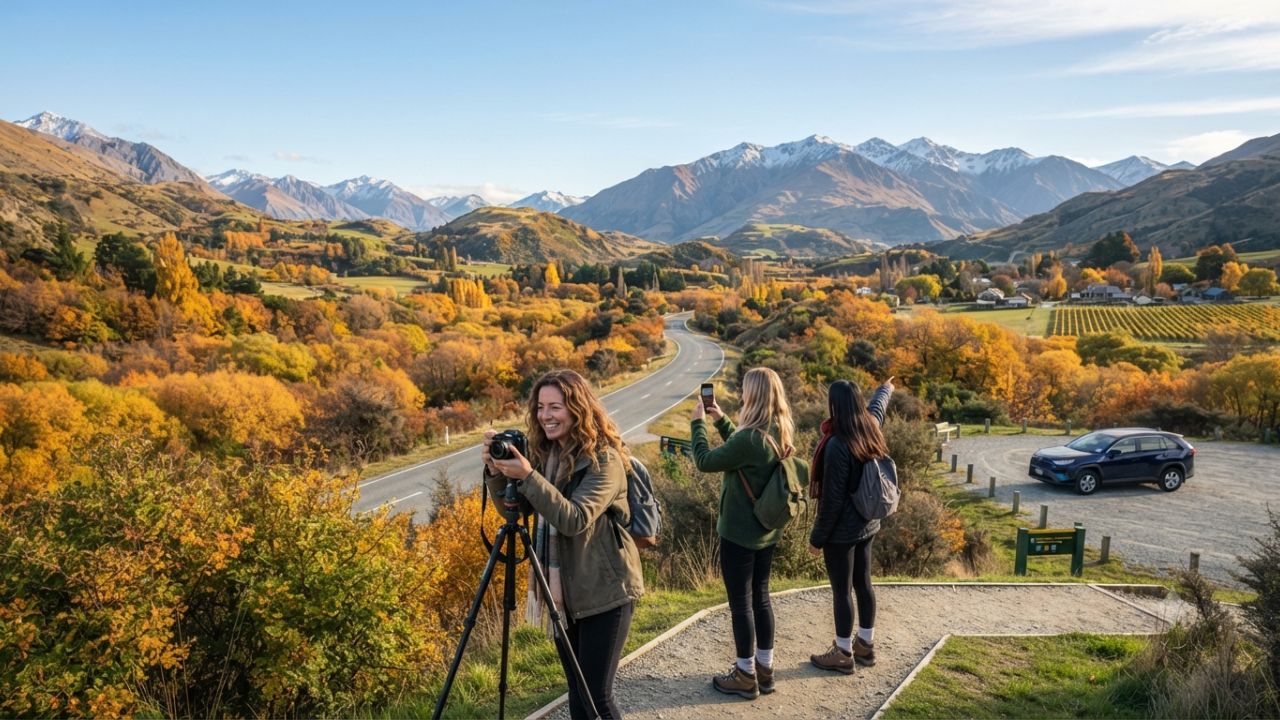
New Zealand is experiencing an unprecedented 59% increase in international forward bookings for the 2026 autumn season, driven by expanded airline seat capacities, extended visitor stays, and record wine harvest tourism across the South and North Islands.
[WELLINGTON, New Zealand] — International forward bookings to New Zealand have jumped by up to 59% for the 2026 autumn season, signaling a structural realignment in how global travelers experience the nation. Official metrics from Tourism New Zealand confirm that total annual overseas arrivals climbed 9% year-on-year to reach 3.67 million visitors.
Rather than crowding into peak summer months, international travelers are shifting toward the March-to-May shoulder period to take advantage of lower accommodation rates, stable weather, and golden foliage across Central Otago, Arrowtown, and Wanaka.
                  NEW ZEALAND 2026 AUTUMN TOURISM SURGE METRICS
+-------------------------------------------------------------------------------+
|                       NATIONAL TOURISM RECOVERY BENCHMARKS                    |
|  • International Forward Bookings: +59% Increase in Autumn 2026               |
|  • Total Overseas Arrivals: 3.67 Million (+9% Year-on-Year Expansion)          |
|  • National Targets: 3.9 Million Arrivals & $14.4 Billion Visitor Spend       |
+---------------------------------------+---------------------------------------+
                                        |
                   +--------------------+--------------------+
                   |                                         |
                   v                                         v
+---------------------------------------+                 +---------------------+
|     AVIATION & ACCOMMODATION DATA     |                 |  REGIONAL & YIELD   |
| • Air Seat Capacity: +14% Expansion   |                 | • Wine Harvest: +33%|
| • Avg Length of Stay: 19.4 Days       |                 | • Cultural Spend:+21%|
| • Boutique Lodge Bookings: +42%       |                 | • Remote Rentals:+15%|
+---------------------------------------+                 +---------------------+
Economic Drivers Accelerating Central Otago and Queenstown Tourism
Historically, autumn functioned as a quiet transition phase between summer beach holidays and winter ski operations. In 2026, targeted international marketing campaigns aiming for 3.9 million total arrivals and $14.4 billion in annual visitor expenditure transformed the shoulder season into a major revenue generator.
Favorable currency exchange variations provided holders of the US Dollar, Australian Dollar, and British Pound with an effective 8% to 12% purchasing power advantage. International visitors capitalized on these exchange margins to book luxury eco-lodges, self-drive campervan itineraries, and premium wine tours without facing summer price spikes.
| Key Tourism Indicator | 2026 Benchmark Performance | Economic & Traveler Impact |
|---|---|---|
| Autumn Forward Bookings | 59% Growth | Massive shift toward off-peak, shoulder-season travel |
| Total Annual Overseas Visitors | 3.67 Million (+9% YoY) | Strong national arrival recovery approaching pre-pandemic peaks |
| Target National Visitor Spend | $14.4 Billion NZD Target | High-yield visitor strategy spearheaded by Tourism New Zealand |
| Trans-Tasman & Long-Haul Seat Capacity | 14% Increase | Direct flights expanded into Auckland and Christchurch hubs |
| Average International Length of Stay | 19.4 Days (up from 16.5 days) | Travelers linger longer, spreading spend into regional economies |
| Boutique Regional Lodge Bookings | 42% Occupancy Increase | Strong demand for luxury, off-peak eco-accommodations |
| Sustainable Operator Preference | 68% Qualmark Preference | High traveler demand for eco-certified tours and low-emission rentals |
| Cellar Door & Wine Tourism Growth | 33% Revenue Spike | Harvest-aligned visits in Marlborough, Hawke's Bay, and Central Otago |
| Cultural & Indigenous Tourism Spend | 21% Year-on-Year Growth | Surging demand for Māori heritage storytelling and harvest festivals |
| Regional Infrastructure Investment | $150 Million NZD Injected | Government funds for EV chargers, cycle trails, and DOC site upgrades |
Expanded Airline Frequencies into Auckland and Christchurch Gateways
A critical foundation of the 2026 autumn influx is a 14% expansion in international seat capacity across trans-Tasman and long-haul flight routes into Auckland Airport and Christchurch International Airport.
Major international carriers added flight frequencies from key gateways including Sydney, Melbourne, Singapore, and Los Angeles. This aviation expansion lowered transit friction and allowed travelers to easily build multi-region road trips spanning both islands.
       +------------------------------------------------------------------+
       |               AVIATION & TRANSIT ROUTING OVERVIEW                |
       +------------------------------------------------------------------+
       |  • Trans-Tasman Routes: Sydney & Melbourne to Christchurch/Auckland|
       |  • Long-Haul Hubs: Direct connections from Singapore & Los Angeles |
       |  • Regional Transit: Seamless connections to Queenstown & Napier  |
       |  • Capacity Expansion: +14% Total Seat Capacity in March–May     |
       +------------------------------------------------------------------+
Extended Length-of-Stay and Accommodation Trends Across Wellington and Queenstown
Data from the Ministry of Business, Innovation and Employment (MBIE) indicates that the average length of stay for international autumn visitors extended to 19.4 days, up markedly from 16.5 days recorded in pre-pandemic survey baselines.
Simultaneously, bookings for boutique regional lodges jumped by 42%. Flexible remote work policies and digital nomad visas contributed to a 15% increase in medium-term rentals across Wellington, Tauranga, and Queenstown, helping maintain high off-peak occupancy for local hospitality businesses.
                  VISITOR EXPENDITURE & DURATION BREAKDOWN
+-------------------------------------------------------------------------------+
|  • Pre-Pandemic Average Stay: 16.5 Days                                       |
|  • 2026 Autumn Average Stay: 19.4 Days (+2.9 Days Extended Duration)          |
|  • Boutique Lodge Bookings: +42% YoY Increase                                 |
|  • Remote Work / Digital Nomad Medium-Term Rentals: +15% Growth                 |
+-------------------------------------------------------------------------------+
Wine Harvest Alignments Boost Marlborough and Hawke's Bay Regional Economies
Unlike summer travel that concentrates heavily in gateway cities, autumn visitors spread across secondary agricultural and wine-producing regions. Cellar door visits and wine-tourism revenues in Marlborough, Hawke’s Bay, and Central Otago surged by 33% during the autumn grape-harvest window.
Concurrently, inbound visitor spending on cultural and heritage experiences rose 21% year-on-year. Harvest festivals in Rotorua and Northland allowed tourists to engage directly with indigenous Māori storytelling, traditional culinary arts, and local craft heritage.
REGIONAL ECONOMIC IMPACT & INVESTMENT
| Column 1 |
|---|
| 1. REGIONAL INFRASTRUCTURE INJECTION |
| • $150 Million NZD invested via MBIE into regional tourism assets |
| • Upgraded EV charging networks along remote alpine transit corridors |
| • Enhanced Department of Conservation (DOC) tracks and amenities |
| 2. SUSTAINABLE TOURISM ADOPTION |
| • 68% of autumn visitors selected Qualmark-accredited eco-operators |
| • High adoption of low-emission rental vehicles and tree-planting tours |
Impact Analysis: Infrastructure Resilience and Year-Round Yields
The 59% forward booking surge demonstrates how targeted shoulder-season marketing successfully mitigates over-tourism. By shifting visitor volume into off-peak months, New Zealand avoids infrastructure gridlock while maintaining stable, year-round employment for regional hospitality workers.
With $150 million in regional tourism infrastructure upgrades delivering expanded EV charging networks, upgraded cycling trails, and enhanced Department of Conservation (DOC) site facilities, the nation has built a resilient framework for long-term eco-tourism growth.
Why This Matters (Information Gain & Experience)
For the traveler, this seasonal shift means access to world-class alpine scenery, luxury lodges, and wine-harvest festivals without peak-summer price inflation or long queues. The 14% increase in direct flight capacity makes trans-Tasman and long-haul connections faster and more affordable.
From a logistical perspective, the extended 19.4-day average stay gives visitors ample time to navigate both islands safely using upgraded EV charging corridors and well-maintained alpine highways, ensuring a high-yield, low-stress vacation experience.
Frequently Asked Questions
What caused the 59% surge in New Zealand autumn travel for 2026?
The surge was driven by a 14% expansion in international airline seat capacity, favorable exchange rates (8% to 12% purchasing advantage for USD, AUD, and GBP holders), stunning golden foliage in Central Otago, and targeted shoulder-season campaigns by Tourism New Zealand.
How long do international tourists stay in New Zealand during autumn?
The average length of stay during the autumn window reached 19.4 days, up from 16.5 days in pre-pandemic benchmark periods.
Which regions benefit most from New Zealand's autumn travel boom?
Secondary regional hubs including Central Otago, Queenstown, Wanaka, Arrowtown, Marlborough, Hawke's Bay, Rotorua, and Northland benefit significantly from wine-harvest tours, cultural festivals, and self-drive itineraries.
Internal Connection
Disclaimer
This article is for informational and educational purposes only. It does not constitute legal, financial, or professional advice. While we strive to provide accurate and up-to-date information, travel policies, regulations, and conditions change rapidly. Always verify information with official sources before making travel decisions. Nomad Lawyer makes no representations about the accuracy, reliability, completeness, or suitability of the information provided. Readers should consult qualified professionals for advice specific to their circumstances. The views expressed in this article are those of the author and do not necessarily reflect the views of Nomad Lawyer.
Raushan Kumar
Founder & Lead Developer
Full-stack developer with 11+ years of experience and a passionate traveller. Raushan built Nomad Lawyer from the ground up with a vision to create the best travel and law experience on the web.
Learn more about our team →