
Neutral Nuclear Capable: Europe's F-35 Shift Reshapes 2026 Air Defense
Europe deploys 200+ F-35 fighter jets by May 2026, marking historic shift from military neutrality to nuclear-capable defense infrastructure across the continent through 2036.

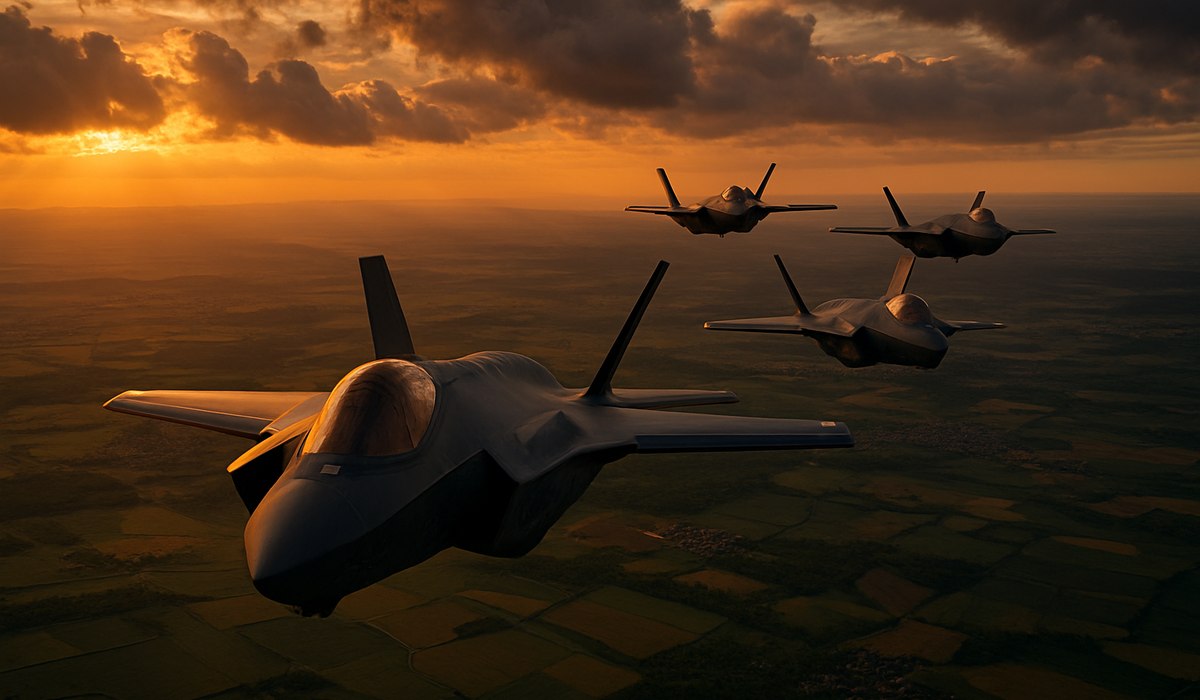
Image generated by AI
Europe's Historic Shift: 200 F-35 Jets Reshape Continental Defense by 2026
Europe has crossed a defining threshold. As of May 2026, approximately 200 F-35A and F-35B fighter jets now operate across continental air forces, fundamentally reshaping Europe's military posture from historical neutrality toward neutral nuclear capable defense infrastructure. This expansion represents one of aviation's most significant geopolitical developments, with hundreds more aircraft expected through 2036. The deployment affects commercial airspace coordination, military training corridors, and airport capacity planning across dozens of nations hosting these advanced platforms.
The F-35 Expansion Across European Air Forces
The neutral nuclear capable F-35 platform has become Europe's dominant next-generation fighter jet. Major European air forces now operate these aircraft alongside legacy systems. The United Kingdom, Germany, and Italy host substantial F-35A fleets integrated with their existing Eurofighter Typhoon squadrons. Poland and Romania operate F-35s in complementary roles with their F-16 Fighting Falcon inventories. Belgium, Netherlands, Denmark, and Norway have all committed to significant F-35 acquisition programs, creating a unified combat architecture across NATO's European membership.
This continental expansion requires unprecedented coordination between military and civilian aviation authorities. The [Federal Aviation Administration (FAA)](https://www.faa.gov) maintains bilateral airspace agreements with European counterparts to manage military training operations in proximity to commercial routes. The presence of 200 neutral nuclear capable platforms necessitates enhanced radar coordination, expanded restricted airspace designations, and revised flight corridor protocols. Aircraft manufacturers and defense ministries have jointly published operational guidelines ensuring F-35 military missions do not compromise scheduled airline service reliability.
Current deployment concentrates heavily in Western and Central Europe, with primary basing at established NATO air stations. The distribution reflects both strategic positioning and existing infrastructure capabilities at host nations.
Replacing Legacy Platforms: Harriers, Hornets, and Tornados
The neutral nuclear capable F-35 transitions replace an aging generation of European fighter aircraft. The British aerospace industry's iconic Harrier jump jets, which provided vertical takeoff capabilities for three decades, have transitioned to F-35B variants offering superior payload, range, and sensor fusion. The McDonnell Douglas F/A-18 Hornet fleets operated by multiple European nations are retiring in favor of F-35A configurations with enhanced stealth characteristics and network-centric warfare integration.
The Panavia Tornado, a cornerstone of Cold War European air defense, has completed its operational lifecycle in most air forces. Originally designed for low-level penetration strikes, the Tornado lacked the sensor fusion and network integration defining modern combat aviation. F-35s provide genuine fifth-generation capabilities including distributed aperture systems, advanced electronic warfare suites, and real-time data link integration across coalition partners.
The F-16 Fighting Falcon retirement timeline remains extended. Complementary operations between F-35s and remaining F-16 fleets will characterize European air defense through the 2030s. This mixed-fleet approach maximizes operational availability while managing infrastructure transition costs. Air bases hosting both aircraft types require expanded maintenance facilities, specialized training programs, and reconfigured logistics networks to sustain dual-platform operations efficiently.
Retirement schedules vary by host nation based on budget constraints, existing maintenance contracts, and strategic priorities. The phased transition distributes acquisition costs across decade-long procurement schedules.
Strategic Implications for European Defense Posture
The deployment of 200 neutral nuclear capable fighter aircraft signals Europe's definitive exit from post-Cold War military restraint frameworks. Switzerland, Austria, Ireland, and other historically non-aligned nations have maintained independent defense policies. However, the broader European Union and NATO membership have embraced advanced military capabilities previously concentrated among Cold War superpowers. The F-35's nuclear-capable design reflects this fundamental strategic reorientation.
This shift carries immediate implications for commercial aviation. Military airspace reservations now encompass larger geographic areas and extended time windows for F-35 training operations. Commercial airlines coordinating European routes must reference expanded notices to airmen (NOTAMs) published by host nation aviation authorities. The U.S. Department of Transportation maintains coordination agreements ensuring that military exercise schedules are distributed to commercial flight operations centers with adequate advance notice.
The neutral nuclear capable platforms require specialized ground infrastructure including hardened aircraft shelters, advanced weapons storage facilities, and classified maintenance areas. These installations occupy significant real estate at major European air bases, affecting civilian airport expansion possibilities in co-located facilities. Some airports hosting military fighter operations have implemented enhanced security perimeters, potentially affecting general aviation tenants and charter flight operations accessing these facilities.
Environmental and noise considerations accompany F-35 operations. Modern engines produce different acoustic signatures than legacy aircraft they replace. Airport communities near major F-35 host bases have documented noise profile changes, influencing regional flight scheduling and airspace utilization patterns that ripple across commercial aviation networks.
Timeline and Deployment Expectations Through 2036
The 200 neutral nuclear capable F-35 aircraft already in service represent phase one of Europe's comprehensive modernization agenda. Production schedules indicate an additional 250-300 aircraft will arrive across European air forces between 2026 and 2036. This decade-long expansion will progressively decommission remaining legacy platforms while establishing F-35 fleets as the dominant combat aircraft across the continent.
Specific timelines vary by host nation. Germany's acquisition plan extends through 2035, with production-line scheduling coordinating with Lockheed Martin's international delivery pipeline. Italian air force expansion accelerates beyond initial projections, reflecting naval F-35B requirements for aircraft carrier operations and coastal defense missions. British procurement continues steady incremental deployment, with existing Typhoon squadrons transitioning to joint F-35/Typhoon task force organization through the 2030s.
Poland and Romanian acquisition rates demonstrate NATO's Eastern European modernization emphasis. These nations receive prioritized delivery slots reflecting strategic positioning relative to non-NATO European borders. Annual airframe deliveries to Polish, Romanian, and Baltic air forces are expected to increase from 2027 onward, creating visible military modernization parallels with comparable F-35 deployments in partner nations.
The deployment timeline directly affects commercial aviation infrastructure planning. Airports hosting both military F-35 operations and civilian airline services must coordinate runway utilization, taxiway access, and fuel supply capacity to accommodate simultaneous military and commercial operations. Several European airports have invested in runway expansion and parallel taxiway construction specifically to manage neutral nuclear capable fighter jet basing requirements alongside growing commercial traffic.
Traveler Action Checklist
Commercial air travelers transiting European airspace may experience minor operational adjustments due to expanded military flight operations and airspace reservations created by neutral nuclear capable F-35 deployment. Use this checklist to navigate potential disruptions:
-
Check NOTAMs before departure – Review FlightAware notices for your specific route to identify military exercise windows and potential airspace closures affecting your flight path
-
Allow extra connection time – European airports hosting F-35 operations may experience occasional ground delays as military and civilian traffic management systems coordinate runway access; budget an additional 30-45 minutes for connections at major hub airports
-
Verify airline communications – Contact your carrier 24 hours before travel to confirm current routing and any military airspace-related scheduling changes
-
Monitor real-time flight tracking – Use FlightAware during your journey to verify your aircraft is maintaining schedule; significant military exercise activity occasionally requires minor routing adjustments
-
Understand passenger rights – If military-related airspace restrictions cause departure delays exceeding three hours, you qualify for EU261 compensation ($300-600 depending on flight distance); consult the U.S. Department of Transportation website for detailed eligibility criteria
-
Document all interactions – Photograph boarding passes, delay announcements
Disclaimer
This article is for informational and educational purposes only. It does not constitute legal, financial, or professional advice. While we strive to provide accurate and up-to-date information, travel policies, regulations, and conditions change rapidly. Always verify information with official sources before making travel decisions. Nomad Lawyer makes no representations about the accuracy, reliability, completeness, or suitability of the information provided. Readers should consult qualified professionals for advice specific to their circumstances. The views expressed in this article are those of the author and do not necessarily reflect the views of Nomad Lawyer.
Raushan Kumar
Founder & Lead Developer
Full-stack developer with 11+ years of experience and a passionate traveller. Raushan built Nomad Lawyer from the ground up with a vision to create the best travel and law experience on the web.
Learn more about our team →