
Lufthansa Strikes Ground 82% of Flights Across Europe: UK, Italy, France, Germany, Spain Face Travel Chaos and Flight Cancellations Crisis in 2026
Lufthansa's massive strikes ground over 82% of flights across Europe, creating unprecedented travel chaos. UK, Italy, France, Germany, Spain, and more nations scramble for alternatives as airfares soar.

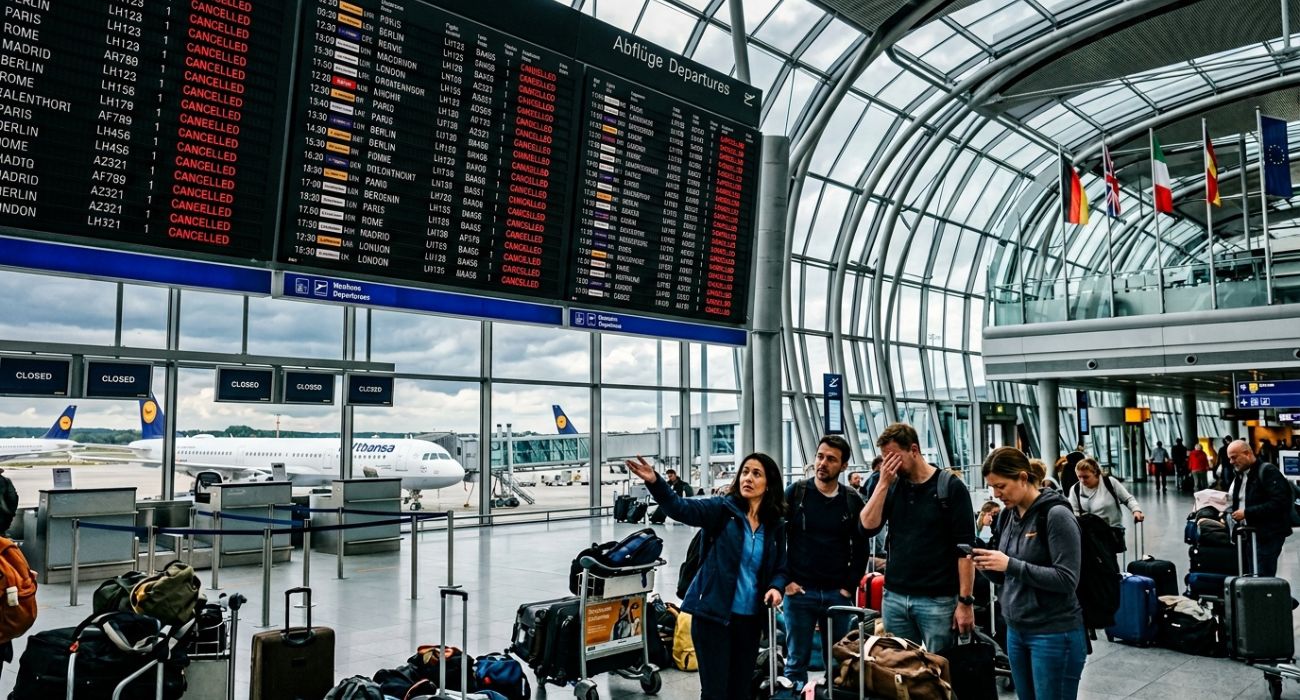
Image generated by AI
Europe Gripped by Historic Travel Disruption as Lufthansa Strikes Devastate Continental Aviation Network
The European travel landscape has descended into unprecedented chaos as Lufthansa's relentless industrial action continues to cripple one of the continent's largest airline networks. With more than 82 percent of the carrier's flights grounded, millions of passengers across the United Kingdom, Italy, France, Germany, Spain, Belgium, Netherlands, Switzerland, and Portugal are facing a perfect storm of cancellations, astronomical price hikes, and severely limited travel options. The cascading impact of these strikes has transformed what should be the peak spring travel season into a logistical nightmare for both leisure and business travelers, forcing desperate passengers to explore increasingly expensive and time-consuming alternatives.
The industrial action, rooted in longstanding disputes over employee compensation, pension restructuring, and working conditions, has escalated into one of the most disruptive labor actions the aviation sector has witnessed in recent years. As negotiations between Lufthansa management and union representatives remain deadlocked, the human cost continues to mount—with families missing vacations, business professionals unable to reach critical meetings, and tourism operators watching their revenue evaporate in real time.
Germany Bears the Brunt: Frankfurt and Munich Hubs Paralyzed
Germany, home to Lufthansa's operational heartland, has emerged as the epicenter of this aviation catastrophe. The airline's two primary European hubs—Frankfurt am Main and Munich—have been effectively neutralized, with 82 percent of scheduled flights cancelled or severely delayed. These airports, which typically handle hundreds of thousands of passengers daily and serve as crucial connection points for onward travel throughout Europe and beyond, have transformed into scenes of frustration and desperation.
Frankfurt Airport, Europe's busiest aviation hub and Lufthansa's largest operational base, has seen its departure boards dominated by red cancellation notices. Travelers hoping to reach iconic German destinations—from the Brandenburg Gate in Berlin to the fairy-tale spires of Neuschwanstein Castle in Bavaria and the breathtaking Alpine scenery of the Bavarian Alps—have found their journeys either postponed indefinitely or forced onto alternative carriers at premium prices. The economic ripple effects are already visible, with hotels, restaurants, and attractions across Germany reporting sharp declines in visitor numbers.
Munich's Franz Josef Strauss Airport, serving as Lufthansa's second-largest hub, faces similarly catastrophic disruption. The airport's role as a gateway to Bavaria's world-famous beer halls, Christmas markets, and mountain resorts has been severely compromised, leaving tourism operators scrambling to manage cancellations and refund requests.
United Kingdom Travelers Caught in Continental Crossfire
British travelers, already accustomed to navigating post-pandemic aviation complexities, now face an additional layer of disruption as Lufthansa strikes eliminate crucial transatlantic and intra-European connections. London's major airports—serving as the UK's primary international gateways—have experienced significant knock-on effects, with flights to Frankfurt and Munich either cancelled entirely or rerouted through alternative carriers at substantially elevated fares.
The strike's impact extends beyond direct Lufthansa services. Thousands of British passengers holding connecting flights through Frankfurt or Munich to destinations across Asia, the Middle East, and Africa have found their journeys disrupted, with rebooking options limited and alternative routing often adding 12-24 hours to travel times. Business travelers heading to German financial centers and technology hubs have been particularly hard hit, with critical meetings postponed and corporate travel budgets stretched to breaking point.
France Experiences Secondary but Significant Disruptions
France's aviation infrastructure, while not as directly impacted as Germany's, has nonetheless suffered considerable strain from the Lufthansa strikes. Paris Charles de Gaulle Airport (CDG), Europe's second-busiest aviation hub and a critical connection point for transatlantic traffic, has experienced elevated congestion as airlines attempt to reroute passengers away from Lufthansa services. The airport's parallel facility, Orly, has similarly absorbed overflow traffic, creating bottlenecks and extended processing times.
French travelers attempting to reach German destinations, or those relying on Lufthansa connections through Frankfurt or Munich for onward journeys, have been forced to accept significant delays or prohibitively expensive alternative arrangements. The strikes have also disrupted the carefully balanced network of European air routes, with airlines struggling to accommodate displaced passengers while maintaining their own operational schedules.
Italy's Tourism Sector Reels from Connectivity Crisis
Italy's major urban centers—Rome, Venice, Florence, and Milan—have all experienced meaningful disruption as Lufthansa's grounded fleet eliminates direct and connecting flights to and from these culturally significant destinations. Rome's Leonardo da Vinci-Fiumicino Airport and Venice's Marco Polo Airport, both crucial gateways for international tourists, have seen reduced passenger volumes as travelers either postpone trips or select alternative routing through other European hubs.
The impact on Italy's tourism economy cannot be overstated. Spring represents peak season for visitors seeking to experience the Colosseum, Vatican City, Venetian canals, and Tuscan countryside. With Lufthansa flights grounded and alternative options expensive and inconvenient, many travelers have opted to cancel entirely, representing a significant loss of revenue for hotels, restaurants, attractions, and local businesses dependent on international visitor spending.
Spain's Major Hubs Face Cascading Cancellations
Spain's primary aviation gateways—Madrid-Barajas, Barcelona-El Prat, and Seville airports—have all experienced substantial flight cancellations as Lufthansa's network collapse reverberates through European connectivity. Madrid, serving as Spain's largest aviation hub, has absorbed some overflow traffic from other European airports, but capacity constraints and the sheer volume of displaced passengers have created significant bottlenecks.
Barcelona, a major gateway for Mediterranean tourism and business travel, has similarly struggled with the secondary effects of Lufthansa's strikes. Seville, while smaller, has nonetheless experienced meaningful disruption to its international connectivity. Spanish travelers attempting to reach Central Europe, Scandinavia, or beyond have found their options severely limited, with alternative routing often requiring multiple connections and adding substantial time to journeys.
Benelux and Alpine Nations Navigate Spillover Effects
Belgium, Netherlands, Switzerland, and Portugal—while not directly hosting Lufthansa's primary hubs—have nonetheless experienced significant disruption as the strikes ripple through Europe's interconnected aviation network. Brussels Airport, serving as a major European hub for other carriers, has absorbed displaced passengers attempting to reach destinations previously served by Lufthansa. Amsterdam's Schiphol Airport has similarly experienced elevated congestion and extended processing times.
Switzerland's Zurich Airport, a crucial connection point for Alpine region travel and a gateway to Central Europe, has seen increased traffic as passengers attempt to reroute around Lufthansa's grounded fleet. Portuguese travelers, particularly those in Lisbon, have found international connectivity severely constrained, with many forced to accept expensive alternative arrangements or postpone travel plans entirely.
The Passenger Experience: Soaring Costs and Limited Alternatives
For millions of travelers caught in this aviation crisis, the financial and logistical impact has been severe. Airfares on alternative carriers have skyrocketed as demand far exceeds available capacity. A typical economy ticket on competing airlines has increased by 40-60 percent, with premium cabin fares rising even more dramatically. Passengers holding Lufthansa tickets face the agonizing choice between accepting substantial rebooking fees, waiting indefinitely for flight resumption, or purchasing expensive last-minute tickets on alternative carriers.
Hotel cancellation policies have become a secondary concern for many travelers, who now face the prospect of losing both their flights and accommodations. Business travelers have watched their corporate travel budgets evaporate, while families have seen carefully planned vacations dissolve into logistical nightmares. The psychological toll of uncertainty—not knowing when flights might resume or what alternatives might be available—has added stress to an already fraught situation.
Eurostar and Alternative Transport Experience Unprecedented Demand
In a silver lining for rail operators, Eurostar services between London and Paris have experienced unprecedented booking surges as travelers seek alternatives to air travel. The iconic rail service, typically operating at high capacity during spring months, has seen additional trains added to accommodate demand, with many services now fully booked weeks in advance. Journey times of approximately 2 hours 15 minutes from London St. Pancras to Paris Gare du Nord have suddenly become attractive compared to the uncertainty and delays plaguing air travel.
Regional rail networks across Europe have similarly experienced increased bookings, with travelers opting for train journeys over air travel despite longer journey times. Bus services, including long-distance operators serving major European cities, have also reported elevated demand as cost-conscious travelers seek budget-friendly alternatives to expensive airline rebooking options. The shift toward ground-based transportation has provided some relief to stranded passengers, though capacity constraints on these services have also begun to emerge.
Industry Analysis: Systemic Vulnerabilities Exposed
The Lufthansa strikes have exposed critical vulnerabilities in Europe's aviation infrastructure and the continent's dependence on a small number of major carriers and hub airports. Lufthansa's dominance in Central European aviation means that disruption to its operations creates cascading effects throughout the entire network, affecting not only passengers flying with Lufthansa but also those relying on connections through its hubs.
The dispute underlying these strikes—centered on employee compensation, pension obligations, and working conditions—reflects broader tensions within the aviation industry. Post-pandemic recovery has been uneven, with airlines struggling to balance operational costs against passenger demand and employee expectations. Lufthansa's situation is not unique; similar labor disputes have affected other major carriers, suggesting that the industry faces systemic challenges that extend beyond any single airline.
The strikes also highlight the limited flexibility within Europe's aviation system. With airport capacity constraints, slot allocation restrictions, and regulatory limitations, alternative carriers cannot simply add flights to absorb displaced passengers. This structural inflexibility means that when a major carrier experiences disruption, the entire system suffers, with limited ability to quickly redistribute capacity.
The Road Ahead: Uncertainty and Recovery Prospects
As negotiations between Lufthansa and union representatives continue, there remains considerable uncertainty about when normal operations might resume. Each day of continued strikes represents millions of euros in lost revenue for the airline, mounting costs for affected passengers, and significant economic damage to tourism-dependent regions across Europe.
The airline has indicated willingness to discuss employee concerns, but fundamental disagreements over pension restructuring and compensation levels remain unresolved. Union representatives have demonstrated resolve to maintain industrial action until their demands are substantially addressed, suggesting that resolution may not come quickly.
For travelers currently stranded or facing cancelled flights, the immediate priority is securing alternative transportation, even at elevated costs. Those with flexible travel dates should consider postponing trips until operations normalize. Business travelers should explore virtual meeting alternatives where possible, while leisure travelers might consider rescheduling to later in the year when the situation stabilizes.
Conclusion: A Continent in Transition
The Lufthansa strikes represent far more than a temporary disruption to airline schedules. They represent a fundamental challenge to Europe's aviation infrastructure, exposing the fragility of a system dependent on a small number of major carriers and hub airports. The strikes have demonstrated that when major carriers experience operational disruption, the entire continent's travel ecosystem suffers, with limited ability to quickly adapt or redistribute capacity.
For passengers, the immediate lesson is clear: travel flexibility and contingency planning are essential in an increasingly unpredictable aviation environment. For the industry, the strikes underscore the need for more robust labor relations, better contingency planning, and potentially greater diversification of routing options to reduce dependence on single carriers and hub airports.
As Europe navigates this crisis, the human cost—measured in cancelled vacations, missed business meetings, and economic losses across tourism-dependent regions—continues to mount. Resolution of the underlying labor dispute remains the only path to restoring normal operations and allowing Europe's travel ecosystem to recover from this unprecedented disruption.
Key Takeaways
- Massive Disruption: Lufthansa strikes have grounded over 82% of the airline's flights, creating unprecedented travel chaos across Europe
- Geographic Scope: Nine nations affected—UK, Italy, France, Germany, Spain, Belgium, Netherlands, Switzerland, and Portugal
- Hub Impact: Frankfurt and Munich airports, Lufthansa's primary European hubs, effectively paralyzed with cascading effects throughout the continent
- Soaring Costs: Airfares on alternative carriers have increased 40-60%, with premium cabin fares rising even more dramatically
- Alternative Transport Surge: Eurostar and regional rail services experiencing unprecedented demand as travelers seek alternatives to air travel
- Tourism Consequences: Major destinations including Rome, Venice, Florence, Milan, Madrid, Barcelona, and Seville experiencing significant visitor declines
- Systemic Vulnerabilities: Strikes expose critical weaknesses in Europe's aviation infrastructure and over-reliance on major carriers and hub airports
- Uncertain Timeline: Ongoing labor disputes suggest resolution may not come quickly, with continued disruption likely in coming weeks
- Passenger Options: Travelers should consider postponing trips, exploring virtual alternatives, or accepting substantial rebooking costs on alternative carriers
Related Travel Guides
Disclaimer
This article is for informational and educational purposes only. It does not constitute legal, financial, or professional advice. While we strive to provide accurate and up-to-date information, travel policies, regulations, and conditions change rapidly. Always verify information with official sources before making travel decisions. Nomad Lawyer makes no representations about the accuracy, reliability, completeness, or suitability of the information provided. Readers should consult qualified professionals for advice specific to their circumstances. The views expressed in this article are those of the author and do not necessarily reflect the views of Nomad Lawyer.
Kunal K Choudhary
Co-Founder & Contributor
A passionate traveller and tech enthusiast. Kunal contributes to the vision and growth of Nomad Lawyer, bringing fresh perspectives and driving the community forward.
Learn more about our team →