
NCAA warns wetter springs could disrupt 2026 tournament flights
NCAA warns that wetter spring weather and airline capacity constraints threaten 2026 tournament logistics. Athletic departments urged to prepare for flight disruptions affecting teams and fans traveling to championships.

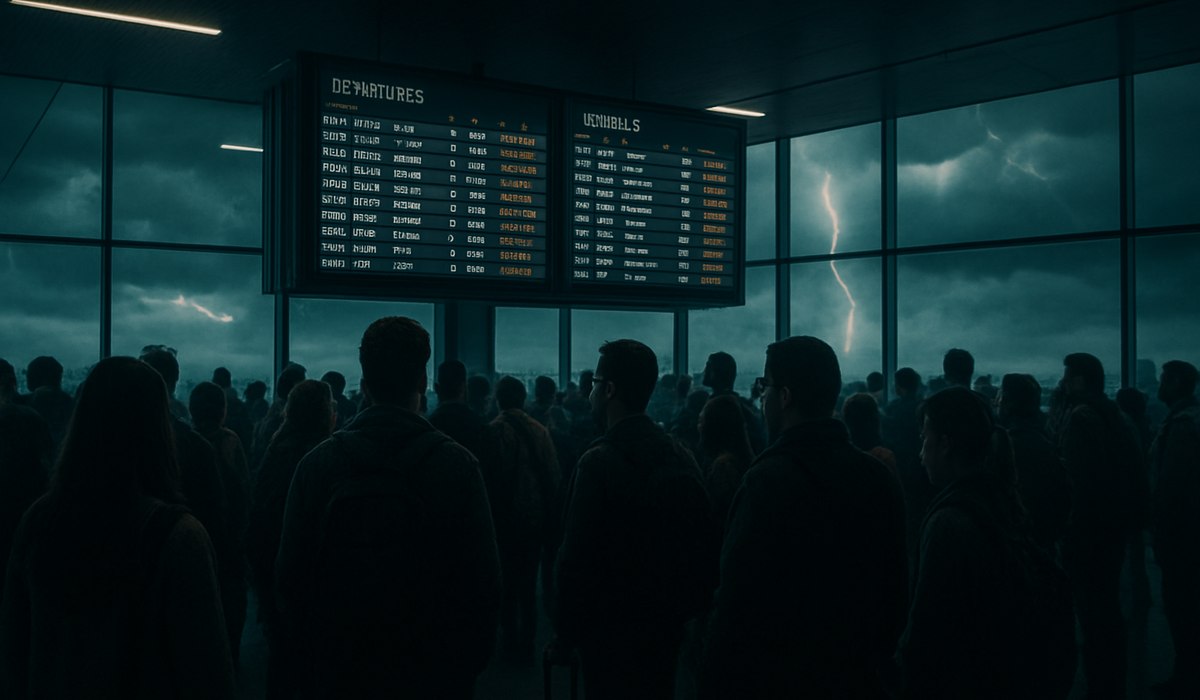
Image generated by AI
NCAA Issues Flight Disruption Warning for 2026 Tournament Season
The NCAA has issued an urgent advisory warning that volatile spring weather and constrained airline capacity could severely disrupt tournament travel logistics in 2026. The memo circulated to athletic departments highlights growing concerns that the men's and women's basketball tournaments, along with other spring championships, will unfold amid fragile air travel infrastructure and increasingly unsettled weather patterns. Travel planners face a convergence of challenges: wetter springs are delivering more intense precipitation events, while major airlines struggle with charter availability and hub congestion during peak spring break demand. The warning arrives following a series of high-impact weather systems that exposed how quickly aviation networks can unravel when multiple stressors align.
Recent Weather Chaos Exposes Fragile Aviation Networks
Early 2026 demonstrated just how vulnerable air travel remains to severe spring weather. A sprawling January winter storm produced widespread ice and snow from northern Mexico through the southern and northeastern United States, triggering travel bans in certain regions and generating one of the most significant single-day weather-related flight cancellation tallies in recent memory. Airlines were still recalibrating schedules when another powerful system struck in March. That March blizzard, tracked as an extratropical cyclone, buried portions of the Upper Midwest and High Plains under several feet of snow while unleashing severe weather across the Lower Mississippi Valley and Southeast.
Major corridors experienced temporary closures, and air travel through large central U.S. hubs suffered cascading delays. Operations at affected airports were hampered by visibility limits, crew time-out regulations, and equipment positioned out of service—not simply runway closures alone. By early April, rolling disruptions at major U.S. hubs persisted as spring storms collided with holiday travel demand. For tournament organizers managing hundreds of athletes, coaches, and officials moving between sites over compressed three-week schedules, these weather patterns demonstrate how quickly tournament logistics can derail. The NCAA's concern is particularly acute because tournament games follow rigid scheduling windows that leave minimal buffer for weather-related delays.
Real-time flight tracking through resources like FlightAware showed dozens of simultaneous cancellations at Charlotte Douglas International, Memphis International, and Nashville International—all tournament hubs. The Federal Aviation Administration documented the operational stress in its incident reports throughout the January and March events.
Wetter Springs and Climate Trends Add New Uncertainty
Climatological data for recent years reveals that spring across many U.S. regions has become warmer and noticeably wetter, with greater precipitation concentrated in heavy downpours. Research on North American storm systems indicates that a warming atmosphere can hold increased moisture, contributing to intense rain events while still supporting powerful late-season snowstorms when cold air masses move south. For air travel operations, this atmospheric mix raises the likelihood of thunderstorms, low cloud ceilings, icing conditions, and rapid wind shifts that slow or halt operations entirely.
Studies examining transportation vulnerability at large sporting events underscore the exposure of tournaments such as March Madness to disruption. Analysis of previous NCAA basketball tournaments documents that air travel for teams and fans represents both the largest emissions source and a critical operational vulnerability. As seasonal storm patterns shift, organizers face a dual challenge: limiting environmental impact while building additional buffer into already-choreographed travel plans.
Public weather data for early 2026 illustrates how conditions can swing rapidly. The January storm was followed by heavy rain episodes in the Pacific Northwest and South, while the March system combined blizzard conditions in northern regions with severe convective storms in central and eastern states. For tournaments distributing hundreds of personnel across multiple sites spanning different regions and time zones, these overlapping hazards complicate charter scheduling, venue access, and ground transportation coordination. Meteorologists and climate researchers caution that individual storms cannot be solely attributed to climate trends, yet they reinforce a pattern of more frequent extreme weather events.
Charter Availability and Hub Congestion Create Perfect Storm
The NCAA's travel communication emphasized practical constraints beyond weather itself. Charter aircraft are experiencing higher demand across the aviation market, with sports, corporate, and leisure clients competing for limited capacity. Tournament organizers traditionally depend on charter flights to move teams between early-round sites and later regional or Final Four venues, but constrained supply means fewer backup options when disruptions occur.
Reporting on the memo indicates that major charter operators face fully-booked schedules through spring 2026, with pricing pressures increasing substantially. When spring weather forces reschedules or cancellations, alternative aircraft become difficult or impossible to secure. Additionally, congestion at key hubs—particularly during spring break travel peak—means that even successfully-launched flights face extended ground waits, tarmac delays, and crew scheduling conflicts.
The NCAA's advisory specifically flagged concern over hubs in Charlotte, Memphis, Nashville, and the Upper Midwest that typically handle tournament traffic concentration. When multiple tournament games occur on the same day across different regions, the simultaneous demand for ground handling, gate availability, and crew resources can exceed hub capacity. Commercial carriers have already reported booking challenges during March and April 2026 due to overlapping spring break school travel, religious holiday travel, and early summer vacation demand.
What Athletic Departments Must Do Now to Prepare
Athletic departments cannot eliminate weather risk, but strategic preparation can significantly reduce disruption exposure. The NCAA's guidance emphasizes early booking of charter flights with explicit weather contingency clauses and backup aircraft reservations. Teams should communicate directly with charter operators to understand cancellation policies, rebooking procedures, and insurance coverage specific to weather events.
Scheduling flexibility matters enormously. Where possible, athletic departments should advocate for tournament scheduling that allows 24-hour buffers between potential game sites rather than back-to-back venues requiring same-day travel. Ground transportation planning becomes critical—securing rental vehicle fleets and bus services well in advance prevents last-minute scrambles when air service is delayed.
Communication protocols deserve particular attention. Teams should establish clear chains of command for travel decisions, designate weather monitoring staff, and coordinate directly with the NCAA tournament operations team. Fans purchasing travel packages should verify refund policies with airlines and travel agencies before booking. Documentation of all reservations, including confirmation numbers and contingency contacts, allows rapid rebooking if cancellations occur.
Insurance coverage warrants review. Travel insurance policies vary significantly in weather coverage and reimbursement thresholds. Athletic departments managing team travel should consult with insurance brokers about tournament-specific policies that protect against both flight cancellations and secondary accommodation needs if delays stretch beyond 24 hours.
Traveler Action Checklist
-
Book early and confirm charter backup provisions – Secure tournament travel reservations at least 60 days in advance and verify that charter contracts include explicit rebooking guarantees and alternative aircraft clauses.
-
Monitor weather patterns during spring 2026 – Check the National Weather Service and meteorological forecasts 10 days before your travel dates; adjust plans if severe weather systems approach tournament regions.
-
Review airline cancellation and rebooking policies – Understand your airline's weather waiver procedures by visiting the carrier's website or calling customer service; document all policy details in writing.
-
Secure travel insurance with comprehensive coverage – Purchase policies explicitly covering weather-related flight cancellations; compare multiple providers and verify coverage thresholds before binding coverage.
-
Establish flexible ground transportation – Book rental vehicles or charter bus services with flexible cancellation terms; identify backup transportation options including ride-sharing services and regional transit authorities.
-
Create redundant communication channels – Exchange phone numbers, email addresses, and alternate contact information with travel companions; designate a primary decision-maker for rebooking logistics.
-
Verify accommodations have flexible policies – Confirm hotels, venues, and attractions offer date-change flexibility without penalty; prioritize properties within walking or short transit distance from airports.
-
Track flights in real-time using FlightAware – Monitor your specific flight number starting 24 hours before departure; set alert notifications for status changes and gate assignments.
-
Register with the FAA's Smart Traveler program – Provide the Department of Transportation your travel itinerary
Disclaimer
This article is for informational and educational purposes only. It does not constitute legal, financial, or professional advice. While we strive to provide accurate and up-to-date information, travel policies, regulations, and conditions change rapidly. Always verify information with official sources before making travel decisions. Nomad Lawyer makes no representations about the accuracy, reliability, completeness, or suitability of the information provided. Readers should consult qualified professionals for advice specific to their circumstances. The views expressed in this article are those of the author and do not necessarily reflect the views of Nomad Lawyer.
Raushan Kumar
Founder & Lead Developer
Full-stack developer with 11+ years of experience and a passionate traveller. Raushan built Nomad Lawyer from the ground up with a vision to create the best travel and law experience on the web.
Learn more about our team →