
Navy Angeles Class Submarines Face Critical Structural Challenge in 2026
All 62 U.S. Navy Angeles class submarines share identical design vulnerabilities complicating Cold War-era fleet retirement. 2026 transition impacts undersea dominance strategy.

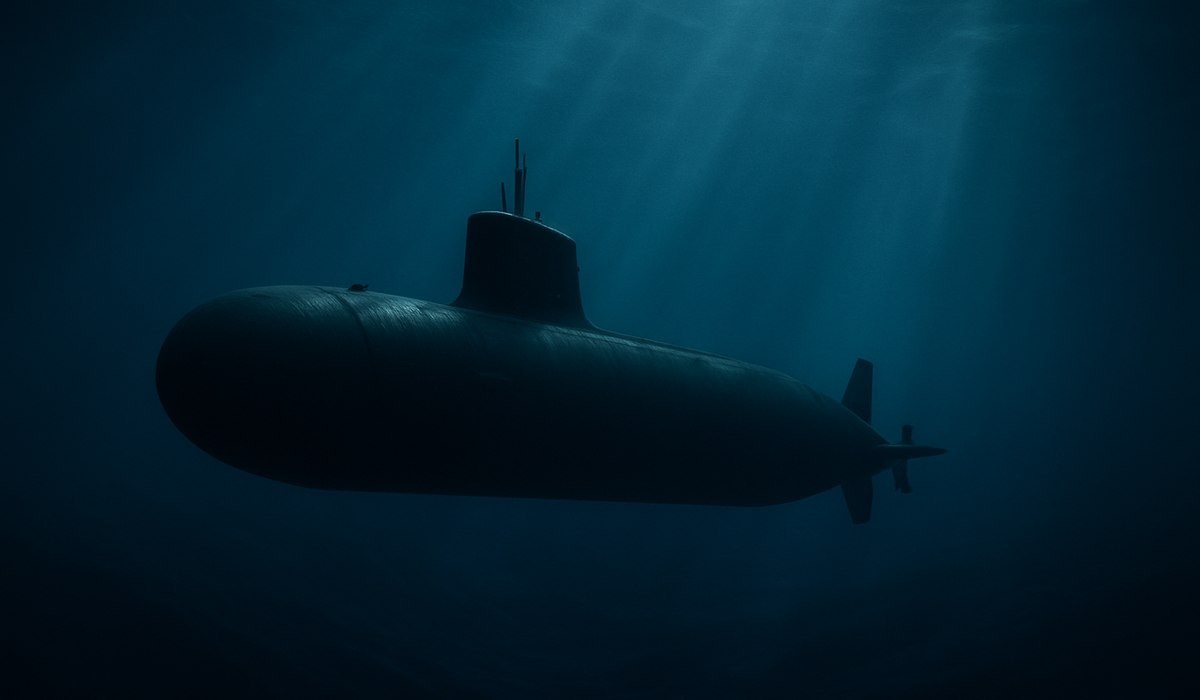
Image generated by AI
U.S. Navy's Navy Angeles Class Submarines Face Unified Structural Crisis
The entire fleet of 62 U.S. Navy Angeles class nuclear attack submarines confronts an identical engineering vulnerability that complicates their phased retirement and replacement timeline. Built across three decades during and after the Cold War, these vessels share fundamental design limitations that impact modern naval strategy and undersea dominance. The U.S. Navy now races to transition this aging fleet while rivals China and Russia monitor the strategic gap this transition creates.
The Los Angeles-Class: America's Undersea Workhorse
The Navy Angeles class emerged as America's response to Soviet submarine advancement during the height of Cold War tensions. Launched beginning in 1976, the class represented a generational leap from the slower, noisier Sturgeon-class submarines that preceded them. These fast-attack submarines were engineered for high sustained speed, advanced sonar capabilities, and unlimited operational range through nuclear propulsion.
The fleet divided into three distinct production blocks, each incorporating incremental improvements. Flight I submarines operated as pure hunter-killer vessels optimized for deep-ocean anti-submarine warfare. Flight II variants added twelve vertical launch system tubes for Tomahawk missiles, creating the first multi-mission capability. The final Block III configuration, including the 23 quieter 688i variants, represented the most capable iteration with enhanced Arctic operations capacity and dramatically reduced acoustic signatures.
For fifty years, the Navy Angeles class defined American submarine dominance. Their missions expanded from intercepting Soviet ballistic missile submarines to protecting carrier strike groups, gathering intelligence, and delivering precision land-attack strikes. This versatility made them invaluable across shifting strategic requirements from the Cold War through contemporary operations.
The Design Flaw Affecting All 62 Submarines
Despite extensive modernization across three production blocks, every Navy Angeles class submarine shares identical structural limitations that cannot be remedied through upgrades. The nuclear reactors powering these vessels function for only thirty to thirty-five years without refueling—an engineering constraint built into the original 1970s design specifications that no retrofit can overcome.
Many Navy Angeles class submarines have already exceeded their designed service life, creating urgent operational challenges. The original architecture lacks adaptability for modern mission requirements, with insufficient internal space for special operations forces and outdated sensor integration limiting contemporary effectiveness. The acoustic signature of even the newest 688i variants falls below modern submarine standards set by recently deployed Virginia and Seawolf-class vessels.
These submarines also suffer from increasingly demanding maintenance requirements as they age. Extended dry-dock periods reduce fleet availability precisely when geopolitical tensions demand maximum undersea presence. Their limited computational capacity and dated electronics integration prevent simple software updates from addressing modern threats. The structural flaw is not mechanical failure but fundamental design obsolescence—technology that served brilliantly for fifty years cannot meet twenty-first-century demands.
Replacement Challenges and Strategic Implications
The Virginia-class submarine program represents the Navy's replacement strategy, but production rates create a critical vulnerability window. Building submarines at sufficient scale to maintain undersea superiority requires sustained industrial capacity, congressional funding, and international stability that cannot be guaranteed. Each Virginia-class boat requires approximately ten years from contract to deployment, meaning the retirement of aging Navy Angeles class submarines occurs faster than replacements achieve operational status.
This transition period presents unprecedented strategic risk. Chinese Type 095-class submarines and Russian Yasen-class vessels advance in capability while American Navy Angeles class withdrawals reduce fast-attack submarine numbers. The U.S. Navy cannot maintain Cold War-era submarine fleet sizes with modern vessels, forcing difficult prioritization decisions about deployment regions and operational commitments.
The structural reality transcends individual submarine limitations. The entire industrial base supporting Navy Angeles class operations—specialized maintenance facilities, trained crews, supply chain infrastructure—must be systematically decommissioned. Yard capacity dedicated to these vessels transitions to Virginia and Columbia-class production, creating logistical bottlenecks that compound deployment challenges throughout the 2026-2035 transition period.
Rival Powers Watching the Transition
China and Russia closely monitor American submarine fleet transitions, recognizing the strategic window this creates. Beijing's expanding submarine force now includes vessels designed specifically to counter American undersea advantages. Russian submarine modernization efforts accelerate simultaneously with U.S. Navy Angeles class retirements, creating asymmetrical advantages in contested regions.
The Indo-Pacific represents the most strategically significant transition zone. Chinese submarines increasingly operate in traditional American patrol areas as Navy Angeles class vessels retire without immediate Virginia-class replacements. Russian Arctic operations expand while American undersea presence contracts in northern waters where the Navy Angeles class pioneered operations under polar ice.
Strategic competitors recognize that American submarine dominance, unquestioned since the 1980s, faces genuine challenge. The psychological impact of visible fleet reduction may embolden regional adversaries more than the actual capability loss. Transparent reporting of American submarine retirements provides intelligence advantages to nations investing heavily in undersea warfare capabilities.
What This Means for Travelers
While submarine fleet transitions seem distant from civilian travel concerns, these developments carry important indirect implications for maritime security and international stability:
-
Increased Naval Presence in Commercial Corridors: As Navy Angeles class submarines retire, remaining vessels concentrate on high-traffic commercial shipping lanes, increasing likelihood of naval exercises in popular cruise routes and maritime passages through the South China Sea and Western Pacific.
-
Extended Port Security Procedures: Naval bases hosting submarine maintenance facilities implement enhanced security protocols during Virginia-class transition operations, potentially affecting civilian access to port cities and waterfront areas near major submarine homeports.
-
Geopolitical Risk Elevation: The strategic gap created by Navy Angeles class retirement increases tension in contested maritime regions, potentially affecting commercial air routes and maritime security assessments for international travel planning.
-
Infrastructure Investment Around Naval Bases: Communities hosting submarine maintenance facilities experience increased military construction and infrastructure development, temporarily affecting local transportation and tourism services in areas like Norfolk, Virginia and San Diego, California.
-
Updated Travel Advisories: The U.S. State Department may issue adjusted maritime travel advisories reflecting changing undersea security posture and naval exercise schedules in the Indo-Pacific and contested waters.
| Aspect | Details | Impact |
|---|---|---|
| Total Fleet Size | 62 Navy Angeles class submarines across three production blocks | Largest American fast-attack submarine class ever built |
| Reactor Lifespan | 30-35 years without refueling | Fundamental structural limitation affecting all vessels identically |
| Replacement Rate | Virginia-class submarines average 10-year production cycle | Creates critical capability gap 2026-2035 |
| Block III Vessels | 23 advanced 688i submarines with enhanced capabilities | Most capable variant still below modern acoustic standards |
| Mission Expansion | From Cold War anti-submarine to multi-mission strike platforms | Demonstrates versatility but increases modernization cost |
| Competitor Response | Chinese Type 095 and Russian Yasen-class advancement | Strategic advantage window during American transition |
| Maintenance Requirements | Increasing dock time as vessels age beyond design specifications | Reduces fleet availability during critical deployment periods |
Frequently Asked Questions
What exactly is wrong with the Navy Angeles class submarines?
The Navy Angeles class submarines face multiple interconnected challenges: nuclear reactors with thirty to thirty-five-year operational limits, internal architecture lacking adaptability for modern mission requirements, acoustic signatures inferior to contemporary designs, insufficient space for special operations forces, and increasingly demanding maintenance schedules. No single flaw exists—rather, the entire design grows obsolete against modern threats and mission requirements.
Why can't the Navy simply upgrade these submarines?
Fundamental structural limitations cannot be resolved through upgrades. The reactor constraint is physically built into vessel design and cannot be retrofitted. Internal space limitations restrict equipment and personnel additions. The hull design predates modern sonar integration requirements. These are not software problems requiring patches but architectural decisions made in the 1970s that cannot be retrofitted without essentially building new submarines.
**How many submarines does the Navy lose when the Navy Angeles class
Raushan Kumar
Founder & Lead Developer
Full-stack developer with 11+ years of experience and a passionate traveller. Raushan built Nomad Lawyer from the ground up with a vision to create the best travel and law experience on the web.
Learn more about our team →