
Myanmar Air Travel Crisis: Ticket Prices Soar Across Yangon, Mandalay, and Myitkyina Amid Security Concerns
Severe flight shortages and security fears cause airfares to Myanmar's Myitkyina to skyrocket past 1.7M kyats. What this aviation crisis means for travelers now.

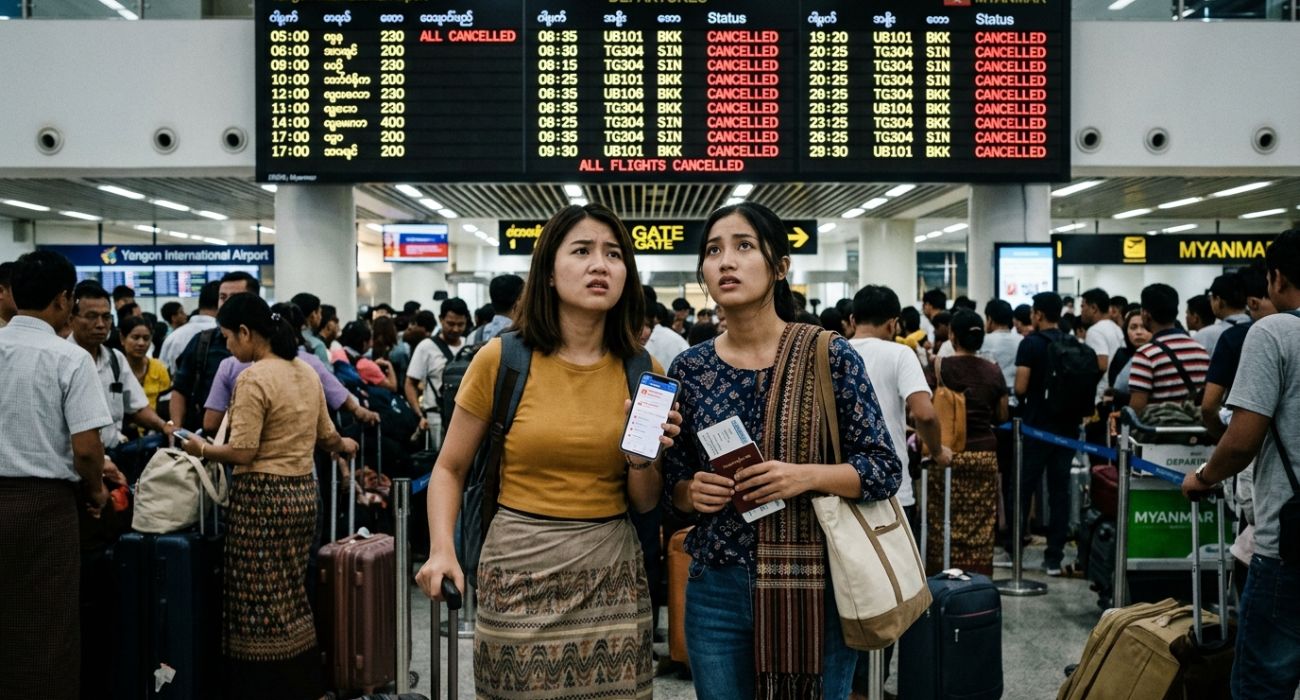
Image generated by AI
Myanmar Airfare Crisis Deepens: Myitkyina Flight Prices Skyrocket Amid Security Fears and Seat Shortages
YANGON, Myanmar — A deepening aviation crisis in Myanmar is leaving travelers stranded and driving domestic airfares to unprecedented heights. As flight shortages intensify, travelers flying between Yangon, Mandalay, and Myitkyina are facing a volatile market defined by massive price hikes and growing safety concerns.
The domestic aviation sector is currently grappling with extreme instability, particularly on routes connecting to Kachin State. Recent reports indicate that ticket prices on certain routes have surged past 1.7 million Myanmar kyats, a staggering increase that places immense pressure on residents and business travelers alike.
The Skyrocketing Cost of Flying to Myitkyina
The capital of Kachin State, Myitkyina, has emerged as one of the most expensive destinations within Myanmar's domestic network. The pricing structure for these flights has become notoriously unpredictable, with fares fluctuating wildly from day to day.
Recent data highlights the severity of the price volatility:
- Unprecedented Spikes: While some passengers in April managed to secure tickets for under 1 million kyats, others on identical routes just days later faced costs exceeding 1.3 million kyats.
- Economic Impact: These surges come at a time when Myanmar's economy is already struggling with high inflation and currency depreciation.
- Supply Shortage: The number of available seats remains significantly lower than pre-2020 levels due to reduced fleet availability and rising fuel costs.
Security Disruptions and the Drone Incident
The current instability is not merely an economic issue; it is deeply tied to heightened aviation security fears. The industry is still reeling from a major security breach that occurred earlier this year.
In February, an ATR 72-600 aircraft operated by Myanmar National Airlines was reportedly struck by a drone while preparing for departure at Myitkyina Airport. This incident led to a month-long suspension of all flights to and from the region. Although operations resumed in early April, the psychological and operational impact remains severe, with airlines struggling to restore consistent schedules and passenger confidence.
Impact on Tourism and Local Trade
The aviation crisis is casting a long shadow over the regional economy. Myitkyina serves as a vital gateway to northern Myanmar's ecological and cultural treasures, including its famous jade trading centers and mountain landscapes.
The crisis is affecting several key sectors:
- Tourism Stagnation: The inability to secure reliable flights threatens the fragile recovery of domestic tourism in Kachin State.
- Business Uncertainty: Corporate travel between Yangon, Mandalay, and the north is facing significant strain due to unpredictable schedules.
- Humanitarian and Essential Travel: Because road travel to northern Myanmar can be slow and seasonal, air travel is a lifeline for medical, educational, and humanitarian missions.
The Rise of Black-Market Ticket Reselling
As official airline inventories dwindle, a troubling trend has emerged: the proliferation of informal, black-market ticket resales. Reports are increasing from travelers in Kachin State regarding agents reselling scarce tickets at heavily inflated prices.
This lack of transparency is eroding trust in the domestic aviation system. With many flights to Myitkyina already fully booked through May, the reliance on unregulated secondary markets is creating a "wild west" environment for travelers who have no choice but to fly.
Passenger Impact: Who Is Most Affected?
The cascading effects of this crisis extend well beyond tourists and business travelers:
- Local residents dependent on air connectivity for access to healthcare and education face the harshest consequences as prices rise beyond their means.
- Traders and merchants relying on Myitkyina's jade markets are absorbing higher transportation costs that squeeze already thin margins.
- International visitors planning heritage or eco-tourism to northern Myanmar are increasingly rerouting or canceling trips entirely.
What This Means for Travelers
If you are planning to travel within Myanmar — particularly to northern regions — the current landscape requires extreme flexibility and early planning.
Key Takeaways for Passengers:
- Plan Far in Advance: Book domestic flights at least one month before your intended departure date.
- Avoid Last-Minute Booking: Prices are most volatile and highest near the departure date.
- Monitor Multiple Carriers: Check schedules for Myanmar Airways International, Air Thanlwin, Mann Yadanarpon, and Air Mingalar, as seat availability rotates between operators.
- Build in Buffers: If your itinerary involves connecting through Yangon or Mandalay, add extra days to your schedule to account for sudden cancellations or delays.
Industry Analysis: Systemic Pressures Behind the Crisis
The Myanmar aviation sector's current turmoil is the product of several overlapping systemic failures:
- Fleet Reduction: Years of economic pressure and international sanctions have shrunk the operational fleets of most domestic carriers.
- Fuel Cost Surge: Global jet fuel prices, exacerbated by ongoing geopolitical tensions, have driven operational costs to record levels.
- Security Investments: Following the ATR 72-600 drone incident, airlines are incurring additional costs to implement enhanced pre-departure security protocols, which further reduces turnaround efficiency.
The Myanmar aviation sector is facing its most defining test in years. As the industry navigates rising operational costs and security challenges, the stability of this vital economic artery remains deeply uncertain.
Key Takeaways
- Domestic airfares to Myitkyina have surged, with some routes exceeding 1.7 million kyats
- A drone strike on an ATR 72-600 in February caused a month-long regional flight suspension
- Severe seat shortages have fuelled a black-market ticket resale economy
- Flights to Myitkyina are already fully booked through May 2026
- Travelers should book at least one month in advance and prepare for significant schedule volatility
- Active carriers on Kachin State routes include Myanmar Airways International, Air Thanlwin, Mann Yadanarpon, and Air Mingalar
FAQ
Q: Why are flight prices to Myitkyina so high right now? A: A combination of severe flight shortages, increased operational costs (including fuel), and reduced aircraft availability has driven prices to record highs, sometimes exceeding 1.7 million kyats.
Q: Is it safe to fly to Myitkyina? A: While flights have resumed following the February drone incident, security concerns and operational disruptions continue to impact the reliability of schedules.
Q: How far in advance should I book my domestic flights in Myanmar? A: Due to high demand and low supply, travelers are advised to book at least one month in advance to ensure availability and avoid the steepest price surges.
Q: Which airlines are currently operating routes to Kachin State? A: Flights are being operated on a rotating basis by several carriers, including Myanmar Airways International, Air Thanlwin, Mann Yadanarpon, and Air Mingalar.
Related Travel Guides
Disclaimer
This article is for informational and educational purposes only. It does not constitute legal, financial, or professional advice. While we strive to provide accurate and up-to-date information, travel policies, regulations, and conditions change rapidly. Always verify information with official sources before making travel decisions. Nomad Lawyer makes no representations about the accuracy, reliability, completeness, or suitability of the information provided. Readers should consult qualified professionals for advice specific to their circumstances. The views expressed in this article are those of the author and do not necessarily reflect the views of Nomad Lawyer.
Kunal K Choudhary
Co-Founder & Contributor
A passionate traveller and tech enthusiast. Kunal contributes to the vision and growth of Nomad Lawyer, bringing fresh perspectives and driving the community forward.
Learn more about our team →