
Morocco Secures 4.5% Economic Growth Forecast for 2026 as Tourism and Heavy Industry Merge
Driven by aggressive European nearshoring and a massive post-pandemic tourism rebound, Morocco is rapidly establishing itself as Africa’s most stable economic powerhouse.

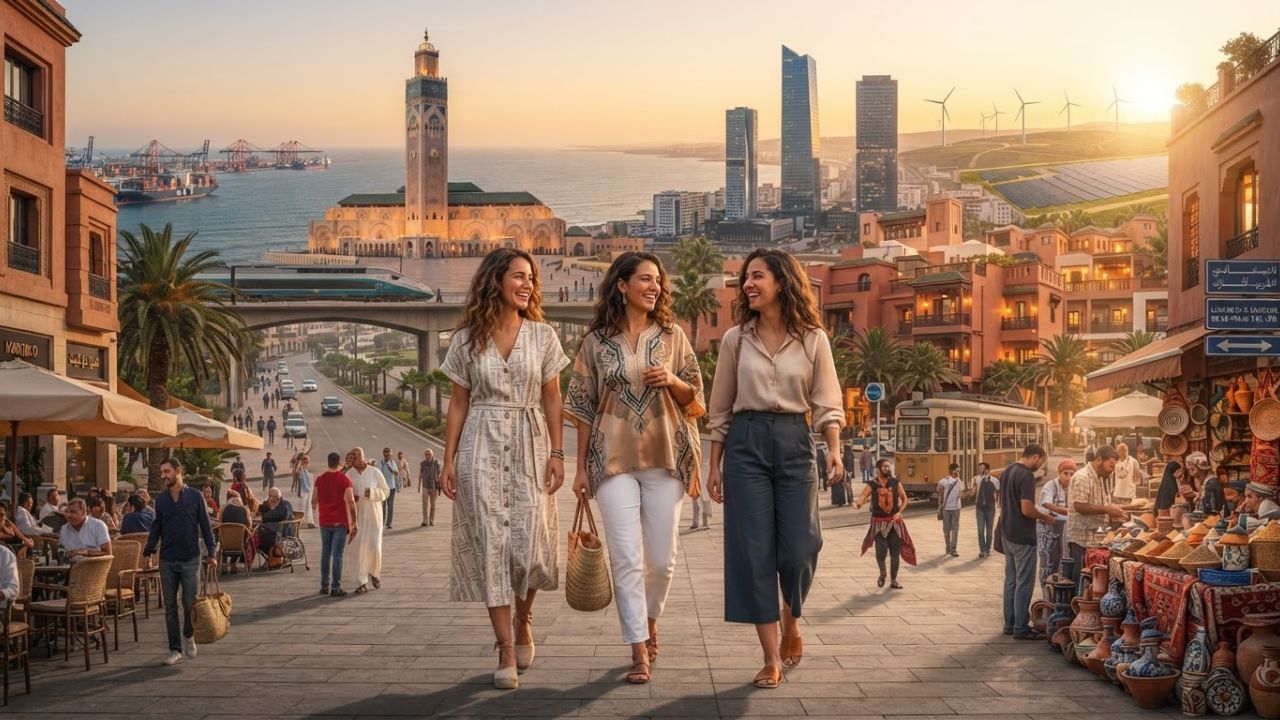
Image generated by AI
[Casablanca, July 3] — Morocco is rapidly transforming into the primary economic conduit between Europe and the African continent. Driven by a massive structural expansion across heavy manufacturing, international tourism, and domestic consumption, economic forecasters project the North African nation will achieve a robust 4.5% GDP growth rate in 2026. This aggressive upward trajectory confirms that Morocco has successfully decoupled from regional instability, leveraging its strategic geographic positioning to attract massive foreign direct investment away from increasingly volatile Asian and Eastern European markets.
The core engine of this 2026 expansion is the country's aggressive industrial integration. Global multinational corporations are executing major nearshoring and reshoring operations, heavily investing in Moroccan automotive production, aeronautics, and renewable energy clusters. Supported by rapidly modernizing ports and highly efficient logistics corridors, Morocco now operates as a critical, low-cost supply chain hub directly feeding the European consumer market.
Tourism Infrastructure Absorbs Global Demand
Parallel to its industrial boom, Morocco’s international tourism sector is executing a massive, highly profitable recovery. Traditional cultural hubs like Marrakech and Fez, alongside the coastal economic centers of Casablanca and Tangier, are reporting surging visitor volumes. This influx is heavily supported by expanded aviation connectivity and highly simplified travel access policies targeting high-yield European and Middle Eastern demographics.
This tourism explosion is generating critical foreign exchange earnings and driving massive localized job creation. To capture this momentum, international hospitality conglomerates are flooding the market with capital, launching new luxury hotel developments and massive coastal resort expansions. When combined with steady domestic consumption and a highly stable inflation environment, the tourism sector provides the critical economic resilience required to offset broader global macroeconomic uncertainty.
Casablanca Dominates Corporate Finance
While Marrakech drives the leisure economy, Casablanca is actively cementing its status as the financial nucleus of the region. The Casablanca Finance City ecosystem is successfully drawing major international banking institutions and corporate headquarters seeking direct, regulated access to both African and Mediterranean markets. By providing sophisticated cross-border financial services, Casablanca ensures that the massive foreign investment flowing into Moroccan logistics and manufacturing can be deployed efficiently and securely.
Key Facts Breakdown
- Economic Forecast: Morocco projects a strong 4.5% GDP growth rate for 2026.
- Industrial Pillars: Automotive, aeronautics, textiles, and renewable energy lead manufacturing output.
- Tourism Hubs: Marrakech, Casablanca, Fez, and Tangier report surging international arrivals.
- Financial Center: Casablanca Finance City is drawing major multinational corporate headquarters.
- Macro Stability: Domestic consumption remains highly stable due to contained inflationary pressures.
Why This Matters
Our analysis of the 2026 economic forecast indicates that Morocco has successfully executed a dual-engine growth strategy that highly eludes most emerging markets. By simultaneously scaling heavy, export-driven industry (like aeronautics) and high-margin service sectors (like luxury tourism), the Moroccan government has brilliantly insulated its economy against localized shocks. If European consumer spending drops, the tourism sector might soften, but the automotive manufacturing base—which relies on long-term corporate supply contracts—will sustain the GDP. This aggressive nearshoring trend proves that European corporations are terrified of extended supply chains stretching into Asia. Morocco is simply the closest, most stable, and most heavily incentivized alternative.
Industry Outlook
Market trends suggest that international capital will continue to aggressively target Moroccan infrastructure over the next 36 months. Expect major European low-cost airline carriers to furiously request expanded landing slots in Marrakech and Tangier, as holidaymakers increasingly substitute highly inflated Southern European destinations for cheaper, high-quality Moroccan alternatives. Furthermore, while the 4.5% GDP forecast relies heavily on industrial and service sector stability, a highly favorable agricultural harvest season in 2026 could actually push national growth rates significantly higher. Moving forward, rival North African nations must drastically overhaul their own foreign investment regulations if they hope to prevent Casablanca from entirely monopolizing regional corporate finance.
Related Travel Guides
- Global Event Tourism Market to Hit $2.5 Trillion by 2032 as Corporate Giants Abandon Remote Work
- Washington D.C. Gridlocked as Great American State Fair Ignites 16-Day America 250 Celebration
- Las Vegas Outranks Miami and Los Angeles by Locking in Formula 1 and Super Bowl Mega-Events
- India Aggressively Scales Sky Tourism as Paragliding Surges Across Himalayan Hubs
- Sri Lanka Outranks the Galápagos and French Polynesia to Claim World’s Best Island Title
Disclaimer
This article is for informational and educational purposes only. It does not constitute legal, financial, or professional advice. While we strive to provide accurate and up-to-date information, travel policies, regulations, and conditions change rapidly. Always verify information with official sources before making travel decisions. Nomad Lawyer makes no representations about the accuracy, reliability, completeness, or suitability of the information provided. Readers should consult qualified professionals for advice specific to their circumstances. The views expressed in this article are those of the author and do not necessarily reflect the views of Nomad Lawyer.
Kunal K Choudhary
Co-Founder & Contributor
A passionate traveller and tech enthusiast. Kunal contributes to the vision and growth of Nomad Lawyer, bringing fresh perspectives and driving the community forward.
Learn more about our team →