
Montevideo Economic Surge and Investment Inflows Drive Record Tourism Growth Across Uruguay
Foreign direct investment reaching $1.1 billion and 3.2 million international visitor arrivals catalyze infrastructure, MICE, and luxury hospitality growth in Montevideo, Uruguay.

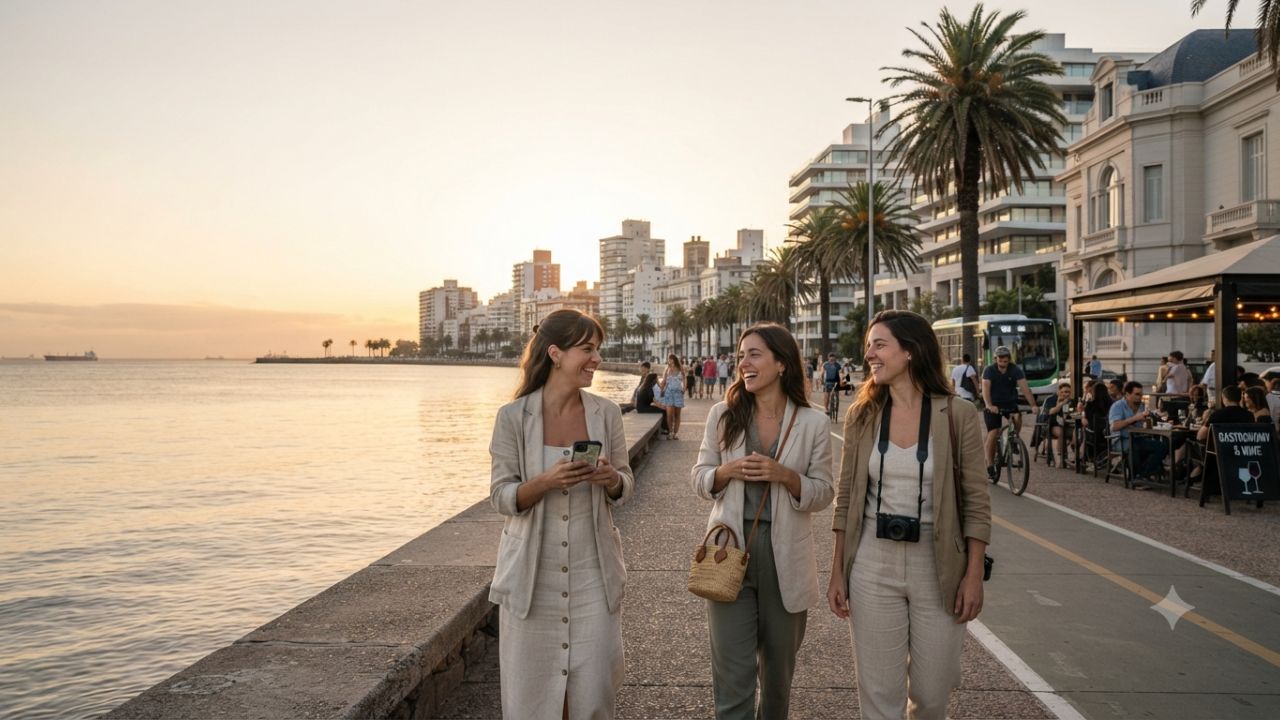
Image generated by AI
Rising foreign direct investment inflows scaling past $1.1 billion and a recorded surge of over 3.2 million international tourists are driving a structural economic transformation across Montevideo, positioning Uruguay’s capital as South America’s premier hub for corporate and sustainable urban travel.
Foreign currency revenues from international tourism have climbed past $1.78 billion, establishing the sector as an indispensable engine of national economic expansion. Backed by high environmental standards, predictable fiscal policies, and strategic multi-modal infrastructure, Montevideo is attracting major capital allocations into corporate housing, eco-tourism projects, and historic urban regeneration projects according to official updates from Uruguay Natural.
Foreign Investment Inflows Catalyze Hospitality Real Estate
Uruguay’s established reputation for political stability, low corruption metrics, and transparent legal protections has turned Montevideo into a primary regional target for international corporate headquarters and business travel. Net foreign direct investment inflows reached $1.1 billion, representing approximately 1.3 percent of national GDP, bolstered by a quarterly foreign investment surge of $598.77 million.
Municipal decrees and national tax incentive frameworks offer targeted exemptions for commercial real estate developments that hit specific employment and innovation benchmarks. Institutional capital is flowing into premium coastal neighborhoods like Carrasco and Pocitos, where luxury hotel towers and corporate housing developments are expanding rapidly. This steady capital deployment stabilizes hotel occupancy percentages and elevates average daily room rates across the capital year-round.
Multi-Modal Infrastructure and Gateway Connectivity
Targeted capital investments are simultaneously modernizing Montevideo’s key transport corridors, connecting international visitors with historic downtown sectors and regional hubs. Carrasco International Airport, recognized for its terminal architecture designed by Carlos Ott, operates as the primary international entryway, handling direct long-haul flights from Madrid as well as high-frequency regional links to São Paulo and Buenos Aires.
Montevideo Multi-Modal Transport Gateway Matrix
├── Aviation Gateway   : Carrasco International Airport (Transatlantic & South American links)
├── Maritime Corridor : Port of Montevideo (Río de la Plata passenger ferries & 120+ cruise lines)
└── Overland Hub      : Tres Cruces Terminal (Connecting Argentina, Brazil, Paraguay & Bolivia)
At the waterfront, the Port of Montevideo manages daily high-speed passenger ferries across the Río de la Plata to Buenos Aires, while hosting over 120 international cruise ships annually. On land, the Tres Cruces Bus Terminal and Shopping complex forms the core arterial hub linking the capital to land transit corridors across Argentina, Brazil, Paraguay, and Bolivia. These integrated transportation networks ensure international travelers transition smoothly between maritime, air, and overland routes.
Economic Indicators Supporting Montevideo's Travel Sector
Uruguay's broader macroeconomic metrics highlight a robust operational landscape for international enterprise, hospitality investment, and regional trade.
| Economic Indicator | Official Benchmark / Statistical Value | Direct Impact on Tourism & Hospitality |
|---|---|---|
| Foreign Direct Investment (FDI) | $1.1 Billion (1.3% of GDP) / $598.77M quarterly surge | Accelerates luxury hotel construction and corporate housing development |
| International Tourist Arrivals | Over 3.2 Million visitors | Drives foreign currency travel expenditure past $1.78 Billion nationwide |
| Trade Openness Ratio | 49.7% of national GDP | Facilitates cross-border passenger flows and international corporate travel |
| Land Border Corridors | 1,050 km (Brazil) / 541 km (Argentina) | Supports heavy regional drive-in tourism and overland intercity bus networks |
| National Renewable Energy Grid | Over 90% renewable energy generation | Enhances green tourism credentials and powers electric public transport |
| Digital Infrastructure | Over 92% internet penetration | Enables multi-month stays for international technology professionals |
| Financial Inclusion & VAT Refunds | Over 75% adult inclusion / POS tax incentives | Removes payment friction and stimulates spontaneous retail spending |
| Central Bank Interest Benchmark | 5.75% benchmark rate | Maintains fiscal predictability for long-term hospitality investments |
| GDP Per Capita Benchmark | Exceeds $25,216 | Elevates domestic purchasing power and supports premium culinary venues |
| National Labor Force Pool | 1.8 Million active workers (Life Exp: 83.31 yrs) | Supplies highly educated, multilingual staff across luxury hotels |
MICE and Business Tourism Growth in South America
Predictable governance and a strong national GDP per capita benchmark exceeding $25,216 have established Montevideo as a leading destination for Meetings, Incentives, Conferences, and Exhibitions (MICE). International event planners routinely select the capital's modern convention centers due to transparent corporate tax frameworks and a central bank benchmark interest rate hovering near 5.75 percent.
Corporate visitors frequently extend commercial trips into localized leisure exploration. Visiting executives take advantage of proximity to Tannat wine-tasting routes operating just beyond the metropolitan limits, as well as historic landmarks including the Teatro Solís and Mercado del Puerto. This convergence of corporate meetings and high-end gastronomy maximizes daily visitor expenditure across local small businesses.
Sustainable Urban Tourism, Clean Energy, and Digital Nomad Access
Environmental governance is central to Montevideo’s long-term urban tourism framework. Powered by a national energy grid running on over 90 percent renewable energy, the capital is expanding electric city bus fleets along its famous 20-kilometer coastal rambla. Travelers seeking low-carbon transit options find a clean, technologically advanced urban landscape.
Montevideo Sustainable Travel Framework
├── Clean Grid Power   ──► Over 90% Renewable Energy Generation
├── Urban Mobility     ──► Electric City Buses along the 20km Coastal Rambla
├── Remote Work Access ──► 92%+ Internet Penetration & Long-Stay Residency Visas
└── Digital Financials ──► 75%+ Inclusion with Point-of-Sale VAT Incentives
With national internet penetration exceeding 92 percent, progressive visa frameworks offer legal remote work pathways for global technology specialists. High-earning remote workers are establishing multi-month residencies in coastal districts like Pocitos, providing stable off-season occupancy for boutique hotels and co-living properties. Combined with point-of-sale value-added tax refunds on international credit cards and financial inclusion metrics exceeding 75 percent, foreign visitors experience frictionless digital transactions throughout the capital.
Why This Matters
Montevideo demonstrates how targeted foreign direct investment and transparent corporate governance can modernize a South American capital while safeguarding cultural heritage and environmental sustainability. For international travelers, the expansion of transatlantic flight links via Carrasco Airport and seamless ferry transfers from Buenos Aires make accessing Uruguay simpler than ever before.
For real estate developers and hospitality operators, Uruguay's fiscal stability and high GDP per capita create a low-risk environment for long-term capital commitment. By aligning clean energy infrastructure, digital nomad visas, and historic preservation in districts like Ciudad Vieja, Montevideo is establishing a template for high-yield, resilient urban tourism in Latin America.
FAQ: Montevideo Tourism & Economic Growth 2026
What is driving the recent tourism growth in Montevideo?
The surge is driven by strong macroeconomic stability, over $1.1 billion in net foreign direct investment, strategic tax incentives for commercial development, and expanded transatlantic and regional air connections.
How do foreign tourist numbers contribute to Uruguay's economy?
Uruguay welcomed over 3.2 million international tourists in recent tracking cycles, generating over $1.78 billion in foreign currency revenues that support hospitality, dining, and retail sectors nationwide.
What transport options connect Montevideo to neighboring countries?
Montevideo is connected via transatlantic flights at Carrasco International Airport, daily passenger ferries across the Río de la Plata from Buenos Aires, and intercity overland routes from the Tres Cruces Bus Terminal to Argentina, Brazil, Paraguay, and Bolivia.
Why is Montevideo attracting digital nomads and remote workers?
The city features over 92 percent internet penetration, a power grid running on over 90 percent renewable energy, automated VAT refunds on international cards, and dedicated long-stay legal residency frameworks.
Related Travel Guides
Disclaimer
This article is for informational and educational purposes only. It does not constitute legal, financial, or professional advice. While we strive to provide accurate and up-to-date information, travel policies, regulations, and conditions change rapidly. Always verify information with official sources before making travel decisions. Nomad Lawyer makes no representations about the accuracy, reliability, completeness, or suitability of the information provided. Readers should consult qualified professionals for advice specific to their circumstances. The views expressed in this article are those of the author and do not necessarily reflect the views of Nomad Lawyer.
Kunal K Choudhary
Co-Founder & Contributor
A passionate traveller and tech enthusiast. Kunal contributes to the vision and growth of Nomad Lawyer, bringing fresh perspectives and driving the community forward.
Learn more about our team →